


It is just over four years since the novel coronavirus – which came to be known as Covid-19 – first emerged in the Chinese city of Wuhan.
The rapid outbreak of the disease sparked a pandemic, claiming millions of lives and devastating economies the world over.
Now experts are working to prevent a future global health crisis by sharpening their focus on an as yet unknown threat, often termed as Disease X.
At a World Economic Forum discussion in Davos this week, World Health Organisation Director General Dr Tedros Adhanom Ghebreyesus warned that societies were “still not prepared” for what could be on the horizon.
His stark message was delivered more than five years after the WHO began including Disease X on its list of priority diseases.
This list covers the pathogens, identified or as-yet-unknown, that are said to pose the biggest threats, but for which there may not be adequate countermeasures.

Raising the alarm
“Disease X represents the knowledge that a serious international epidemic could be caused by a pathogen currently unknown to cause human disease,” is how the WHO puts it.
As part of the WHO’s preparedness planning, more than 200 scientists are currently assessing the pandemic risks from no fewer than 30 families of viruses along with a core group of bacteria – and Disease X.
Ian Jones, professor of virology at the University of Reading in the UK, said that it was almost certain that the next pandemic would be caused by a virus.
“Viruses are the only things that can appear suddenly and spread most quickly,” he said.
In the wake of the Covid-19 pandemic, another coronavirus is an obvious potential source, as there are countless types of them in animals.
One could pose a threat if it crossed the species barrier and began infecting and spreading between people. This is what is often thought to have happened with Sars-CoV-2, the virus that causes Covid-19.
There have now been more than 773 million cases of Covid-19 and seven million deaths, according to official figures, although the real tally is likely to be much higher.
A key concern for Prof Paul Hunter, an infectious diseases researcher at the University of East Anglia in the UK, is the trade in wild animal bushmeat, something that he and his colleagues have been writing about for around two decades.
“The problem is not local communities catching bushmeat and eating it. Even if they get something nasty, it’s unlikely in remote areas to spread rapidly,” he said.
“When you bring these animals into cities, if something makes the jump, then it’s much more likely to spread. That’s certainly what happened with Sars in 2003 and almost certainly what happened with Covid. That’s the big threat.
“What’s certain is that Covid isn’t the last new pandemic we’ll experience in the coming decades.”
More pandemics to come
-

Nearly empty roads amid a phased lockdown due to Covid-19 in Shanghai, China. The country's largest city reported more than 13,000 daily Covid cases for the first time, as a sweeping lockdown of its 25 million residents and mass testing uncovered extensive spread of the highly infectious Omicron variant. Bloomberg -

Medical workers gather near a banner that reads 'Unite as one, resolutely win the battle against epidemic' during a departure ceremony before leaving for Shanghai, in Jinan, east China's Shandong Province. AP -
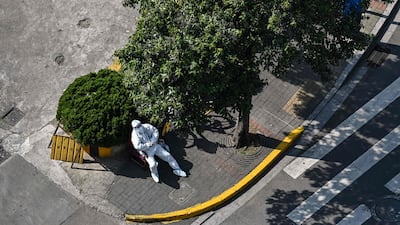
China has sent more than 10,000 health workers from across the country to Shanghai, including 2,000 military medical staff, as it struggles to tackle the rapidly spreading Covid-19 outbreak. AFP -
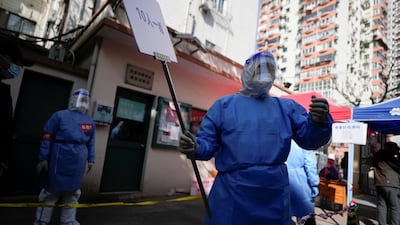
Workers in protective suits direct residents lining up for Covid testing. Reuters -
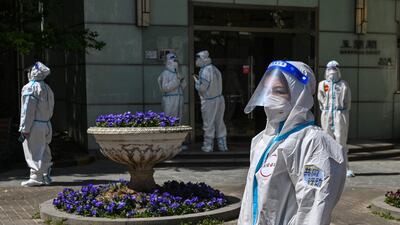
Medical workers and volunteers in a compound where residents are being tested for Covid-19. AFP -

Authorities are building the world’s largest makeshift isolation centre to help contain the outbreak in Shanghai. AFP -

A delivery man arranges his orders during lockdown in the Jingan district of western Shanghai. AP -

A worker in protective gear chats with residents outside shuttered shops in the Jingan district of western Shanghai. AP -

The number of cases continues to rise in Shanghai and Jilin, a north-eastern province. AP -
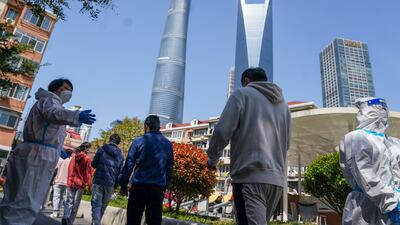
Residents wait to submit samples for tests at a community centre in the Pudong New Area of Shanghai. AP -

A person walks a dog. Reuters -
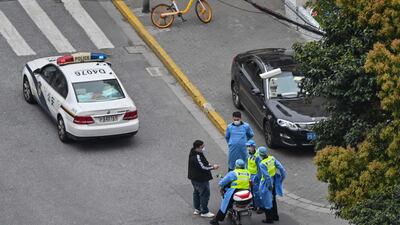
Policemen wearing protective gear on a street during patrols. AFP -

Workers remove their protective gear at the entrance of a neighbourhood. AFP -

Food shortages and shuttered manufacturing plants have hit residents hard. AFP -

Workers unload groceries from a truck before distributing them to residents. AP -

A man helps a woman to consume a packet of traditional Chinese medicine, as she sits by the side of a road outside a residential compound. Reuters -

Empty highways at night in Shanghai. Bloomberg


While coronaviruses are at or close to the top of lists of where the next pandemic is likely to come from, there is currently “an unprecedented level of immunity” to them in the population because of the large number of infections in recent times, Prof Jones said.
As a result, the chance of another coronavirus soon emerging as a threat in the way that Sars-CoV-2 did is “quite small”, he said.
The number one risk for Prof Jones is the potential for a new type of influenza to emerge – not least because this family of viruses has caused pandemics “many times before”.
Known flu pandemics began in 1889, 1918, 1957, 1968, 1977 and 2009, with the worst thought to have been the Spanish flu pandemic of 1918 to 1920, which killed tens of millions.
Further down the list of pandemic threats, Ebola virus disease has grabbed many headlines because of its high death rate, often above 50 per cent, among those infected.
However, as with the similar Marburg virus, which is also caused by a filovirus, it likely does not pass easily enough between people to become a global concern.
“Haemorrhagic fevers like Ebola are much more lethal, but don’t spread anywhere near as readily as respiratory viruses,” Prof Hunter said.
Another cause for concern is Nipah virus, which, the WHO states, is contracted by people in contact with infected bats or pigs.
First identified in Malaysia in 1998, this paramyxovirus has recently caused a number of infections and deaths in India and is, Prof Jones said, commonly among those viruses listed as potential causes of the next pandemic.
However, because the virus infects the brain and central nervous system tissues, he sees it as being less likely than others to spread easily.
“The likelihood of the virus suddenly becoming transmissible by the respiratory route is almost inconceivable,” said Prof Jones.
Ready to respond
-
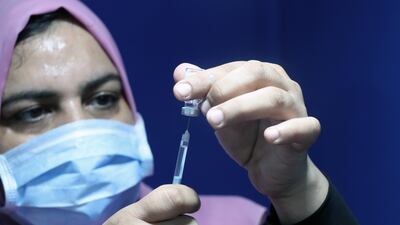
A nurse prepares a vaccine against Covid-19 at a vaccination centre operating at Sadat station on the Cairo Metro. EPA -
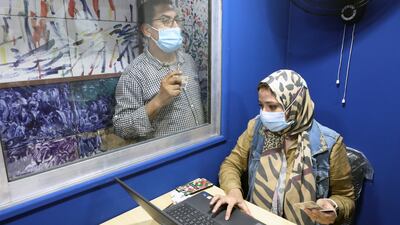
A man waits at the metro station to receive a dose of the vaccine. EPA -
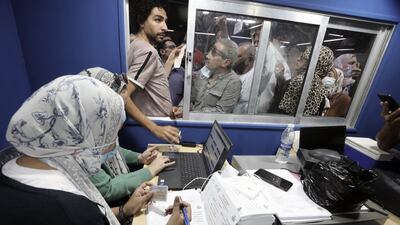
People must register to receive a dose. EPA -

Not everyone observes social distancing. Reuters -

A woman is immunised at a youth centre in the Egyptian capital. Reuters -

People wait to receive the vaccine in Cairo. Reuters -

A woman receives a dose of Covid-19 vaccine. Reuters -

A nurse prepares a dose of the Sinovac Covid-19 shot at Cairo University. Reuters


The speed with which vaccines against Covid-19 were developed indicates that, if or when another pandemic emerges, the world may be in a better position to respond than was the case in previous decades.
In a paper published in NPJ Vaccines journal in November, scientists from the pharmaceutical company Pfizer – which with BioNTech produced one of the key Covid-19 vaccines – said that lessons from Covid-19 and influenza pandemics “underscore the importance of strengthening surveillance systems [and] investing in early-stage research on pandemic pathogens”.
They also said it showed the importance of the “development of platform technologies”.
This follows the rollout of new forms of vaccine, notably messenger RNA or mRNA vaccines, during the pandemic.
Prof Jones said that it was also important to minimise the risks of another pandemic emerging and, for him, agriculture is central to this.
“The amount of meat being consumed in the world, the number of pigs bred and processed per unit of land mass and unit of population is huge,” he said.
“I don’t think people appreciate the amount of biological material being amplified and moved around. That’s one area that poses a risk.
“If things were able to get into that population of farm animals, there’s a huge opportunity for it amplify, because all the animals are the same and in a dense population, and [there is] the chance for it to be transmitted to people.”

