
More than 100 dolphins have died in a lake in the Brazilian Amazon in the past week as severe drought affects the region.
Many more of the aquatic mammals could die soon if water temperatures remain high.
Two more dead dolphins were found on Monday in the region around Tefe Lake, said the Mamiraua Institute, a research group of Brazil’s Ministry of Science, Technology and Innovation.
Thousands of fish have also died, local media reported.
Video provided by the institute showed vultures picking the dolphin carcasses beached on the lakeside.
Experts believe high water temperatures are the most likely cause of the deaths in the region's lakes.
Temperatures have exceeded 39°C in the Tefe Lake area in the past week.
The Brazilian government’s Chico Mendes Institute for Biodiversity Conservation, which manages conservation areas, said last week it had sent teams of veterinarians and dolphin experts to investigate the deaths.
State of emergency
There had been about 1,400 river dolphins in Tefe Lake, said Miriam Marmontel, a researcher from the Mamiraua Institute.
“In one week we have already lost around 120 animals … which could represent 5 to 10 per cent of the population,” said Ms Marmontel.
Workers have recovered carcasses of dolphins since last week in a region where dry rivers have impacted impoverished riverside communities and stuck their boats in the sand.
-
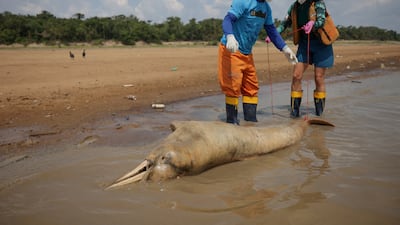
More than 100 dolphins have died in the Brazilian Amazon rainforest in the past week as severe drought affects the region. Reuters -
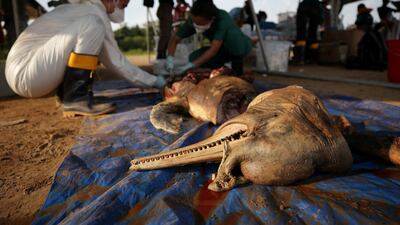
Two more were found dead on October 2 in the region around Tefe Lake, said the Mamiraua Institute. Reuters -

Experts believe high water temperatures of up to 39°C are the cause of the deaths in the region's lakes. Reuters -

Thousands of fish have also died. Reuters -
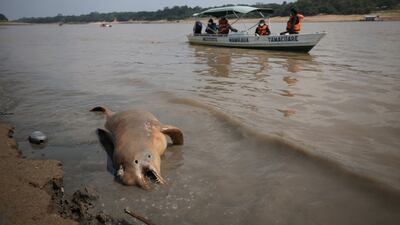
It has been warned many more of the aquatic mammals could die soon if water temperatures remain high. Reuters -
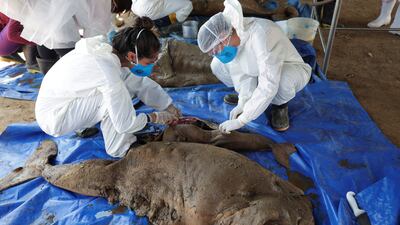
The Brazilian government has sent teams of dolphin experts to investigate the deaths. Reuters -
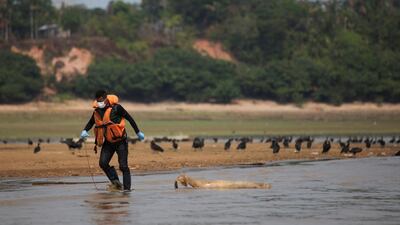
Another dead dolphin is retrieved in Tefe. Reuters -
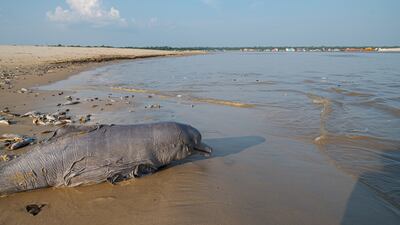
Video footage has shown vultures picking at dead dolphins beached on the lakeside. EPA -
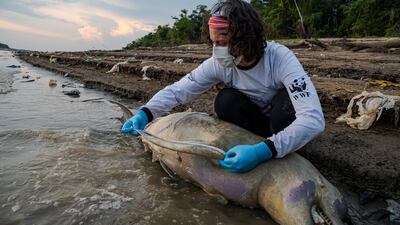
'In one week we have already lost around 120 animals, which could represent 5 to 10 per cent of the population,' said one researcher. EPA -
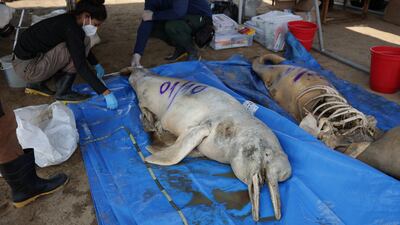
Before the spate of deaths, there had been about 1,400 river dolphins in Tefe Lake. Reuters -
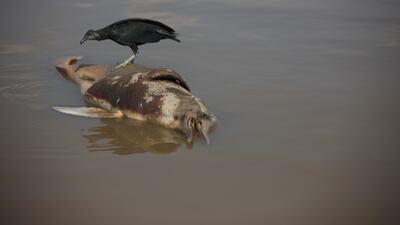
But workers have been recovering dolphin carcasses since last week in a region where rivers have run dry. Reuters -
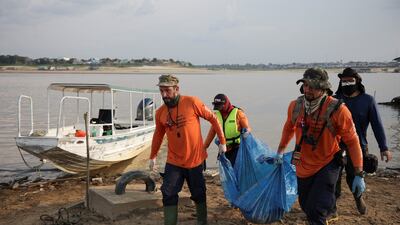
Drought has had a profound effect on riverside communities in the Amazon region. Reuters


Amazonas state governor Wilson Lima declared a state of emergency because of the drought on Friday.
Nicson Marreira, mayor of Tefe, a city of 60,000 residents, said his government could not deliver food directly to some isolated communities because the rivers are dry.
Ayan Fleischmann, the geospatial coordinator at the Mamiraua Institute, said the drought has had a major impact on the riverside communities in the Amazon region.
“Many communities are becoming isolated, without access to good quality water, without access to the river, which is their main means of transportation,” he said.
Mr Fleischmann said water temperatures rose from 32°C on Friday to almost 38°C on Sunday.
He said they are still determining the cause of the dolphin deaths, but that the high temperature remains the main candidate.

