

The chances have plummeted that a newly discovered asteroid with the potential to wipe out a city will hit Earth on Valentine's Day 2046, the European Space Agency said on Tuesday.
The asteroid, which is named 2023 DW and is estimated to be about the size of a 50-metre Olympic swimming pool, was first seen by a small Chilean observatory on February 26.
The asteroid was given a one in 847 chance of hitting Earth. But Richard Moissl, head of the ESA's planetary defence office, told AFP on Tuesday that overnight the probability fell to one in 1,584.
"It will go down now with every observation until it reaches zero in a couple of days at the latest," Mr Moissl said. "No one needs to be worried about this guy."
Nasa on Tuesday lowered its own odds of impact to one in 770, meaning there was a 99.87 per cent chance that the asteroid would miss Earth.
"We tend to be a little more conservative but it definitely appears to now have a downward trend in probability," Nasa's planetary defence officer Lindley Johnson told AFP.
New observations often shrink the "uncertainty region" where the asteroid will reach its closest point to Earth, Mr Johnson said.
While Earth is still inside that uncertainty region, the odds temporarily increase until further observations exclude Earth and the probability drops to zero.
If it were to strike Earth in 2046, it would be speeding along at about 15km a second, according to estimations.
There would be an about 70 per cent chance it landed in the Pacific Ocean, but the possible strike zone would also include the US, Australia or South-East Asia, Mr Moissl said.
Experts also emphasised that the world is no longer defenceless against such a threat.
Remarkable images show moment Nasa’s Dart spacecraft smashed into asteroid - in pictures
-
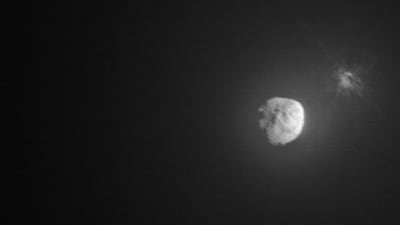
The first images that show the moment Nasa’s Dart spacecraft crashed into an asteroid have been released. Photo: Italian Space Agency / Nasa -
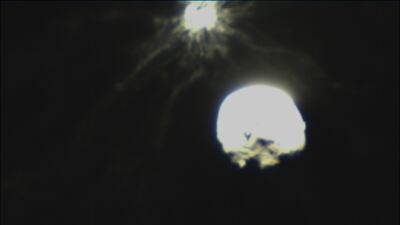
Nasa’s Double Asteroid Redirection Test (Dart) spacecraft targeted a binary asteroid system and smashed into Dimorphos – which orbits a larger asteroid, Didymos, to see if it can shift it slightly off course. Photo: Italian Space Agency / Nasa -
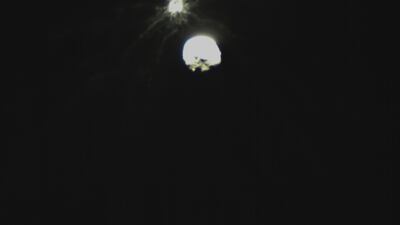
The pictures were captured by Italian Space Agency’s LiciaCube, a small cube satellite, that was released by the Dart spacecraft on September 11. Photo: Italian Space Agency / Nasa -
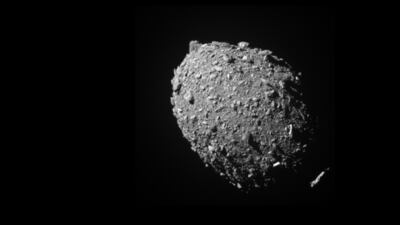
Viewers across the world got a point of view of the spacecraft the moment it crashed into the asteroid on September 27, 2022, at a speed of 24,000km an hour — fast enough to travel from New York to Paris in 15 minutes. Photo: Nasa -
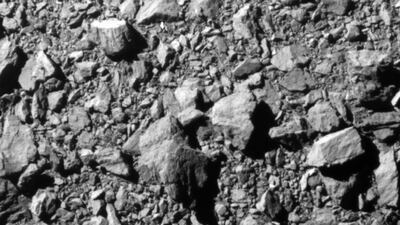
The collision on Tuesday was part of a planetary defence test by the US space agency, and the asteroid posed no threat to Earth. Photo: Nasa


Last year, Nasa's Dart spacecraft deliberately slammed into the pyramid-sized asteroid Dimorphos, significantly knocking it off course in the first such test of our planetary defences.
Davide Farnocchia at Nasa said the "Dart mission gives us confidence that such a mission would be successful" against 2023 DW, if required.
"Everyone should relax, ignore the sensationalist headlines and stories, and watch how this situation plays out," Mr Johnson said, adding that any threat was likely to "evaporate" soon.
"Nevertheless, the planetary defence community will keep looking up."
Agence France-Presse contributed to this report

