Notable Nobel Peace Prize Winners - in pictures
-
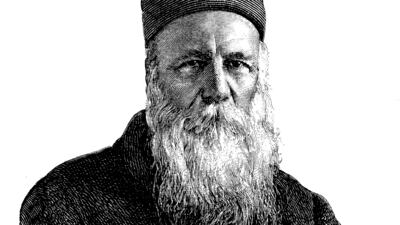
1901. Jean-Henri Dunant. The founder of the Red Cross was awarded the prize 'for his humanitarian efforts to help wounded soldiers and create international understanding'. He shared the first award with Frederic Passy. Getty Images -

1901. Frederic Passy. The French economist and writer was awarded 'for his lifelong work for international peace conferences, diplomacy and arbitration'. Getty Images -
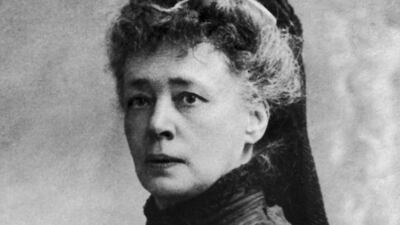
1905. Baroness Bertha von Suttner. The first woman to win the Peace Prize, she was awarded for her work as President of the Permanent International Peace Bureau. She was also the author of the anti-war novel 'Lay Down Your Arms'. Getty Images -
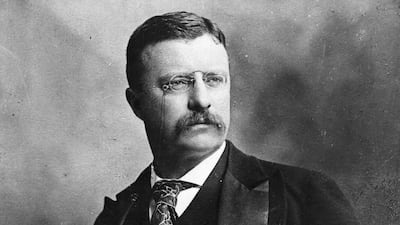
1906. Theodore Roosevelt. The 26th US president was awarded for 'for his role in bringing to an end the bloody war recently waged between two of the world’s great powers, Japan and Russia'. Getty Images -
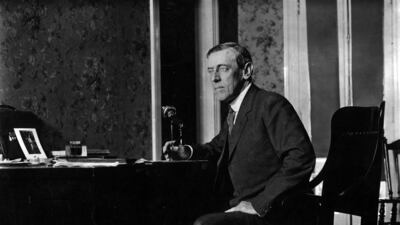
1919. Woodrow Wilson, the 28th US president was awarded 'for his role as founder of the League of Nations'. Getty Images -
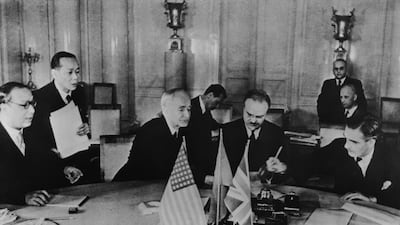
1945. Cordell Hull, centre left, won 'for his indefatigable work for international understanding and his pivotal role in establishing the United Nations'. He is pictured here signing the four-power pact in Moscow in 1943 alongside (L-R) Chinese ambassador to Moscow Foo Ping Shen, Vyacheslav Mikhailovich Molotov of Russia and Anthony Eden of Britain. Getty Images -
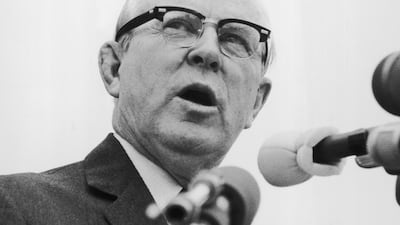
1957. Canadian politician Lester Bowles Pearson was awarded 'for his crucial contribution to the deployment of a United Nations Emergency Force in the wake of the Suez Crisis'. Getty Images -
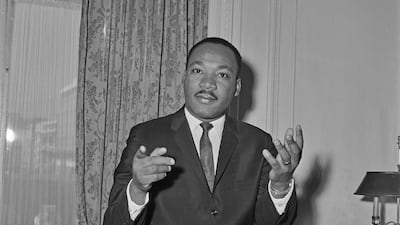
1964. American civil rights campaigner Martin Luther King Jnr was awarded 'for his non-violent struggle for civil rights for the Afro-American population'. Getty Images -
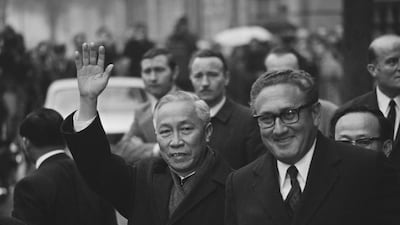
1973. Another shared award, North Vietnamese leader Le Duc Tho and US National Security Adviser Henry Kissinger are pictured here at the Paris Peace Accords during the Vietnam War, January 1973. They were jointly awarded the Nobel Peace Prize later that year 'for jointly having negotiated a cease fire in Vietnam in 1973'. Getty Images -
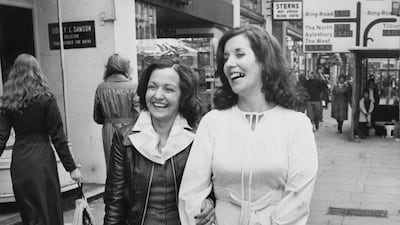
1976. Mairead Corrigan (left) and Betty Williams, co-founders of Community of Peace People, were both awarded 'for the courageous efforts in founding a movement to put an end to the violent conflict in Northern Ireland'. Getty Images -

1978. US president Jimmy Carter, who would go on to be awarded the Peace Prize himself in 2002, is pictured here with Israeli Prime Minister Menachem Begin and Egyptian President Mohamed Anwar Sadat during peace talks at Camp David, Maryland in 1978. That year Mr Begin and Mr Sadat won 'for jointly having negotiated peace between Egypt and Israel in 1978'. Getty Images -
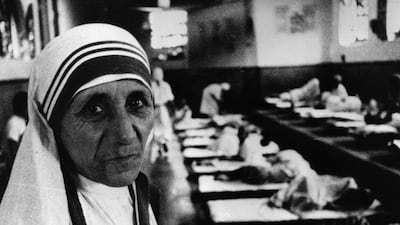
1979. Mother Teresa receiving the Nobel Peace Prize in Oslo, Norway, 'for her work for bringing help to suffering humanity'. Getty Images -
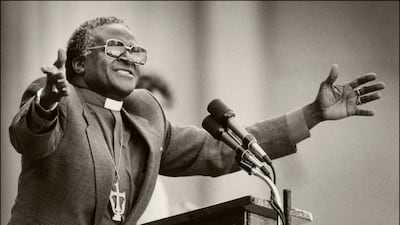
1984. South African religious leader and activist Bishop Desmond Tutu was awarded the prize 'for his role as a unifying leader figure in the non-violent campaign to resolve the problem of apartheid in South Africa'. Pictured here giving an impassioned speech at the University of California Berkeley in 1985. Getty Images -
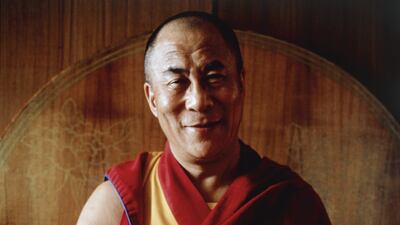
1989. His Holiness the 14th Dalai Lama (Tenzin Gyatso) at his home in Dharamsala, India, circa 1991. He won 'for advocating peaceful solutions based upon tolerance and mutual respect in order to preserve the historical and cultural heritage of his people'. Getty Images -
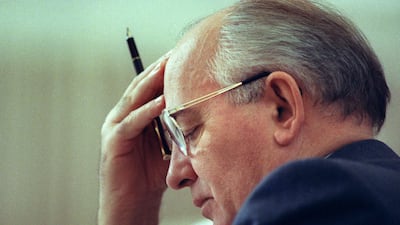
1990. The last Soviet president Mikhail Gorbatchev was awarded 'for the leading role he played in the radical changes in East-West relations'. AFP -
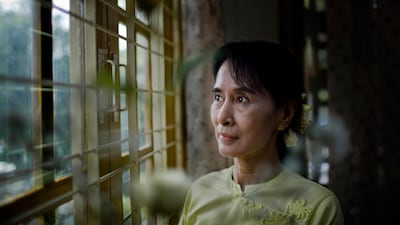
1991. Myanmar democracy figurehead Aung San Suu Kyi became a Peace Prize laureate 'for her non-violent struggle for democracy and human rights'. Getty Images -

1993. South African president Nelson Mandela and second deputy president F.W. de Klerk were jointly awarded 'for their work for the peaceful termination of the apartheid regime, and for laying the foundations for a new democratic South Africa'. Reuters -
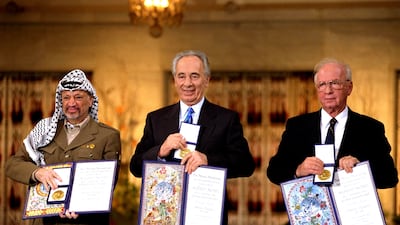
1994. (R-L) Israeli PM Yitzak Rabin, Israeli foreign minister Shimon Peres and Palestinian leader Yaser Arafat, were each Nobel Peace Prize winners, 'for their efforts to create peace in the Middle East'. Getty Images -
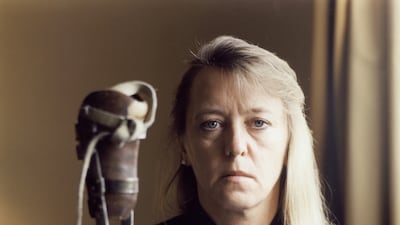
1997. Jody Williams was awarded alongside the International Campaign to Ban Landmines 'for their work for the banning and clearing of anti-personnel mines'. Getty Images -
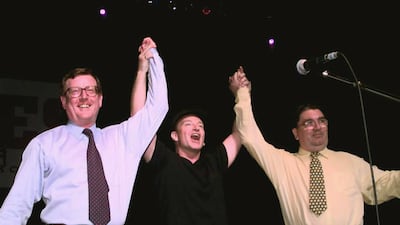
1998. Ulster Unionist leader David Trimble, left, and SDLP leader John Hume, standing with Irish rock band U2's lead singer Bono, were awarded 'for their efforts to find a peaceful solution to the conflict in Northern Ireland'. EPA -

2001. UN secretary general Kofi Annan was a Nobel Peace Prize laureate along with the UN 'for their work for a better organized and more peaceful world'. Getty Images -
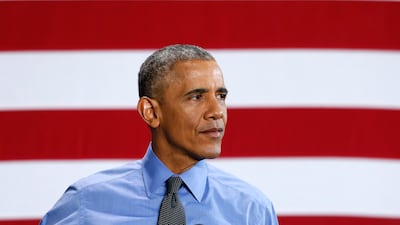
2009. 44th US president Barack Obama was named Nobel Peace Prize winner 'for his extraordinary efforts to strengthen international diplomacy and cooperation between peoples'. EPA -
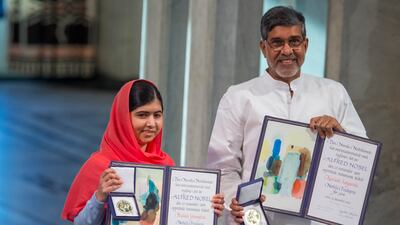
2014. Malala Yousafzai and Kailash Satyarthi accept their Nobel Peace Prize Awards 'for their struggle against the suppression of children and young people and for the right of all children to education'. Getty Images -

2021. Nobel Peace Prize winners Maria Ressa (L) and Dmitry Muratov receive their awards during the ceremony at the City Hall in Oslo. Ms Ressa, from the Philippines, and Mr Muratov, from Russia, were awarded the Nobel Peace Prize for their efforts for freedom of expression. EPA


Most popular today

