Civilians lose limbs — and their lives — all too often in Yemen, where landmines and unexploded weapons are a daily hazard after years of conflict. Photo: Masam

Landmines will kill and maim along Yemen’s coast for ‘many decades’ to come, UN warns


James Reinl
  • English
  • Arabic

Landmines have killed and injured about 150 civilians around Yemen’s port city of Hodeidah since November and removing the deadly remnants of war will take decades to complete, a UN military official said on Wednesday.

Maj Gen Michael Beary, the top UN official in rebel-held Hodeidah, said a relative calm since pro-government forces withdrew from the region late last year had allowed the painstaking and dangerous task of removing the mines to begin in earnest.

The area — once a front line in the war between Yemen’s Houthi rebel movement and forces loyal to the internationally recognised government — was “very contaminated” with mines and other unexploded ordnance, he added.

“What we're doing is a lot of mine surveys, establishing where the really dangerous areas are for women and children near clinics, hospitals, schools … to try and ensure the safety of the population is increased,” Maj Gen Beary, a retired Irish infantryman who leads the UN mission in Hodeidah, said in New York.

“It’s a major challenge and it's going to be there for many decades.

“Hardly a week goes by without a child, a woman or a young man losing their life or being seriously injured.”

Civilian casualties have drastically declined across Yemen since a nationwide truce came into effect on April 2.

But deaths from landmines were “increasing as civilians, including children, venture into contaminated front-line areas that were previously inaccessible”, UN envoy Hans Grundberg told the Security Council this week.

Yemen is awash with tens of thousands of landmines. Many were laid by Houthi rebels along the coast, the border with Saudi Arabia and nearby towns and villages during the war that has ravaged the country since 2014, researchers say.

The Arabian Peninsula nation has joined Afghanistan, Angola, Somalia and Cambodia as among the world’s most mine-contaminated countries, where devices maim and kill civilians decades after bloody wars have ground to a halt.

Various UN agencies are working with de-mining groups and Yemen’s government to tackle the problem, which has claimed more than 1,400 lives since 2018, according to one UN estimate.

The state-backed Saudi Project for Landmine Clearance (Masam) has destroyed about 5,000 anti-personnel mines, almost 125,000 anti-tank mines, nearly 200,000 pieces of unexploded ordnance and close to 7,500 improvised explosive devices.

Yemen, one of the poorest countries in the world, has been devastated by almost eight years of war between the Iran-backed Houthi rebels and government forces supported since 2015 by a coalition led by Saudi Arabia.

Civilians affected by landmines in Yemen — in pictures

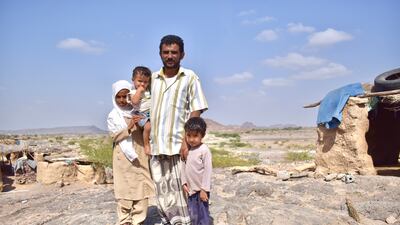
  • Saeed, 55 was driving to see his sister in hospital in Mokha when the car he was driving hit a landmine, which exploded instantly, killing his daughter, 3, and injuring her nine-year-old sister. Photo: Cherry Franklin for DRC
    Saeed, 55 was driving to see his sister in hospital in Mokha when the car he was driving hit a landmine, which exploded instantly, killing his daughter, 3, and injuring her nine-year-old sister. Photo: Cherry Franklin for DRC
  • Working alone, without a salary or support, from his home in Khoka, Mohammad has been arranging transport and medical support to people injured by landmines and other explosive ordnance. Photo: Cherry Franklin for DRC
    Working alone, without a salary or support, from his home in Khoka, Mohammad has been arranging transport and medical support to people injured by landmines and other explosive ordnance. Photo: Cherry Franklin for DRC
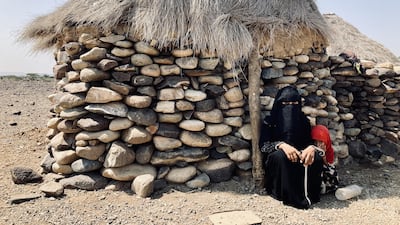
  • After enduring conflict and displacement, two years ago Eman and her family returned to their home, a tiny stone hut in the middle of the desert. But even though the fighting has moved on, the danger remains. Eman’s house is in the middle of a vast minefield. Photo: Cherry Franklin for DRC
    After enduring conflict and displacement, two years ago Eman and her family returned to their home, a tiny stone hut in the middle of the desert. But even though the fighting has moved on, the danger remains. Eman’s house is in the middle of a vast minefield. Photo: Cherry Franklin for DRC
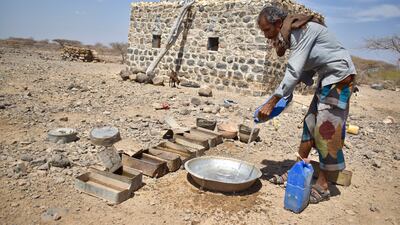
  • Abdullah, 35, pours water for his goats into empty storage containers for bullets and soldier’s helmets, the remnants of Yemen’s ongoing seven-year conflict. He gestures to an anti-tank mine lying on the ground nearby: “There are mines everywhere here. Sometimes our sheep or camels set off the landmines and they explode, but you can see them everywhere on the ground.” Photo: Cherry Franklin for DRC
    Abdullah, 35, pours water for his goats into empty storage containers for bullets and soldier’s helmets, the remnants of Yemen’s ongoing seven-year conflict. He gestures to an anti-tank mine lying on the ground nearby: “There are mines everywhere here. Sometimes our sheep or camels set off the landmines and they explode, but you can see them everywhere on the ground.” Photo: Cherry Franklin for DRC
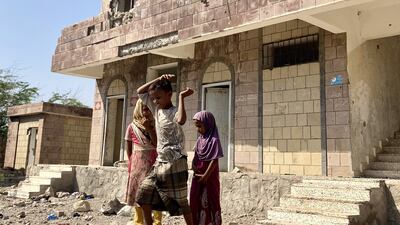
  • In Mowza, western Yemen, a tiny school sits on top of a hillside. There’s no road to the school, just a narrow dusty track that winds its way through open fields. The building was occupied by Houthi troops in 2018. The walls are riddled with bullet holes and the three small classrooms are in a bad state of repair – but it’s the land outside the school that poses the most threat to the young pupils. The school sits in fields littered with landmines and other unexploded ordnance. Photo: Cherry Franklin for DRC
    In Mowza, western Yemen, a tiny school sits on top of a hillside. There’s no road to the school, just a narrow dusty track that winds its way through open fields. The building was occupied by Houthi troops in 2018. The walls are riddled with bullet holes and the three small classrooms are in a bad state of repair – but it’s the land outside the school that poses the most threat to the young pupils. The school sits in fields littered with landmines and other unexploded ordnance. Photo: Cherry Franklin for DRC
RESULTS
%3Cp%3E3.30pm%3A%20Al%20Maktoum%20Challenge%20Round%203%20%E2%80%93%20Group%201%20(PA)%20%2475%2C000%20(Dirt)%202%2C000m%3Cbr%3EWinner%3A%20Jugurtha%20De%20Monlau%2C%20Pat%20Dobbs%20(jockey)%2C%20Jean-Claude%20Pecout%20(trainer)%3C%2Fp%3E%0A%3Cp%3E4.05pm%3A%20Dubai%20City%20Of%20Gold%20%E2%80%93%20Group%202%20(TB)%20%24250%2C000%20(Turf)%202%2C410m%3Cbr%3EWinner%3A%20Global%20Storm%2C%20William%20Buick%2C%20Charlie%20Appleby%3C%2Fp%3E%0A%3Cp%3E4.40pm%3A%20Burj%20Nahaar%20%E2%80%93%20Group%203%20(TB)%20%24250%2C000%20(D)%201%2C600m%3Cbr%3EWinner%3A%20Discovery%20Island%2C%20James%20Doyle%2C%20Bhupat%20Seemar%3C%2Fp%3E%0A%3Cp%3E5.15pm%3A%20Nad%20Al%20Sheba%20Turf%20Sprint%20%E2%80%93%20Group%203%20(TB)%20%24250%2C000%20(T)%201%2C200m%3Cbr%3EWinner%3A%20Al%20Dasim%2C%20Mickael%20Barzalona%2C%20George%20Boughey%3C%2Fp%3E%0A%3Cp%3E5.50pm%3A%20Al%20Bastakiya%20%E2%80%93%20Listed%20(TB)%20%24170%2C000%20(D)%201%2C900m%3Cbr%3EWinner%3A%20Go%20Soldier%20Go%2C%20Adrie%20de%20Vries%2C%20Fawzi%20Nass%3C%2Fp%3E%0A%3Cp%3E6.25pm%3A%20Al%20Maktoum%20Challenge%20Round%203%20%E2%80%93%20Group%201%20(TB)%20%24450%2C000%20(D)%202%2C000m%3Cbr%3EWinner%3A%20Salute%20The%20Soldier%2C%20Adrie%20de%20Vries%2C%20Fawzi%20Nass%3C%2Fp%3E%0A%3Cp%3E7.10pm%3A%20Ras%20Al%20Khor%20%E2%80%93%20Conditions%20(TB)%20%24300%2C000%20(T)%201%2C400m%3Cbr%3EWinner%3A%20Al%20Suhail%2C%20William%20Buick%2C%20Charlie%20Appleby%3C%2Fp%3E%0A%3Cp%3E7.45pm%3A%20Jebel%20Hatta%20%E2%80%93%20Group%201%20(TB)%20%24350%2C000%20(T)%201%2C800m%3Cbr%3EWinner%3A%20Alfareeq%2C%20Dane%20O%E2%80%99Neill%2C%20Charlie%20Appleby%3C%2Fp%3E%0A%3Cp%3E8.20pm%3A%20Mahab%20Al%20Shimaal%20%E2%80%93%20Group%203%20(TB)%20%24250%2C000%20(D)%201%2C200m%3Cbr%3EWinner%3A%20Sound%20Money%2C%20Mickael%20Barzalona%2C%20Bhupat%20Seemar%3C%2Fp%3E%0A
The specs

Engine: 3-litre twin-turbo V6

Power: 400hp

Torque: 475Nm

Transmission: 9-speed automatic

Price: From Dh215,900

On sale: Now

Who's who in Yemen conflict

Houthis: Iran-backed rebels who occupy Sanaa and run unrecognised government

Yemeni government: Exiled government in Aden led by eight-member Presidential Leadership Council

Southern Transitional Council: Faction in Yemeni government that seeks autonomy for the south

Habrish 'rebels': Tribal-backed forces feuding with STC over control of oil in government territory

UAE v United States, T20 International Series

Both matches at ICC Academy, Dubai. Admission is free.

1st match: Friday, 2pm

2nd match: Saturday, 2pm

UAE squad: Mohammed Naveed (captain), Rohan Mustafa, Ashfaq Ahmed, Shaiman Anwar, Rameez Shahzad, Amjad Gul, CP Rizwan, Mohammed Boota, Abdul Shakoor, Ahmed Raza, Imran Haider, Sultan Ahmed, Zahoor Khan, Amir Hayat

USA squad: Saurabh Netravalkar (captain), Jaskaran Malhotra, Elmore Hutchinson, Aaron Jones, Nosthush Kenjige, Ali Khan, Jannisar Khan, Xavier Marshall, Monank Patel, Timil Patel, Roy Silva, Jessy Singh, Steven Taylor, Hayden Walsh

Japan 30-10 Russia

Tries: Matsushima (3), Labuschange | Golosnitsky

Conversions: Tamura, Matsuda | Kushnarev

Penalties: Tamura (2) | Kushnarev

The specs

Engine: 2.0-litre 4-cyl, 48V hybrid

Transmission: eight-speed automatic

Power: 325bhp

Torque: 450Nm

Price: Dh359,000

On sale: now 

Updated: June 16, 2022, 4:20 PM