

Five cruise missiles hit targets in Kyiv on Sunday, Ukrainian officials have said. The weapons, reportedly KH-22 missiles fired from the Caspian Sea, have a 600-kilometre range, marking the end of weeks of relative calm in the capital.
The attack came as Ukrainian forces claimed to have made gains in the country's east, after a period of Russian advances that the UK's Ministry of Defence called "incremental."
-
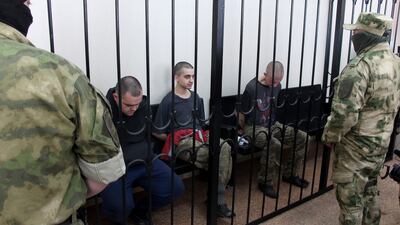
British citizens Aiden Aslin, left, and Shaun Pinner, right, and Moroccan Saaudun Brahim, centre, sit behind bars in a courtroom in the breakaway eastern Ukrainian enclave of Donetsk. The three were sentenced to death by pro-Moscow rebels for fighting on Ukraine's side. AP -
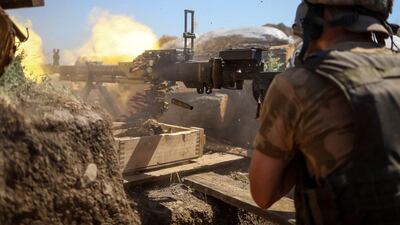
A Ukrainian soldier fires a machine gun near the town of New York in the breakaway Donetsk enclave. Reuters -
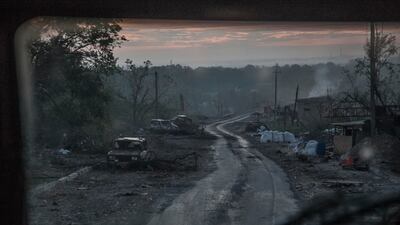
The gutted remains of cars lie along a road during heavy fighting in Severodonetsk. AP -
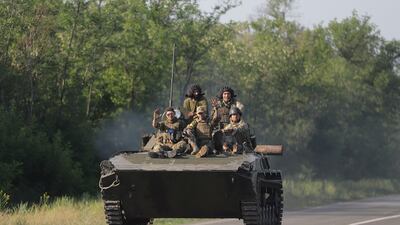
Ukrainian soldiers ride an armoured vehicle near the city of Bakhmut, in the breakaway Donetsk enclave. EPA -
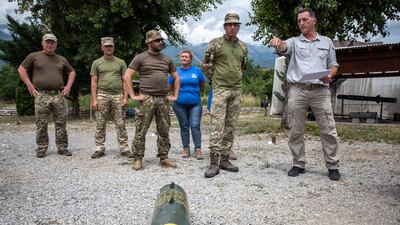
Ukrainian soldiers and members of civilian demining organisations take part in a training exercise for bomb disposal experts in Peja, Kosovo. Getty -
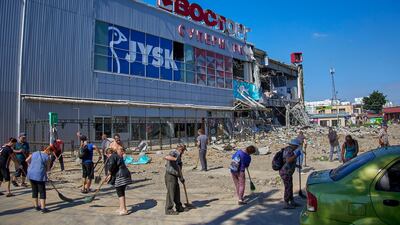
Volunteers clear debris near a damaged shopping mall after night shelling in Kharkiv, Ukraine. EPA -
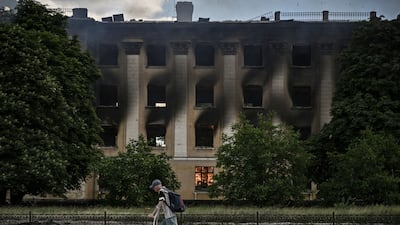
A man walks past a college on fire after a strike in Lysychansk in the eastern Ukrainian region of Donbas. AFP -
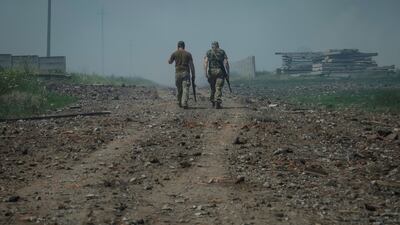
Ukrainian service members near the town of Soledar. Reuters -
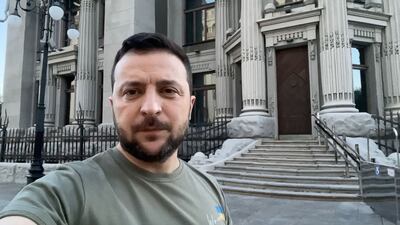
Ukrainian President Volodymyr Zelenskyy in Kyiv. AFP -
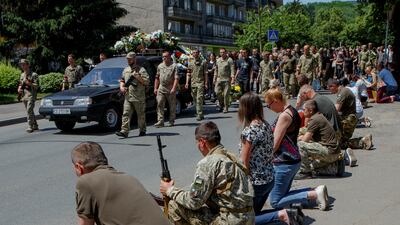
Residents kneel during a funeral procession for senior lieutenant Vasyl Herych, 31, of the 15th Separate Mountain Assault Battalion, who was killed in Perechyn, Ukraine. Reuters -
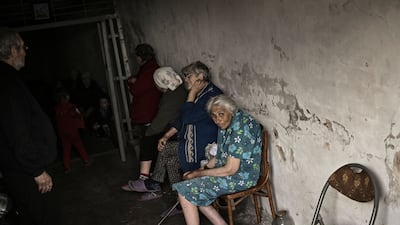
People hide in a bomb shelter in the city of Lysychansk in the Donbas region. AFP -
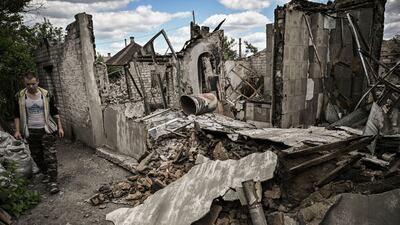
Ivan Sosnin, 19, surveys the damage to his home in Lysychansk. AFP -
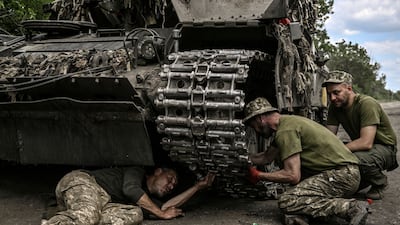
Ukrainian troops repair a tank in the Donbas region. AFP -
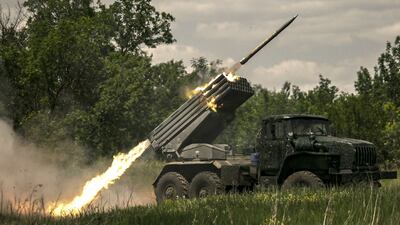
Ukrainian troops fire rockets towards Russian positions at a front line in the Donbas region. AFP -
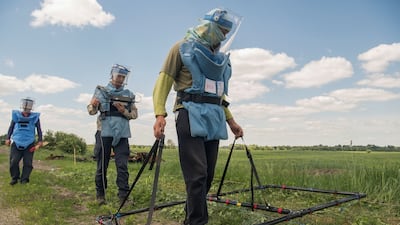
Volunteers from a Danish NGO demonstrate how to search for explosive devices with help of a loop metal detector, outside the town of Ichnia in Ukraine. Reuters -
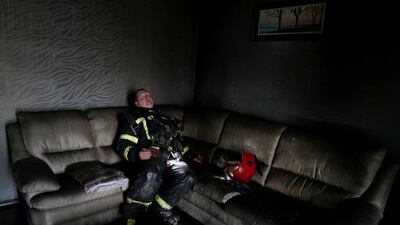
A firefighter takes a break after putting out a fire at a house in a district of Kharkiv that was bombed by Russian forces. Reuters -
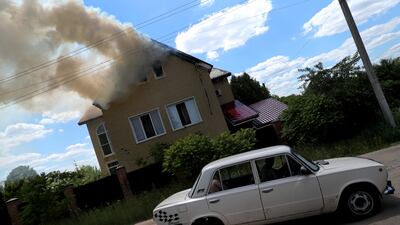
Plumes of smoke rise from a house on fire after a military strike by Russian forces in Kharkiv. Reuters -
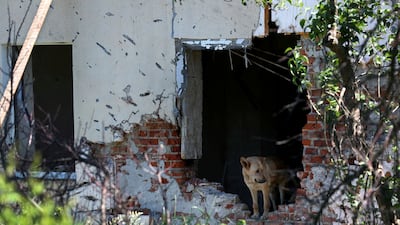
The damaged house of Inna Bobryntseva, a woman who died during Russian shelling, in Kharkiv. Ukrainian officials exhumed her body from her backyard as part of an investigation into war crimes. Reuters -
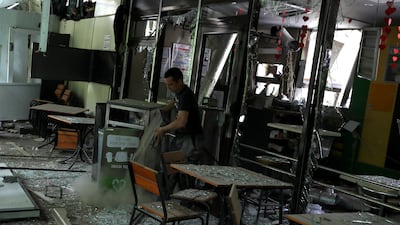
A man moves items from a damaged shop in Kharkiv after a Russian military strike the night before. Reuters -
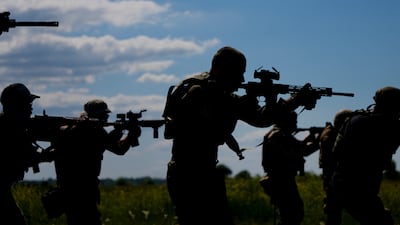
Civilian militia men hold shotguns during training at a shooting range on the outskirts of Kyiv, Ukraine. AFP -
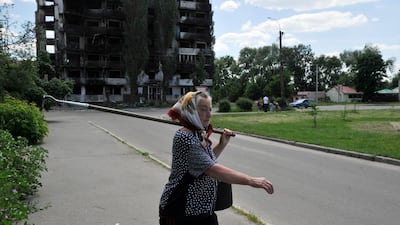
A woman walks by a destroyed apartment building in the town of Borodyanka. AFP -
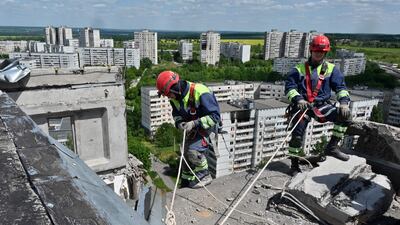
Rescuers dismantle collapsing structures of a heavily damaged 16-storey residential building in the Saltivka district of Kharkiv. AFP -
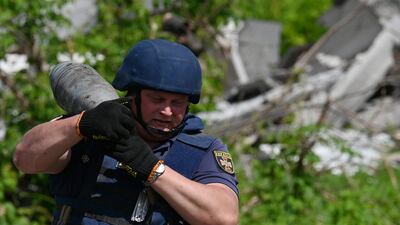
A Ukrainian bomb disposal worker carries unexploded ordnance during mine clearance work in the village of Yahidne, in the liberated territories of the Chernihiv region. AFP -
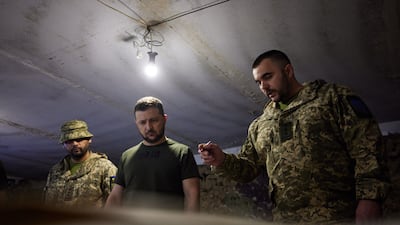
Ukrainian President Volodymyr Zelenskyy, centre, visits the military during a trip to the Zaporizhzhia region. AFP -
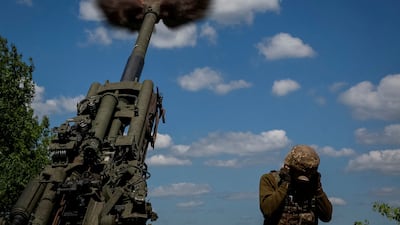
Ukrainian service members fire a shell from a M777 Howitzer in the Donetsk region as Russia's attack on Ukraine continues. Reuters -
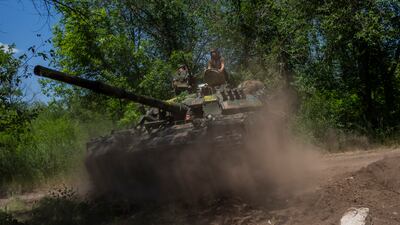
Ukrainian servicemen manoeuvre a tank near the frontline in the Donetsk region. AP Photo -
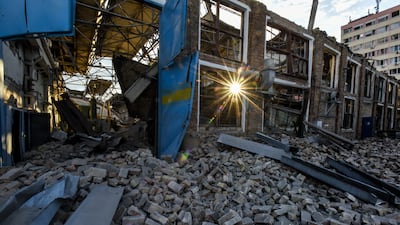
The remains of the Darnytsia Car Repair Plant damaged by missile strikes in Kyiv. EPA -

A couple embrace on Maidan square in Kyiv. AP Photo -
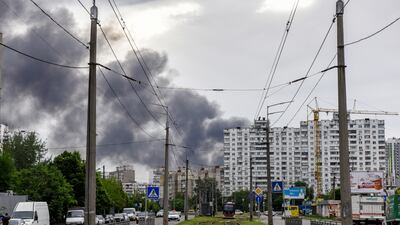
Smoke rises from a residential area in Kyiv. Mayor Vitali Klitschko said several explosions occurred following missile strikes in the Darnytskyi and Dniprovskyi districts of the capital with no casualties reported. EPA -

A woman holds a poster showing Russian President Vladimir Putin during a protest against the war in Ukraine at the Brandenburg Gate in Berlin. AP -

Smoke rises in the background after Russian missile strikes in Kyiv. AP -
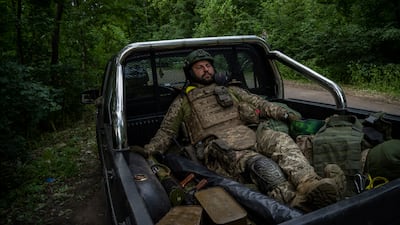
A Ukrainian serviceman pauses before going back to the frontline in the Donetsk region of eastern Ukraine. AP -
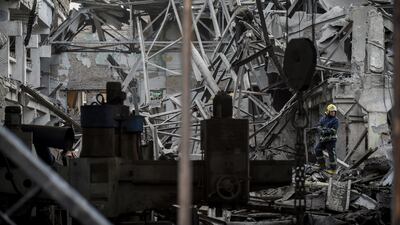
Firefighters dampen down a rail facility in the Darnytsia district of Kyiv after a Russian air strike. EPA -
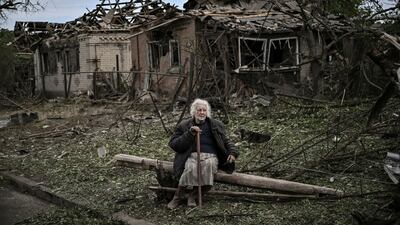
An elderly woman sits in front of destroyed houses after a missile strike, which killed a civilian, in the city of Druzhkivka in the eastern Ukrainian region of Donbas. AFP -

A man examines an apartment destroyed during shelling in Donetsk, eastern Ukraine. Five civilians were killed and 20 were injured. EPA -
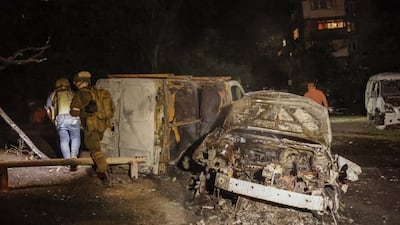
Residents examine cars destroyed during shelling in Donetsk. EPA -
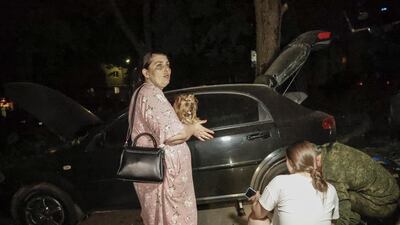
Civilians are evacuated from apartments destroyed during shelling in Donetsk. EPA -
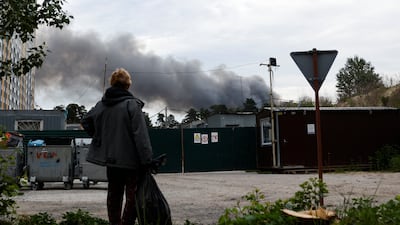
A man looks on as smoke rises after explosions were heard in Kyiv. Reuters -
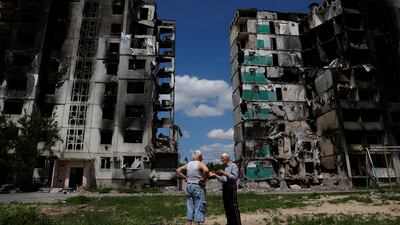
Residents chat in front of a destroyed building in Borodianka, as Russia's attacks on Ukraine continue. Reuters -
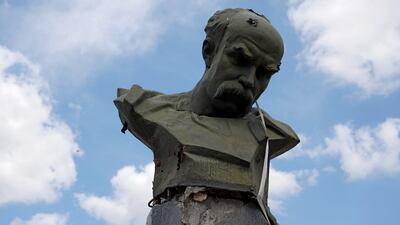
A monument to Ukrainian poet Taras Shevchenko, damaged by shelling in Borodianka. Reuters -
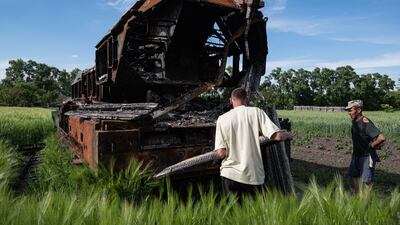
Men scavenge a burnt Russian military vehicle for parts and scrap metal in Novyi Bykiv. Getty -
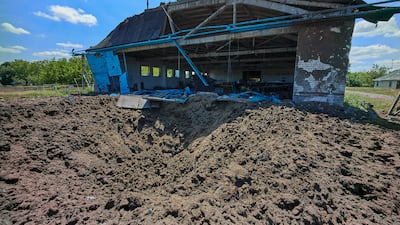
A crater and a destroyed building after a rocket attack on a small airfield near Kharkiv. EPA -
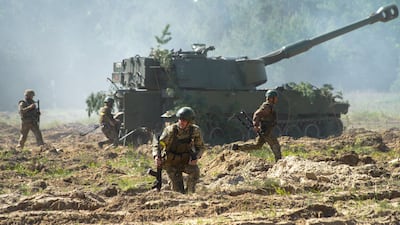
Ukrainian howitzers in action at an undisclosed location. AFP -
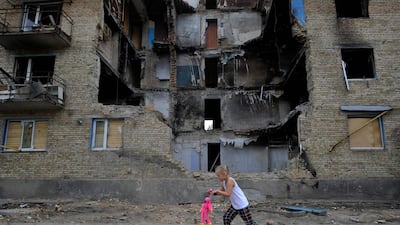
A girl rides a scooter past a destroyed building in the village of Horenka, Kyiv. AFP -

Pope Francis hugs a child during a meeting at the Vatican with children with disabilities and Ukrainian children who fled their country. Reuters -

Ukrainian emergency works at a damaged building following shelling in Kharkiv. AP -

Members of a medical rescue team gather inside their temporary base in the Donetsk region of eastern Ukraine. AP -
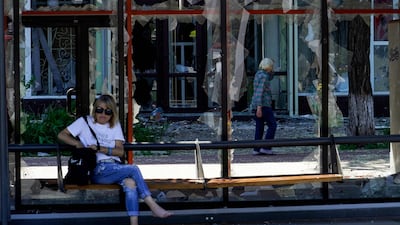
A woman sits at a destroyed bus station in the city of Mariupol. AFP -
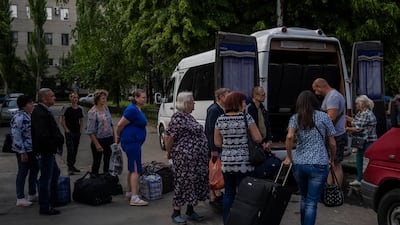
Residents are evacuated from Slovyansk, eastern Ukraine. AP


Dark smoke could be seen from many miles away after the attack on two outlying districts of Kyiv. Ukraine said the strike hit a rail car repair works, while Moscow said it had destroyed tanks sent by Eastern European countries to Ukraine.
At least one person was taken to hospital, although there were no immediate reports of deaths.
"The Kremlin resorts to new insidious attacks. Today’s missile strikes at Kyiv have only one goal — kill as many as possible," tweeted Ukrainian presidential adviser, Mikhailo Podolyak.
Ukraine's nuclear power operator said a Russian cruise missile had flown "critically low" over the country's second largest nuclear power plant.
Sunday's attack was the first big strike on Kyiv since late April, when a missile killed a journalist. Recent weeks have involved Russia focusing its destructive might mainly on front lines in the east and south. However, Moscow occasionally strikes elsewhere in what it calls a campaign to degrade Ukraine's military infrastructure and block Western arms shipments.
Fierce Sievierodonetsk battle
Russia has concentrated its forces in recent weeks on the small, eastern industrial city of Sievierodonetsk, pursuing one of the biggest ground battles of the war in an attempt to capture one of two eastern provinces it claims on behalf of separatist proxies.
After retreating steadily in the city in recent days, Ukraine mounted a counter-attack there, which it says took the Russians by surprise. After recapturing a part of the city, Ukrainian forces were now in control of half of it and continuing to push the Russians back, said Sergiy Gaidai, governor of the Luhansk region that includes Sievierodonetsk.
The claims could not be independently verified. Both sides say they have inflicted considerable casualties in Sievierodonetsk, a battle that could determine which side carries the momentum into a protracted war of attrition in the coming months.
In another sign Ukraine has held off the Russian advance, Mr Gaidai said evacuations resumed from the Ukrainian-held part of Luhansk province on Sunday, and 98 people had escaped. Russian forces have been trying for weeks to cut off the main road out to encircle Ukrainian troops there, and evacuations were halted last week after a journalist was killed by shelling.
Britain's defence ministry said on Sunday that Ukrainian counter attacks in Sievierodonetsk over the past 24 hours were likely to blunt any operational momentum Russia had gained. Moscow was deploying poorly equipped separatist fighters in the city to limit the risk to its regular forces, it said.
In the neighbouring Donetsk province, which Moscow also claims on behalf of its separatist proxies, Russian forces have been advancing in recent days in territory north of the Siverskyi Donets river, in advance of what Ukraine anticipates could be a push on the major city of Sloviansk.
Ukrainian officials said at least eight people were killed and 11 injured in Russian shelling in the province overnight.
In a Sunday address to 35,000 people in Rome, Pope Francis noted that more than 100 days had passed since "the start of the armed aggression against Ukraine", and called the war "the negation of God's dream".

