

"This planet is our only home," says UN Secretary General Antonio Guterres, ahead of World Environment Day on Sunday.
The Earth’s natural systems "cannot keep up with our demands", the UN chief said.
"It is vital we safeguard the health of its atmosphere, the richness and diversity of life on Earth, its ecosystems and its finite resources. But we are failing to do so.
"We are asking too much of our planet to maintain ways of life that are unsustainable," he said, noting that this not only hurts the Earth, but also its inhabitants.
Since 1973, the day has been used to raise awareness and generate political momentum around growing environmental concerns, such as toxic chemical pollution, desertification and global warming.
It has since grown into a global action platform, helping to drive change in consumption habits, as well as in national and international environmental policy.
By providing food, clean water, medicines, climate regulation and protection from extreme weather events, Mr Guterres stressed that a healthy environment is essential for people and sustainable development goals.
"It is essential that we wisely manage nature and ensure equitable access to its services, especially for the most vulnerable people and communities," Mr Guterres said.
More than three billion people are affected by degraded ecosystems. Pollution causes some nine million premature deaths each year, and more than one million plant and animal species risk extinction — many within decades, according to the UN chief.
"Close to half of humanity is already in the climate danger zone – 15 times more likely to die from climate impacts such as extreme heat, floods and drought," he said, adding that there is a 50:50 chance that global temperatures will breach the Paris Agreement limit of 1.5 degrees in the next five years.
By 2050, more than 200 million people each year risk displacement through climate disruption.
Climate tipping points - in pictures
-
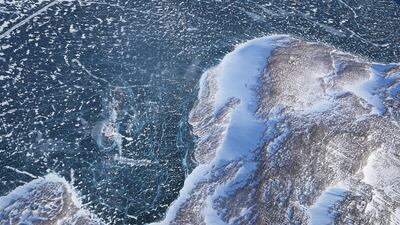
Greenland ice sheet disintegration – Rising temperatures causing the retreat of the ice sheet, which would cause sea levels to rise. -
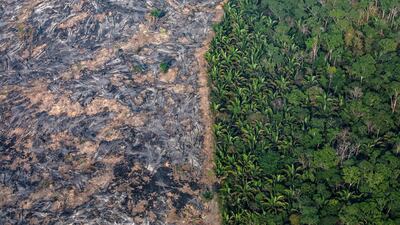
Amazon rainforest dieback – Large-scale dieback of the forest, via increased temperatures and drying, or direct deforestation, would amplify global warming. -
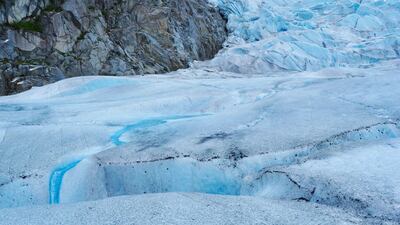
Permafrost loss – Thawing of carbon-rich soils, which releases greenhouse gas into the atmosphere. -
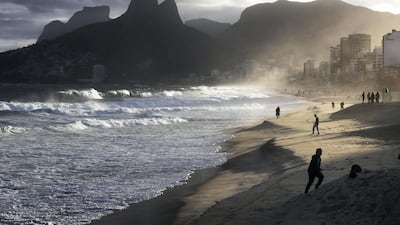
Atlantic meridional overturning circulation breakdown – An increased amount of freshwater in the Northern Atlantic disrupting the system of currents. -
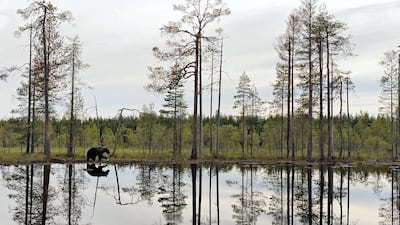
Boreal forest shift – Warming causes dieback in the south of the forests, and expansion into the tundra in the north, which would cause regional warming. -
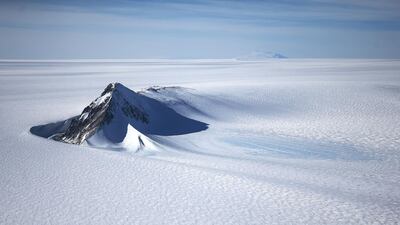
West Antarctic ice sheet disintegration – The melting of major ice sheets would lead to significant increases in sea level. -
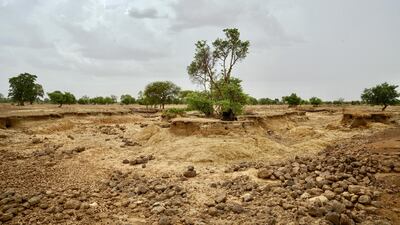
West African monsoon shift – A change in the monsoon season would lead to agricultural disruption and effect the ecosystem. -
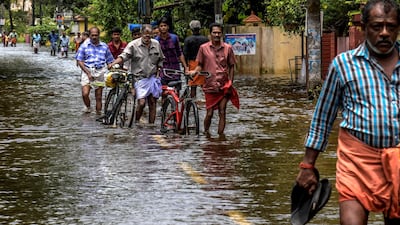
Indian monsoon shift – An increase in the planetary albedo (increases in the atmospheric brown cloud haze over India) has the capability of switching off the monsoon, which is crucial for the local economy, as well as being important for agriculture. -
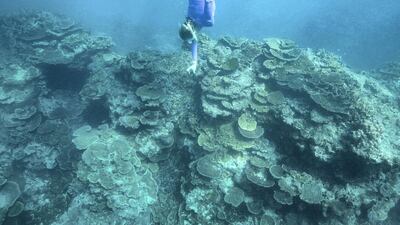
Coral reef die-off – Exposure to increased sea temperatures can kill off reefs, which has a serious effect on ecosystems and local economies.


When world leaders came together 50 years ago at the UN Conference on the Human Environment, they committed to protecting the planet.
"But we are far from succeeding. We can no longer ignore the alarm bells that ring louder every day," warned the top UN official.
The recent Stockholm+50 environment meeting reiterated that all 17 SDGs rely on a healthy planet to avert the triple crises of climate change, pollution and biodiversity loss.
He urged governments to prioritise climate action and environmental protection through policy decisions that promote sustainable progress.
The Secretary-General outlined recommendations to activate renewable energy everywhere by making renewable technologies and raw materials available to all, cutting red tape, shifting subsidies and tripling investment.
"Businesses need to put sustainability at the heart of their decision-making for the sake of humanity and their own bottom line. A healthy planet is the backbone of nearly every industry on Earth," he said.
He advocated for the empowerment of women and girls as "forceful agents of change," including in decision-making at all levels. And upheld the usage of indigenous and traditional knowledge to help protect fragile ecosystems.
'Beyond the Headlines': What are dust storms and can we stop them?
The UN chief flagged that history has shown what can be achieved when we put the planet first, pointing to a continent-sized hole in the ozone layer that triggered every country to commit to the Montreal Protocol, which phased out ozone-depleting chemicals.
"This year and the next will present more opportunities for the global community to demonstrate the power of multilateralism to tackle our intertwined environmental crises, from negotiations on a new global biodiversity framework to reverse nature loss by 2030 to the establishment of a treaty to tackle plastics pollution," he stated.
Mr Guterres reiterated the UN commitment to lead cooperative global efforts, "because the only way forward is to work with nature, not against it."

