

As the clock reaches 2.45am, Mohammad Raees embarks on a 90-minute dash through the alleyways of the walled city of Old Delhi, yelling “Hoshiyar” or “be alert” to waken Muslims who observe Ramadan to eat before fasting begins at sunrise.
He goes to every household, climbing steep staircases, bellowing the names of the residents of Matia Mahal area near Jama Masjid, a 17th-century mosque in the heart of the capital.
“I remember all their names by heart. There must be 400 families, and I make sure that no one is left out,” he told The National.
Mr Raees, 45, is one of the last remaining sehriwallahs, or town criers, in old Delhi, which is home to nearly a quarter of a million Muslims.
Sehriwallahs were traditionally given the job of waking residents for sehri, the Urdu word for suhoor, the early morning meal taken before fasting begins.
They were once an essential part of Muslim neighbourhoods, with their torches and lanterns, singing religious songs and beating drums to wake the faithful in times before clocks became common.
Almost every locality had its own criers, who were chosen by the local mosques or had volunteered for the task. Many sehriwallahs would migrate from villages for the month-long tradition.
Alarm clocks, smartphones and other modern inventions have made that tradition obsolete.
Mr Raees, who has two daughters, succeeded his father as a sehriwallah.
“After my father’s death, the imam at the mosque gave me his stick and asked me to fulfil the duty. Since that day, I have been doing my work religiously,” he said.
Although many in the market community with its restaurants serving Mughal and Middle-Eastern-inspired delicacies remain awake for dawn, Mr Raees’s role seems critical to ensuring no one sleeps through the time for sehri.
“Whether it is rain or winter or blistering heat, I don’t take a day off. I am devoted to my duties. This is my legacy, and I have to take it forward,” said Mr Raees, a resident of Minto road area near Old Delhi.
Wearing worn-out leather sandals, his early morning journey journey takes him along about two kilometres of uneven paths blocked with parked motorcycles and dark, narrow lanes.
At times, he may keep knocking on a door of a family home with his wooden stick until he gets a response, to ensure they have their meal in time.
Children can be heard from windows, demanding he say their names. There could be up to six people in a family but, despite his rush, Mr Raees fulfils their request.
“I don’t feel tired at all even though I fast the whole day. I always feel energetic doing this. It has become my habit.”
“In fact, I enjoy it because people eagerly wait for me. Even small kids, they ask me to take their names,” he said.
For the rest of the year, Mr Raees works at a bangle shop and makes about 8,000 rupees ($105) a month.
-
Sheikh Zayed Grand Mosque in Abu Dhabi shot last year by KhalifaSat, UAE's first indigenously developed satellite. Photo: Mohammed bin Rashid Space Centre -
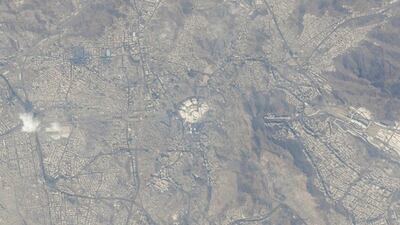
The Grand Mosque in Makkah, Saudi Arabia, captured from the International Space Station by Hazza Al Mansouri, the first Emirati astronaut in space, in 2019. Photo: Hazza Al Mansouri -
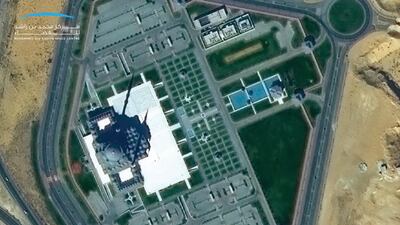
A stunning image of Sharjah’s largest mosque captured by KhalifaSat. Photo: Mohammed bin Rashid Space Centre -
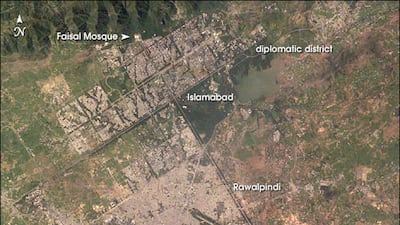
The Faisal Mosque in Islamabad, Pakistan, which is the sixth largest globally, as seen from space. Photo: Nasa's Earth Observatory -
Sheikh Zayed Grand Mosque in Abu Dhabi attracts more than 40,000 worshippers during Eid prayers. Photo: Maxar / Space Imaging Middle East -
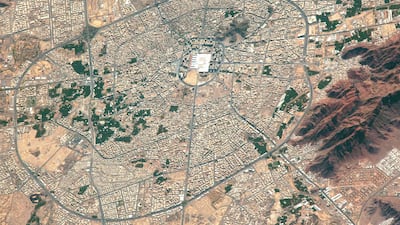
The Prophet's Mosque in Madinah, Saudi Arabia, as seen from space. Photo: Nasa -
The Grand Mosque in Makkah, Saudi Arabia, captured by KhalifaSat. Photo: Mohammed bin Rashid Space Centre


While he is not paid a fixed fee for his role as a sehriwallah, some residents may give him with cash and sweets on Eid.
“I eagerly wait for Ramadan because I get to do a noble task. I don’t worry about money, God looks after my family and my children. I take a break from work because this is my priority,” he said.
“I feel I am chosen by God to fulfil this important task. It is a big responsibility and I feel blessed to be doing it.”
Mr Raees has long been a popular voice in the neighbourhood.
“Our Ramadan would be incomplete without him. We have been hearing his voice for more than two decades. I still depend on his calls. I don’t use an alarm. Even my grandchildren wait for him,” Haji Aleemuddin, 64, told The National.
After the hectic morning, Mr Raees eats sehri and offers the morning prayers at a mosque before taking a few hours to sleep.
He is back on his feet by the afternoon, preparing iftar at the mosque. He spends the evening performing taraweeh prayers before getting ready for his next early morning dash.

