


Live updates: follow the latest news on Russia-Ukraine
A British peer who volunteered to help house Ukrainian refugees has criticised the unwelcoming system, which she says inflicts further trauma on those fleeing the war.
Baroness Finlay of Llandaff and her husband, Professor Andrew Finlay, have been waiting three weeks for visas to be cleared via the Homes for Ukraine scheme.
The Homes for Ukraine programme, which the UK government sees as an important tool for increasing the number of Ukrainians who can apply for refugee visas, has been previously criticised as a chaotic system that started too slow.
Baroness Finlay did not wish to identify the refugee family but said they were known to her before the Russian war.
The father of the family is a doctor in Ukraine, she said, who had worked with her husband and remains in Kyiv. They have also submitted an application for him in the event he also leaves Ukraine due to injury or other reasons.
-
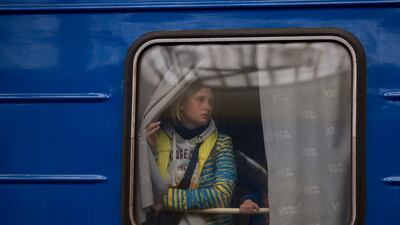
A young woman looks out the window as her train arrives from Pokrovsk, in the east of Ukraine, to Lviv in the country's centre. Getty -

A truck carries black bags containing bodies exhumed from a mass grave for investigations in Bucha, in the outskirts of Kyiv, Ukraine. AP -
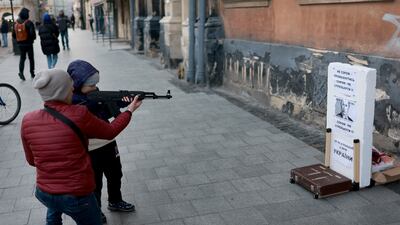
A child uses an air rifle to shoot at a target with the face of Russian President Vladimir Putin in Lviv, Ukraine. Getty -
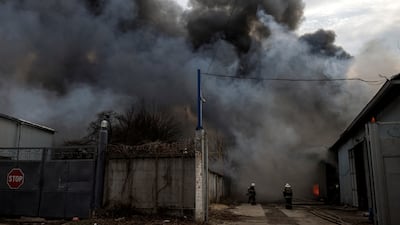
Firefighters try to contain a blaze at a factory after Russian shelling in Kharkiv, Ukraine. Reuters -
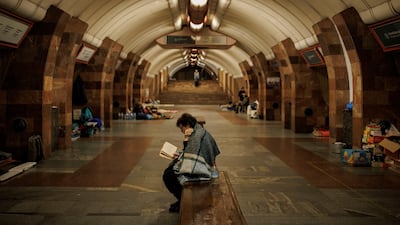
A woman reads as residents shelter from Russian shelling in a Kharkiv metro station. Reuters -
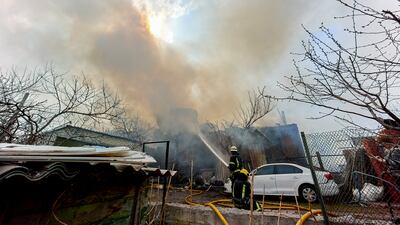
Ukrainian rescuers try to put out the fire at a private building after shelling in Kharkiv, Ukraine. EPA -
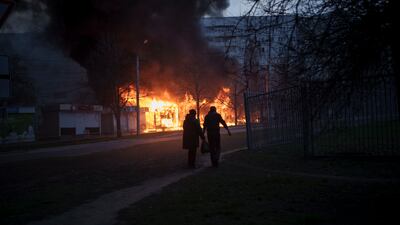
A couple of residents walk past burning shops after a Russian attack in Kharkiv, Ukraine. AP Photo -
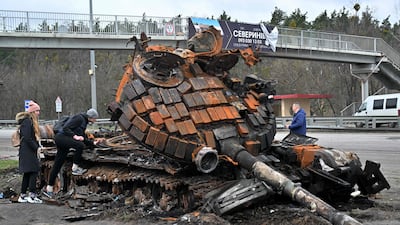
A destroyed Russian tank on the outskirts of Buzova village in Kyiv draws crowds of curious residents. AFP -

The Russian offensive in the Kyiv region has left a huge crater on a bridge in Makariv. AFP -
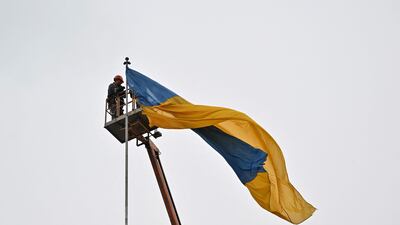
Workers put an Ukrainian flag on a pole in the centre of Makariv. AFP -
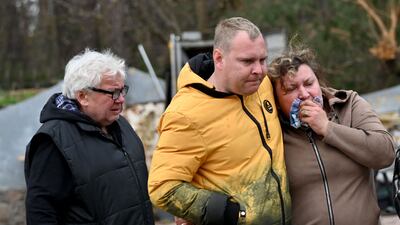
A Ukrainian mother is comforted by relatives after the body of her son was discovered in a manhole in Buzova village, west of Kyiv. AFP -
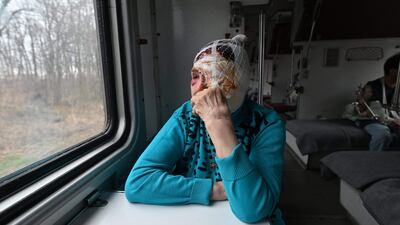
An injured Ukrainian on a medical evacuation train bound for the western Ukrainian city of Lviv. AFP -
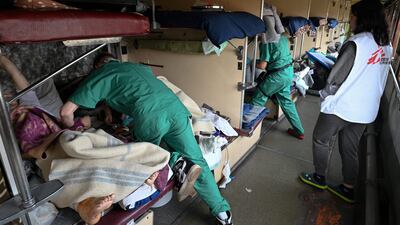
A Doctors Without Borders team at work on medical evacuation train. AFP -
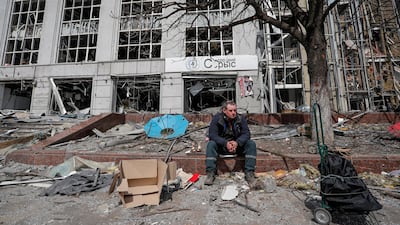
A damaged building in the southern port city of Mariupol. Reuters -
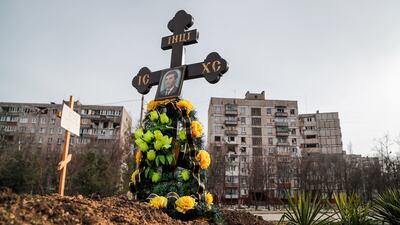
Graves of the victims of the Ukraine-Russia conflict in Mariupol. Reuters -
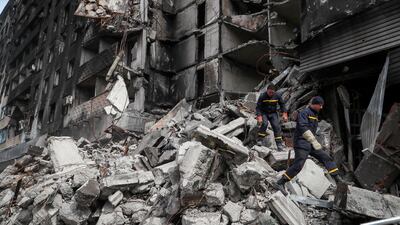
Emergency workers sift through debris of a damaged building in Mariupol. Reuters -

The conflict has forced Mariupol residents to wait in line for drinking water. Reuters -
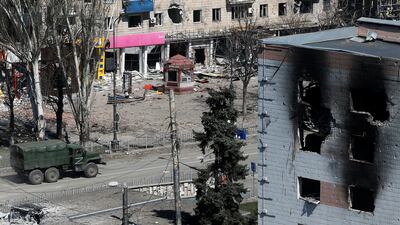
A Russian military vehicle in Mariupol. Reuters -

Food distribution at a church in the town of Borodyanka, north-west of Kyiv. AP -
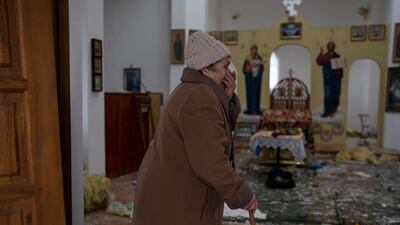
A visitor is in shock after returning to her church, which had come under Russian attack, in the Kyiv town of Makaro. AP -
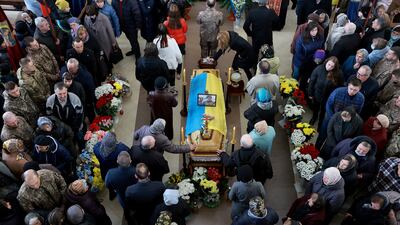
Mourners gather at the funeral of Ukrainian soldier Andriy Zagornyakon in Kamianka-Buzka. Getty Images -

A resident returns with his dog to survey his damaged building in Kharkiv. EPA -
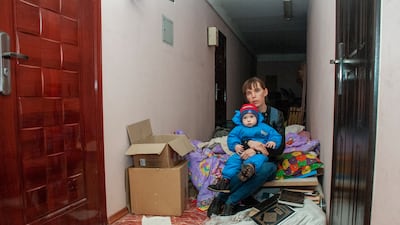
A woman and a child are forced to sit on the corridor of a building in Kharkiv that is used as a bomb shelter. EPA -
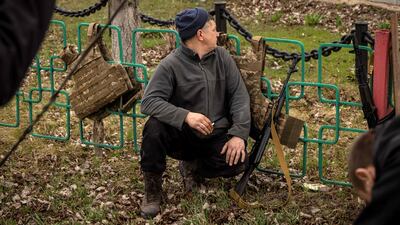
A Ukrainian guard in the eastern town of Barvinkove, during Russia's invasion of its neighbouring country. AFP -
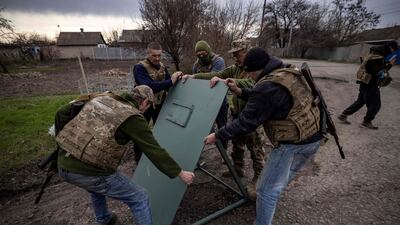
Ukrainian guards strengthen their position in the eastern town of Barvinkove. AFP -

Emotional farewell at the train station in the eastern Ukrainian city Kramatorsk, which has come under Russian attack. AFP -
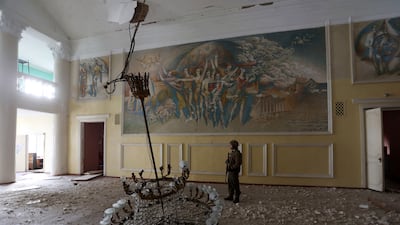
A Ukrainian serviceman surveys the damaged cultural centre, in the town of Rubizhne, Luhansk region. AFP -
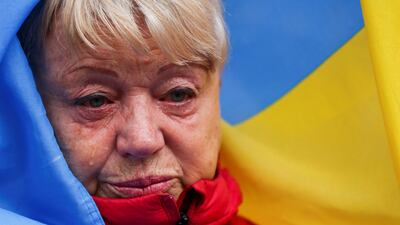
A participant at the pro-Ukrainian demonstration outside Downing Street in London. Reuters -
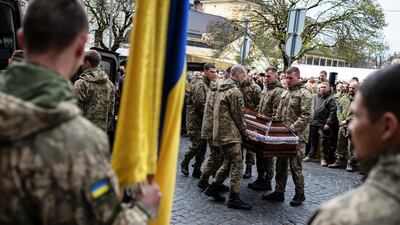
Colleagues bid farewell to Yuriy Dadak-Ruf and Taras Kryt, the Ukrainian soldiers killed in Russian shelling of the Luhansk region. Reuters -

A villager warms himself in the yard of his house in Bucha, on the outskirts of Kyiv. AP -
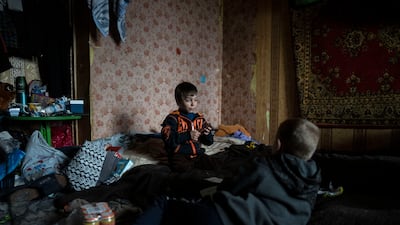
Vlad, the six-year old Ukrainian who lost his mother during their confinement in a Bucha basement amid the Russian invasion, plays with a friend inside his house. AP -
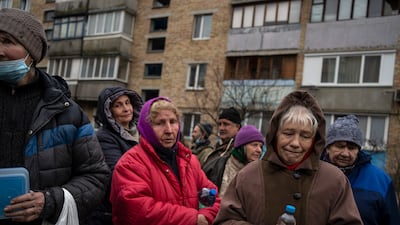
A group of women wait to receive free food in Bucha. AP -
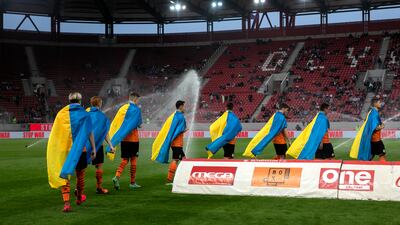
Shakhtar Donetsk players carry the Ukrainian flag before their football match against Olympiakos in Piraeus, near Athens. AP -
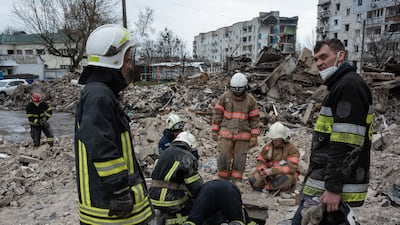
Rescue workers clear the rubble of an apartment building in Borodianka. Getty Images -
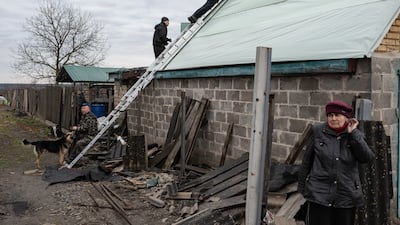
A man repairs the roof of a house while standing on a ladder, in Andriivka, Ukraine. Getty Images -

Valerii, 65, rides by his destroyed apartment building in Borodianka. Getty Images -
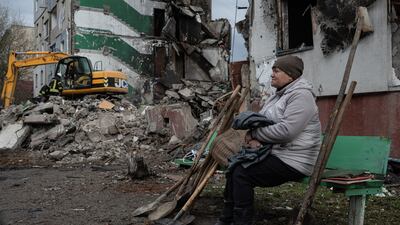
A Ukrainian woman in Borodianka waits as rescue workers search for her daughter, her son-in-law and her granddaughter among the rubble. Getty Images -
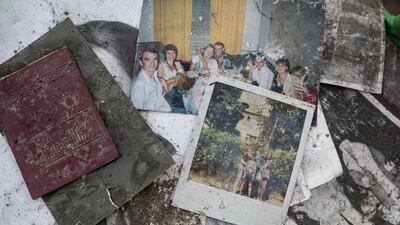
Family photos are scattered among the debris of a destroyed apartment tower in Borodianka. Getty Images -
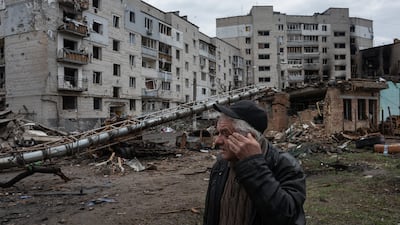
A distraught survivor of the attack on Borodianka. Getty Images -
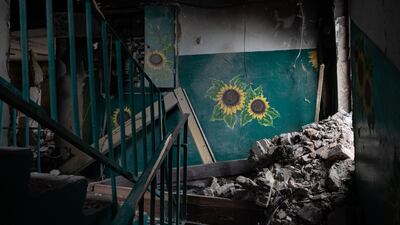
Debris of an apartment building in Borodianka. Getty Images -
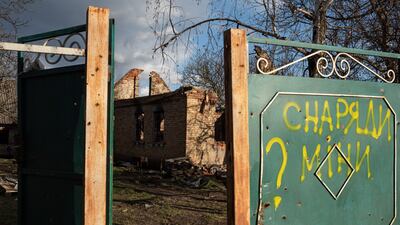
A writing on the gate of a destroyed building in Andriivka - 'Shells, mines?' - points to the threat faced by Ukrainians. Getty Images -
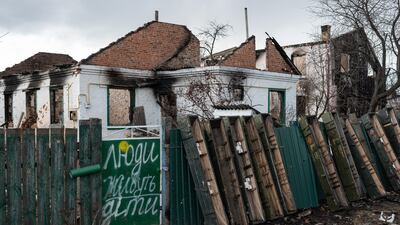
Another writing on the fence of a destroyed building, in Andriivka, reads 'People children live here'. Getty Images -
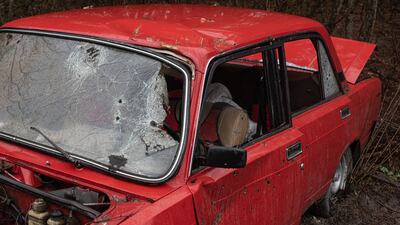
A bullet-riddled car near Ozera. Getty Images


“He's decided to stay to serve his country and he's basically entrusted his wife and two children to us,” Baroness Finlay added.
“We've said we will do whatever is needed for however long to support them, and we know that it might be years.”
Baroness Finlay said they had to process each of the four refugees' applications individually, which has made her concerned they may not be approved together.
-

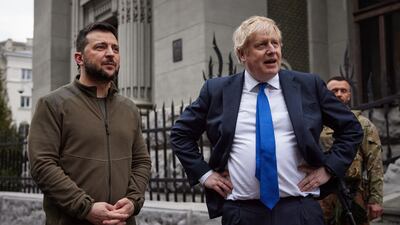
British Prime Minister Boris Johnson, left, speaks with a resident as he walks with Ukrainian President Volodymyr Zelenskyy in central Kyiv. AFP -
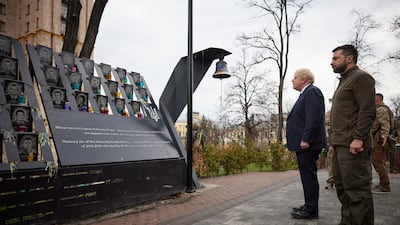
Mr Johnson, left, and Mr Zelenskyy visit the Memorial to the Heavenly Hundred Heroes in Kyiv. AFP -
The British Prime Minister paid an unannounced visit to Kyiv in a "show of solidarity" with Ukraine. AFP -
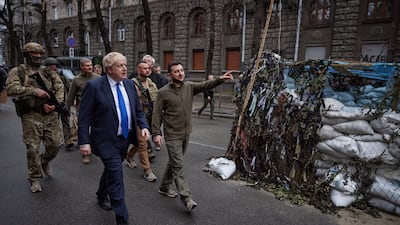
Mr Johnson arrived a day after a missile strike killed dozens at a railway station in Ukraine's east. AFP -
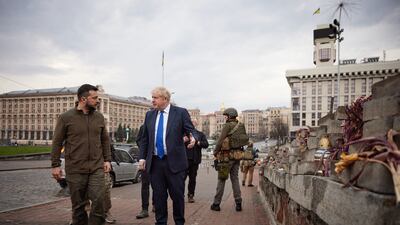
Mr Johnson surveys the damage caused during fighting between Russian troops and Ukrainian forces, in Kyiv. AFP -
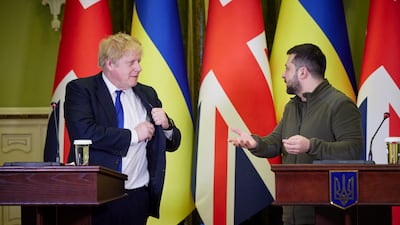
Mr Johnson and Mr Zelenskyy attend a news briefing. Reuters -
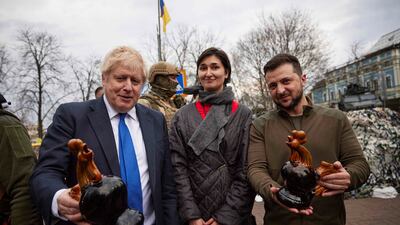
The leaders pose for a picture with a woman, after she gave them gifts. AP -
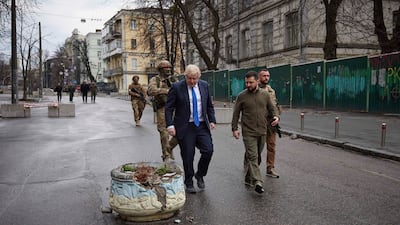
Mr Johnson and Mr Zelenskyy on a street in downtown Kyiv. AP -
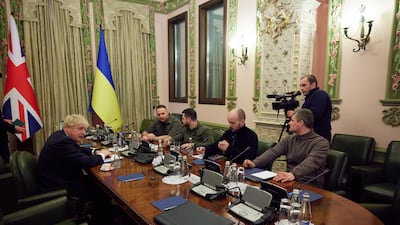
Mr Zelenskyy, third right, Mr Johnson, left, and various officials during a meeting. EPA -
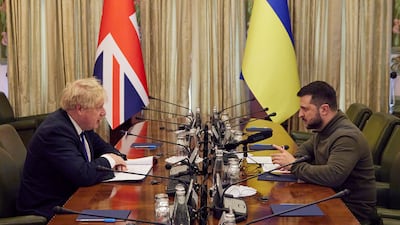
Mr Johnson said the West would continue to "ratchet up" sanctions on Moscow as he praised the courage of the Ukrainian troops. AP


Despite repeated efforts in person at a visa information centre and over the phone, she said the only information she has received from in response has been four separate emails to say each applicant is “in the system” to be processed — which arrived on Thursday.
“The silence is awful … nobody can help me find out what's happened to these people's applications,” she said.
“I think there is a failure of recognition that this uncertainty is adding to the trauma that these people have already experienced.
“These aren't just pieces of paper, these are people … and these are people who have lost everything.
“We need to provide an environment where they know that they are welcome and they are safe — how can they feel welcome?
“The message from the system is that the country is not welcoming them. One cannot separate children from their parents.
The family will live in the home with Baroness Finlay and her husband, who have bought an extra bed and fridge to accommodate the whole family, clearing space in their kitchen cupboards so they can have space to cook their own meals.
They also installed another television and a radio, which can be tuned to Ukrainian radio stations so that the refugees can have a link to their home country.
A government representative said: “We continue to process visas for the Homes for Ukraine scheme as quickly as possible, but accept progress has not been quick enough.
“The Home Office has made changes to visa processing — the application form has been streamlined, Ukrainian passport holders can now apply online and do their biometrics checks once in the UK, and greater resource has gone into the system.”

