
Two earthquakes struck Afghanistan’s western Badghis province along the border with Turkmenistan on Monday afternoon, killing 26 as three villages of about 800 houses were flattened by the tremors.
The UN Office for the Co-ordination of Humanitarian Affairs said women and children were among the dead and at least four people had been injured. Villagers in the area were still searching on Tuesday for their family members and removing items stuck beneath the debris.

Badghis province is one of Afghanistan’s most impoverished and underdeveloped regions.
According to the UN, hundreds of mud-brick houses destroyed in the earthquake were already vulnerable because of heavy rains in the country. Many survivors spent the night sheltering at their relatives’s houses while others stayed among the ruins of their homes.
The US Geological Survey registered a magnitude 5.3 earthquake at 2pm, followed by a magnitude 4.9 quake at 4pm local time.
They struck 41 kilometres east and 50 kilometres south-east of Qala-e-Naw, the provincial capital.
Bas Mohammed Sarwari, chief of the province’s Culture and Information Department, said frightened residents fled their homes for safety.
The more powerful of the earthquakes hit Qadis district in the southern tip of the province, where the majority of the damage and deaths occurred, Mr Sarwari said.
-
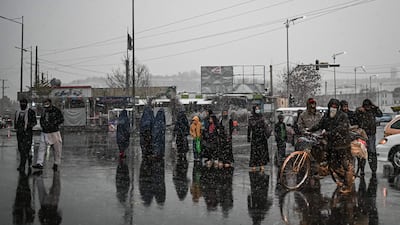
People walk along a road during the first snow in Kabul, Afghanistan. All photos: AFP -
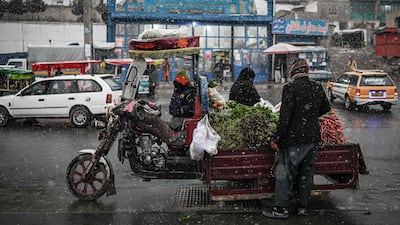
A vendor sells vegetables during the snowfall. -
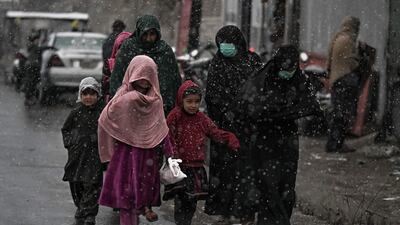
Women and children brave the chilly weather. -
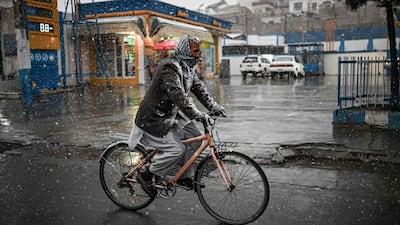
A cyclist sports a dusting of snow. -
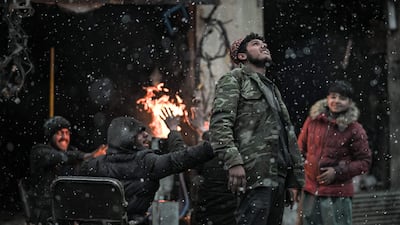
People gather around a fire as the first snowflakes fall. -
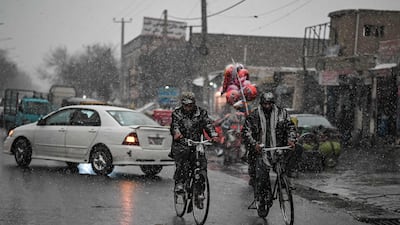
Men cycle along a slippery road. -
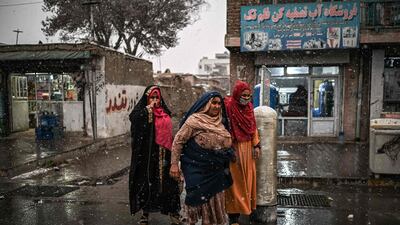
Women venture out in the cold conditions. -
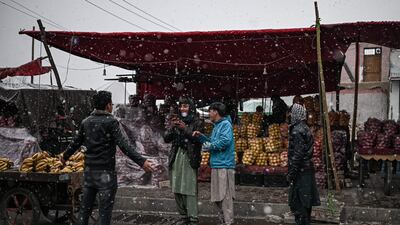
A boy poses for a picture. -
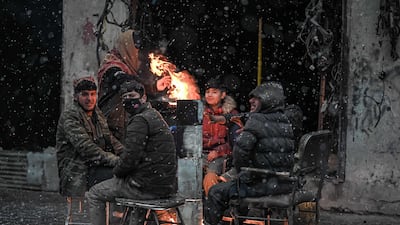
Youths gather around a fire to enjoy the weather.


By nightfall, contacts could be established with only four villages, he said.
“Tomorrow we have a plan to send rescue teams as well as assistance for the affected families,” he said.
Mr Sarwari said the tremors were felt across the province.
Some homes in Qala-e-Naw suffered cracks but no major injuries or widespread damage were reported.
“People whose homes have been damaged or destroyed are being hosted by their relatives and other members of their communities,” the UN said.
“Preliminary reports indicate that food, shelter, and non-food items, and heating materials are most urgently needed.”
The Taliban, who came to power after overrunning the country in mid-August, called on international aid organisations to provide immediate help, including tents and other basic necessities, for the victims. The Taliban put the death toll at 22 and the disparity in the figures could not immediately be reconciled.

