A solar power plant in the UAE. Silvia Razgova / The National

Israel talks up ‘paradise’ of climate co-operation with UAE and others


James Reinl
  • English
  • Arabic

Senior Israeli envoy Gilad Erdan on Tuesday talked up growing co-operation with the UAE and other Arab states on fighting climate change and the prospects of a “paradise of progress” in the drought-prone Middle East.

Mr Erdan, Israel’s ambassador to the US and the UN, said last year’s Abraham Accord normalisation deals between Israel, the UAE, Bahrain and Morocco were opening doors to technology sharing in the arid and turbulent region.

He told the UN Security Council of a “new era” in ties that would help turn the war-ravaged Middle East into a “centre of creativity and solutions to the world's most pressing challenges”.

“Israel is a global leader in crucial areas such as water management, sustainable agriculture and renewable energy,” Mr Erdan told the council.

“Together with the nations of the Abraham Accords, and all nations which seek peace, we can turn the Middle East into a global hub of climate innovation for the benefit of our environment, our economies and the future of our children.”

His comments followed a first-of-its-kind meeting on Monday in Washington between the top diplomats of Israel, the UAE, India and the US, with joint efforts against climate change high on the agenda.

The talks brought together US Secretary of State Antony Blinken, UAE Minister of Foreign Affairs and International Co-operation Sheikh Abdullah bin Zayed, Israel's Foreign Minister Yair Lapid and India's Minister for External Affairs Subrahmanyam Jaishankar.

UAE officials have also promoted co-operation with Israel on agriculture, renewable energy, water conservation and other environmental issues, including a tie-up between Gulf-Israel Green Ventures and the UAE’s United Stars Group in February.

Israel, Morocco and dozens of other countries have signed up to the Agriculture Innovation Mission for Climate, a joint US-UAE plan to raise money to fund research into technology for cleaner farming and food transport systems.

This year Yousef Al Otaiba, the UAE Ambassador to the US, said “warmer relations will help get us to a cooler planet”.

Later this month, signatories to the 2015 Paris Agreement on climate change will meet for the Cop26 talks in Glasgow, Scotland, in a collective effort to limit global temperature rises to 1.5°C above pre-industrial levels.

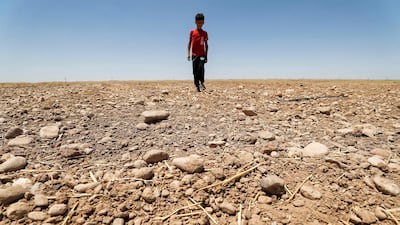
The planet has so far warmed by 1.2°C and is headed for at least 2.8°C this century — raising the risk of fires, droughts, floods, hurricanes and other weather disasters that could force millions of people from their homes.

Mercer, the investment consulting arm of US services company Marsh & McLennan, expects its wealth division to at least double its assets under management (AUM) in the Middle East as wealth in the region continues to grow despite economic headwinds, a company official said.

Mercer Wealth, which globally has $160 billion in AUM, plans to boost its AUM in the region to $2-$3bn in the next 2-3 years from the present $1bn, said Yasir AbuShaban, a Dubai-based principal with Mercer Wealth.

Within the next two to three years, we are looking at reaching $2 to $3 billion as a conservative estimate and we do see an opportunity to do so,” said Mr AbuShaban.

Mercer does not directly make investments, but allocates clients’ money they have discretion to, to professional asset managers. They also provide advice to clients.

“We have buying power. We can negotiate on their (client’s) behalf with asset managers to provide them lower fees than they otherwise would have to get on their own,” he added.

Mercer Wealth’s clients include sovereign wealth funds, family offices, and insurance companies among others.

From its office in Dubai, Mercer also looks after Africa, India and Turkey, where they also see opportunity for growth.

Wealth creation in Middle East and Africa (MEA) grew 8.5 per cent to $8.1 trillion last year from $7.5tn in 2015, higher than last year’s global average of 6 per cent and the second-highest growth in a region after Asia-Pacific which grew 9.9 per cent, according to consultancy Boston Consulting Group (BCG). In the region, where wealth grew just 1.9 per cent in 2015 compared with 2014, a pickup in oil prices has helped in wealth generation.

BCG is forecasting MEA wealth will rise to $12tn by 2021, growing at an annual average of 8 per cent.

Drivers of wealth generation in the region will be split evenly between new wealth creation and growth of performance of existing assets, according to BCG.

Another general trend in the region is clients’ looking for a comprehensive approach to investing, according to Mr AbuShaban.

“Institutional investors or some of the families are seeing a slowdown in the available capital they have to invest and in that sense they are looking at optimizing the way they manage their portfolios and making sure they are not investing haphazardly and different parts of their investment are working together,” said Mr AbuShaban.

Some clients also have a higher appetite for risk, given the low interest-rate environment that does not provide enough yield for some institutional investors. These clients are keen to invest in illiquid assets, such as private equity and infrastructure.

“What we have seen is a desire for higher returns in what has been a low-return environment specifically in various fixed income or bonds,” he said.

“In this environment, we have seen a de facto increase in the risk that clients are taking in things like illiquid investments, private equity investments, infrastructure and private debt, those kind of investments were higher illiquidity results in incrementally higher returns.”

The Abu Dhabi Investment Authority, one of the largest sovereign wealth funds, said in its 2016 report that has gradually increased its exposure in direct private equity and private credit transactions, mainly in Asian markets and especially in China and India. The authority’s private equity department focused on structured equities owing to “their defensive characteristics.”

INFO

Schools can register for the Abu Dhabi Schools Championships at www.champions.adsc.ae

Florence and the Machine – High as Hope
Three stars

At a glance

- 20,000 new jobs for Emiratis over three years

- Dh300 million set aside to train 18,000 jobseekers in new skills

- Managerial jobs in government restricted to Emiratis

- Emiratis to get priority for 160 types of job in private sector

- Portion of VAT revenues will fund more graduate programmes

- 8,000 Emirati graduates to do 6-12 month replacements in public or private sector on a Dh10,000 monthly wage - 40 per cent of which will be paid by government

Another way to earn air miles

In addition to the Emirates and Etihad programmes, there is the Air Miles Middle East card, which offers members the ability to choose any airline, has no black-out dates and no restrictions on seat availability. Air Miles is linked up to HSBC credit cards and can also be earned through retail partners such as Spinneys, Sharaf DG and The Toy Store.

An Emirates Dubai-London round-trip ticket costs 180,000 miles on the Air Miles website. But customers earn these ‘miles’ at a much faster rate than airline miles. Adidas offers two air miles per Dh1 spent. Air Miles has partnerships with websites as well, so booking.com and agoda.com offer three miles per Dh1 spent.

“If you use your HSBC credit card when shopping at our partners, you are able to earn Air Miles twice which will mean you can get that flight reward faster and for less spend,” says Paul Lacey, the managing director for Europe, Middle East and India for Aimia, which owns and operates Air Miles Middle East.

Company%20profile
%3Cp%3E%3Cstrong%3EName%3A%20%3C%2Fstrong%3EPurpl%3C%2Fp%3E%0A%3Cp%3E%3Cstrong%3ECo-founders%3A%20%3C%2Fstrong%3EKarl%20Naim%2C%20Wissam%20Ghorra%2C%20Jean-Marie%20Khoueir%3C%2Fp%3E%0A%3Cp%3E%3Cstrong%3EBased%3A%20%3C%2Fstrong%3EHub71%20in%20Abu%20Dhabi%20and%20Beirut%3C%2Fp%3E%0A%3Cp%3E%3Cstrong%3EStarted%3A%20%3C%2Fstrong%3E2021%3C%2Fp%3E%0A%3Cp%3E%3Cstrong%3ENumber%20of%20employees%3A%20%3C%2Fstrong%3E12%3C%2Fp%3E%0A%3Cp%3E%3Cstrong%3ESector%3A%20%3C%2Fstrong%3EFinTech%3C%2Fp%3E%0A%3Cp%3E%3Cstrong%3EFunding%3A%20%3C%2Fstrong%3E%242%20million%26nbsp%3B%3C%2Fp%3E%0A
WORLD CUP SEMI-FINALS

England v New Zealand (Saturday, 12pm)

Wales v South Africa (Sunday, 1pm)

Squad

Ali Kasheif, Salim Rashid, Khalifa Al Hammadi, Khalfan Mubarak, Ali Mabkhout, Omar Abdulrahman, Mohammed Al Attas, Abdullah Ramadan, Zayed Al Ameri (Al Jazira), Mohammed Al Shamsi, Hamdan Al Kamali, Mohammed Barghash, Khalil Al Hammadi (Al Wahda), Khalid Essa, Mohammed Shaker, Ahmed Barman, Bandar Al Ahbabi (Al Ain), Al Hassan Saleh, Majid Suroor (Sharjah) Walid Abbas, Ahmed Khalil (Shabab Al Ahli), Tariq Ahmed, Jasim Yaqoub (Al Nasr), Ali Saleh, Ali Salmeen (Al Wasl), Hassan Al Muharami (Baniyas) 

Our legal consultant

Name: Dr Hassan Mohsen Elhais

Position: legal consultant with Al Rowaad Advocates and Legal Consultants.

Lexus LX700h specs

Engine: 3.4-litre twin-turbo V6 plus supplementary electric motor

Power: 464hp at 5,200rpm

Torque: 790Nm from 2,000-3,600rpm

Transmission: 10-speed auto

Fuel consumption: 11.7L/100km

On sale: Now

Price: From Dh590,000

UAE currency: the story behind the money in your pockets
Profile Box

Company/date started: 2015

Founder/CEO: Mohammed Toraif

Based: Manama, Bahrain

Sector: Sales, Technology, Conservation

Size: (employees/revenue) 4/ 5,000 downloads

Stage: 1 ($100,000)

Investors: Two first-round investors including, 500 Startups, Fawaz Al Gosaibi Holding (Saudi Arabia)

Infiniti QX80 specs

Engine: twin-turbocharged 3.5-liter V6

Power: 450hp

Torque: 700Nm

Price: From Dh450,000, Autograph model from Dh510,000

Available: Now

UAE currency: the story behind the money in your pockets
Recycle Reuse Repurpose

New central waste facility on site at expo Dubai South area to  handle estimated 173 tonne of waste generated daily by millions of visitors

Recyclables such as plastic, paper, glass will be collected from bins on the expo site and taken to the new expo Central Waste Facility on site

Organic waste will be processed at the new onsite Central Waste Facility, treated and converted into compost to be re-used to green the expo area

Of 173 tonnes of waste daily, an estimated 39 per cent will be recyclables, 48 per cent  organic waste  and 13 per cent  general waste.

About 147 tonnes will be recycled and converted to new products at another existing facility in Ras Al Khor

Recycling at Ras Al Khor unit:

Plastic items to be converted to plastic bags and recycled

Paper pulp moulded products such as cup carriers, egg trays, seed pots, and food packaging trays

Glass waste into bowls, lights, candle holders, serving trays and coasters

Aim is for 85 per cent of waste from the site to be diverted from landfill 

Updated: October 19, 2021, 5:25 PM