

“This is not a hotel, it’s an experience that people feel differently about,” says Rima Husseini, co-owner of the historic Palmyra Hotel in the Lebanese city of Baalbek.
“But there's a common ground [for all visitors] which is Palmyra and the temples in front of it.”
It is one of the oldest buildings in the country, built in 1874 by an Orthodox Greek businessman from Constantinople.
The Palmyra celebrates its 150th anniversary next year, its history rivalled only by the ancient and famous temple complex that sprawls across the landscape on the other side of the road.
Remarkably, the hotel has never closed its doors despite the 1975-1990 Civil War in Lebanon, Covid-19 and the devastating economic crisis affecting the country – among other things.
“This is a hotel with a story to tell,” says Ms Husseini of the Palmyra, which has outlasted the Ottoman presence in Lebanon, the French Mandate, and the civil war.
In the olden days, the hotel was famed for its lavish parties and the glamorous guests who stayed there. Walking through one of the high-ceilinged rooms on the ground floor, Ms Husseini points to the images of those who have passed through the hotel’s doors, including Ella Fitzgerald, Charles De Gaulle and the Shah of Iran.
Covered in leaves on the outside and adorned with ancient artefacts and old posters on the inside, the hotel was at near full occupancy when The National visited last weekend, courtesy of the annual Baalbek International Festival. However, that is a rarity now.
Ms Husseini, whose husband bought the Palmyra in 1985, admits that the hotel needs some renovation and restoration work.
“Yes there are a lot of shortcomings and sometimes I feel embarrassed because there are so many things that should be fixed. But it is an old, old building. And that requires, especially now, so much investment. And it's not an easy task. But what I'm doing right now is trying to introduce changes or renovation that is needed, but in phases.”
-
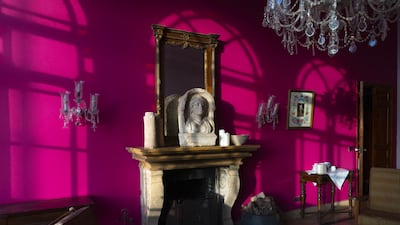
Palmyra Hotel in Baalbek, Lebanon. Getty Images -

Once a haven for renowned international figures, the Palmyra now stands empty. Reuters -

Due to growing security concerns in the area near the Syrian border, instability has deprived the hotel of guests. Reuters -

The Palmyra Hotel was built in 1847. Reuters -

Pictures of famous guests decorate a wall. Reuters -

The hotel lobby. Getty -

The exterior in the Roman city of Baalbek. Reuters -

Guests in the garden of the Palmyra Hotel. Matt Kynaston / The National -

The plush interior of the Palmyra. Matt Kynaston / The National -
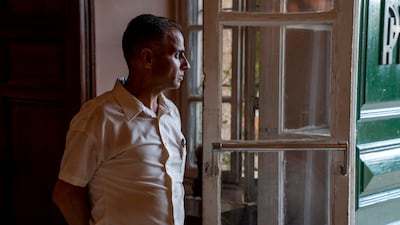
The clerk is busy managing guests' bookings for The Baalbek International Festival. Matt Kynaston / The National -

Rima Husseini is the co-owner of the Palmyra, she says she wants to preserve the history and culture of the building, while admitting it desperately needs renovations. Matt Kynaston / The National


She says the high point of her association with the hotel has been “looking at Baalbek and the Palmyra through the eyes of the people. And this is why I am always going back on the travellers themselves.
“It is the travellers who made this place. It is not the paint on the wall. It is the people who come just wanting to see this place, have this experience.”
But sometimes, the problems in Lebanon are “so overpowering”, Ms Husseini says.
Lebanon has been gripped by a devastating economic crisis since 2019 that has plunged much of the country into poverty. The Covid-19 pandemic meant that the tourism industry – a vital source of foreign currency – took a hit, although there are signs now of a slow recovery.
“Sometimes, whenever you take 10 steps ahead, it just slaps you in the face and you stumble back,” Ms Husseini says.
Despite the need for modernisation, she wants to keep the soul of the Palmyra alive.
“Every year, we try – because it is worth it. I’ve done so many changes, but I love it when people step in and say ‘oh my God, it is as if we are stepping back in time and nothing has changed'.”
Nestled in the Beqaa Valley in eastern Lebanon, Baalbek suffers the effects of what Ms Husseini calls a notorious reputation. Because it is relatively close to neighbouring Syria, some foreign governments, such as the UK's, urge caution when travelling to the area.
Some parts of the city are controlled by criminal gangs involved in drug cultivation and smuggling, others are run by Iran-backed armed group and political party Hezbollah. There are also frequent armed clashes between gangs, and operations by the security forces, making the area a relatively high security risk.
“So this imposes a lot of challenges, to agencies, to people who work, because it carries a lot of responsibility,” Ms Husseini says.
“On an individual level we get a lot of tourists. But the kind of tourism that you hope for is on the grander scale – for people to come and enjoy all of the new kinds of tourism that exist in the world today.
“Everyone has his own taste in what he considers as being the travelling experience that he wants. And I really do believe that Baalbek [can] offer on all those different types of tourism.”

