


People often tend to go overboard spending beyond their means during Eid Al Fitr celebrations and later struggle with buyer’s remorse. This could spell trouble for many households who are struggling amid the global cost-of-living crisis.
It is important to avoid racking up holiday debt, particularly when interest rates are rising, financial experts warn.
“It is important to place a tight lid on unnecessary expenses, giving way to unbridled debt,” says Ullas Rao, assistant professor of finance at Heriot-Watt University Dubai.
“Most significantly, ensuring adequate cash to meet emergency expenses should be the cardinal principle.”
The most common costs associated with Eid celebrations include entertainment, purchasing gifts for friends and family, buying new clothes, overseas travel or staycations, and charity donations or zakat.
“Allocate a budget for the entire month. Divide it among essential expenses such as groceries [40 per cent], utilities [20 per cent], and charitable donations [10 per cent],” says Adi Sinha, founder of OpenTap, a growth management consulting company, and a financial literacy campaigner.
“Keep track of your spending and make adjustments as needed. Focus on meeting essential needs before indulging on non-essential items such as a new outfit.”
About 35 per cent of Americans took on holiday debt in 2022 — about the same percentage as the previous year (36 per cent), according to a December survey of 2,050 consumers by online lending marketplace LendingTree. However, the average debt jumped to $1,549, up 24 per cent from $1,249 in 2021.
Sixty-three per cent of those who took on debt in the last holiday season didn’t plan to do so, up from 54 per cent in 2021, the survey found.
Credit cards were the most common form of debt in 2022, with 59 per cent of respondents using it, followed by 24 per cent who said they utilised “buy now, pay later” schemes.
About 37 per cent who took on holiday debt in the US last year expect to take five months or more to pay it off, a significant jump from 28 per cent in 2021, the survey revealed.

“Opt for modest meals and gatherings, like preparing a meal that costs only 20 per cent of your daily food budget instead of spending 50 per cent on extravagant dishes,” Mr Sinha says.
Resist the urge to make unplanned purchases, such as buying a gadget that costs 50 per cent of your weekly discretionary budget during a Ramadan sale, and stay true to your budget goals, he recommends.
Mr Sinha also advises consumers to set aside a portion of their budget, say 15 per cent, exclusively for Eid expenses, such as gifts and new clothing. This will prevent overspending and accumulating debt at the end of the month.
“Stay away from going out every night to lavish buffets. Just because it’s on sale and looks like a good deal, it doesn’t mean you have to buy it,” says Abdel Rahman Rabie, a senior public relations specialist in Dubai.
“Work on your discipline to restrict that urge and to give modestly according to your means. Also ask yourself if it’s necessary to buy, and if it is, then make sure you search for the best deal available.”
Mr Rabie also recommends shoppers to take advantage of places that offer free entrance or reduced cost for entertainment and activities.

Nerry Toledo, a business development manager with a Dubai-based employee assistance and well-being programme provider, says consumers must be mindful of their spending throughout the year so that they have money set aside for special occasions like Eid.
Save a small amount of money each month for the Eid holiday to prepare you for the festival, she says.
“Consider giving thoughtful, personalised gifts or handmade items rather than purchasing expensive gifts for everyone,” Ms Toledo adds.
“Avoid overspending to keep up with others or meet societal expectations. It is possible to celebrate Eid with family and friends without breaking the bank.”
Financial experts also shared their tips on how UAE residents can cut their expenses and avoid going into debt during the Eid holiday.
Plan ahead
Begin by creating the most important aspect — your budget and also a gift list, along with a shopping list if you are hosting Eid celebrations, according to Rupert Connor, partner at Abacus Financial Services.
Online shopping can often make it easier to overspend because of the sheer convenience as well as improved user experiences on merchant websites, he warns.
Ramadan event in Dubai introduces tourists to iftar — in pictures
-

A Muslim helps a non-Muslim guest to put on a hijab at the Sheikh Mohammed Centre for Cultural Understanding in Dubai during an event to introduce tourists and visitors to the culture of iftar during Ramadan. All photos by Reuters -
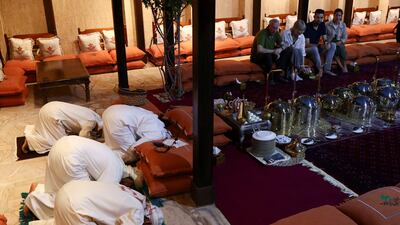
Muslims pray as visitors watch and learn during an iftar event to introduce tourists and visitors to the culture of Emirati iftar at Ramadan held in the Sheikh Mohammed Centre for Cultural Understanding in Dubai. -
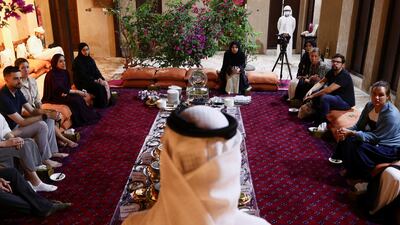
Emirati cultural representative Youssef Al Mannai of the Sheikh Mohammed Centre for Cultural Understanding in Dubai speaks to a group of overseas visitors during an iftar event. -

Emirati performers present Ramadan folklore to a group of visitors at the Sheikh Mohammed Centre for Cultural Understanding in Dubai, where customs and practices of the holy month were explained. -

Emirati cultural representative Youssef Al Mannai of the Sheikh Mohammed Centre for Cultural Understanding in Dubai with guests during an iftar event. -
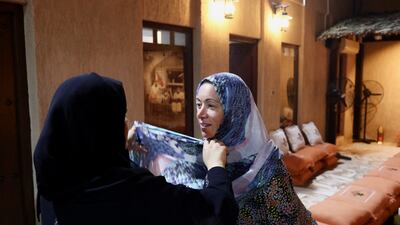
A Muslim helps a non-Muslim visitor to put on a hijab at the Sheikh Mohammed Centre for Cultural Understanding Ramadan event in Dubai. -
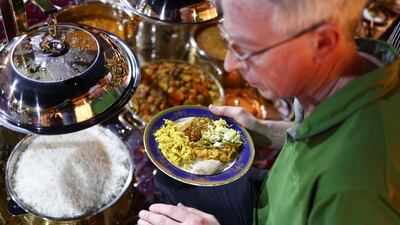
A visitor with Emirati food and drink at the Sheikh Mohammed Centre for Cultural Understanding in Dubai. -
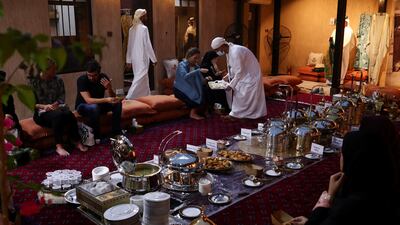
Tea is served at the Sheikh Mohammed Centre for Cultural Understanding in Dubai, where a group of overseas visitors took iftar as part of celebrations during the holy month. -

Emirati cultural representative Youssef Al Mannai speaks to guests at the Sheikh Mohammed Centre for Cultural Understanding in Dubai during an iftar event to introduce tourists and visitors to the culture of Ramadan. -

Emirati cultural representative Youssef Al Mannai at the Sheikh Mohammed Centre for Cultural Understanding in Dubai.


“Do not forget, though, that hosting parties with houseguests is more expensive now, with the cost of food increasing with global inflation. Keep track of every single purchase, otherwise you will overspend more quickly,” he says.
Sophia Bhatti, chief executive of Dubai-based Wimbledon Wealth, says it is important to determine how much you can afford to spend on Eid celebrations and gifts.
“Then make a list of all the expenses you anticipate, including food, gifts and travel, and allocate a specific amount for each item,” she says.
“Look for deals and discounts on items you need to buy. You can also consider shopping online to compare prices and save money.
“Prioritise expenses based on their importance. For example, food and travel expenses may be more important than buying new clothes.”
Pay with cash
Ms Bhatti recommends using cash instead of credit cards, to avoid overspending. “This way, you can keep track of your expenses and avoid accumulating debt.”
Mr Connor agrees. “Those who struggle with debt can adopt a policy of paying with cash for discretionary Eid expenses,” he says.
“By avoiding future interest charges, and possible late fees, you also liberate disposable income to fund other goals.”
Mr Rao, from Heriot-Watt University Dubai, believes resisting the temptation to use credit cards, which charge a high annual percentage yield, to pay for holiday expenses is another smart way to avoid the debt trap.
If you have to use a credit card, make sure to pay off the balance in full each month to avoid accumulating debt.
Consider alternative celebrations
Suggest to your friends that instead of gifting this year, you can organise a group volunteer day, says Mr Connor.
In addition to spending quality time together, you will feel proud of your efforts rather than suffering buyer’s remorse, he adds.
Setting expectations at the outset with friends and family members is a great way to limit spending during Eid.
Set an amount with family and friends for a gift exchange and this will help stay within budget, Mr Connor suggests.
“Don’t feel pressured to spend more than you can afford just to keep up with others. Remember that Eid is about spending time with loved ones, not about showing off your wealth,” according to Ms Bhatti.
Watch: The journey of Dubai's Ramadan cannon
Instead of going out to expensive restaurants or buying expensive gifts, consider hosting a potluck dinner or making home-made gifts, she recommends.
Meanwhile, FinTech start-up Xare helps shoppers make better money decisions, which, in turn, keep them away from debt, says Padmini Gupta, chief executive and co-founder.
For instance, Xare’s new feature, the XareClub, allows users to invite friends to join and share their cards on the platform to shop and enjoy discounts collectively.
“Through Xare, families can share money instantly, securely and for free with loved ones in the same city or across borders,” Ms Gupta says.
“As an alternative to taking expensive loans from banks, Xare allows users to access the unused credit limit on a loved one’s card.
“People borrow from family members in times of need, and Xare allows them to share credit instantly and securely on mutually agreed repayment terms. This easy access to money or credit is invaluable for families stuck in emergencies.”

