

Abdul Rahman Abdul Kareem and Mariam Yarub believe that small changes can have a big impact and that everyone can play a role in creating a better world for future generations.
For the first time in Iraq, the young entrepreneurs have introduced plantable paper and biodegradable packaging that not only help to reduce waste but also help the environment.
“We are facing mounting environmental challenges and we are seeking to improve the lifestyle to one that is more environmentally friendly and for that we present a wide range of eco-friendly products,” Ms Yarub told The National.

Iraq has suffered severe environmental degradation as a result of water scarcity, climate change and alarming levels of pollution.
The country is ranked the fifth most vulnerable in the world to climate change, according to the UN Environment Programme.
One of the most pressing issues is dwindling flows in the two main rivers, the Tigris and Euphrates, mainly as a result of upstream dams in Turkey and Iran and poor water management.
The country is experiencing its worst drought in decades, with temperatures above 50°C last summer. Many of Iraq’s lakes have shrunk.
Desertification affects 39 per cent of the country and 54 per cent of agricultural land has been degraded, mainly due to soil salinity caused by historically low water levels in the two rivers and reduced rainfall.
Trees once covered more than 60 per cent of Iraq's land but this has dropped to less than 4 per cent, according to experts.
Faced with these threats to the environment, Mr Abdul Kareem and Ms Yarub saw an opportunity to make a difference.
In 2020, they founded Eco Life, a company dedicated to producing environmentally friendly products.
Their first venture was skincare products, beauty soap, shampoo, drinking straws and shopping bags — all made from natural and sustainably-sourced materials.
“All our products are locally made from materials from Iraqi nature, mainly plants,” Ms Yarub, 28, said.
co-founder of Eco Life
At the beginning, they launched campaigns on social media and held events to spread awareness about the benefits of eco-friendly products and the importance of reducing waste to protect the environment.
“The whole story is new to our society,” she said. “It wasn’t easy to convince people who were focusing only on prices, but later more people started to accept the idea of protecting the environment."
Early this year, Eco Life introduced plantable paper and biodegradable containers, which it plans to make plantable as well in future.
“Now Iraqis can use the plantable paper for business and gift cards or wedding invitations, or for any other purpose,” Ms Yarub said.
“You can now keep the memory you love in the form of a plant instead of paper,” she added.
Plantable paper is made from post-consumer materials embedded with flower, vegetable or herb seeds. When planted, the seeds germinate and grow while the paper composts away.
Plantable paper has been in production for decades but this is the first time it is being made and used in Iraq.
Mr Abdul Kareem, 26, said demand for the new product was increasing
“It is a weird and lovely experience and Iraqis love it,” he said.
Eco Life's plantable paper is mainly infused with seeds of seasonal flowers, but clients can request seeds for vegetables or herbs, he said.
The price varies depending on the paper size and the printing, but starts from 75,000 dinars (about $50) for 100 A4 sheets. The eco-friendly containers have been distributed to a limited number of clients for trial.
Green entrepreneurship is being widely adopted in Iraq to create sustainable activities that respect the environment and improve agriculture.
Marwa Al Nuaimi, the founder of Green Gold, which specialises in converting waste into organic fertiliser, has ordered Eco Life's containers for the seedpods her company produces.
Called GG Balls, the seedpods are marketed as "a gift that evolves" with time.
Ms Al Nuaimi said they are meant to raise awareness about the importance of agriculture, increasing green spaces, and the community’s role in reducing pollution.
“This is the first time to see such products in Iraq and that will improve agriculture in Iraq," Ms Al Nuaimi said.
She is optimistic about the future of environmental entrepreneurship in Iraq because of “increasing interest among people and their orientation towards creating a green environment”.
Iraqis battle drought as Lake Dukan retreats - in pictures
-

Lake Dukan in Iraq is fed by a Tigris tributary, the Lower Zab river, which has its source in Iran. All photos: AFP -
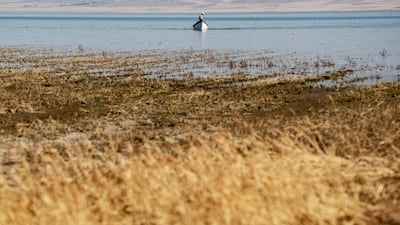
For several years both the lake and the river have been shrinking, severely affecting the lives of farmers in the region. -
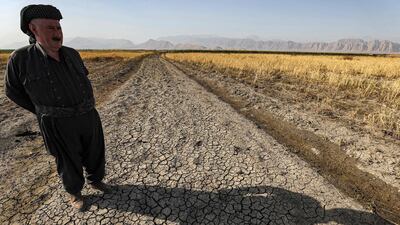
Bapir Kalkani, 56, farms near the picturesque lake but has seen marked changes over the past three years as Iraq suffers prolonged drought. "There was water where I'm standing now" in 2019, he says. "It used to go three kilometres further, but the level has retreated." -
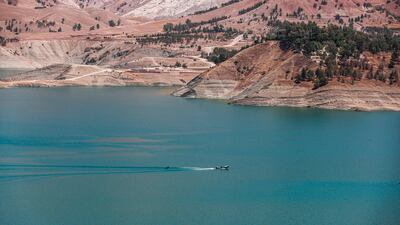
The large artificial lake was created in the 1950s following construction of the Dukan dam, to supply irrigation and drinking water for the region, as well as to generate electricity. -
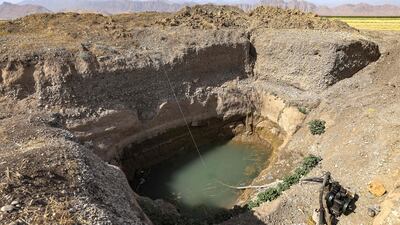
Farmers in the area used to dig shallow wells fed by the Dukan so they could irrigate their crops. Not any more. "The wells have lost 70 per cent of their water," Mr Kalkani says. -

Drought is not the only source of the farmers' water problems. Iran has built several dams on the Lower Zab, notably the Kolsa barrage. -
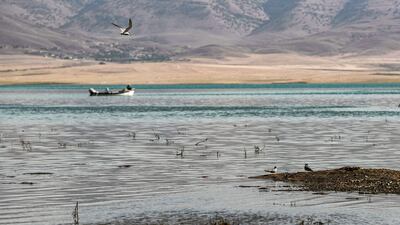
"The Kolsa dam has caused at least an 80 per cent drop in the water levels" of the Lower Zab, says Banafsheh Keynoush of the Washington-based Middle East Institute. She says Iran is going through one of the worst droughts in its history and has had to revise its irrigation policy. "Iran is on a dam-building spree, and many of its dams are small," she says. -
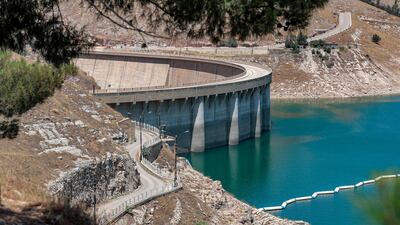
The Dukan dam in Iraq has also been badly affected by the reduced river flow, says its director Kochar Jamal Tawfeeq. "Now we have only 41 per cent, below half of the capacity" of the dam, he says. -

It supplies drinking water for 'about three million people in Sulaymaniyah and Kirkuk', two major cities downstream, he says. But at only 300 mm of rainfall last year - half the previous annual average - the skies have not been generous. And Mr Tawfeeq says 2022 is on track to mirror last year's figures. -
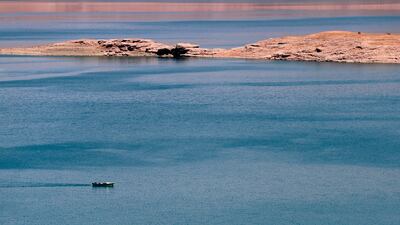
"We are releasing 90 cubic metres per second," the director says. "When the reservoir is full, we release 200 to 250." -
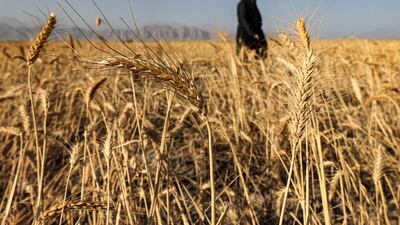
Tawfeeq says farmers are being told "not to grow crops that need too much water". -
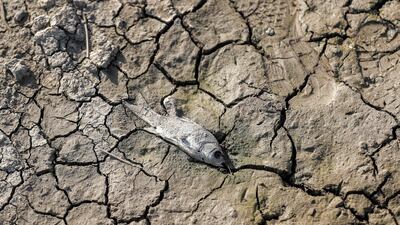
He says Baghdad sent teams to Iran to discuss the reduced flow of the Lower Zab river, but "there's no co-operation from the Iranians". Iran contends its river flow contribution into the Tigris and Euphrates basin is only about 6 per cent, according to Ms Keynoush. -
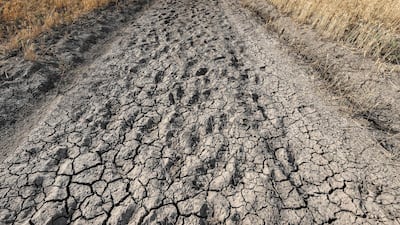
"What Iran is trying to say is: 'The Euphrates and Tigris problems you have are really between you and Turkey'," where the two main rivers have their sources, she says. But Iraq itself is not above criticism, says Azzam Alwash, founder of the Nature Iraq non-government organisation and presidential adviser. -

The Iraqi Kurdistan government in the north plans to construct new dams but the projects lack any co-ordination with Baghdad, Mr Alwash says. Downstream, in central and south Iraq, the situation is being exasperated by a lack of modernisation of water resources and could result in disaster, he warns.



