• UAE Founding Father, the late Sheikh Zayed bin Sultan Al Nahyan, practises falconry. Photo: Al Ittihad
    UAE Founding Father, the late Sheikh Zayed bin Sultan Al Nahyan, practises falconry. Photo: Al Ittihad
  • Sheikh Zayed during a hunting trip. Photo: Al Ittihad
    Sheikh Zayed during a hunting trip. Photo: Al Ittihad
  • Sheikh Mohamed bin Zayed, now UAE President, during a visit to Pakistan in the 1970s. Photo: National Archives
    Sheikh Mohamed bin Zayed, now UAE President, during a visit to Pakistan in the 1970s. Photo: National Archives
  • Sheikh Zayed is among the leaders, including then Ruler of Dubai Sheikh Rashid, at a falconry conference in Abu Dhabi in 1976. Photo: Al Ittihad
    Sheikh Zayed is among the leaders, including then Ruler of Dubai Sheikh Rashid, at a falconry conference in Abu Dhabi in 1976. Photo: Al Ittihad
  • Sheikh Zayed supported the sport of falconry. Photo: Al Ittihad
    Sheikh Zayed supported the sport of falconry. Photo: Al Ittihad
  • Sheikh Zayed with a falcon in Abu Dhabi. Photo: Al Ittihad
    Sheikh Zayed with a falcon in Abu Dhabi. Photo: Al Ittihad
  • Sheikh Mohamed bin Zayed at a falconers' club in Abu Dhabi. Photo: National Archives
    Sheikh Mohamed bin Zayed at a falconers' club in Abu Dhabi. Photo: National Archives
  • Sheikh Mohammed bin Rashid, Vice President and Ruler of Dubai, shows a falcon to George W Bush, US president at the time, in 2008. Wam
    Sheikh Mohammed bin Rashid, Vice President and Ruler of Dubai, shows a falcon to George W Bush, US president at the time, in 2008. Wam
  • Sheikh Mohammed with Hollywood actor Tom Cruise in 2010. AFP
    Sheikh Mohammed with Hollywood actor Tom Cruise in 2010. AFP
  • Sheikh Zayed meets a falcon breeder in Abu Dhabi in 1976. Photo: Al Ittihad
    Sheikh Zayed meets a falcon breeder in Abu Dhabi in 1976. Photo: Al Ittihad
  • Sheikh Zayed during a hunting trip in Abu Dhabi. Photo: Al Ittihad
    Sheikh Zayed during a hunting trip in Abu Dhabi. Photo: Al Ittihad
  • Sheikh Mohamed bin Zayed and Bahrain's King Hamad at a falcon hunt in 2018. Mohamed Al Hammadi / Crown Prince Court - Abu Dhabi
    Sheikh Mohamed bin Zayed and Bahrain's King Hamad at a falcon hunt in 2018. Mohamed Al Hammadi / Crown Prince Court - Abu Dhabi
  • Sheikh Mohamed and Sheikh Mohammed bin Rashid at a meeting in Dubai in 2017. Ryan Carter / Crown Prince Court - Abu Dhabi
    Sheikh Mohamed and Sheikh Mohammed bin Rashid at a meeting in Dubai in 2017. Ryan Carter / Crown Prince Court - Abu Dhabi
  • Sheikh Hamdan bin Mohammed, Crown Prince of Dubai, during a hunting trip in Uzbekistan. Photo: Twitter
    Sheikh Hamdan bin Mohammed, Crown Prince of Dubai, during a hunting trip in Uzbekistan. Photo: Twitter
  • Sheikh Mansour bin Zayed, Deputy Prime Minister and Minister of the Presidential Court, at the opening of the Abu Dhabi International Hunting and Equestrian Exhibition in 2004. AFP
    Sheikh Mansour bin Zayed, Deputy Prime Minister and Minister of the Presidential Court, at the opening of the Abu Dhabi International Hunting and Equestrian Exhibition in 2004. AFP

Inside the multimillion-dollar world of high-end falcon training


James Langton
  • English
  • Arabic

In a clear blue sky a hawk circles, its keen eyes seeking out prey in the dunes and scrub of the desert floor below.

The sight is one that has not changed for centuries, because, with the cooler months arriving, thoughts in the Emirates turn to hunting with falcons.

Generations of Emiratis have bonded with the falcon, a Bedouin tradition embedded in the country’s cultural heritage.

But if the essence of falconry remains the same, the sport has changed beyond recognition in the past 50 years.

Saved from extinction

Captive breeding, artificial insemination, blood lines and even hawk passports are now central to the world of falconry. Birds that sweep through the skies over Arabia and Pakistan are as likely as not to have first tested their wings thousands of kilometres away, to be sold sometimes for thousands of dirhams.

As unromantic as this view of 21st-century falconry might seem, it has also helped to save nature’s ultimate aerial predator from near extinction in Europe in the 1960s.

“It was falconers who first noticed the decline in wild populations,” says Mark Upton, general secretary of the International Association for Falconry and Conservation of Birds of Prey (IAF).

“Environmental issues and pesticides in farming were killing them off wholesale. In Germany, the peregrine falcon had become extinct.”

Roger Upton died in 2017, when he was 80 years old. Photo: Mark Upton

Anyone with a knowledge of falconry, and particularly in the UAE, will know the surname Upton.

Mark’s father, Roger Upton, was a passionate chronicler of falconry and the author of several definitive books on the subject. In the 1960s he travelled to Abu Dhabi, where he became a close friend of Sheikh Zayed, hunting with him.

In 2017, the year of his death at 80, he was awarded a posthumous Abu Dhabi award, cited for preserving “an essential Bedouin custom that is not only a craft or a sport but a way of life that bridges cultural divides between Arab and western falconers”.

Rescuing the species

Mark remembers Sheikh Zayed visiting his father in the UK when he was five and visiting Abu Dhabi in 1976. Now a well-known artist specialising in wildlife, he breeds a small number of birds for family and friends and has now passed the family love of falconry to his own children.

It was falconers in Europe, with the support of men such as Sheikh Zayed, who rescued the population, he says.

Awareness of the loss of wild hawks means populations in Europe are now back at record levels. The IAF works in other countries, including Central Asia, another important breeding ground, to support conservation.

The organisation has strong links with the UAE, working with the Emirates Falconers Club, with Majid Al Mansouri, founder of the Abu Dhabi Falcon Hospital, as its president.

What really transformed the modern world of falconry, though, was a breakthrough in captive breeding in the early 1970s.

Before then, all falcons were captured as young birds in the wild. In Arabia, where falcons are winter migrants, “they would trap them, train them fast and then release them back in the wild”, Mark says.

Roger Upton, a noted authority on falcons, frequently hunted with Sheikh Zayed. Photo: Mark Upton

This method actually improved the birds' chances of survival, improving their hunting skills and ensuring a good supply of food. “In the wild, 70 per cent to 80 per cent of birds die in their first year,” he says.

Hawks are notoriously difficult to breed in captivity and the skill needed to capture and train wild birds meant it was a niche sport. In the UK in the 1960s there were perhaps only 100 members of the British Falconers Club, and not all of them owned birds.

The Americans cracked captive breeding first, followed by Europe in the mid 1970s. Artificial insemination is one technique used, but many birds are hatched naturally.

Boom in the Middle East

Falcons breed only once a year, in the spring, prompted by the lengthening days, although it is possible to produce a second clutch of eggs by removing and incubating the first.

Chicks born in captivity are far more likely to survive than in the wild, and the birds are easier to train from birth. Captive breeding also takes the pressure off wild populations.

With birds becoming available for sale in greater numbers, there was a boom in the popularity of falconry, and no more so than the Middle East and the countries of the Arabian Gulf.

Coincidentally, the 1970s were also a time when oil revenues were transforming the fortunes of the Gulf Arabs.

Enjoying money and leisure for the first time, Emiratis could reconnect with a Bedouin culture that transformed hunting with hawks, once an essential source of meat in a harsh desert environment, into an enjoyable sport.

Demand from the Gulf means falcon breeding has become a thriving business. Prices for a single bird start at about £2,000 (Dh8.300, about $2,240) but size, looks and even blood lines can push this much higher.

Still, says Mark Upton, “high prices of hundreds of thousands are very unusual”.

More common is some Gulf Arabs buying 20 or 30 birds at a time as gifts for their friends. A hunting camp in the UAE might have as many 100 birds taking part.

Strict conservation

Mark Upton is a well-known wildlife artist and executive secretary of the International Association for Falconry and Conservation of Birds of Prey. Photo: Mark Upton

The interest and popularity of falconry goes hand in hand with strict conservation rules designed to prevent birds being snatched in the wild.

Each bird is issued with individual papers to prove it has been bred in captivity under the Convention on International Trade in Endangered Species of Flora and Fauna.

Without this “falcon passport” it cannot cross international borders or enter the UAE.

The IAF, which now has members in 86 countries, plays a wider role in supporting conservation. The houbara bustard, a chicken-sized bird and desert prey for falcons, also suffered huge population decline by the turn of the century, the result of habitat loss and hunting with guns.

In 2006, the International Fund for Houbara Conservation began a breeding programme that has led to tens of thousands of birds being reintroduced in the wild, including the UAE, North Africa and Pakistan.

And while the falcon is no longer endangered in Europe, dangers still exist elsewhere in the world. Power lines were estimated to be electrocuting up to 4,000 saker falcons a year in Mongolia as well as numerous other birds of prey, including eagles.

Power lines, described by the IAF as “24/7 killing machines”, can be neutralised with a simple and inexpensive insulator.

To thrive and survive, falcons, it seems, still need the help of mankind, an even more deadly predator.

Adihex 2022 – in pictures

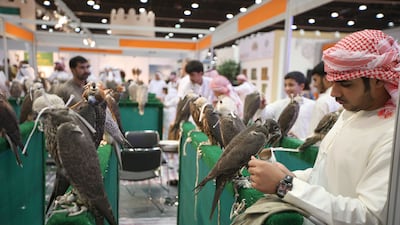
  • The Abu Dhabi International Hunting and Equestrian Exhibition (ADIHEX) has announced the launch of a new edition of the "Most Beautiful Captive-Bred Falcons" contest. WAM
    The Abu Dhabi International Hunting and Equestrian Exhibition (ADIHEX) has announced the launch of a new edition of the "Most Beautiful Captive-Bred Falcons" contest. WAM
  • Participants will present their best captive-bred falcons from farms in the region and elsewhere.
    Participants will present their best captive-bred falcons from farms in the region and elsewhere.
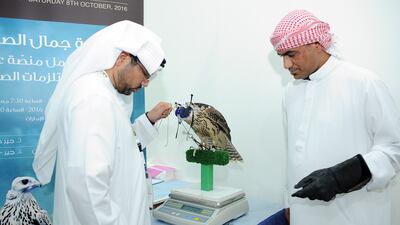
  • A jury comprising Emirati and international experts assesses the falcons based on criteria such as weight, symmetry and colour of feathers and the general aesthetic appearance of the bird.
    A jury comprising Emirati and international experts assesses the falcons based on criteria such as weight, symmetry and colour of feathers and the general aesthetic appearance of the bird.
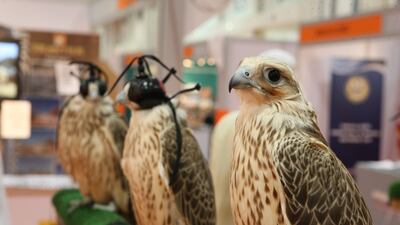
  • Because the falconers present birds bred in captivity, the need to use untamed falcons from the wild is eliminated, allowing for more reproduction in their natural habitat.
    Because the falconers present birds bred in captivity, the need to use untamed falcons from the wild is eliminated, allowing for more reproduction in their natural habitat.
The Voice of Hind Rajab

Starring: Saja Kilani, Clara Khoury, Motaz Malhees

Director: Kaouther Ben Hania

Rating: 4/5

Super heroes

Iron Man
Reduced risk of dementia
Alcohol consumption could be an issue

Hulk
Cardiac disease, stroke and dementia from high heart rate

Spider-Man
Agility reduces risk of falls
Increased risk of obesity and mental health issues

Black Panther
Vegetarian diet reduces obesity
Unknown risks of potion drinking

Black Widow
Childhood traumas increase risk of mental illnesses

Thor
He's a god

The flights: South African Airways flies from Dubai International Airport with a stop in Johannesburg, with prices starting from around Dh4,000 return. Emirates can get you there with a stop in Lusaka from around Dh4,600 return.
The details: Visas are available for 247 Zambian kwacha or US$20 (Dh73) per person on arrival at Livingstone Airport. Single entry into Victoria Falls for international visitors costs 371 kwacha or $30 (Dh110). Microlight flights are available through Batoka Sky, with 15-minute flights costing 2,265 kwacha (Dh680).
Accommodation: The Royal Livingstone Victoria Falls Hotel by Anantara is an ideal place to stay, within walking distance of the falls and right on the Zambezi River. Rooms here start from 6,635 kwacha (Dh2,398) per night, including breakfast, taxes and Wi-Fi. Water arrivals cost from 587 kwacha (Dh212) per person.

THE%20SPECS
%3Cp%3EEngine%3A%204.4-litre%20twin-turbo%20V8%20hybrid%0D%3Cbr%3EPower%3A%20653hp%20at%205%2C400rpm%0D%3Cbr%3ETorque%3A%20800Nm%20at%201%2C600-5%2C000rpm%0D%3Cbr%3ETransmission%3A%208-speed%20auto%0D%3Cbr%3E0-100kph%20in%204.3sec%0D%3Cbr%3ETop%20speed%20250kph%0D%3Cbr%3EFuel%20consumption%3A%20NA%0D%3Cbr%3EOn%20sale%3A%20Q2%202023%0D%3Cbr%3EPrice%3A%20From%20Dh750%2C000%0D%3Cbr%3E%3C%2Fp%3E%0A
RIVER%20SPIRIT
%3Cp%3E%3Cstrong%3EAuthor%3A%20%3C%2Fstrong%3ELeila%20Aboulela%C2%A0%3C%2Fp%3E%0A%3Cp%3E%3Cstrong%3EPublisher%3A%3C%2Fstrong%3E%20Saqi%20Books%3C%2Fp%3E%0A%3Cp%3E%3Cstrong%3EPages%3A%3C%2Fstrong%3E%20320%3C%2Fp%3E%0A%3Cp%3E%3Cstrong%3EAvailable%3A%3C%2Fstrong%3E%20Now%3C%2Fp%3E%0A
World record transfers

1. Kylian Mbappe - to Real Madrid in 2017/18 - €180 million (Dh770.4m - if a deal goes through)
2. Paul Pogba - to Manchester United in 2016/17 - €105m
3. Gareth Bale - to Real Madrid in 2013/14 - €101m
4. Cristiano Ronaldo - to Real Madrid in 2009/10 - €94m
5. Gonzalo Higuain - to Juventus in 2016/17 - €90m
6. Neymar - to Barcelona in 2013/14 - €88.2m
7. Romelu Lukaku - to Manchester United in 2017/18 - €84.7m
8. Luis Suarez - to Barcelona in 2014/15 - €81.72m
9. Angel di Maria - to Manchester United in 2014/15 - €75m
10. James Rodriguez - to Real Madrid in 2014/15 - €75m

The%20specs
%3Cp%3E%3Cstrong%3EEngine%3A%20%3C%2Fstrong%3E2.0-litre%204-cyl%20turbo%3Cbr%3E%3Cstrong%3EPower%3A%20%3C%2Fstrong%3E190hp%20at%205%2C600rpm%3Cbr%3E%3Cstrong%3ETorque%3A%20%3C%2Fstrong%3E320Nm%20at%201%2C500-4%2C000rpm%3Cbr%3E%3Cstrong%3ETransmission%3A%20%3C%2Fstrong%3E7-speed%20dual-clutch%20auto%3Cbr%3E%3Cstrong%3EFuel%20consumption%3A%20%3C%2Fstrong%3E10.9L%2F100km%3Cbr%3E%3Cstrong%3EPrice%3A%20%3C%2Fstrong%3EFrom%20Dh119%2C900%3Cbr%3E%3Cstrong%3EOn%20sale%3A%20%3C%2Fstrong%3ENow%3C%2Fp%3E%0A
Company Profile

Name: Thndr
Started: 2019
Co-founders: Ahmad Hammouda and Seif Amr
Sector: FinTech
Headquarters: Egypt
UAE base: Hub71, Abu Dhabi
Current number of staff: More than 150
Funds raised: $22 million

Updated: October 21, 2022, 6:00 PM