


On September 5, the governing Conservative party will pick either Rishi Sunak or Liz Truss to be its leader - who will, by extension, become the next British prime minister. Then, in the next two years, that winning candidate must seek a new mandate from the electorate in a general election.
The new prime minister will have no honeymoon period with the public, given the current combination of high taxes, low growth, poor productivity, inflation, inadequate provision of public services, union militancy, and continuing resentment at the Brexit result – a flame kept alive by a media largely hostile to the Tories.
However, given the British media's focus on domestic economic woes, it is sometimes easy to forget that so much of the cost-of-living crisis, and not just in the UK, is a direct result of turbulence and violence abroad. So, while a Sunak or Truss government will have little option but to focus on the domestic economy, it must also seek to shape the international environment in Britain's interest. Into this arena, the whole national toolkit of diplomacy, defence engagement, intelligence-sharing, aid and, importantly, trade must be poured.
While continuing to contribute to those global issues of climate change, the environment, demographic growth and migration, terrorism and state failure, Britain must confront Russia's malign actions in Ukraine, with their dire consequences for energy and grain supplies, and contain what many in the West perceive to be the increasingly predatory behaviour of China. In the meantime, the security-related issues concerning Iran and North Korea have not gone away, nor the threat from extremist violence, or the consequences of Britain's withdrawal from the EU. In all these challenges, Britain must not, and cannot, afford to be a by-stander or a spectator. Continued international turmoil, further challenges to the international rules-based order, and greater stress on trade and the shortening of supply chains can only exacerbate the weaknesses of national economies.

Britain is a "global nation". That is not hyperbole, nor is it post-Brexit hype. It is a fact, and Britain's continuing reach and influence is everywhere in the world, from language, laws, administrative structures, architecture, fashion, music, technology and innovation, and in the militaries of a number of countries. Britain remains a key member of the UN Security Council, a leading member of Nato, a nuclear power, an important friend to the EU, and has close links with all 72 members of the Commonwealth. Her economy, and her defence spending, are among the largest in the world. All of this is at the disposal of a prime minister with the confidence and competence to use them. The policy choices of the next leader will be vital, but so too will be his or her personality and political philosophy.
So, what might we expect from the two candidates for Britain's highest political office?
Neither contender is a Tory insider, both are vocally patriotic and neither has the declinist mindset of many in the so-called establishment. Like former prime minister Margaret Thatcher, neither has come into politics to "manage decline", and both are refreshingly optimistic and ambitious for the people. Both understand the importance of the trans-Atlantic link, see Nato as the primary vehicle for national security, and are committed to the British nuclear deterrent.
Mr Sunak is the smoother, slicker, probably more articulate of the two, although Ms Truss is improving in these aspects. He is a classic immigrant success story, and his commitment to the country that has given him this opportunity is genuine and strong, as is his commitment to a Conservative philosophy of small state, sound economy and personal responsibility. He is an internationalist, rich, with the credibility of a successful financial career behind him, and would move probably more easily, and feel more at home, in the corridors of power. He would almost certainly be more welcome to European leaders, despite having voted to "Leave", but his impact in the US might be less than that of Ms Truss. He is also less comfortable or familiar with the military or the intelligence services.
Given US President Joe Biden's apparent antipathy to Britain, neither may make significant headway. However, given the current security and defence challenges, it is vital that the new prime minister gets to Washington, and other key capitals, early in their tenure, and explains to both domestic and international audiences the importance of collective action by western powers, and close allies.
Ms Truss has been on a more personal journey. Her parents were Labour party supporters, and she was a Liberal Democrat. A lukewarm "Remainer" in the Brexit debate, conscious of the economic disruption, she nevertheless understands the importance and appeal of national sovereignty. Her conservatism is that of the convert, who has had to think through her political philosophy. She has written extensively on issues of political and individual freedom, and is an articulate supporter of free trade. Her time in the Department of Trade, including her work to deliver new free trade agreements has given her exposure in many countries.
-
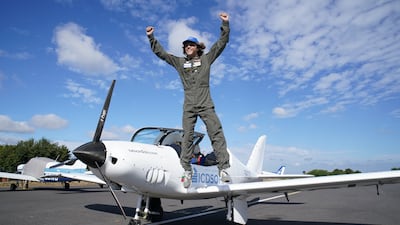
Mack Rutherford, 17, celebrates after arriving at Biggin Hill Airport in Kent on Monday, as he continues his bid to set a Guinness World Record as the youngest person to fly around the world solo in a small plane. PA -
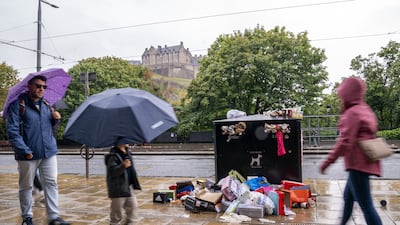
Bins overflow with rubbish along Princes Street in Edinburgh on Monday, as a strike by municipality cleaners entered its fourth day. PA -
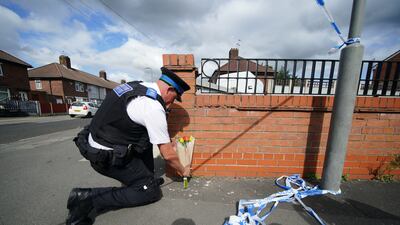
On Tuesday a police officer lays flowers near the scene where Olivia Pratt-Korbel, 9, was fatally shot, on Kingsheath Avenue in Knotty Ash, Liverpool. PA -
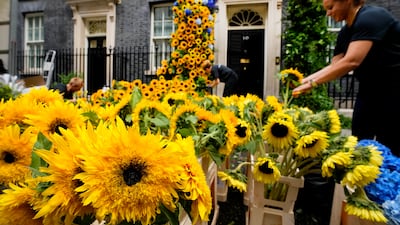
Florists decorate the entrance to 10 Downing Street with flowers in Ukraine's national colours, in London on Tuesday, a day before the besieged country's independence day. AP -
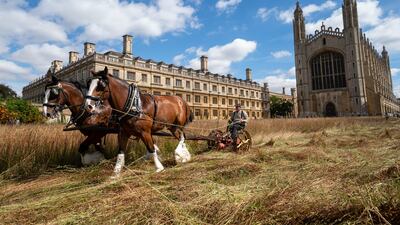
A man rides a carriage drawn by shire horses as he harvests wildflower meadow at King's College Cambridge on Tuesday. PA -
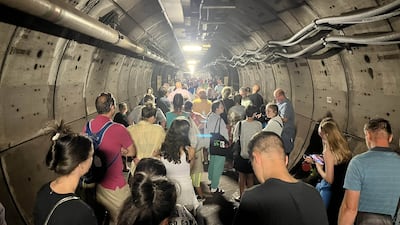
Hundreds of passengers wait in tunnels under the English Channel after a train broke down on Tuesday. PA -
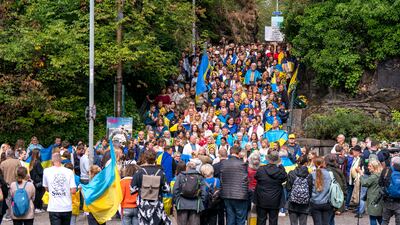
People gather in Edinburgh on Wednesday to take part in a Ukraine independence march. AP -

A port worker surfs at the Port of Felixstowe, Britain's biggest and busiest container terminal, on Wednesday after members of the Unite union went on strike. PA -
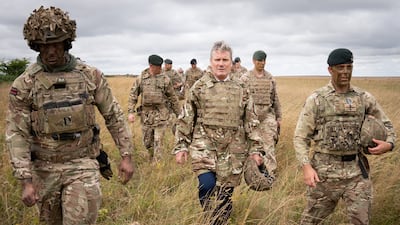
Labour leader Sir Keir Starmer with British soldiers in Wiltshire on Wednesday, where he saw Ukrainian soldiers being trained by the army as part of Operation Interflux. PA -
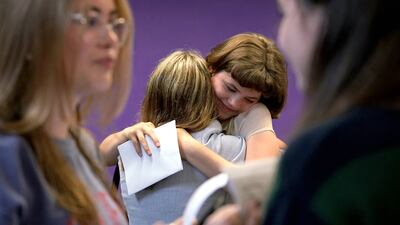
Pupils congratulate each other after receiving their GCSE results at Roedean School in Brighton, on Thursday. PA -
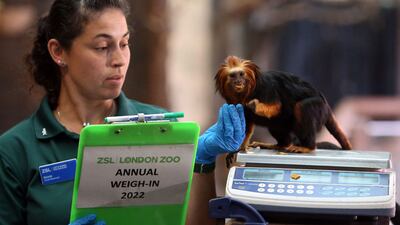
Samira, a golden-headed lion tamarin, stands on a scale during the London Zoo's annual weigh-in on Thursday. AFP -

Royal Mail staff join a Communication Workers Union strike outside a post office in London on Friday. More than 115,000 postal workers are on strike in a dispute over pay, the biggest walkout since 2009. EPA -
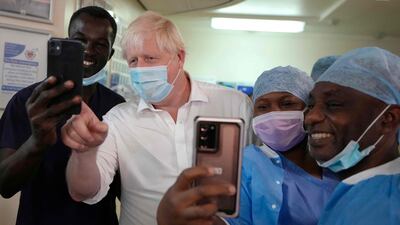
British Prime Minister Boris Johnson poses for a photograph with members of staff at the South-West London Elective Orthopaedic Centre in Epsom on Friday. AFP


Her current tenure as Foreign Secretary has put her in the forefront of helping coalesce opposition to Russian President Vladimir Putin, and educated her in the leverage Britain's well-respected armed forces can give the country’s prime minister. She will be a keen advocate of higher defence spending, and a more forward-leaning security posture. That security posture will include strengthening defence agreements with like-minded allies and partners. She has called for a "global Nato", although what that would mean in terms of commitments remains to be seen. A good relationship with the EU, and certain European leaders, is very important, but Ms Truss is unlikely to sacrifice national interests for short-term consensus. Indeed, under Ms Truss, Britain may well attempt to move even further from the European economic model. Given the importance of energy security, and its linkage to economic security, she would, in all likelihood, increase Britain’s engagement with partners in the Gulf, where the country has had decades of very close relationships.
Given the scale of the challenges facing an incoming prime minister, both Mr Sunak and Ms Truss will need to maximise Britain's international position in support of their efforts to address the domestic problems. Both have good credentials for engaging globally, although Ms Truss may feel more comfortable with stressing the hard-power aspects of what Britain brings to the world.
Time will be short for either candidate, given the proximity of the next general election. And whatever be their respective plans, hopes and aspirations, both at home and abroad, there are always what former prime minister Harold Macmillan identified as the greatest challenge for political leaders – "events, dear boy, events”.

