• Dore Canyon. Photo: Leon McCarron
    Dore Canyon. Photo: Leon McCarron
  • Near the town of Galala. Photo: Leon McCarron
    Near the town of Galala. Photo: Leon McCarron
  • Lalish temple. Photo: Leon McCarron
    Lalish temple. Photo: Leon McCarron
  • Above the city of Akre. Photo: Leon McCarron
    Above the city of Akre. Photo: Leon McCarron
  • Lawin Mohammad approaching Halgurd. Photo: Leon McCarron
    Lawin Mohammad approaching Halgurd. Photo: Leon McCarron
  • The path out of Rwanduz. Photo: Leon McCarron
    The path out of Rwanduz. Photo: Leon McCarron
  • Looking over Barzan valley. Photo: Leon McCarron
    Looking over Barzan valley. Photo: Leon McCarron
  • The Bradost mountain range. Photo: Leon McCarron
    The Bradost mountain range. Photo: Leon McCarron
  • Cascades near the village Zoragvan. Photo: Leon McCarron
    Cascades near the village Zoragvan. Photo: Leon McCarron
  • Group trip. Photo: Leon McCarron
    Group trip. Photo: Leon McCarron
  • Approach to Dinarta. Photo: Leon McCarron
    Approach to Dinarta. Photo: Leon McCarron
  • Dargala valley. Photo: Leon McCarron
    Dargala valley. Photo: Leon McCarron
  • Approaching the village of Barzan. Photo: Leon McCarron
    Approaching the village of Barzan. Photo: Leon McCarron
  • Shush. Photo: Leon McCarron
    Shush. Photo: Leon McCarron
  • Leon McCarron and Lawin Mohammad under Mamarout. Photo: Leon McCarron
    Leon McCarron and Lawin Mohammad under Mamarout. Photo: Leon McCarron
  • Rwanduz Gorge. Photo: Leon McCarron
    Rwanduz Gorge. Photo: Leon McCarron
  • The endangered Egyptian vulture. Photo: Korsh Ararat
    The endangered Egyptian vulture. Photo: Korsh Ararat
  • The imperial eagle. Photo: Korsh Ararat
    The imperial eagle. Photo: Korsh Ararat
  • The steppe eagle. Photo: Korsh Ararat
    The steppe eagle. Photo: Korsh Ararat
  • Egyptian vulture. Photo: Korsh Ararat
    Egyptian vulture. Photo: Korsh Ararat
  • Qaradagh protected area. Photo: Korsh Ararat
    Qaradagh protected area. Photo: Korsh Ararat
  • Qaradagh protected area. Photo: Korsh Ararat
    Qaradagh protected area. Photo: Korsh Ararat
  • Qaradagh protected area. Photo: Korsh Ararat
    Qaradagh protected area. Photo: Korsh Ararat
  • Qaradagh protected area. Photo: Korsh Ararat
    Qaradagh protected area. Photo: Korsh Ararat

Eco-tourism comes to Iraq - but will the green travellers follow?


Thomas Helm
  • English
  • Arabic

“I want to organise tours that have 14 days of hiking, 14 guides and 14 home stays,“ Lawin Mohammad tells me about the new Zagros Mountain Trail, a project he co-founded in Iraq’s Kurdistan region.

It is as if he is making up for lost time. Welcoming and sheltering travellers from around the world is an important part of Kurdish and Iraqi culture. But these days, persistent instability means the tourists aren’t coming.

The trail, now almost finished, is quite literally trying to work around this tough past. At points, it guides visitors through one of the most land-mined areas on the planet, a legacy of many terrible conflicts in the late 20th century.

The trail's organisers think it can be part of a solution to such problems. Mr Mohammad tells me that he wants to use the momentum behind the project to create an NGO called the Zagros Mountain Association. “If we go to donors, embassies and government officials as an organisation, not individuals, we can make more of an impression.”

Leon McCarron, right and Lawin Mohammad, second right, founders of the Zagros Mountain Trail. Photo: Leon McCarron

The trail is also a 240 kilometre-long reminder of the huge environmental problems confronting Iraq. It passes flora and fauna threatened by mismanagement and desertified, emptying villages.

As it nears completion, excitement is mounting. Mr Mohammad and his fellow co-founder Leon McCarron, an adventurer and author, are preparing a final round of GPS mapping, signposting and consultations with communities on the route. Its promise is getting attention beyond the world of hiking. There are hopes the model might catch on elsewhere and help build an eco-tourism movement in Iraq.

The Kurdistan region's relative stability could make it an important testing ground for similar projects. Many are already under way. On a recent tour of the Qaradagh protected area on the north-eastern border with Iran, Korsh Ararat, a conservationist and scholar of local bird species based at the University of Sulaimani, told me about his many plans and the long way to go before tourists and authorities understand what a sustainable holiday really is.

“Eco-tourism is about more than having a barbecue in nature,” he says. “The government might think all you need is a good paved road into a national park but it’s about far more.” Rather than merely build, authorities need to consult experts, invest in the long term and, crucially, do the harder task of drawing up and enforcing laws to protect nature.

Qaradagh needs them. Surveying the park from one of its many peaks, Mr Ararat points out a new, brightly shining illegal summer house that had popped up on top of a hill, and a scattering of leftover barbecues.

He is frank about Qaradagh's precarious situation. He and his colleagues are doing their best to fight back. They have built an eco-lodge in the hope it will eventually attract paying visitors and offer an example across Iraq of how to build sustainably. They have also worked with locals in a bid to stamp out illegal hunting. A preliminary international investigation in which Mr Ararat was involved found that Kurdistan is the second most-affected area in the Middle East by the practice.

The expansion of legal hunting in the areas bordering the park, however, is being considered and Mr Ararat makes a strong environmental case for it. Hunters from around the world could target overpopulated animals that are damaging the area, in particular wild boar. While controversial, similar models have proven to be lucrative in countries such as South Africa and Canada. Careful monitoring would be needed, however. Many local hunters use military-grade weapons and night-vision goggles previously supplied by the international coalition. Wildlife does not stand a chance. Illegal hunting has played a role in the near-extinction of one of the region’s most precious species, the Persian leopard, alongside deforestation and the animal’s value on the black market.

Many of these factors have been made worse by economic troubles. Eco-tourism could help. Mr Mohammad of the Zagros Mountain Trail told me how one of the project’s guides used to be a poacher. “He is now paid by us and has turned into a committed environmentalist, fighting for the species he used to kill, trying to convince other hunters to stop.”

Korsh Ararat is an expert on local bird species as well as a conservationist. Photo: Korsh Ararat

Back in Qaradagh, Mr Ararat shows me sustainable, small-scale dams that NGO Nature Iraq and volunteers are building using mud. They are quick to construct, cost as little as $3,000 and can be covered by trees. The idea is to keep water for animals in the increasingly dry environment. This supports local bird species, many of which are endemic to the area, and, in turn, creates a remarkable zone for international bird watchers.

In the history of Iraq’s water, the sustainable dam is a novelty. Few things symbolise the short-sighted ambition of the country’s 20th century industrial frenzy as a spree in dam-building. It also happened in neighbouring Turkey and Iran. The latter is thought to have built more than 600 in the past three decades.

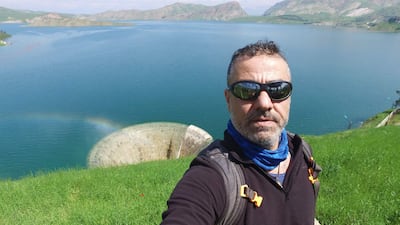
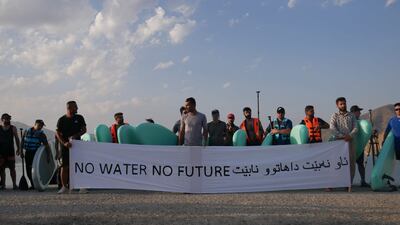
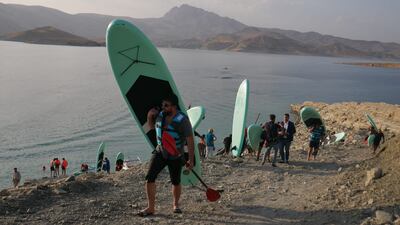
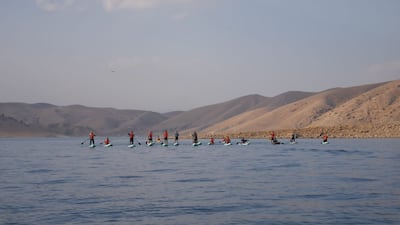
Downstream, water-scarce Iraq is feeling this legacy hard. Nabil Musa, the founder of Waterkeepers Iraq and Kurdistan, believes eco-tourism can help. His approach is straightforward: by getting more people on and in Iraq’s waterways, environmentalists can help to protect and raise awareness. He offers tours on paddle boards and swimming excursions, which are often combined with picking up litter and lectures on the threats to water in Iraq.

  • Nabil Musa at the Dukan Dam in the Kurdistan region of Iraq. Photo: Nabil Musa
    Nabil Musa at the Dukan Dam in the Kurdistan region of Iraq. Photo: Nabil Musa
  • Water keepers in Iraq. Photo: Nabil Musa
    Water keepers in Iraq. Photo: Nabil Musa
  • Getting ready for a paddleboarding trip. Photo: Nabil Musa
    Getting ready for a paddleboarding trip. Photo: Nabil Musa
  • The group believes that trips into nature can help to raise awareness of environment issues. Photo: Nabil Musa
    The group believes that trips into nature can help to raise awareness of environment issues. Photo: Nabil Musa
  • Sources of water in Iraq are disappearing at a catastrophic rate. Photo: Nabil Musa
    Sources of water in Iraq are disappearing at a catastrophic rate. Photo: Nabil Musa
  • Nabil Musa taking pictures of the Sirwan River on the outskirts of Halabja, Iraq. Reuters
    Nabil Musa taking pictures of the Sirwan River on the outskirts of Halabja, Iraq. Reuters

He also speaks about its therapeutic power: “During the Saddam era I was barely able to travel anywhere. When I was finally able to explore my country, the water became a form of therapy.” On his tours he aims to share the same experience, in the hope it might reconnect Iraqis, many of whom are isolated in cities, to the environment. He believes doing so could profoundly change society. “Nature is linked to politics. Without good politics, it is hard to love nature. Nature can be a form of therapy for Iraq.”

An informal popular movement is emerging elsewhere. There are many social media groups that organise excursions into nature. But they still need guidance. Mr Ararat stressed that more people need to be educated in how to make trips safe for the environment, even for those with good intentions. Like Mr Musa, his view of eco-tourism in Iraq is not merely about conserving nature, but also the people whose right it is to experience its beauty.

This is where the importance of the domestic market comes in. Eco-tourism would not be solely concerned with attracting lucrative holidaymakers from abroad. It is also about creating the next generation of desperately needed Iraqi conservationists. For Mr Ararat, who teaches them, this is the ultimate goal: “It’s not so much money that we need to protect nature, but people."


Western Clubs Champions League:

  • Friday, Sep 8 - Abu Dhabi Harlequins v Bahrain
  • Friday, Sep 15 – Kandy v Abu Dhabi Harlequins
  • Friday, Sep 22 – Kandy v Bahrain

Company Profile

Company name: NutriCal

Started: 2019

Founder: Soniya Ashar

Based: Dubai

Industry: Food Technology

Initial investment: Self-funded undisclosed amount

Future plan: Looking to raise fresh capital and expand in Saudi Arabia

Total Clients: Over 50

Meydan race card

6.30pm: Maiden Dh 165,000 1,600m
7.05pm: Handicap Dh 185,000 2,000m
7.40pm: Maiden Dh 165,000 1,600m
8.15pm: Handicap Dh 190,000 1,400m
8.50pm: Handicap Dh 175,000 1,600m
9.25pm: Handicap Dh 175,000 1,200m
10pm: Handicap Dh 165,000 1,600m

The specs
  • Engine: 3.9-litre twin-turbo V8
  • Power: 640hp
  • Torque: 760nm
  • On sale: 2026
  • Price: Not announced yet
Dunki
%3Cp%3E%3Cstrong%3EDirector%3A%3C%2Fstrong%3E%20Rajkumar%20Hirani%C2%A0%3C%2Fp%3E%0A%3Cp%3E%3Cstrong%3EStarring%3A%3C%2Fstrong%3E%20Shah%20Rukh%20Khan%2C%20Taapsee%20Pannu%2C%20Vikram%20Kochhar%20and%20Anil%20Grover%3C%2Fp%3E%0A%3Cp%3E%3Cstrong%3ERating%3A%3C%2Fstrong%3E%204%2F5%3C%2Fp%3E%0A
ALRAWABI%20SCHOOL%20FOR%20GIRLS
%3Cp%3ECreator%3A%20Tima%20Shomali%3C%2Fp%3E%0A%3Cp%3EStarring%3A%C2%A0Tara%20Abboud%2C%C2%A0Kira%20Yaghnam%2C%20Tara%20Atalla%3C%2Fp%3E%0A%3Cp%3ERating%3A%204%2F5%3C%2Fp%3E%0A
The specs
Engine: 2.5-litre, turbocharged 5-cylinder

Transmission: seven-speed auto

Power: 400hp

Torque: 500Nm

Price: Dh300,000 (estimate)

On sale: 2022 

Ten tax points to be aware of in 2026

1. Domestic VAT refund amendments: request your refund within five years

If a business does not apply for the refund on time, they lose their credit.

2. E-invoicing in the UAE

Businesses should continue preparing for the implementation of e-invoicing in the UAE, with 2026 a preparation and transition period ahead of phased mandatory adoption. 

3. More tax audits

Tax authorities are increasingly using data already available across multiple filings to identify audit risks. 

4. More beneficial VAT and excise tax penalty regime

Tax disputes are expected to become more frequent and more structured, with clearer administrative objection and appeal processes. The UAE has adopted a new penalty regime for VAT and excise disputes, which now mirrors the penalty regime for corporate tax.

5. Greater emphasis on statutory audit

There is a greater need for the accuracy of financial statements. The International Financial Reporting Standards standards need to be strictly adhered to and, as a result, the quality of the audits will need to increase.

6. Further transfer pricing enforcement

Transfer pricing enforcement, which refers to the practice of establishing prices for internal transactions between related entities, is expected to broaden in scope. The UAE will shortly open the possibility to negotiate advance pricing agreements, or essentially rulings for transfer pricing purposes. 

7. Limited time periods for audits

Recent amendments also introduce a default five-year limitation period for tax audits and assessments, subject to specific statutory exceptions. While the standard audit and assessment period is five years, this may be extended to up to 15 years in cases involving fraud or tax evasion. 

8. Pillar 2 implementation 

Many multinational groups will begin to feel the practical effect of the Domestic Minimum Top-Up Tax (DMTT), the UAE's implementation of the OECD’s global minimum tax under Pillar 2. While the rules apply for financial years starting on or after January 1, 2025, it is 2026 that marks the transition to an operational phase.

9. Reduced compliance obligations for imported goods and services

Businesses that apply the reverse-charge mechanism for VAT purposes in the UAE may benefit from reduced compliance obligations. 

10. Substance and CbC reporting focus

Tax authorities are expected to continue strengthening the enforcement of economic substance and Country-by-Country (CbC) reporting frameworks. In the UAE, these regimes are increasingly being used as risk-assessment tools, providing tax authorities with a comprehensive view of multinational groups’ global footprints and enabling them to assess whether profits are aligned with real economic activity. 

Contributed by Thomas Vanhee and Hend Rashwan, Aurifer

Who's who in Yemen conflict

Houthis: Iran-backed rebels who occupy Sanaa and run unrecognised government

Yemeni government: Exiled government in Aden led by eight-member Presidential Leadership Council

Southern Transitional Council: Faction in Yemeni government that seeks autonomy for the south

Habrish 'rebels': Tribal-backed forces feuding with STC over control of oil in government territory

Jurassic%20Park
%3Cp%3E%3Cstrong%3EDirector%3A%20%3C%2Fstrong%3ESteven%20Spielberg%3Cbr%3E%3Cstrong%3EStars%3A%3C%2Fstrong%3E%20Sam%20Neill%2C%20Jeff%20Goldblum%20and%20Richard%20Attenborough%3Cbr%3E%3Cstrong%3ERating%3A%3C%2Fstrong%3E%205%2F5%3C%2Fp%3E%0A
Specs

Engine: 3.0L twin-turbo V6
Gearbox: 10-speed automatic
Power: 405hp at 5,500rpm
Torque: 562Nm at 3,000rpm
Fuel economy, combined: 11.2L/100km
Price: From Dh292,845 (Reserve); from Dh320,145 (Presidential)
On sale: Now

The Sand Castle

Director: Matty Brown

Stars: Nadine Labaki, Ziad Bakri, Zain Al Rafeea, Riman Al Rafeea

Rating: 2.5/5

Updated: August 30, 2022, 6:24 PM