The world — or at least the slice of it featured in the evening news — can seem a depressing place, with an endless stream of stories about war, corruption, inequality, crime and environmental destruction.
But before we get too downhearted by the doom and gloom filling news bulletins and newspapers, it’s worth remembering that things often make headlines because they are bad.
Indeed, speaking to the BBC this month, Steven Pinker, the Canadian-American psychologist and author, described journalism as “a non-random sample of the worst things that happen in the world at any given moment”.
Pinker has become something of champion of positive news, not least as he wrote a book, The Better Angels of Our Nature, in which he argued that violence had declined over time. The 2011 volume attracted much attention and praise, although some scholars took issue with its conclusions.
Pinker said there was “a natural incredulity” when he talked about data showing improvements in various areas, “because they don’t make the news”.
Reasons to be hopeful
People have told him that when they learnt that indicators of poverty or longevity were improving, they felt more hopeful about the world.
In Pinker’s view, positive news gets ignored in part because “good things tend to creep up” and sometimes they’re “the things that don’t happen”, such as the fall in the number of terrorist attacks in the US.
While it is easy to knock journalists for not accentuating the positive, bad stories can serve a useful role, such as when they hold the powerful to account, said Prof An Nguyen, professor of journalism at Bournemouth University in the UK.
Much news is about the unexpected, and such events — fires, accidents, sudden deaths — are more often than not bad things.
“Journalism is always looking for the exception rather than the norm,” he said. “Journalism is looking at something that, in statistical terms, we would call outliers. Something beyond the normal things that happen in daily life.”
On alert for bad news
Also, negative reporting may tap into what is sometimes described as the “negativity bias” in human psychology: we are more alert to the bad than to the good.
“The human brain evolved in a way to respond to dangers, to threats from the very primitive days until now,” Prof Nguyen said.
“The threats are different from the cave people thousands of years ago, but human beings have evolved in a way to respond much more strongly to bad things. That’s why bad news travels fast and good news travels very slowly.”
But too much negative reporting can cause people to switch off and avoid the news, he said, and even affect the mental health of audiences.
Prof Nguyen researches “solutions journalism”, a growing field in which reporting does not merely discuss things that are wrong, but also talks about how they could be improved.
While the evidence is mixed, some studies indicate that this type of reporting engages audiences and spurs them into feeling that they can make a difference to their local community or the wider world.
“This sort of story does serve the interests at least of some segments of the audience,” Prof Nguyen said.
War reporting, for example, can shift into peace reporting, looking into what is being done to overcome the difficulties that an area has experienced.
Indeed human ingenuity and energy has helped us to overcome many of the biggest challenges that our species — and in some cases other species — have faced.
Here we look at some of the ways in which the world has become a better place.
1. Fewer people live in absolute poverty
While countless tens of millions of people across the globe have very difficult lives, the numbers who live in extreme poverty, defined as having to live on less than $1.90 a day, has declined considerably.
One aim of the United Nations Millennium Development Goals was, between 1990 and 2015, to reduce by half the number of people living in absolute poverty.
This 50 per cent reduction was achieved five years before schedule, the UN reports, and more than 1 billion people were lifted out of extreme poverty in the quarter of a century after 1990.
Over the same time period, the number of people who were undernourished almost halved, a particularly impressive achievement given that the world's population is continuing to grow.
And numbers living in poverty continue to fall, with estimates suggesting that on an average day the number of people in extreme poverty declines by 137,000.
2. Child and maternal mortality have fallen, while life expectancy has increased
A major study looking at death rates in recorded human history, reported by OurWorldinData, found that the infant mortality rate (the proportion of children dying in their first year) was 26.9 per cent. Almost half of children, 46.2 per cent, never reached adulthood.
Today, the figures are very different. Averaged across the world, 2.9 per cent of children die in their first year, while 4.6 per cent die before their 15th birthday.
As OurWorldinData reports, “we have seen a very steep decline during our lifetimes” in childhood mortality, with rates only one fifth what they were in the middle of the 20th century.
For many families, the tragedy of death during infancy or childhood is all too real — 5.2 million children aged below 5 die each year — but it is much less common than it used to be.
Maternal mortality has also fallen dramatically, even over the past two decades, with 450,800 maternal deaths in 2000 and 293,760 in 2017.
Life expectancy has increased dramatically, rising from 29 years in 1800 when averaged across the world to 46 in 1950 and 71 in 2015.
3. Some animals that faced extinction are now thriving
Amid much negative news about how humans are heating the planet and destroying the natural world, there are positive stories of creatures threatened with extinction that have been brought back from the brink.
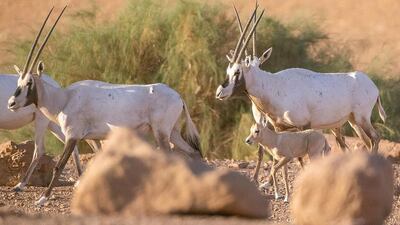
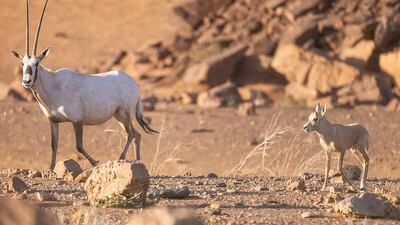
Among them is the Arabian oryx, which by the 1970s became extinct in the wild. Now, more than 1,200 of these animals live free, while thousands more are in captivity, often in large enclosures that enable them to roam widely.
There are other pieces of good news, including the recovery of the peregrine falcon, a bird described by The Nature Conservancy, a US-founded environmental organisation, as “nature's finest flying machine”.
This bird, which can dive at speeds above 320kph, suffered hugely because of habitat loss, egg collectors and, in particular, the pesticide DDT, which was subsequently banned in the US and elsewhere.
The bird was bred in captivity and thousands have been released in North America alone since the mid-1970s, while numbers have also recovered in other countries, including the UK.
4. Access to education for females has increased
Since the beginning of the 20th century, access to education for females has moved closer to that of males in every region of the world and, in some regions, females on average now spend more years than males in education.
In sub-Saharan Africa in 1900, females spent only 7.47 per cent as many years in education as males did. In the most dramatic turnaround of all regions, by 2010 the figure had grown to 82 per cent.
The Middle East and North Africa region has seen the ratio grow from 29.65 per cent in 1900 to 87.5 per cent in 2010, while in Asia and the Pacific it increased from 14.3 per cent to 84.07 per cent.
Latin America and the Caribbean recorded growth from 53.16 per cent to 101.28 per cent, Eastern Europe from 68.65 per cent to, also, 101.28 per cent, while in advanced economies, the increase was from 74.46 per cent to 100 per cent.
In all world regions, overall educational inequality has also fallen when figures from 1960 onwards are considered, indicating that more people have access to schooling.
5. Terrorist attacks are down
While some statistics, such as those of childhood mortality or life expectancy, show long-term, sustained declines, the reduction in the number of terrorist attacks across the globe is relatively recent, but does represent a clear trend.
Turn the clock back to 1992 and, across the globe, there was a total of 5,071 terrorist incidents by non-state actors, with the most heavily affected regions being the Middle East and North Africa, South America and Western Europe.
Numbers fell to 934 incidents in 1998 and, over the next five years or so, increased slightly before declining. After 1,167 incidents were recorded in 2003, numbers rose almost every year — often very steeply — for the next decade, peaking at 16,959 incidents in 2014.
There has been a steep decline since then, with numbers almost halving to 8,495 in 2019. While still much above historical averages, recent figures represent a significant improvement.

Company info
Company name: Entrupy
Co-founders: Vidyuth Srinivasan, co-founder/chief executive, Ashlesh Sharma, co-founder/chief technology officer, Lakshmi Subramanian, co-founder/chief scientist
Based: New York, New York
Sector/About: Entrupy is a hardware-enabled SaaS company whose mission is to protect businesses, borders and consumers from transactions involving counterfeit goods.
Initial investment/Investors: Entrupy secured a $2.6m Series A funding round in 2017. The round was led by Tokyo-based Digital Garage and Daiwa Securities Group's jointly established venture arm, DG Lab Fund I Investment Limited Partnership, along with Zach Coelius.
Total customers: Entrupy’s customers include hundreds of secondary resellers, marketplaces and other retail organisations around the world. They are also testing with shipping companies as well as customs agencies to stop fake items from reaching the market in the first place.
The Voice of Hind Rajab
Starring: Saja Kilani, Clara Khoury, Motaz Malhees
Director: Kaouther Ben Hania
Rating: 4/5
Living in...
This article is part of a guide on where to live in the UAE. Our reporters will profile some of the country’s most desirable districts, provide an estimate of rental prices and introduce you to some of the residents who call each area home.
Hidden killer
Sepsis arises when the body tries to fight an infection but damages its own tissue and organs in the process.
The World Health Organisation estimates it affects about 30 million people each year and that about six million die.
Of those about three million are newborns and 1.2 are young children.
Patients with septic shock must often have limbs amputated if clots in their limbs prevent blood flow, causing the limbs to die.
Campaigners say the condition is often diagnosed far too late by medical professionals and that many patients wait too long to seek treatment, confusing the symptoms with flu.
Company profile
Date started: 2015
Founder: John Tsioris and Ioanna Angelidaki
Based: Dubai
Sector: Online grocery delivery
Staff: 200
Funding: Undisclosed, but investors include the Jabbar Internet Group and Venture Friends
THE LIGHT
Director: Tom Tykwer
Starring: Tala Al Deen, Nicolette Krebitz, Lars Eidinger
Rating: 3/5
Quick%20facts
%3Cul%3E%0A%3Cli%3EStorstockholms%20Lokaltrafik%20(SL)%20offers%20free%20guided%20tours%20of%20art%20in%20the%20metro%20and%20at%20the%20stations%3C%2Fli%3E%0A%3Cli%3EThe%20tours%20are%20free%20of%20charge%3B%20all%20you%20need%20is%20a%20valid%20SL%20ticket%2C%20for%20which%20a%20single%20journey%20(valid%20for%2075%20minutes)%20costs%2039%20Swedish%20krone%20(%243.75)%3C%2Fli%3E%0A%3Cli%3ETravel%20cards%20for%20unlimited%20journeys%20are%20priced%20at%20165%20Swedish%20krone%20for%2024%20hours%3C%2Fli%3E%0A%3Cli%3EAvoid%20rush%20hour%20%E2%80%93%20between%209.30%20am%20and%204.30%20pm%20%E2%80%93%20to%20explore%20the%20artwork%20at%20leisure%3C%2Fli%3E%0A%3C%2Ful%3E%0A
Company%20profile
%3Cp%3E%3Cstrong%3EName%3A%3C%2Fstrong%3E%20Homie%20Portal%20LLC%3C%2Fp%3E%0A%3Cp%3E%3Cstrong%3EStarted%3A%3C%2Fstrong%3E%20End%20of%202021%C2%A0%3C%2Fp%3E%0A%3Cp%3E%3Cstrong%3EFounder%3A%20%3C%2Fstrong%3EAbdulla%20Al%20Kamda%C2%A0%3C%2Fp%3E%0A%3Cp%3E%3Cstrong%3EBased%3A%3C%2Fstrong%3E%20Dubai%3C%2Fp%3E%0A%3Cp%3E%3Cstrong%3ESector%3A%3C%2Fstrong%3E%20FinTech%C2%A0%3C%2Fp%3E%0A%3Cp%3E%3Cstrong%3EInitial%20investment%3A%3C%2Fstrong%3E%20Undisclosed%C2%A0%3C%2Fp%3E%0A%3Cp%3E%3Cstrong%3ECurrent%20number%20of%20staff%3A%3C%2Fstrong%3E%2014%C2%A0%3C%2Fp%3E%0A%3Cp%3E%3Cstrong%3EInvestment%20stage%3A%20%3C%2Fstrong%3ELaunch%C2%A0%3C%2Fp%3E%0A%3Cp%3E%3Cstrong%3EInvestors%3A%3C%2Fstrong%3E%20Self-funded%3C%2Fp%3E%0A
Engine: 3.5-litre V6
Transmission: eight-speed automatic
Power: 290hp
Torque: 340Nm
Price: Dh155,800
On sale: now
SPECS
%3Cp%3E%3Cstrong%3EEngine%3A%3C%2Fstrong%3E%202-litre%204-cylinder%20turbo%0D%3Cbr%3E%3Cstrong%3EPower%3A%20%3C%2Fstrong%3E268hp%0D%3Cbr%3E%3Cstrong%3ETorque%3A%20%3C%2Fstrong%3E380Nm%0D%3Cbr%3E%3Cstrong%3EPrice%3A%20%3C%2Fstrong%3EFrom%20Dh208%2C000%0D%3Cbr%3E%3Cstrong%3EOn%20sale%3A%20%3C%2Fstrong%3ENow%0D%3Cbr%3E%3C%2Fp%3E%0A
Desert Warrior
Starring: Anthony Mackie, Aiysha Hart, Ben Kingsley
Director: Rupert Wyatt
Rating: 3/5
Profile
Name: Carzaty
Founders: Marwan Chaar and Hassan Jaffar
Launched: 2017
Employees: 22
Based: Dubai and Muscat
Sector: Automobile retail
Funding to date: $5.5 million
How to keep control of your emotions
If your investment decisions are being dictated by emotions such as fear, greed, hope, frustration and boredom, it is time for a rethink, Chris Beauchamp, chief market analyst at online trading platform IG, says.
Greed
Greedy investors trade beyond their means, open more positions than usual or hold on to positions too long to chase an even greater gain. “All too often, they incur a heavy loss and may even wipe out the profit already made.
Tip: Ignore the short-term hype, noise and froth and invest for the long-term plan, based on sound fundamentals.
Fear
The risk of making a loss can cloud decision-making. “This can cause you to close out a position too early, or miss out on a profit by being too afraid to open a trade,” he says.
Tip: Start with a plan, and stick to it. For added security, consider placing stops to reduce any losses and limits to lock in profits.
Hope
While all traders need hope to start trading, excessive optimism can backfire. Too many traders hold on to a losing trade because they believe that it will reverse its trend and become profitable.
Tip: Set realistic goals. Be happy with what you have earned, rather than frustrated by what you could have earned.
Frustration
Traders can get annoyed when the markets have behaved in unexpected ways and generates losses or fails to deliver anticipated gains.
Tip: Accept in advance that asset price movements are completely unpredictable and you will suffer losses at some point. These can be managed, say, by attaching stops and limits to your trades.
Boredom
Too many investors buy and sell because they want something to do. They are trading as entertainment, rather than in the hope of making money. As well as making bad decisions, the extra dealing charges eat into returns.
Tip: Open an online demo account and get your thrills without risking real money.
MATCH INFO
Uefa Champions League final:
Who: Real Madrid v Liverpool
Where: NSC Olimpiyskiy Stadium, Kiev, Ukraine
When: Saturday, May 26, 10.45pm (UAE)
TV: Match on BeIN Sports
The%20Color%20Purple
%3Cp%3E%3Cstrong%3EDirector%3A%20%3C%2Fstrong%3EBlitz%20Bazawule%3Cbr%3E%3Cstrong%3EStarring%3A%20%3C%2Fstrong%3EFantasia%20Barrino%2C%20Taraji%20P%20Henson%2C%20Danielle%20Brooks%2C%20Colman%20Domingo%3Cbr%3E%3Cstrong%3ERating%3A%3C%2Fstrong%3E%204%2F5%3C%2Fp%3E%0A
Business Insights
- Canada and Mexico are significant energy suppliers to the US, providing the majority of oil and natural gas imports
- The introduction of tariffs could hinder the US's clean energy initiatives by raising input costs for materials like nickel
- US domestic suppliers might benefit from higher prices, but overall oil consumption is expected to decrease due to elevated costs
MATCH INFO
Barcelona 4 (Messi 23' pen, 45 1', 48', Busquets 85')
Celta Vigo 1 (Olaza 42')
A State of Passion
Directors: Carol Mansour and Muna Khalidi
Stars: Dr Ghassan Abu-Sittah
Rating: 4/5
Fixtures:
Thursday:
Hatta v Al Jazira, 4.55pm
Al Wasl v Dibba, 7.45pm
Friday:
Al Dhafra v Al Nasr, 5.05pm
Shabab Al Ahli Dubai v Al Wahda, 7.45pm
Saturday:
Ajman v Emirates, 4.55pm
Al Ain v Sharjah, 7.45pm
Poland Statement
All people fleeing from Ukraine before the armed conflict are allowed to enter Poland. Our country shelters every person whose life is in danger - regardless of their nationality.
The dominant group of refugees in Poland are citizens of Ukraine, but among the people checked by the Border Guard are also citizens of the USA, Nigeria, India, Georgia and other countries.
All persons admitted to Poland are verified by the Border Guard. In relation to those who are in doubt, e.g. do not have documents, Border Guard officers apply appropriate checking procedures.
No person who has received refuge in Poland will be sent back to a country torn by war.
Movie: Saheb, Biwi aur Gangster 3
Producer: JAR Films
Director: Tigmanshu Dhulia
Cast: Sanjay Dutt, Jimmy Sheirgill, Mahie Gill, Chitrangda Singh, Kabir Bedi
Rating: 3 star
More on Quran memorisation:
Sri Lanka-India Test series schedule
1st Test July 26-30 in Galle
2nd Test August 3-7 in Colombo
3rd Test August 12-16 in Pallekele
MATCH INFO
UAE Division 1
Abu Dhabi Harlequins 12-24 Abu Dhabi Saracens
EA Sports FC 26
Publisher: EA Sports
Consoles: PC, PlayStation 4/5, Xbox Series X/S
Rating: 3/5
The burning issue
The internal combustion engine is facing a watershed moment – major manufacturer Volvo is to stop producing petroleum-powered vehicles by 2021 and countries in Europe, including the UK, have vowed to ban their sale before 2040. The National takes a look at the story of one of the most successful technologies of the last 100 years and how it has impacted life in the UAE.
Read part four: an affection for classic cars lives on
Read part three: the age of the electric vehicle begins
Read part one: how cars came to the UAE
Company%20profile
%3Cp%3E%3Cstrong%3EName%3A%3C%2Fstrong%3E%20WonderTree%3Cbr%3E%3Cstrong%3EStarted%3A%3C%2Fstrong%3E%20April%202016%3Cbr%3E%3Cstrong%3ECo-founders%3A%3C%2Fstrong%3E%20Muhammad%20Waqas%20and%20Muhammad%20Usman%3Cbr%3E%3Cstrong%3EBased%3A%3C%2Fstrong%3E%20Karachi%2C%20Pakistan%2C%20Abu%20Dhabi%2C%20UAE%2C%20and%20Delaware%2C%20US%3Cbr%3E%3Cstrong%3ESector%3A%3C%2Fstrong%3E%20Special%20education%2C%20education%20technology%2C%20assistive%20technology%2C%20augmented%20reality%3Cbr%3EN%3Cstrong%3Eumber%20of%20staff%3A%20%3C%2Fstrong%3E16%3Cbr%3E%3Cstrong%3EInvestment%20stage%3A%20%3C%2Fstrong%3EGrowth%3Cbr%3E%3Cstrong%3EInvestors%3A%3C%2Fstrong%3E%20Grants%20from%20the%20Lego%20Foundation%2C%20UAE's%20Anjal%20Z%2C%20Unicef%2C%20Pakistan's%20Ignite%20National%20Technology%20Fund%3C%2Fp%3E%0A