The National Museum of Customs and GST in Panaji, Goa. Photo: @MuseumGoa via Twitter

A visit to Dharohar, Goa's famous 'smugglers museum'


  • English
  • Arabic

Synonymous with scenic beaches, picturesque churches and charming cafes, the coastal Indian state of Goa is also home to a one-of-a-kind museum that displays smuggled goods seized by Indian Customs over the years. The unique Dharohar National Museum of Customs and GST (Goods and Service Tax) also documents the behind-the-scenes work done by authorities in nabbing culprits and protecting the country’s cultural heritage.

Although the museum’s provenance goes back to 2009, it has been recently revamped and thrown open to the public in a new guise. It nestles inside a 400-year-old Blue Building on the banks of river Mandovi, where a stone inscription in Portuguese over the entrance is the first thing that greets you.

Underscoring Goa’s significance as a centre of international trade, as a Portuguese colony from 1510 to 1961 ships sailed in and out of the state's port from East Africa and Japan, transporting everything from fragrant spices to horses and slaves, which were then traded in other Asian ports or sent back to Lisbon.

Inside the museum’s cool confines, antique wooden floors, a grand staircase and capacious halls greet visitors. To the left of the entrance is the ticket counter and a cloak room. To the right is a chapel dedicated to St Anthony.

The lobby of Dharohar: National Museum of Customs and GST in Goa. Photo: @MuseumGoa via Twitter

The museum has galleries enough to satisfy every interest, including: the Introductory gallery; History of Taxation gallery; Guardians of our Economic Frontiers gallery; Guardians of our Art & Heritage; Guardians of Flora & Fauna; Custodians of our Social Well-being; Journey of Indirect taxes, Salt Tax to GST; and the GST Gallery.

The Guardians of our Economic Frontier gallery is a fascinating archive that reveals the modus operandi of smugglers and the efforts of custom officials in intercepting them to recover stolen goods. Visitors are taught how gold, drugs and other contraband items made their way to India.

From diamonds in the soles of shoes, gold bars embedded in various body parts, jewels in a car's engine or in the hollow of a walking stick, the museum throws light on all the various methods employed by criminals in their attempts to outwit customs officials.

India — once known for its temples brimming with precious gold statues of gods and goddesses as well as artefacts, metal sculptures and terracotta antiques — attracted invaders who plundered the country repeatedly.

Seized goods displayed in Dharohar. Photo: @MuseumGoa via Twitter

The museum’s most popular section, the Battle of Wits gallery, underlines the tussle between the smugglers and the law enforcement agencies over confiscated goods. One large wall has the front half of a white Premier Padmini car protruding from its surface, its open hood revealing how smugglers hid contraband in car engines. The rim of a cycle tire holds a pouch of drugs while currency is stashed in a hollowed-out book.

Before the economic liberalisation in India in the 1990s, when an obsession with foreign watches was at its peak, they were smuggled inside steel tiffin carriers or within the carved-out body of a boom-box. The Battle of Wits gallery also features life-size mannequins of a British couple "posing as aristocrats". They were caught red handed at Bombay Port in 1966 for smuggling diamonds and gold hidden in a walking stick and gold biscuits sewn into the woman's jacket.

The museum, housed in a 400-year-old building, was recently revamped. Photo: @MuseumGoa via Twitter

The Seizure gallery is where the confiscated goods are displayed. Sculptures of bronze, wood and brass jostle for space with mammoth tortoise shells, shark jaws and ivory tusks. The Amin Pillar (circa second century BC), the Nataraja from the Chola period (circa 11th-12th century BC) as well as seized sculptures and antiquities contributed by various high commissions are displayed.

Ironically, illegal trade in antiquities and wildlife worth billions continues today with rare artefacts, animal skins and body parts leaving the country despite stringent laws.

A museum official says the goal is to evoke a sense of the past and to show the achievements of the customs department in the task of revenue generation and protection of cultural and natural heritage in an educative and entertaining way.

“We also intend the museum to promote a culture of voluntary compliance with tax laws and inspire people to pay their taxes with pride,” he says.

Visitors will probably leave the museum with newfound respect for Indian custom officials, who are usually viewed solely as an inconvenience to those leaving or entering the country. Had it not been for them, India’s priceless cultural heritage would have long ago been lost to unscrupulous smugglers and lawbreakers.

A history of Indian art: open-source encyclopaedia traces 10,000 years of culture – in pictures

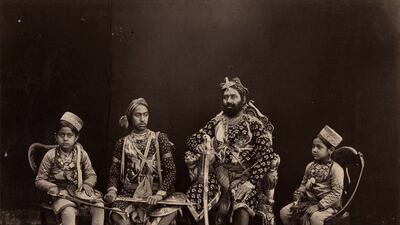
  • ‘The Maharaja of Ajaigarh with his Three Sons’, Lala Deen Dayal, albumen print, circa 1882. Photo: Hugh Huxley Collection
    ‘The Maharaja of Ajaigarh with his Three Sons’, Lala Deen Dayal, albumen print, circa 1882. Photo: Hugh Huxley Collection
  • ‘Nataraja, Shiva as the Lord of Dance’, bronze, circa 900-1200s. Photo: Cleveland Museum of Art
    ‘Nataraja, Shiva as the Lord of Dance’, bronze, circa 900-1200s. Photo: Cleveland Museum of Art
  • ‘Celestial dancer (Devata)’, sandstone, mid-11th century. Photo: Metropolitan Museum of Art
    ‘Celestial dancer (Devata)’, sandstone, mid-11th century. Photo: Metropolitan Museum of Art
  • ‘Untitled (Portrait of a Man Holding a Bird)’, Suresh Punjabi, Suhag Studio, celluloid negative, 1987. Photo: Museum of Art & Photography
    ‘Untitled (Portrait of a Man Holding a Bird)’, Suresh Punjabi, Suhag Studio, celluloid negative, 1987. Photo: Museum of Art & Photography
  • Stamp seal and modern impression: unicorn and incense burner, burnt steatite, circa 2600–1900 BC. Photo: Metropolitan Museum of Art
    Stamp seal and modern impression: unicorn and incense burner, burnt steatite, circa 2600–1900 BC. Photo: Metropolitan Museum of Art
  • ‘Buddha Offering Protection’, copper alloy, late sixth to early seventh century. Photo: Metropolitan Museum of Art
    ‘Buddha Offering Protection’, copper alloy, late sixth to early seventh century. Photo: Metropolitan Museum of Art
Stage results

1. Julian Alaphilippe (FRA) Deceuninck-QuickStep  4:39:05

2. Michael Matthews (AUS) Team BikeExchange 0:00:08

3. Primoz Roglic (SLV) Jumbo-Visma same time 

4. Jack Haig (AUS) Bahrain Victorious s.t  

5. Wilco Kelderman (NED) Bora-Hansgrohe s.t  

6. Tadej Pogacar (SLV) UAE Team Emirates s.t 

7. David Gaudu (FRA) Groupama-FDJ s.t

8. Sergio Higuita Garcia (COL) EF Education-Nippo s.t     

9. Bauke Mollema (NED) Trek-Segafredo  s.t

10. Geraint Thomas (GBR) Ineos Grenadiers s.t

War 2

Director: Ayan Mukerji

Stars: Hrithik Roshan, NTR, Kiara Advani, Ashutosh Rana

Rating: 2/5

MOUNTAINHEAD REVIEW

Starring: Ramy Youssef, Steve Carell, Jason Schwartzman

Director: Jesse Armstrong

Rating: 3.5/5

COMPANY%20PROFILE
%3Cp%3E%3Cstrong%3ECompany%20name%3A%3C%2Fstrong%3E%20Switch%20Foods%3Cbr%3E%3Cstrong%3EStarted%3A%3C%2Fstrong%3E%202022%3Cbr%3E%3Cstrong%3EFounder%3A%3C%2Fstrong%3E%20Edward%20Hamod%3Cbr%3E%3Cstrong%3EBased%3A%3C%2Fstrong%3E%20Abu%20Dhabi%2C%20UAE%3Cbr%3E%3Cstrong%3EIndustry%3A%3C%2Fstrong%3E%20Plant-based%20meat%20production%3Cbr%3E%3Cstrong%3ENumber%20of%20employees%3A%3C%2Fstrong%3E%2034%3Cbr%3E%3Cstrong%3EFunding%3A%3C%2Fstrong%3E%20%246.5%20million%3Cbr%3E%3Cstrong%3EFunding%20round%3A%3C%2Fstrong%3E%20Seed%3Cbr%3E%3Cstrong%3EInvestors%3A%3C%2Fstrong%3E%20Based%20in%20US%20and%20across%20Middle%20East%3C%2Fp%3E%0A
The BIO

Favourite piece of music: Verdi’s Requiem. It’s awe-inspiring.

Biggest inspiration: My father, as I grew up in a house where music was constantly played on a wind-up gramophone. I had amazing music teachers in primary and secondary school who inspired me to take my music further. They encouraged me to take up music as a profession and I follow in their footsteps, encouraging others to do the same.

Favourite book: Ian McEwan’s Atonement – the ending alone knocked me for six.

Favourite holiday destination: Italy - music and opera is so much part of the life there. I love it.

Lexus LX700h specs

Engine: 3.4-litre twin-turbo V6 plus supplementary electric motor

Power: 464hp at 5,200rpm

Torque: 790Nm from 2,000-3,600rpm

Transmission: 10-speed auto

Fuel consumption: 11.7L/100km

On sale: Now

Price: From Dh590,000

Which honey takes your fancy?

Al Ghaf Honey

The Al Ghaf tree is a local desert tree which bears the harsh summers with drought and high temperatures. From the rich flowers, bees that pollinate this tree can produce delicious red colour honey in June and July each year

Sidr Honey

The Sidr tree is an evergreen tree with long and strong forked branches. The blossom from this tree is called Yabyab, which provides rich food for bees to produce honey in October and November. This honey is the most expensive, but tastiest

Samar Honey

The Samar tree trunk, leaves and blossom contains Barm which is the secret of healing. You can enjoy the best types of honey from this tree every year in May and June. It is an historical witness to the life of the Emirati nation which represents the harsh desert and mountain environments

Greatest Royal Rumble results

John Cena pinned Triple H in a singles match

Cedric Alexander retained the WWE Cruiserweight title against Kalisto

Matt Hardy and Bray Wyatt win the Raw Tag Team titles against Cesaro and Sheamus

Jeff Hardy retained the United States title against Jinder Mahal

Bludgeon Brothers retain the SmackDown Tag Team titles against the Usos

Seth Rollins retains the Intercontinental title against The Miz, Finn Balor and Samoa Joe

AJ Styles remains WWE World Heavyweight champion after he and Shinsuke Nakamura are both counted out

The Undertaker beats Rusev in a casket match

Brock Lesnar retains the WWE Universal title against Roman Reigns in a steel cage match

Braun Strowman won the 50-man Royal Rumble by eliminating Big Cass last

Updated: July 15, 2022, 6:02 PM