



Every day, for the past seven months, Sayed Muhammad Hussainy has kept to the same routine: wake up, pray, then head to his tablet, where he will spend hours drawing.
Much of Hussainy’s latest work is focused on the struggles of life in Taliban-controlled Afghanistan, his art helping him to channel his own pain and fear into colourful, evocative depictions of the hope, dread and desolation many people in his home country now feel.
“When I draw, my mind settles and I feel a sense of comfort,” Hussainy, 29, tells The National by phone from an undisclosed location.
artist
In recent months, his work has focused primarily on Afghan women, who he says have suffered inordinately since former president Ashraf Ghani fled and the Taliban walked into Kabul on August 15.
“If you look at my drawings from before and after the Taliban, it’s a night-and-day difference,” Hussainy says.
His Instagram account, which has more than 8,000 followers, offers a slice of history seen through an artist’s lens. Initially, his work was brighter and featured more cartoon-like characters with words of encouragement or commentary on Afghan society, but over the past few months his posts have become starker and more foreboding.
Hussainy’s style went from whimsical to dark, almost haunting. Gone are the full, round eyes and looks of confidence, replaced with the piercing, laser-like glares of a watchful Taliban and quiet faces that seem to exude a sense of despondence. His work often features stoic and forlorn young women being trapped, followed and pulled down by domineering armed men meant to represent the Taliban-controlled state.
“War and destruction are nothing new in Afghanistan, unfortunately, but the pressures on women have only increased,” Husseiny says. Since the Taliban takeover, teenage girls have been kept out of school for more than 240 days, women have been told to wear face coverings and hundreds of thousands of women are out of work either because of restrictions or because of the huge economic downturn.
“I wanted to be a voice [to raise awareness] that such an abuse is taking place against half the population in today’s Afghanistan.”
Hussainy has tapped into a collective consciousness, as people far and wide have begun to share his work online. “That support uplifts you. It keeps you going, even amid all of the dangers.
“Whatever I was feeling personally, the pain, the hurt, I put it all into my art.”
Getting here hasn’t been easy, Hussainy admits. He spent the first two months of the Taliban takeover “engulfed in sadness” and looking for ways out of the country. He even made the risky trip to Kabul Airport in late August. When he saw thousands of men, women and children squatting in dirt and squalor while Taliban and CIA-backed Afghan intelligence forces fired their rifles into the air, he realised the risk was too high, and quietly returned to his home.
In the past, Hussainy has worked with the Afghan government and was part of a digital campaign to support the Afghan National Security Forces, which made him worry he’d be a target for the Taliban.
“When they first came to power, we didn’t know what they would do or who they would go after, so I just decided to go into hiding.”
His fears only increased when his friend, a journalist, was detained in the spring.
Hussainy says while his friend was in detention, the Taliban took note of messages the two had exchanged, including sketches depicting increased poverty in the country that came about after the international community withheld billions in assets, decreased aid and placed restrictions on banking in the country.
While Hussainy wasn’t particularly concerned about the sketches, he was worried when he found out the Taliban had noticed his logo. “They asked my friend, ‘Who is he, is he here, why does he draw such things?’”
He now tries to be as elusive as possible, knowing he can’t be too careful.
That does not stop him from creating his art, though, despite concerned friends around the world begging him to put down his tablet.
“When I draw, my mind settles and I feel a fleeting sense of comfort. If I didn’t have this, I don’t know what I would do,” he says.
The eight to 14 hours a day he spends on each drawing simply provides him with a sense of solace in turbulent times. “I can show the world how I feel and clear my mind at the same time.”
Afghan fashion designers making their mark internationally — in pictures
-
Marina Khan's brand Avizeh comes off as a treatise of highly stylised, refined takes on the ornate traditions of Afghan dress. Photo: Avizeh -
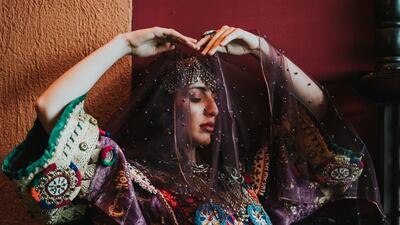
Avizeh plays on high-fashion imagery to challenge traditional notions of femininity and beauty. Photo: Avizeh -

Avizeh's first collection of 20 rings, three necklaces, four cuffs and two headpieces sold out in three days, in late 2014. Photo: Avizeh -
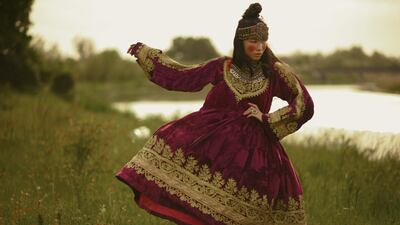
Avizeh's line expanded to include her takes on traditional Afghan women’s dresses. Photo: Avizeh -
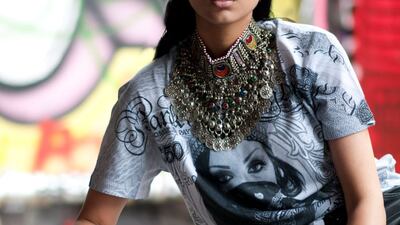
Blingistan is the enfant terrible that uses gawdy designs to make overt, in-your-face statements, borrowing from the styles of 1980s and '90s-era hip-hop. Photo: Blingistan -
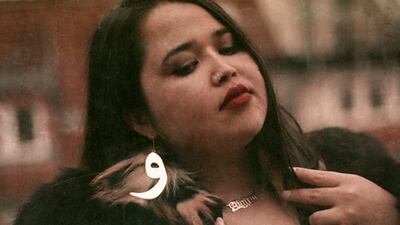
Blingistan was founded by Shamayel Shalizi in 2017. Photo: Blingistan -
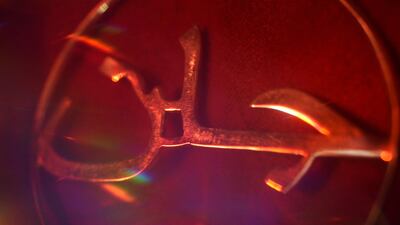
Blingistan has lines of clothing and jewellery. Photo: Blingistan -

Zazai is the eponymous brand from male designer Naweed Zazai. Photo: A D P Yahampath -
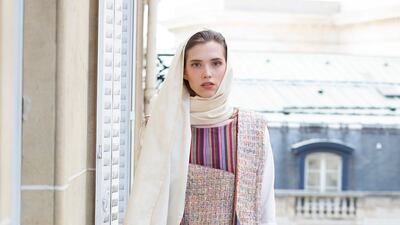
Zazai is in the business of making statements through fashion. Photo: A D P Yahampath -
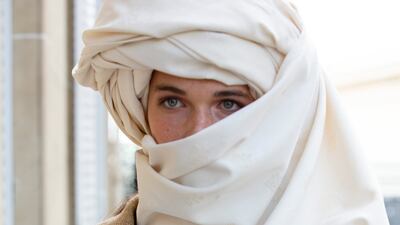
Zazai is named after the storied Pashtun tribe known for their rebellions against British imperialists and an oppressive Afghan monarchy. Photo: A D P Yahampath -

Zazai wanted to take Afghan styles and mix them with high fashion, so he put a man in leggings and reimagined the traditional longi turban, tunics and pato, shawls worn by Afghan men across the country. Photo: A D P Yahampath



