

In the middle of busy Manhattan is the 9/11 Memorial, with two large waterfall pools encased by bronze parapets that bear the names of the victims of the September 11, 2001, attacks and the 1993 World Trade Centre bombing.
On any given day family members and loved ones stop by to spend a few moments remembering those they have lost, often tucking flowers into the grooves of names. Surrounded by swamp white oak trees, it is a serene space that allows for people to come together and grieve.
Although grief is a basic human emotion and one that spares nobody, it is experienced differently and can often be a very lonely journey. Each person heals in their own way and at their own pace, but around the world a growing number of temporary and permanent structures are being built to provide space for people’s loss, offering a way for individuals to collectively process their emotions.

“Remembering our loved ones who have died, and having places to visit, contemplate, pray or just be present can be meaningful and healing for children, parents, and other family members and friends,” says Donna L Schuurman, senior director of advocacy and training at the Dougy Centre, Portland, Oregon.
“There are many examples of these hallowed spaces, often following large-scale tragedies, whether human-caused or natural disasters. As our societies often encourage us to ‘move on’, we also don’t want to forget – or have our loved ones forgotten. Visiting memorials like those built after 9/11 or those to victims of Japan’s 3/11 earthquake and tsunami, pays tribute to those whose lives were taken, and helps ensure that we honour their lives.”
While architecture caters to the functional aspect of creating spaces for living, working and recreation, today there is clearly also a need for it to provide catharsis. In the UK, a country that suffered many deaths caused by the pandemic, a national memorial is being built to the victims. The structure, called Sanctuary, will be built in Miners' Welfare Park, Bedworth and will be completed towards the end of this month. People will be able to visit the structure, grieve for their loved ones, leave behind notes or other objects associated with the person, and, after a week, the whole thing will be burnt on May 28 in an act intended to bring about emotional release.

American artist David Best, the man behind the structure, is not new to creating spaces that encourage people to express or even release their feelings. The artist, who lives in California, trained in sculpture at the San Francisco Art Institute, and his most well known works are intricately carved temples built as part of the annual Burning Man festival held in the Nevada desert, a community event that focuses on art that encourages self-expression and self-reliance.
Best's temples are collaborative structures made of scrap wood built by hundreds of volunteers. Having taken on a spiritual significance, people come to these temples to remember and honour their loved ones. It all started in 2000, when Best was working on a piece for the festival and a young volunteer, Michael Hefflin, was killed in a motorbike accident before it started. That year, Best's creation became a tribute to Hefflin.

The structure he made celebrated the loss of his friend, but many other people came by to leave notes for those who they had lost, too. By the end of the festival, the entire structure, with all the notes, offerings and mementos, was burnt to the ground. The organisers of Burning Man asked Best to come back the next year and build a similar temple. From then on, Best has built several structures that allow people to grieve. “When you make a structure with the intention to address grief, then people come with grief,” Best says.
Best's structures have no religious affiliation, but the intention behind them lends a sacred aura.
“We start with the idea that we are building a sacred structure. From the material used to the process, every step of the way we address it as a sacred project. Whether it is made out of wood, paper or glass, what matters is the intention behind it,” he says.
Structures such as Sanctuary and the 9/11 Memorial, or Wahat Al Karama in Abu Dhabi, which commemorates Emiratis killed in the line of duty, serve a vital purpose, says Aisling Prendergast of the Raymee Grief Centre at The LightHouse Arabia. “There is a need to have somewhere you come just for yourself. At times we are holding on to not only our own grief but also holding someone else's grief and that can impact our ability to grieve.
-

In Idris Khan's Wahat Al Karama work, heavy grey slabs lean against each other, as if arrested in the process of falling. Victor Besa / The National -
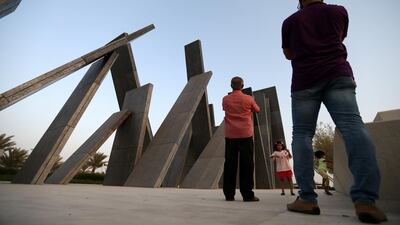
Visitors walk at the courtyard of the memorial of Wahat Al Karama opposite to Sheikh Zayed Mosque in Abu Dhabi. EPA -
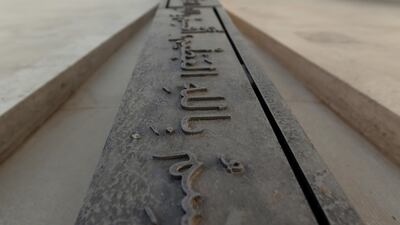
The work is a memorial to the UAE’s martyred soldiers, titled Wahat Al Karama, or "Oasis of Dignity", by British artist Idris Khan. EPA -
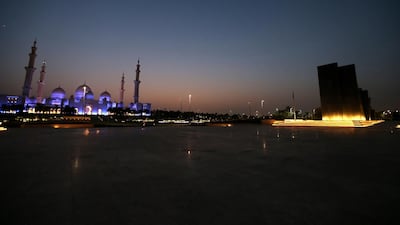
A general view for the external part from the memorial of Wahat Al Karama opposite the Sheikh Zayed Grand Mosque. EPA -
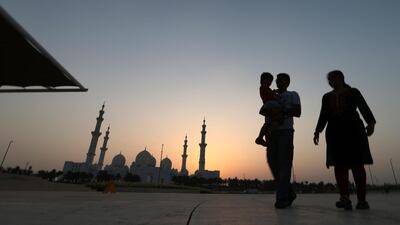
Visitors walk through the courtyard of the memorial. EPA -
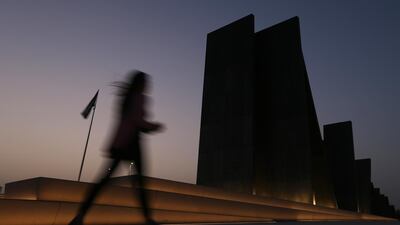
Wahat Al Karama opened to popular acclaim in the UAE in 2016, and has been winning critical awards since. EPA -
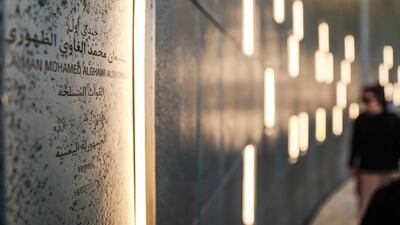
The Pavilion’s internal walls are clad with more than 2,800 aluminium plates, some of which bear the names of the UAE’s fallen soldiers. Victor Besa / The National -
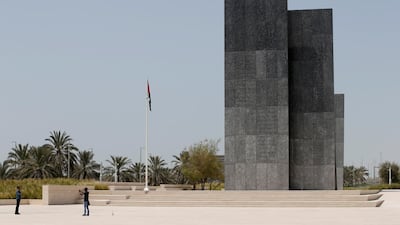
In 2018, the German Design Council announced that the memorial received one of their Iconic Awards for architecture, followed by the Codaworx design and art award. EPA -
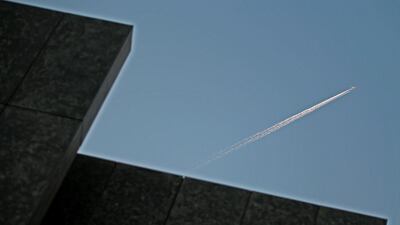
A commercial aircraft flies over Wahat Al Karama. EPA -
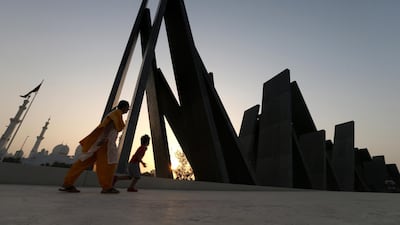
“The work has started to get a lot of momentum on the global stage,” says Idris Khan. EPA -

Sheikh Zayed Mosque as seen from the courtyard of the memorial of Wahat Al Karama. EPA -
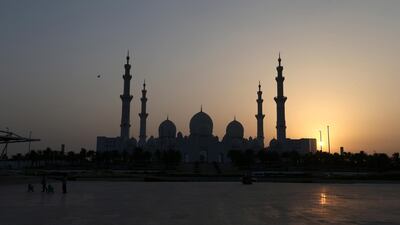
Wahat Al Karama and Skeih Zayed Grand Mosque are open to the public. EPA -
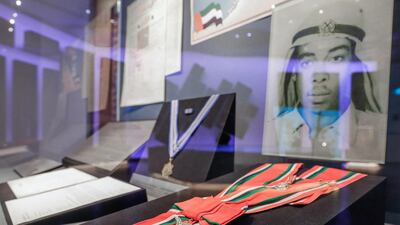
A view of the exhibition at the Wahat Al Karama memorial site. Victor Besa / The National


“People are not able to express their own emotions if they need to take care of somebody else's. Even if we try to suppress grief, it's always there. It does not go away. It comes through in so many different ways. To be able to express those feelings and put them somewhere that's just for you is so important.”
Best has certain reservations about memorials that are permanent in nature, however. “What we build is imperfect. It's built to last for two weeks and it's then burnt. It's not valuable and it does not have to be better than the person coming into it. It's important that the structure allows the person coming into it to feel perfect. Part of the healing process is not having to have something permanently remind you of your loss but to help people go forward.”
Whether someone would be drawn to a permanent structure such as a memorial, or a temporary one similar to the temples Best creates, depends on the individual and how they process their grief.
But the growing need for spaces that offer solace and facilitate healing is not in doubt.

