



It’s no secret that Dubai has changed beyond recognition over the past decade or so (look through the photo gallery above to see the city in the 2000s).
When I arrived in late 2008, Burj Khalifa hadn’t yet reached its full height, there were no Metro stations dotting Sheikh Zayed Road and the social event of the year was the opening of Atlantis, The Palm, with a performance by Kylie Minogue, who in those days was still a headlining act.
But it’s not only Dubai’s skyline that has changed dramatically in the past 14 years. Old-school residents will remember exorbitant rents and, in a pre-Dubai Mall era, shopping trips to BurJuman (or, if you're like fellow columnist Saeed Saeed, Al Ghurair Centre).
There were pilgrimages to Ravi’s for authentic Pakistani and Indian food and daily struggles to find a taxi. Banks tried to entice you with credit card limits of Dh500,000, even if you were being paid peanuts, and walks along JBR were still a novelty.
Here are six other signs you’re officially a Dubai old timer ...
Your phone number starts with 055 or 050
Nothing confirms your status as a long-time UAE resident more than those three digits at the front of your phone number. Back in the day, your allegiances were clear: 055 for du and 050 for Etisalat. There were no 056s, 052s or 058s to muddy the waters.
You can’t remember flying any other airline but Emirates

You know you’ve been in Dubai a long time when you’ve turned the accumulation of Emirates Skywards air miles into a sport. Your status – silver, gold or, for the truly committed, platinum – is a secret source of pride, although you would never be so uncouth as to brag about it in public. As a result, the idea of flying with any other airline is anathema. British Airways, what? If your cabin crew can’t speak at least 12 languages between them, you’re not interested.
You still think Arabian Ranches is a long way out

If you were lucky enough to live in the original Arabian Ranches, when it was first built, you quickly got used to not having many visitors. “All the way out there?” people would say, as if you were inviting them to trek across the Empty Quarter.
To be fair, in those days it was an isolated community with nothing around it, suburban in every sense of the word. Today, with neighbouring communities such as Sustainable City, Mudon and Dubai Hills attracting scores of residents, Arabian Ranches might as well be in the centre of town.
Chi at The Lodge was your spot
Oud Metha is probably not the first place that newcomers to Dubai think of when they are planning an evening out. Not many people are skipping the delights of DIFC for an evening on the outskirts of Bur Dubai. And yet, in the late 2000s, Al Nasr Leisureland was the place to be.
Dubai’s original large-scale leisure centre is still home to a swimming pool, bowling centre and an Olympic-sized ice rink – except, in the old days, those things were a rarity. Al Nasr Leisureland was also home to Chi at The Lodge, an expansive and unexpectedly popular hot spot that sometimes hosted off-the-cuff musical performances. If you know, you know.
You think Dh85,000 is reasonable rent for a studio apartment

In the heady days of late 2008, if you wanted to rent a place of your own anywhere outside Deira or Bur Dubai, the cheapest option you were likely to find was a studio apartment in Discovery Gardens, for the grand old sum of Dh85,000 a year. The one-cheque rule was also completely non-negotiable. Your perception of the property market has been permanently skewed as a result.
You used to wait hours for a taxi

Before the glory days of Uber and Careem, you relied on RTA taxis for all your transport needs. The Metro was, as yet, a distant dream. You’d call the RTA, explain where you needed your car and then wait, patiently, to see if it ever arrived.
Flagging a taxi in the street became a delicate art. Traffic was so bad that many drivers refused to take you if you were heading in the wrong direction. And you would often spend an hour and a half making a 15-minute journey, either because of tailbacks or because your poor driver was new to the country and couldn’t keep up with Dubai’s rapidly expanding road networks.
Dubai's development through the years - in pictures
-
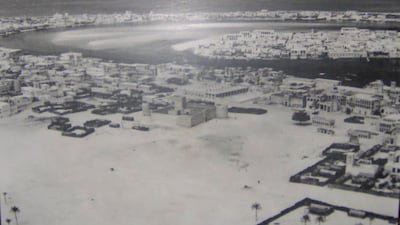
Bur Dubai in the foreground; Deira, middle-right, on the other side of Dubai Creek; and Al Shindagha, left, and Al Ras, right, in the background across the Creek again from Deira, in 1950. Alamy -
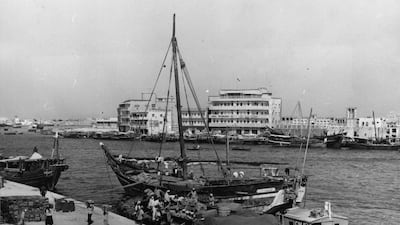
Ships unload their goods on the Creek for the Customs Department in 1967. Getty Images -
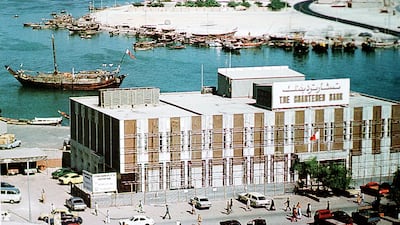
The Dubai Creek in 1976. AFP -
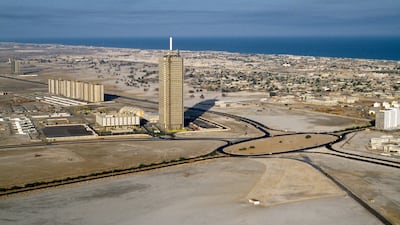
The Dubai World Trade Centre in 1978. Alamy -
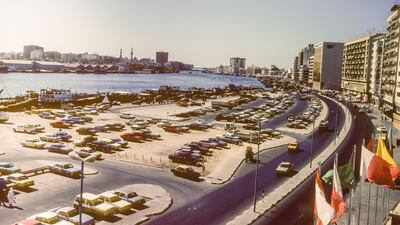
Corniche alongside the Creek in 1984. Alamy -
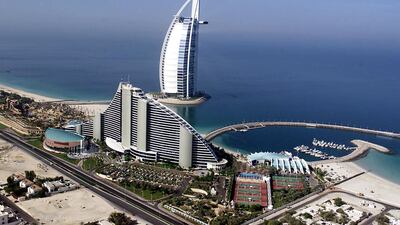
The Burj Al Arab and Jumeirah Beach hotels in 1999. AFP -
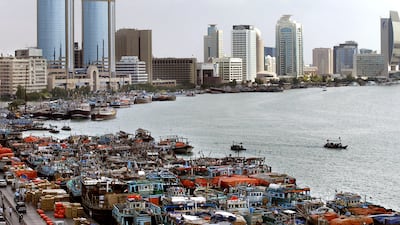
Dubai Creek in 2004. AFP -
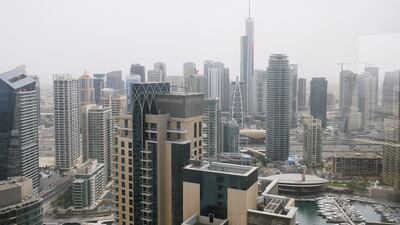
Towers in Dubai Marina and JLT in 2015. Sarah Dea / The National -

The Sheikh Zayed Road in 2020. Reuters -
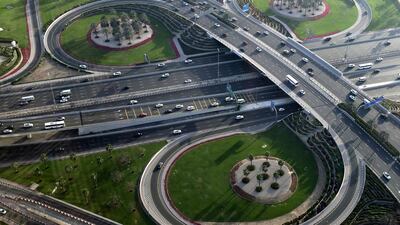
General view of traffic in 2021. Chris Whiteoak / The National -
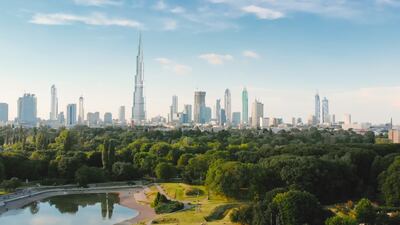
Sheikh Mohammed bin Rashid, Vice President and Ruler of Dubai, launched the Dubai 2040 Urban Master Plan that maps out a comprehensive future map for sustainable urban development in the city. Wam



