


It's the great workplace debate of our time: working from home vs return to the office.
Companies want their staff back - at least for some of the week.
And with many government restrictions now lifted, employees have few excuses - though a recent rise in cases to 2,000-plus per day calls for caution.
Many companies, including their bosses, have also seen the benefits of working from home, with improved productivity and staff on-hand for longer hours.
But where does everyone stand legally?
We spoke to lawyers and workplace experts to find out.
Do UAE employees have the right to work from home?
From a legal perspective, companies are well within their rights to tell staff to come back to the workplace.
“All employment contracts in the UAE include a ‘place of work’ clause, which state that the employee will be working from an employers’ premises,” said Sara Khoja, employment partner at law firm Clyde & Co.
Following government directives to work from home to curb the spread of Covid-19 in 2020, workplaces have steadily been allowed to increase the number of occupants.
Ms Khoja said in a place like Dubai, where authorities are allowing for 100 per cent capacity, a company is in “quite a strong position” to say everyone must come back to the office.

“An employee can only legally resist that mandate if they have a valid medical reason that puts themselves and their co-workers at risk,” she said.
“They would have to be in a high-risk category, like being a cancer patient for example, because then it becomes a health and safety issue.”
She said an employee has no legal grounds for refusing to come back to the office just because they feel they’re more productive working remotely.
What laws do employers need to follow?
There are various steps companies need to take before they can welcome people back into their physical office space again.
Based on which emirate they’re in, businesses must adhere to the capacity regulations which dictate what percentage of their workforce they are legally allowed to have in their office.
For Dubai, that's been full capacity since last June for both the public and private sector, while Abu Dhabi recently doubled its workplace capacity for government employees from 30 to 60 per cent.
Meanwhile, private companies in the capital can still have only 30 per cent of their workforce back. For most of the Northern Emirates, it’s still between 30 and 60 per cent.
Employers are also expected to ensure that there is a distance of at least 2 metres between all desks and workspaces.
For many in office towers, for example, that could mean a physical reconfiguration or bringing staff in on alternate days.
Return to the office? A global debate
The ‘work from home’ versus ‘return to the office’ debate continues to run on.
This week, it was Apple chief executive Tim Cook who received a backlash from his staff after announcing that he wanted them to return to the office from September.
According to The Verge, dozens of Apple employees signed a letter expressing their frustration over the instruction to do three days per week in their offices.
"Without the inclusivity that flexibility brings, many of us feel we have to choose between either a combination of our families, our well-being, and being empowered to do our best work, or being a part of Apple,” the letter said.
As recently reported by The National, businesses across the UAE are turning to a hybrid working model for the long-term as staff return to the office.
Many employers see the benefits, while some fear losing, or failing to attract, the brightest talent to companies with more flexible policies.
However, not all are so flexible.
“We’re also seeing a lot of organisations that are very eager to go back to how things were before and have everyone back in the office full time,” said Ramy Bayyour, regional director at CIPD, a professional body for HR and people development.
“It’s short-sighted because you’re almost writing off all the great benefits we have seen over the last year from offering people that flexibility.”
Mr Bayyour said that in some cases, a lack of trust between employers and their employees led bosses to get their teams back into the office at the first opportunity.
Flexible working: Let's meet halfway
Some employees The National interviewed spoke of their relief at getting back to their office workplace.
It provided the chance to normalise working hours once again, and put a limit on back-to-back Zoom calls.
“The pandemic has taught us that we don’t need to be at the office all the time in order to work productively,” said Steve Severence, a project manager in Abu Dhabi who was asked to start working full time from the office in March.
He said there are some parts of his job, such as making personal connections with clients, that are better done face-to-face. The ideal working week for him would be to spend three days in the office and two days remotely.
However, Mr Severence said his request to switch to that model was met with resistance by his employer.
____________________
Best global remote working places - in pictures
-

The islet of Porer, Croatia has two lighthouse apartments to rent. Courtesy Lighthouses of Croatia -
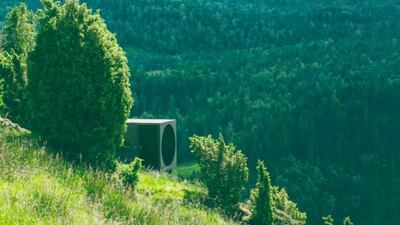
Birdbox, Norway. Courtesy Airbnb -

The Off-grid itHouse in Pioneertown, California, United States, is a modern, ecological and secluded holiday home in the California desert. Courtesy Airbnb -

Qasr Al Sarab Desert Resort by Anantara played host to the stars of Dune while filming scenes in Abu Dhabi. -

The Sharma Springs mansion in Bali is located on the edge of the Ayung River valley. Courtesy Airbnb -

The secluded Berkeley River Lodge in Western Australia is only accessible by plane. Courtesy Berkeley River Lodge -

Set in private land, this charming French cottage is available from Dh212 per night. Courtesy Airbnb -

You can swim or kayak around Brother Island in El Nido in 30 minutes. Courtesy Airbnb -

The location of this rural Swedish home makes it ideal for watching the Aurora Borealis. Courtesy Airbnb -

A private luxury tent at The Oberoi Vanyavilas Wildlife Resort, India. Courtesy The Oberoi -

Grove Cottage is located on a farm in Utah. Courtesy Airbnb


____________________
For Dubai-based accountant Imran Dhalla, working from home full-time when the pandemic first hit last year was initially ideal because it gave him the work-life balance he craved.
“At first I fell in love with WFH, but with time I realised that I was overworking since I had my laptop in front of me the entire time,” said Mr Dhalla.
“The ideal scenario is a hybrid system because it gives you flexibility, while at the same time it also provides that social component of meeting people in the office.”
Recognising anxiety and stress
Whether it’s on a full-time or hybrid basis, HR experts say the onus is on employers to ease their workforce back into the office.
“Having staff come back overnight can have a toll on their mental well-being,” said Mr Bayyour.
“Many people haven’t been around large groups of people for a while, and that could lead to things like social anxiety and stress.”
He also said it’s important for bosses to communicate to their staff that those who are still working remotely will not be favoured over those who are back in the office.
“What we don’t want is that mentality where if my manager sees me in my cubicle, it means I’m working and I’ll get called into meetings but if I’m working from home, I won’t,” said Mr Bayyour.
“There needs to be a level of fairness and inclusivity.”

