



Testing of driverless taxis will begin on Dubai roads later this year to prepare the autonomous vehicles for the unique driving style of the city, officials said.
The 10 automated taxis supplied by US firm Cruise will begin to carry passengers in late 2023.
The Dubai Roads and Transport Authority will complete rigorous testing before that launch to ensure the taxis are prepared for the hectic driving styles of some motorists in the UAE.
“As we get closer to launch we will do publicity so people recognise these cars,” said Ahmed Bahrozyan, chief executive of the Public Transport Agency at the RTA.
“They will not require other drivers to change their habits at all, or for us to invest in any new infrastructure.
“A lot of testing will be done and a testing programme on the roads will begin with Cruise later this year.
“The technology must match the unique driving style of each city.”
Fitted with laser detection and ranging systems to detect distance from objects and with 100 sensors integrated into each vehicle, the taxis will be able to respond safely to other drivers.
Inside, seats face each other and taxis can seat up to six people, with ample room for luggage.
It is hoped wider adoption of autonomous vehicles will greatly reduce road accidents.
By 2030, it is expected that 4,000 driverless taxis will be in operation in Dubai.
“This is a big opportunity to reduce accidents and make mobility more affordable as the savings made from not having drivers can be passed on to customers,” said Mr Bahrozyan.
“They will increase road safety, as 90 per cent of accidents are caused by human error with people falling asleep at the wheel or on their phones.”
Regulations in Dubai will change to accommodate driverless cars, to allow manufacturers to sell their own autonomous vehicles to the public in the future, Mr Bahrozyan said.
A similar trial has already taken place in Abu Dhabi.
A fleet of ride-sharing vehicles as part of the TXAI project was made available for members of the public to try out on Yas Island in December.
The topic of driverless cars was a key focus of the World Government Summit during a session on policies and innovation in the future of movement.
As technology develops, so will the regulations required to create a safe and legal environment for all road users.
Jeff Bleich, chief legal officer of Cruise, the majority-owned autonomous vehicle subsidiary of General Motors, said Dubai would be the firm’s first international partner to innovate a new cities system and develop the future of smart mobility.
“This kind of development and that of smart devices will be essential for work systems around the world, all governments will have to involve this positive transformation,” he said.
“We at Cruise’s Origin AV have been working on solutions for some challenges such as the lack of a visible steering wheel or brakes, which does not currently meet RTA’s required standard in vehicles.”
Self-driving cars — in pictures
-
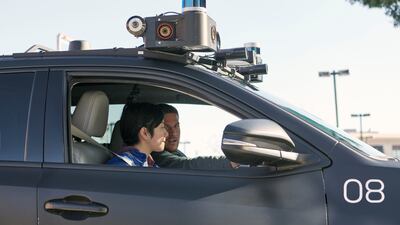
A self-driving car operated by California start-up Zoox. The company began to test its technology on public roads in Las Vegas in 2019. Reuters -
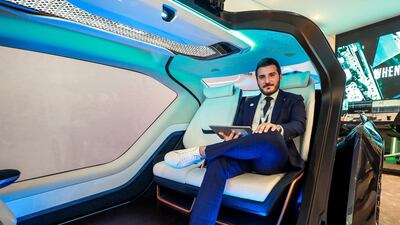
W Motors chairman and chief executive Ralph Debbas in the company's self-driving prototype. The company was founded in 2012 but became famous after one of its vehicles, the Lykan HyperSport, was featured in the 2015 film 'Furious 7'. Victor Besa / The National -
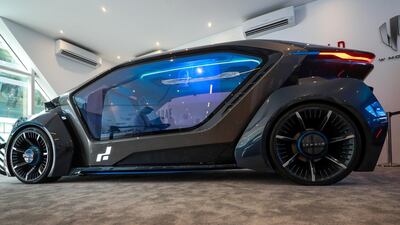
The W Motors self-driving vehicle prototype, on display at the International Defence Exhibition and Conference in Abu Dhabi in 2019. Victor Besa / The National. -
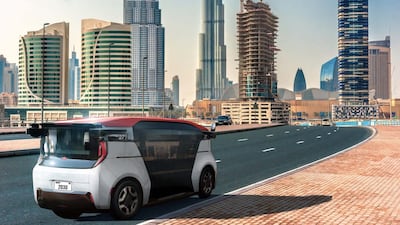
Cruise, the self-driving vehicle company backed by General Motors and Honda, will launch its first international robotaxi service outside the US in Dubai in 2023. Cruise -
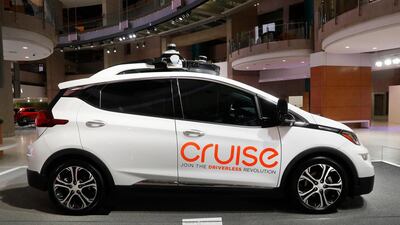
A driverless Cruise vehicle at the Detroit Motor Show. The company is stationing five self-driving cars in San Francisco as it looks to develop a robot taxi service. AP -
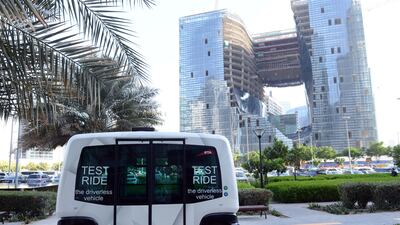
The 10-seater smart driverless car tested by the Roads and Transport Authority in Business Bay, Dubai. Courtesy RTA. -

Ajman's first self-driving bus went on goes on its first official drive in November 2021, with Sheikh Rashid bin Humaid Al Nuaimi, director of Ajman Municipality and Planning Department and UAE's Minister of Artificial Intelligence, Omar bin Sultan Al Olama, onboard. -
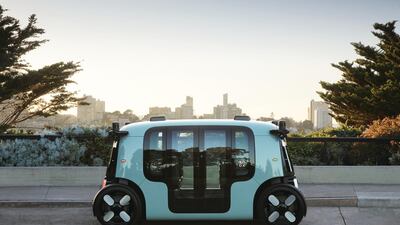
A Zoox robot taxi. The vehicle is loaded with sensors, has no steering wheel and is capable of transporting four people at up to 120 kilometres per hour. Photo: Zoox -
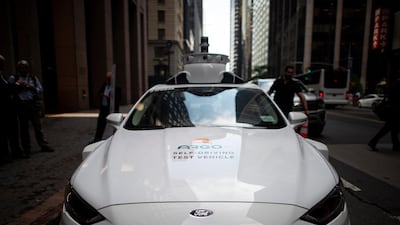
A self-driving car operated by Pittsburgh start-up Argo AI in New York. The company is working with Lyft and Ford to commercialise driverless ride-hailing services at scale. AFP -
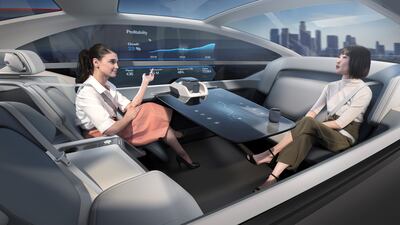
Volvo's self-driving 360c concept car, which was first announced in 2018 and can function as a mobile office or transform into a sleeping area. Volvo says the 360c will create demand for inter-city taxi passengers travelling as far as 300km. Photo: Volvo



