


UAE space chief Sarah Al Amiri has told of ambitious plans to increase private sector investment in the country's growing space industry and make it a key contributor to the economy.
In an exclusive interview with The National, Ms Al Amiri, the Minister of State for Advanced Technology and chairperson of the UAE Space Agency, said the aim is to make the UAE a regional hub for the development of spacecraft systems.
She said the UAE's plans to increase manufacturing and industry's contribution to the country's economic output to Dh300 billion over the next decade would be at the heart of efforts to develop a private space sector that would build advanced space systems and generate more job opportunities, including for overseas talent.
Last month, the UAE launched the 'Operation 300bn' strategy to position the country as a global industrial hub by 2031. It sets out to increase the industrial sector's contribution to the local gross domestic product (GDP) from the current Dh133bn to Dh300bn.
Ms Al Amiri spoke of how the space industry would support the economy and revealed what kind of space technology would be in focus under the industrial plan.
"As we move forward with Operation 300bn, it's very evident that we need to have a private sector and, therefore, an industry in space.
“Most of the current space sector within the Emirates is focused on government spending and programmes across both local and federal governments,” she said.
"Today, we're talking about a space sector that has an indirect impact to the economy. In five years, we want to see a space sector that has both an indirect impact on the economy, society, and also a direct impact on the economy."
Once the industry starts to grow, it would mean access to locally manufactured space technologies.
Steps are already being taken to increase public-private partnerships. UAE-based aerospace manufacturing firm Strata, for example, is developing the parts for the coming MBZ-Sat satellite.
-
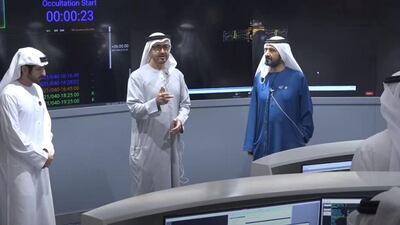
Sheikh Mohamed bin Zayed and Sheikh Mohammed bin Rashid personally thank staff from mission control in Dubai after Hope probe's successful orbit entry on February 9. The National -
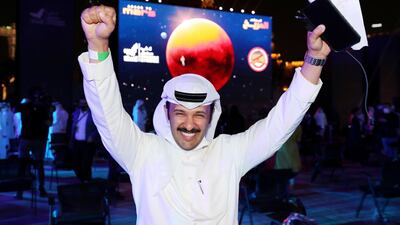
A man celebrates at an event at Burj Park in Dubai to celebrate the Hope probe going into orbit around Mars. Chris Whiteoak / The National -
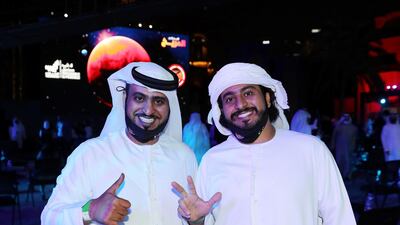
People celebrate at an event at Burj Park to celebrate the Hope probe going into orbit around Mars. Chris Whiteoak / The National -

An event at Burj Park to celebrate the Hope probe going into orbit around Mars. Chris Whiteoak / The National -
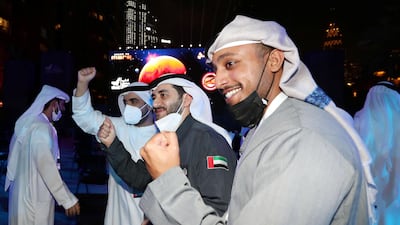
People celebrate at an event at Burj Park to celebrate the Hope probe going into orbit around Mars. Chris Whiteoak / The National -
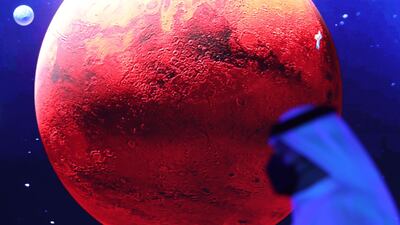
Guests arrive at the Burj Park event to mark the arrival of the Hope probe to Mars. Chris Whiteoak / The National -
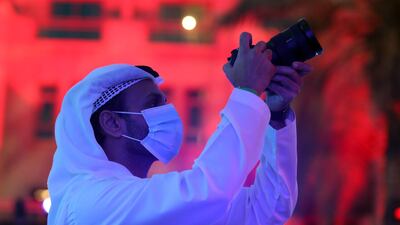
A guest attending the Burj Park event to mark the arrival of the Hope probe to Mars. Chris Whiteoak / The National -
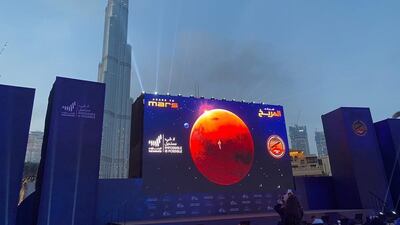
Burj Park was set up for people to watch the Hope probe attempt its Mars orbit insertion. Courtesy: UAE Government Twitter -
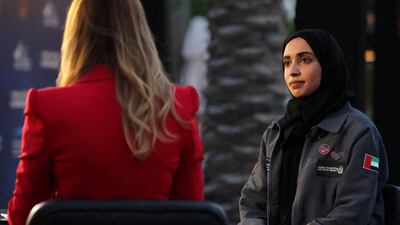
UAE Mars Mission engineer, Hessa Al Matroushi, was interviewed at a Burj Park event to mark the arrival of the Hope probe to Mars. Chris Whiteoak / The National -
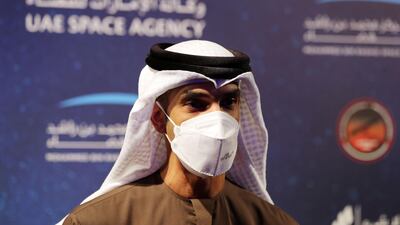
Dr Thani Al Zeyoudi, Minister of State for Foreign Trade, attended the event at Burj Park to mark the arrival of the Hope probe to Mars. Chris Whiteoak / The National -

Engineer Hessa Al Matroushi attended the event at Burj Park to mark the arrival of the Hope probe to Mars. Chris Whiteoak / The National -
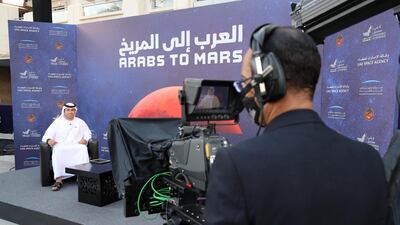
TV crews get ready at an event at Burj Park in Dubai to celebrate the Hope probe going into orbit around Mars. Chris Whiteoak / The National -
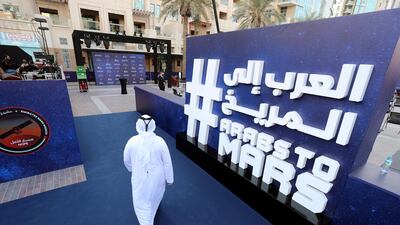
An event at Dubai's Burj Park to celebrate the Hope probe's Mars orbit insertion attempt. Chris Whiteoak / The National -
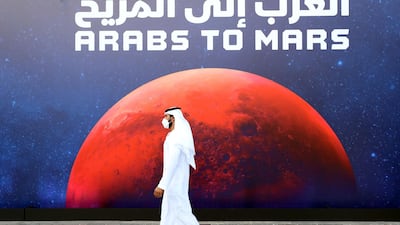
Guests arrive at an event at Burj Park to mark the Hope probe's Mars orbit insertion attempt. Chris Whiteoak / The National -
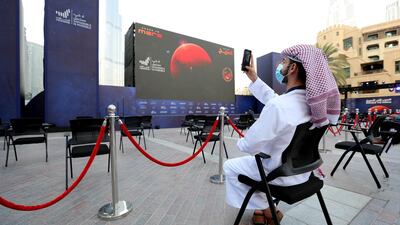
Guests and media arrive at an event at Burj Park to witness Hope probe's Mars orbit insertion attempt. Chris Whiteoak / The National -
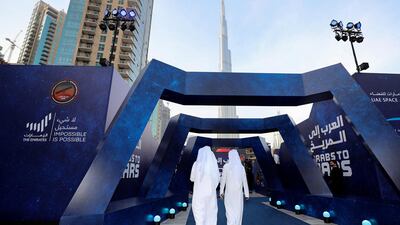
Guests arrive at an event at Burj Park to mark the Hope probe's Mars orbit insertion attempt. Chris Whiteoak / The National -
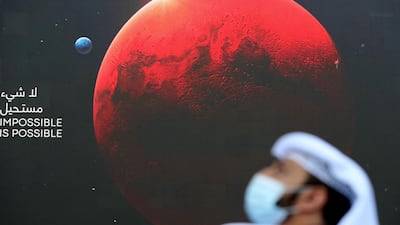
Guests arrive at an event at Burj Park to mark the Hope probe's Mars orbit insertion attempt. Chris Whiteoak / The National -
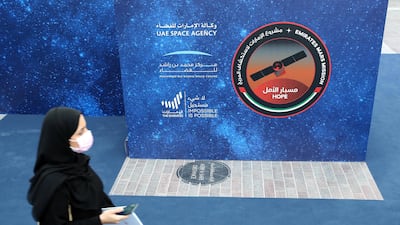
Guests arrive at an event at Burj Park to mark the Hope probe's Mars orbit insertion attempt. Chris Whiteoak / The National -
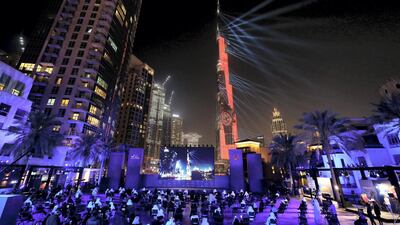
The Burj Khalifa lights up at an event at Burj Park in Dubai to celebrate the Hope probe going into orbit around Mars. Chris Whiteoak / The National -
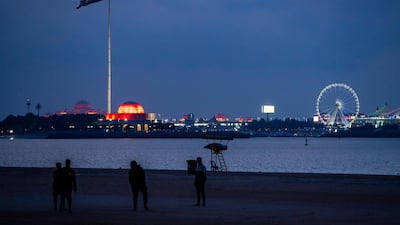
The UAE Flag area on the Corniche in Abu Dhabi lights up in red to celebrate the success of the Hope probe going into orbit around Mars. Victor Besa / The National -
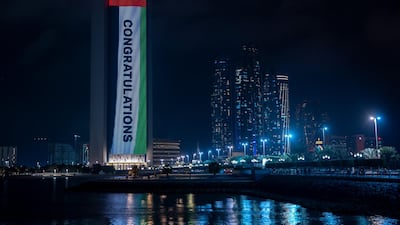
The ADNOC Headquarters lights up in Abu Dhabi to celebrate the success of the Hope probe going into orbit around Mars. Victor Besa / The National -
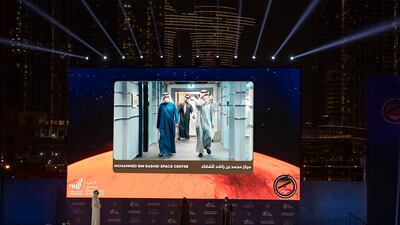
Sheikh Mohamed bin Zayed celebrates with Sheikh Mohammed bin Rashid at an event at Burj Park in Dubai to celebrate the Hope probe going into orbit around Mars. Chris Whiteoak / The National -
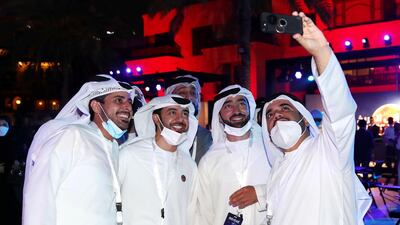
People celebrate at an event at Burj Park in Dubai to mark the Hope probe going into orbit around Mars. Chris Whiteoak / The National


A public-private partnership model is being undertaken by space agencies worldwide, as more private space companies emerge to offer their services to governments.
Nasa has been leading the way in this through its partnership with private rocket company SpaceX, which now sends Nasa astronauts to the International Space Station. The firm’s Starship was also selected to send the next astronauts back to the Moon.
"There is a gap that the UAE can latch into and the reason for the existence of this gap is due to the lower cost of access to space, which provided a new form of spacecraft, products and services in the space sector," said Ms Al Amiri.
Home-grown satellites with 'brains'
Several space technologies would be in focus as the private sector grows, including instrumentation of microsatellites weighing between 100 to 250 kilograms.
Another area of focus would include designing the satellite systems and ‘brains’ of the spacecraft, such as flight software.
These are integral parts of a spacecraft that help improve performance and health.
KhalifaSat, which was the first Emirati-built satellite, was a product of the Mohammed bin Rashid Space Centre, but some parts such as the solar panels, were sourced from an Italian private company.
The UAE’s Hope probe was built by Emiratis along with three American universities.
Investing in local and foreign talent
Through the expansion of the space industry, more opportunities to be part of UAE's and other nation's space programmes would become available to foreign talent.
“The first thing we're focusing on is the sustainability of that sector,” said Ms Al Amiri.
“Because if you want jobs and opportunities to be created, it shouldn't be a one off thing and it shouldn't be for it to be fully sort of driven by demand from the public sector only.
“Step one is ensuring this ecosystem has a demand onto itself, so demand locally and regionally from different sectors, as well as positioning the UAE as a regional hub for the development of spacecraft systems.”
Currently, a government-led space programme makes up most of the country’s space activities.
Mostly UAE citizens have employment in the space sector, but there is demand from international talent who wish to work in the Emirates as space professionals.
“Because this is a new industry, you need to have a methodology by which you build experience for both expats and also for UAE nationals,” said Ms Al Amiri.
“And it's through this that the role of the space agency has evolved to be a space agency for the next decade.
“What we’re now transitioning into is less of a government-funded centres and programmes and more into the creation of a self-sustained space ecosystem.”
“We need to ensure that we have a sustained space industry that carries forward those relatively lower-risk commercial programme and create the necessary value in terms of development of technology for the country and for the region.”
UAE's lunar mission - in pictures
-
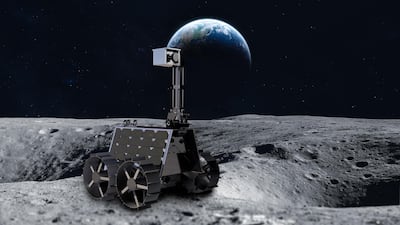
An artist's impression of the UAE's lunar rover called Rashid. -

Dr Hamad Al Marzooqi, project manager of the Emirates Lunar Mission at the Mohammed bin Rashid Space Centre. Chris Whiteoak / The National -
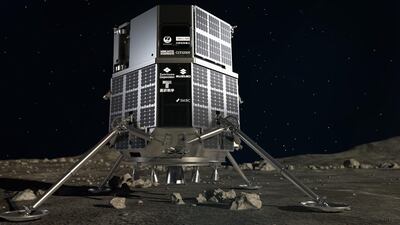
An artist's impression of iSpace's Hakuto-Reboot lunar lander. It will carry UAE's Rashid rover to the surface of the Moon in 2022. -
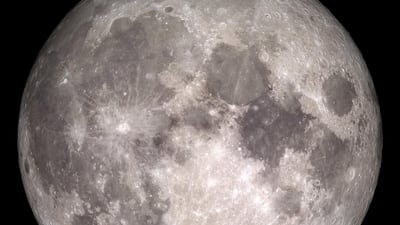
The UAE aims to land the Rashid rover on the near side of the Moon due to its smoother surface. -
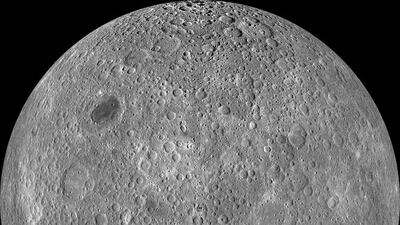
The far side of the Moon remains largely unexplored, but Nasa is turning its focus back to the lunar surface. -
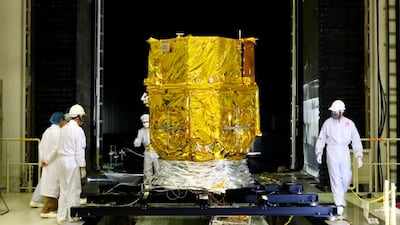
The HAKUTO-R lander, which will deliver the UAE's Rashid rover to the lunar surface in 2022, is now in final stages of assembly. -
The ispace team completed the assembly of the lander's structure thermal model in April. Courtesy: ispace -
The final assembly of the lander is being carried out in co-operation with the Ariane Group GmbH at the Ariane Group facility in Lampoldshausen, Germany. Courtesy: ispace -
Using a lander and rocket that is already available helps Emirati engineers and scientists get quicker and easier access to space. Courtesy: ispace -
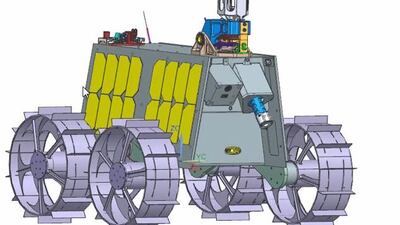
The initial concept design of the Rashid rover. Courtesy: MBRSC -
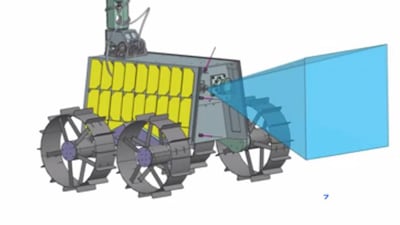
Rashid rover's thermal imager will analyse the Moon's properties through thermal energy. Courtesy: MBRSC -
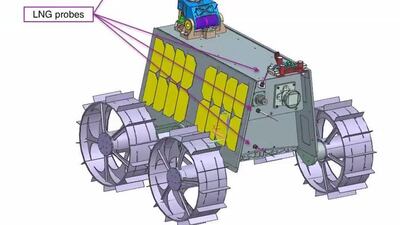
The Langmuir probes on the rover will analyse the lunar surface charge and electric fields. Courtesy: MBRSC -
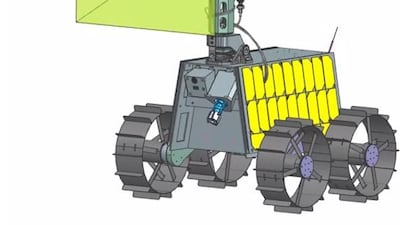
One of the rover's two high-resolution optical imagers that will take photos of the Moon. Courtesy: MBRSC



