• Uranus is surrounded by 13 rings and 27 small moons as it rotates at a nearly 90-degree angle from the plane of its orbit. Photo: Nasa
    Uranus is surrounded by 13 rings and 27 small moons as it rotates at a nearly 90-degree angle from the plane of its orbit. Photo: Nasa
  • Complex organic molecules similar to smoke or smog in a galaxy more than 12 billion light-years from Earth. Photo: Nasa
    Complex organic molecules similar to smoke or smog in a galaxy more than 12 billion light-years from Earth. Photo: Nasa
  • A delicate image of dust structures and bright star clusters taken by the James Webb Space Telescope. Photo: Nasa
    A delicate image of dust structures and bright star clusters taken by the James Webb Space Telescope. Photo: Nasa
  • Saturn has seven rings with several gaps and divisions between them, as well as 53 known moons. Photo: Nasa
    Saturn has seven rings with several gaps and divisions between them, as well as 53 known moons. Photo: Nasa
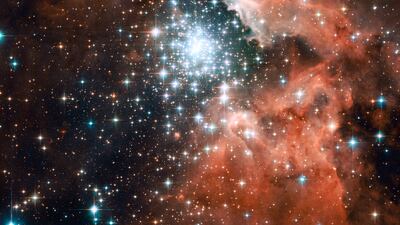
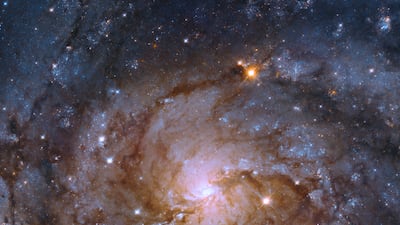
  • Star cluster NGC 346, spiral galaxies NGC 1672 and Messier 74, and the Pillars of Creation, towering tendrils of cosmic dust and gas at the heart of the Eagle Nebula. Photo: Nasa
    Star cluster NGC 346, spiral galaxies NGC 1672 and Messier 74, and the Pillars of Creation, towering tendrils of cosmic dust and gas at the heart of the Eagle Nebula. Photo: Nasa
  • An infrared image of Neptune, the only planet in our solar system not visible to the naked eye. Photo: Nasa
    An infrared image of Neptune, the only planet in our solar system not visible to the naked eye. Photo: Nasa
  • Every eight years, the two stars in this image are brought together by their orbits – creating colliding streams of gas that, under the right conditions, form a new ring of dust. Photo: Nasa
    Every eight years, the two stars in this image are brought together by their orbits – creating colliding streams of gas that, under the right conditions, form a new ring of dust. Photo: Nasa
  • A part of the Orion Nebula known as the Orion Bar. Photo: Nasa
    A part of the Orion Nebula known as the Orion Bar. Photo: Nasa
  • A crowded field of galaxies, along with stars crowned with the James Webb Space Telescope's signature six-pointed diffraction spikes. Photo: Nasa
    A crowded field of galaxies, along with stars crowned with the James Webb Space Telescope's signature six-pointed diffraction spikes. Photo: Nasa
  • The NGC 3256 spiral galaxy was formed after a collision of two massive galaxies about 500 million years ago. Photo: Nasa
    The NGC 3256 spiral galaxy was formed after a collision of two massive galaxies about 500 million years ago. Photo: Nasa
  • The Wolf-Rayet 124 star, featured in an image combining near-infrared and mid-infrared wavelengths of light. Photo: Nasa
    The Wolf-Rayet 124 star, featured in an image combining near-infrared and mid-infrared wavelengths of light. Photo: Nasa
  • An hourglass-shaped cloud of dust and gas is illuminated by light from a protostar. Photo: Nasa
    An hourglass-shaped cloud of dust and gas is illuminated by light from a protostar. Photo: Nasa
  • Two views of the Southern Ring Nebula, which show the planetary nebula as a misshapen oval. Photo: Nasa
    Two views of the Southern Ring Nebula, which show the planetary nebula as a misshapen oval. Photo: Nasa
  • A composite image of the Cartwheel Galaxy captured by the James Webb Space Telescope in August 2022. AFP
    A composite image of the Cartwheel Galaxy captured by the James Webb Space Telescope in August 2022. AFP
  • A cluster of stars in the Small Magellanic Cloud, near the Milky Way. Photo: JWST
    A cluster of stars in the Small Magellanic Cloud, near the Milky Way. Photo: JWST
  • A colour composite image of the Messier 74 galaxy. Photo: JWST
    A colour composite image of the Messier 74 galaxy. Photo: JWST
  • The gravity of galaxy cluster MACS0647 bends and magnifies light from the more distant MACS0647-JD. Photo: Nasa
    The gravity of galaxy cluster MACS0647 bends and magnifies light from the more distant MACS0647-JD. Photo: Nasa
  • The 'Pillars of Creation' — clouds of hydrogen gas and dust 6,500 light years from Earth — captured by the Hubble Space Telescope, left, and James Webb Space Telescope. AP
    The 'Pillars of Creation' — clouds of hydrogen gas and dust 6,500 light years from Earth — captured by the Hubble Space Telescope, left, and James Webb Space Telescope. AP
  • Dust rings resembling a fingerprint created by a rare type of star and its companion. PA
    Dust rings resembling a fingerprint created by a rare type of star and its companion. PA
  • Images of the asteroid Dimorphos hours after Nasa crashed a spacecraft into it in September 2022. EPA
    Images of the asteroid Dimorphos hours after Nasa crashed a spacecraft into it in September 2022. EPA
  • Neptune and seven of its 14 known moons. AFP
    Neptune and seven of its 14 known moons. AFP
  • Thousands of young stars in a stellar nursery called the Tarantula Nebula. Photo: Nasa
    Thousands of young stars in a stellar nursery called the Tarantula Nebula. Photo: Nasa
  • A image of an exoplanet — a gas giant with no rocky surface. Photo: Nasa, ESA and CSA
    A image of an exoplanet — a gas giant with no rocky surface. Photo: Nasa, ESA and CSA
  • Glass-z13, the oldest galaxy to be detected, was formed about 300 million years after the Big Bang. Photo: JWST
    Glass-z13, the oldest galaxy to be detected, was formed about 300 million years after the Big Bang. Photo: JWST
  • Jupiter and its moon Europa. Photo: Nasa
    Jupiter and its moon Europa. Photo: Nasa
  • Jupiter and its moons Europa, Thebe and Metis. Photo: Nasa
    Jupiter and its moons Europa, Thebe and Metis. Photo: Nasa
  • Another image of Jupiter and some of its 79 moons. Photo: Nasa
    Another image of Jupiter and some of its 79 moons. Photo: Nasa
  • An image of galaxy cluster Smacs 0723 taken by the James Webb telescope. Photo: Nasa
    An image of galaxy cluster Smacs 0723 taken by the James Webb telescope. Photo: Nasa
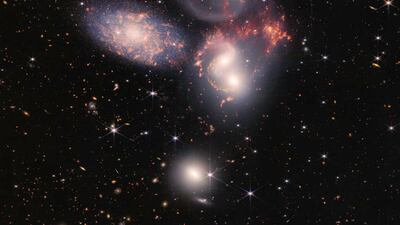
  • Stephan’s Quintet is an area in space that has five galaxies. Photo: JWST
    Stephan’s Quintet is an area in space that has five galaxies. Photo: JWST
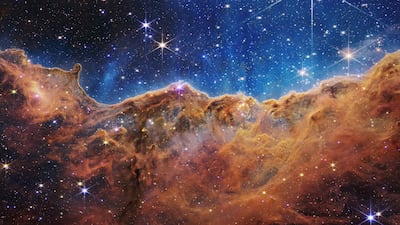
  • The 'Cosmic Cliffs' of the Carina Nebula. Photo: JWST
    The 'Cosmic Cliffs' of the Carina Nebula. Photo: JWST
  • An anniversary image shows the birth of a star in the Rho Ophiuchi cloud complex, the closest star-forming region to Earth. Photo: Nasa
    An anniversary image shows the birth of a star in the Rho Ophiuchi cloud complex, the closest star-forming region to Earth. Photo: Nasa

James Webb Space Telescope discovers 'oldest galaxy in the universe'


Sarwat Nasir
  • English
  • Arabic

The James Webb Space Telescope has detected the oldest known galaxy in the universe.

It captured the GLASS-z13 galaxy that was formed about 300 million years after the Big Bang, which occurred 13.8 billion years ago.

This breaks the record set by its predecessor, the Hubble Space Telescope, when it spotted galaxy GN-z11, which formed 400 million years after the birth of the universe.

The discovery was described in a paper on arXiv, an open access site where reports are published.

“Discoveries from the James Webb Space Telescope have been pouring in since the release of its first full-colour science pictures last week,” New Scientist, the magazine that first reported the story, said on Twitter.

“This red dot is the oldest galaxy we've ever seen! The latest data from the James Webb Space Telescope has helped astronomers find the galaxy, which dates back to just 300 million years after the big bang.

“The galaxy, known as GLASS-z13, has broken the record for the oldest galaxy ever observed by nearly 100 million years.”

The $10 billion telescope was launched into space on Christmas Day, 2021, to observe galaxies formed after the Big Bang.

It is also studying the atmospheres of planets inside and outside of our solar system, so scientists can learn more about the evolution of the universe.

The first image from the telescope, revealed by US President Joe Biden on July 11, was of the galaxy cluster SMACS 0723 as it appeared 4.6 billion years ago.

The first full set of photos was published the next day and included the Southern Ring Nebula, Stephan’s Quintet (five galaxies) and the Carina Nebula.

Webb is far more advanced than Hubble because of its breakthrough technology, design and location in space.

It is placed in Lagrange Point 2, an area that allows it to orbit the Sun, instead of the Earth, allowing it to see greater distances.

20 images of the universe, from galaxy collisions to violent star deaths - in pictures

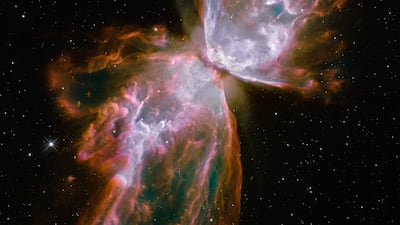
  • This is the NGC 6302 planetary nebula - commonly referred to as the Butterfly Nebula because of its shape. The ‘wings’ are gas heated to nearly 20,000°C and it is tearing across space at more than 950,000 kilometres an hour. At the centre of the nebula is a dying star that was once about five times the mass of the Sun. The image was captured by the Hubble telescope in 2009. Photo: European Space Agency
    This is the NGC 6302 planetary nebula - commonly referred to as the Butterfly Nebula because of its shape. The ‘wings’ are gas heated to nearly 20,000°C and it is tearing across space at more than 950,000 kilometres an hour. At the centre of the nebula is a dying star that was once about five times the mass of the Sun. The image was captured by the Hubble telescope in 2009. Photo: European Space Agency
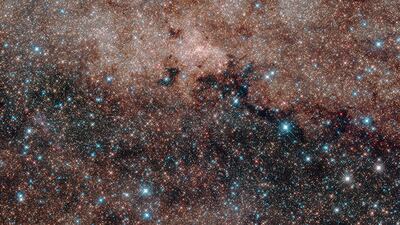
  • This is the heart of our Milky Way galaxy, captured by the Hubble telescope in 2016. It shows a tapestry of more than 500,000 stars and the nuclear star cluster, the biggest and densest star cluster in our galaxy. Photo: Nasa
    This is the heart of our Milky Way galaxy, captured by the Hubble telescope in 2016. It shows a tapestry of more than 500,000 stars and the nuclear star cluster, the biggest and densest star cluster in our galaxy. Photo: Nasa
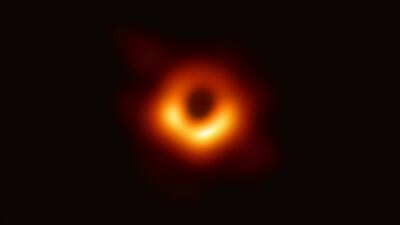
  • In 2019, the first image of a black hole was captured. The Event Horizon Telescope captured it at the centre of the Messier 87 galaxy. EPA / Event Horizon Telescope
    In 2019, the first image of a black hole was captured. The Event Horizon Telescope captured it at the centre of the Messier 87 galaxy. EPA / Event Horizon Telescope
  • In 2022, the Event Horizon Telescope managed to take the first picture of a supermassive black hole at the centre of our galaxy, which is feeding on hydrogen gas. Photo: Event Horizon Telescope
    In 2022, the Event Horizon Telescope managed to take the first picture of a supermassive black hole at the centre of our galaxy, which is feeding on hydrogen gas. Photo: Event Horizon Telescope
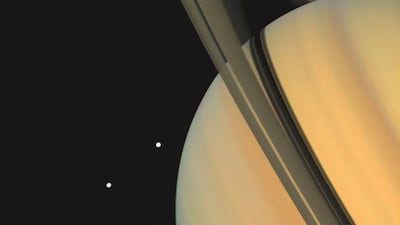
  • A picture of Saturn taken by the Voyager spacecraft in 1980. Taken from a distance of 13 million kilometres, it shows the planet’s moons, Tethys and Dione. Photo: Nasa
    A picture of Saturn taken by the Voyager spacecraft in 1980. Taken from a distance of 13 million kilometres, it shows the planet’s moons, Tethys and Dione. Photo: Nasa
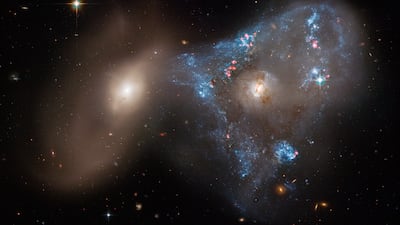
  • An image of two galaxies colliding, fuelled an unusual triangular-shaped star-birthing. Captured by the Hubble telescope in 2022, the interacting galaxies are called Arp 143. Photo: Nasa
    An image of two galaxies colliding, fuelled an unusual triangular-shaped star-birthing. Captured by the Hubble telescope in 2022, the interacting galaxies are called Arp 143. Photo: Nasa
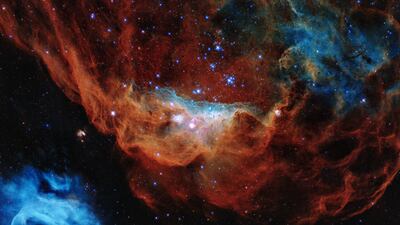
  • This image features the enormous nebula NDC 2014 and its neighbour NGC 2020, which together form part of a vast star-forming region in the Large Magellanic Cloud in the Milky Way, about 163,000 light years away. Captured by the Hubble telescope, it shows turbulent stellar nurseries, where new stars are born. Photo: European Space Agency
    This image features the enormous nebula NDC 2014 and its neighbour NGC 2020, which together form part of a vast star-forming region in the Large Magellanic Cloud in the Milky Way, about 163,000 light years away. Captured by the Hubble telescope, it shows turbulent stellar nurseries, where new stars are born. Photo: European Space Agency
  • The James Webb Space Telescope showed the Carina Nebula, about 7,600 light years away. It revealed areas where stars were being born that other telescopes could not capture. Photo: Nasa / European Space Agency / Canadian Space Agency
    The James Webb Space Telescope showed the Carina Nebula, about 7,600 light years away. It revealed areas where stars were being born that other telescopes could not capture. Photo: Nasa / European Space Agency / Canadian Space Agency
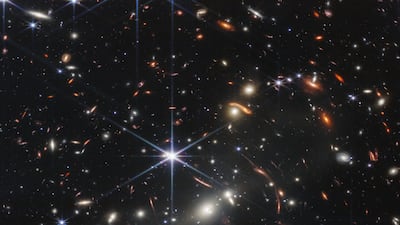
  • The James Webb Space Telescope captured the sharpest views of galaxy cluster SMACS 0723. The image shows the cluster as it was 4.6 billion years ago. Photo: Nasa
    The James Webb Space Telescope captured the sharpest views of galaxy cluster SMACS 0723. The image shows the cluster as it was 4.6 billion years ago. Photo: Nasa
  • Located 290 million light years away, Stephan’s Quintet, or NGC 7318B, is a compact group of five galaxies that was discovered in 1877. Four of them are locked in a cosmic dance of repeated close encounters. Photo: Nasa
    Located 290 million light years away, Stephan’s Quintet, or NGC 7318B, is a compact group of five galaxies that was discovered in 1877. Four of them are locked in a cosmic dance of repeated close encounters. Photo: Nasa
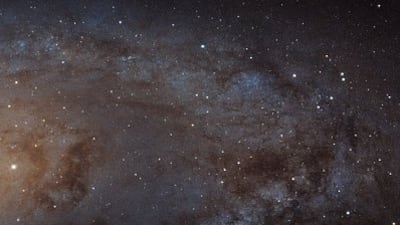
  • Taken by the Hubble telescope in 2015, this is the largest and sharpest image taken of the Andromeda galaxy, which will collide with our galaxy in about five billion years. Photo: European Space Agency
    Taken by the Hubble telescope in 2015, this is the largest and sharpest image taken of the Andromeda galaxy, which will collide with our galaxy in about five billion years. Photo: European Space Agency
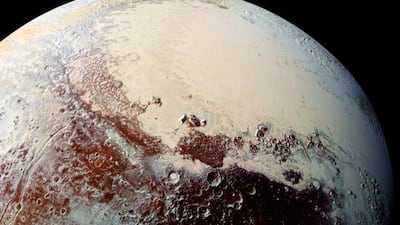
  • Captured by Nasa’s New Horizons spacecraft in 2015, this image shows a region of Pluto that is rich in nitrogen, carbon monoxide and methane ices. Photo: Nasa
    Captured by Nasa’s New Horizons spacecraft in 2015, this image shows a region of Pluto that is rich in nitrogen, carbon monoxide and methane ices. Photo: Nasa
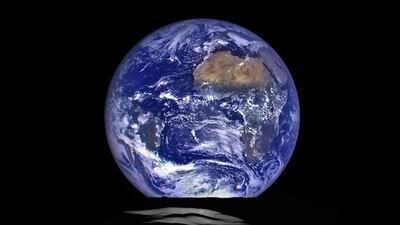
  • A striking composite image of Earth captured by Nasa’s Lunar Reconnaissance Orbiter while in orbit around the Moon in 2015.Photo: Nasa
    A striking composite image of Earth captured by Nasa’s Lunar Reconnaissance Orbiter while in orbit around the Moon in 2015.Photo: Nasa
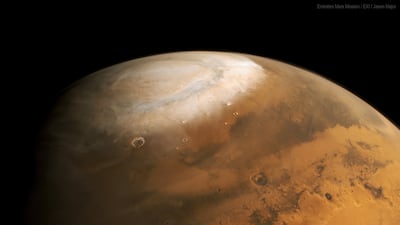
  • This image shows the polar ice cap on Mars. It was taken by the UAE’s Hope probe and processed by graphic designer Jason Major. Photo: Emirates Mars Mission
    This image shows the polar ice cap on Mars. It was taken by the UAE’s Hope probe and processed by graphic designer Jason Major. Photo: Emirates Mars Mission
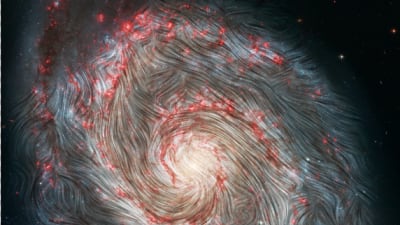
  • The Whirlpool Galaxy is 31 million light years away. Taken by Nasa’s Stratospheric Observatory for Infrared Astronomy, the image shows the galaxy's “arms”, which are actually swirling clouds of gas and dust where massive new stars are born. Photo: Nasa
    The Whirlpool Galaxy is 31 million light years away. Taken by Nasa’s Stratospheric Observatory for Infrared Astronomy, the image shows the galaxy's “arms”, which are actually swirling clouds of gas and dust where massive new stars are born. Photo: Nasa
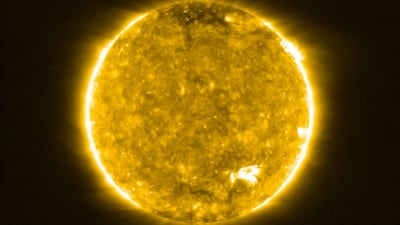
  • The Solar Orbiter, a European Space Agency probe built in the UK, captured images of the Sun in 2020 that show mini solar flares, called campfires, spread across its surface. The probe came within 75.6 million kilometres of the Sun. Photo: European Space Agency
    The Solar Orbiter, a European Space Agency probe built in the UK, captured images of the Sun in 2020 that show mini solar flares, called campfires, spread across its surface. The probe came within 75.6 million kilometres of the Sun. Photo: European Space Agency
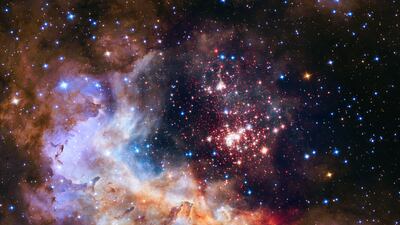
  • To celebrate Hubble’s 25th year in orbit, an image of star cluster Westerlund 2 was taken. Discovered in the 1960s, this cluster has some of the hottest, biggest and brightest stars known to humankind. Photo: European Space Agency
    To celebrate Hubble’s 25th year in orbit, an image of star cluster Westerlund 2 was taken. Discovered in the 1960s, this cluster has some of the hottest, biggest and brightest stars known to humankind. Photo: European Space Agency
  • This Hubble image shows the star-forming region NGC 3603. The cluster is thought to have formed about a million years ago. Photo: European Space Agency
    This Hubble image shows the star-forming region NGC 3603. The cluster is thought to have formed about a million years ago. Photo: European Space Agency
  • Taken by Nasa’s Chandra X-ray Observatory and Europe’s Very Large Telescope, this image shows the remains of an exploded star, an event called the supernova RCW 86. It is believed Chinese astronomers first observed this in 185 AD. Photo: Nasa
    Taken by Nasa’s Chandra X-ray Observatory and Europe’s Very Large Telescope, this image shows the remains of an exploded star, an event called the supernova RCW 86. It is believed Chinese astronomers first observed this in 185 AD. Photo: Nasa
  • The Hubble telescope took a picture of a galaxy hidden behind the Milky Way. The spiral galaxy, IC 342, is about 11 million light years from Earth. Photo: Nasa / European Space Agency
    The Hubble telescope took a picture of a galaxy hidden behind the Milky Way. The spiral galaxy, IC 342, is about 11 million light years from Earth. Photo: Nasa / European Space Agency
MATCH INFO

Uefa Champions League final:

Who: Real Madrid v Liverpool
Where: NSC Olimpiyskiy Stadium, Kiev, Ukraine
When: Saturday, May 26, 10.45pm (UAE)
TV: Match on BeIN Sports

Avatar: Fire and Ash

Director: James Cameron

Starring: Sam Worthington, Sigourney Weaver, Zoe Saldana

Rating: 4.5/5

The%20pillars%20of%20the%20Dubai%20Metaverse%20Strategy
%3Cp%3EEncourage%20innovation%20in%20the%20metaverse%20field%20and%20boost%20economic%20contribution%3C%2Fp%3E%0A%3Cp%3EDevelop%20outstanding%20talents%20through%20education%20and%20training%3C%2Fp%3E%0A%3Cp%3EDevelop%20applications%20and%20the%20way%20they%20are%20used%20in%20Dubai's%20government%20institutions%3C%2Fp%3E%0A%3Cp%3EAdopt%2C%20expand%20and%20promote%20secure%20platforms%20globally%3C%2Fp%3E%0A%3Cp%3EDevelop%20the%20infrastructure%20and%20regulations%3C%2Fp%3E%0A
Desert Warrior

Starring: Anthony Mackie, Aiysha Hart, Ben Kingsley

Director: Rupert Wyatt

Rating: 3/5

Scores

Rajasthan Royals 160-8 (20 ov)

Kolkata Knight Riders 163-3 (18.5 ov)

It Was Just an Accident

Director: Jafar Panahi

Stars: Vahid Mobasseri, Mariam Afshari, Ebrahim Azizi, Hadis Pakbaten, Majid Panahi, Mohamad Ali Elyasmehr

Rating: 4/5

Mercer, the investment consulting arm of US services company Marsh & McLennan, expects its wealth division to at least double its assets under management (AUM) in the Middle East as wealth in the region continues to grow despite economic headwinds, a company official said.

Mercer Wealth, which globally has $160 billion in AUM, plans to boost its AUM in the region to $2-$3bn in the next 2-3 years from the present $1bn, said Yasir AbuShaban, a Dubai-based principal with Mercer Wealth.

Within the next two to three years, we are looking at reaching $2 to $3 billion as a conservative estimate and we do see an opportunity to do so,” said Mr AbuShaban.

Mercer does not directly make investments, but allocates clients’ money they have discretion to, to professional asset managers. They also provide advice to clients.

“We have buying power. We can negotiate on their (client’s) behalf with asset managers to provide them lower fees than they otherwise would have to get on their own,” he added.

Mercer Wealth’s clients include sovereign wealth funds, family offices, and insurance companies among others.

From its office in Dubai, Mercer also looks after Africa, India and Turkey, where they also see opportunity for growth.

Wealth creation in Middle East and Africa (MEA) grew 8.5 per cent to $8.1 trillion last year from $7.5tn in 2015, higher than last year’s global average of 6 per cent and the second-highest growth in a region after Asia-Pacific which grew 9.9 per cent, according to consultancy Boston Consulting Group (BCG). In the region, where wealth grew just 1.9 per cent in 2015 compared with 2014, a pickup in oil prices has helped in wealth generation.

BCG is forecasting MEA wealth will rise to $12tn by 2021, growing at an annual average of 8 per cent.

Drivers of wealth generation in the region will be split evenly between new wealth creation and growth of performance of existing assets, according to BCG.

Another general trend in the region is clients’ looking for a comprehensive approach to investing, according to Mr AbuShaban.

“Institutional investors or some of the families are seeing a slowdown in the available capital they have to invest and in that sense they are looking at optimizing the way they manage their portfolios and making sure they are not investing haphazardly and different parts of their investment are working together,” said Mr AbuShaban.

Some clients also have a higher appetite for risk, given the low interest-rate environment that does not provide enough yield for some institutional investors. These clients are keen to invest in illiquid assets, such as private equity and infrastructure.

“What we have seen is a desire for higher returns in what has been a low-return environment specifically in various fixed income or bonds,” he said.

“In this environment, we have seen a de facto increase in the risk that clients are taking in things like illiquid investments, private equity investments, infrastructure and private debt, those kind of investments were higher illiquidity results in incrementally higher returns.”

The Abu Dhabi Investment Authority, one of the largest sovereign wealth funds, said in its 2016 report that has gradually increased its exposure in direct private equity and private credit transactions, mainly in Asian markets and especially in China and India. The authority’s private equity department focused on structured equities owing to “their defensive characteristics.”

CONFIRMED%20LINE-UP
%3Cp%3E%0DElena%20Rybakina%20(Kazakhstan)%20%20%0D%3Cbr%3EOns%20Jabeur%20(Tunisia)%20%20%0D%3Cbr%3EMaria%20Sakkari%20(Greece)%20%20%0D%3Cbr%3EBarbora%20Krej%C4%8D%C3%ADkov%C3%A1%20(Czech%20Republic)%20%20%0D%3Cbr%3EBeatriz%20Haddad%20Maia%20(Brazil)%20%20%0D%3Cbr%3EJe%C4%BCena%20Ostapenko%20(Latvia)%20%20%0D%3Cbr%3ELiudmila%20Samsonova%20%20%0D%3Cbr%3EDaria%20Kasatkina%E2%80%AF%20%0D%3Cbr%3EVeronika%20Kudermetova%E2%80%AF%20%0D%3Cbr%3ECaroline%20Garcia%20(France)%E2%80%AF%20%0D%3Cbr%3EMagda%20Linette%20(Poland)%E2%80%AF%20%0D%3Cbr%3ESorana%20C%C3%AErstea%20(Romania)%E2%80%AF%20%0D%3Cbr%3EAnastasia%20Potapova%E2%80%AF%20%0D%3Cbr%3EAnhelina%20Kalinina%20(Ukraine)%E2%80%AF%E2%80%AF%20%0D%3Cbr%3EJasmine%20Paolini%20(Italy)%E2%80%AF%20%0D%3Cbr%3EEmma%20Navarro%20(USA)%E2%80%AF%20%0D%3Cbr%3ELesia%20Tsurenko%20(Ukraine)%3Cbr%3ENaomi%20Osaka%20(Japan)%20-%20wildcard%3Cbr%3EEmma%20Raducanu%20(Great%20Britain)%20-%20wildcard%3C%2Fp%3E%0A
The%20Secret%20Kingdom%20
%3Cp%3E%3Cstrong%3EDirector%3A%3C%2Fstrong%3E%20Matt%20Drummond%3C%2Fp%3E%0A%3Cp%3E%3Cstrong%3EStars%3A%20%3C%2Fstrong%3EAlyla%20Browne%2C%20Alice%20Parkinson%2C%20Sam%20Everingham%3C%2Fp%3E%0A%3Cp%3E%3Cstrong%3ERating%3A%3C%2Fstrong%3E%203%2F5%26nbsp%3B%3C%2Fp%3E%0A
Cryopreservation: A timeline
  1. Keyhole surgery under general anaesthetic
  2. Ovarian tissue surgically removed
  3. Tissue processed in a high-tech facility
  4. Tissue re-implanted at a time of the patient’s choosing
  5. Full hormone production regained within 4-6 months
Racecard
%3Cp%3E6pm%3A%20The%20Madjani%20Stakes%20%E2%80%93%20Group%202%20(PA)%20Dh97%2C500%20(Dirt)%201%2C900m%3Cbr%3E6.35pm%3A%20Graduate%20Stakes%20%E2%80%93%20Conditions%20(TB)%20Dh100%2C000%20(D)%201%2C400m%3Cbr%3E7.10pm%3A%20Longines%20Dolcevita%20Collection%20%E2%80%93%20Maiden%20(TB)%20Dh82%2C500%20(D)%201%2C400m%3Cbr%3E7.45pm%3A%20Longines%20Legend%20Driver%20Collection%20%E2%80%93%20Maiden%20(TB)%20Dh82%2C500%20(D)%201%2C600m%3Cbr%3E8.20pm%3A%20Longines%20Master%20Collection%20%E2%80%93%20Handicap%20(TB)%20Dh105%2C000%20(D)%201%2C200m%3Cbr%3E8.55pm%3A%20Longines%20Record%20Collection%20%E2%80%93%20Handicap%20(TB)%20Dh87%2C500%20(D)%202%2C200m%3Cbr%3E9.30pm%3A%20Longines%20Spirit%20Collection%20%E2%80%93%20Handicap%20(TB)%20Dh87%2C500%20(D)%201%2C600m%3C%2Fp%3E%0A
Islamophobia definition

A widely accepted definition was made by the All Party Parliamentary Group on British Muslims in 2019: “Islamophobia is rooted in racism and is a type of racism that targets expressions of Muslimness or perceived Muslimness.” It further defines it as “inciting hatred or violence against Muslims”.

World Cup final

Who: France v Croatia
When: Sunday, July 15, 7pm (UAE)
TV: Game will be shown live on BeIN Sports for viewers in the Mena region

PROFILE OF HALAN

Started: November 2017

Founders: Mounir Nakhla, Ahmed Mohsen and Mohamed Aboulnaga

Based: Cairo, Egypt

Sector: transport and logistics

Size: 150 employees

Investment: approximately $8 million

Investors include: Singapore’s Battery Road Digital Holdings, Egypt’s Algebra Ventures, Uber co-founder and former CTO Oscar Salazar

No%20Windmills%20in%20Basra
%3Cp%3EAuthor%3A%20Diaa%20Jubaili%3C%2Fp%3E%0A%3Cp%3EPages%3A%20180%3C%2Fp%3E%0A%3Cp%3EPublisher%3A%20Deep%20Vellum%20Publishing%C2%A0%3C%2Fp%3E%0A
Who's who in Yemen conflict

Houthis: Iran-backed rebels who occupy Sanaa and run unrecognised government

Yemeni government: Exiled government in Aden led by eight-member Presidential Leadership Council

Southern Transitional Council: Faction in Yemeni government that seeks autonomy for the south

Habrish 'rebels': Tribal-backed forces feuding with STC over control of oil in government territory

Updated: July 21, 2022, 12:20 PM