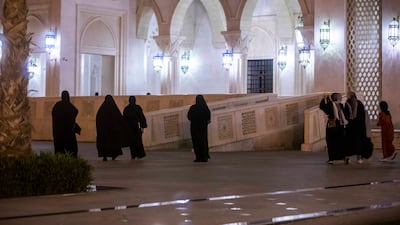
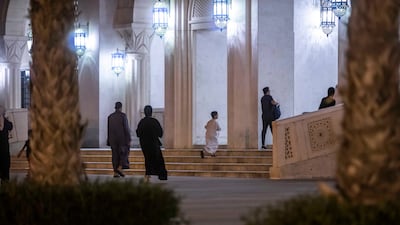
Millions of Muslims worldwide observe the month of Ramadan each year.
This year, the period of fasting began on March 11 for many countries, although some – including Indonesia, the Philippines, Morocco and Japan – will mark the first day of Ramadan in their calendars as March 12.
Throughout the holy month, Muslims abstain from food and drink from sunrise to sunset. Fasting during Ramadan is one of the five pillars of Islam, along with prayer, giving money to charity (zakat), Hajj, and saying the Shahada, which is a profession of faith.
Ramadan is the ninth and holiest month in the Islamic calendar and is a way to get closer to Allah, as well as recognising the needs of the underprivileged.
For those who are unfamiliar with Ramadan, here are several words you will likely hear often throughout the month.
1. Ramadan kareem or Ramadan mubarak
Ramadan kareem translates from Arabic to "generous Ramadan". It is the most common greeting used in the UAE.
In Islam, the holy month is believed to bring many rewards, so Muslims wish a generous Ramadan to each other.
Ramadan mubarak is another common greeting that means "happy Ramadan" or "blessed Ramadan".
You can use this or Ramadan kareem as a way of greeting one another throughout the holy month.
2. Sawm or siyam
These variations of the same word translate from Arabic to "fast".
While fasting, Muslims do not eat, drink or smoke. A greater focus is placed on worshipping, being thankful, getting closer to Allah and understanding the needs of the underprivileged.
You might also hear "ana sayim / sayma", which means "I am fasting".
3. Iftar
This is the meal that you open your fast with. It will be the first Ramadan in three years to be held without Covid-19 restrictions, after authorities dropped an indoor mask mandate in September last year.
Previous limitations on gatherings that once affected Ramadan traditions, such as visiting family and iftar or suhoor tents are no longer in place, allowing the full spirit of the month to be felt once more. Usually, majlis or tents are set up to host large gatherings for iftar.
4. Madfa
This is the iftar cannon that sounds when the sun sets and signifies the end of the fast. Uqlat Al Madfa, or the firing of the cannon, means Muslims can break their fast and have iftar.
5. Suhoor
Suhoor is the meal eaten before the fast begins, just before dawn. Health experts recommend lots of water and healthy food options to keep the body hydrated throughout the day.
6. Imsak
This Arabic word means beginning the daily fast. It is a period of time, about 10 minutes, before the dawn prayer begins and when people, who have eaten suhoor, must stop eating.
7. Mosaharaty
A mosaharaty is a person that roams the streets waking Muslims just before dawn to have suhoor. The traditional job is fast disappearing from modern life but can still be found in some areas of Egypt and Indonesia. Some use drums while others recite prayers to wake the sleepers.
8. Qada
Qada means to make up for an Islamic duty that was missed. During Ramadan, this is typically referred to someone doing something to make up for missing a fast.
Muslims are required to fast during Ramadan unless they are unwell, travelling or menstruating. Other reasons a Muslim might need to make up for missing a fast include accidentally eating or drinking, excessive bleeding or throwing up.
9. Kaffara
When a Muslim misses a fast for other reasons, they may need to carry out a penalty, which is called kaffara. This requires the individual to fast an additional 60 days. If they are unable to, they must instead feed 60 underprivileged people, with one average meal served to each.
10. Salah
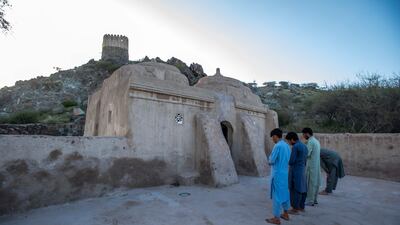
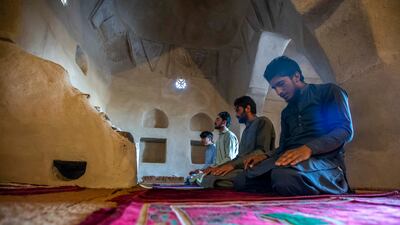
Salah is prayer. Muslims are obliged to pray five times a day – fajr is the dawn prayer, dhuhr is in the afternoon, asr is in late afternoon, maghrib is the sunset prayer and isha is also a late evening prayer. During Ramadan, Muslims are encouraged to also pray taraweeh – though this is not obligatory.
11. Taraweeh
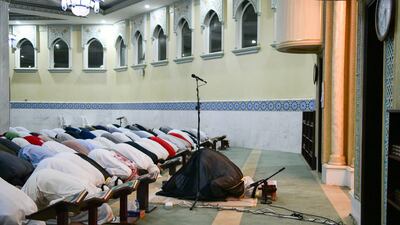
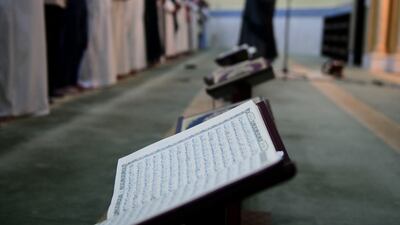
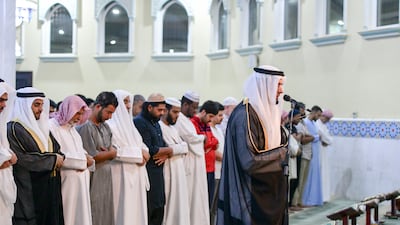
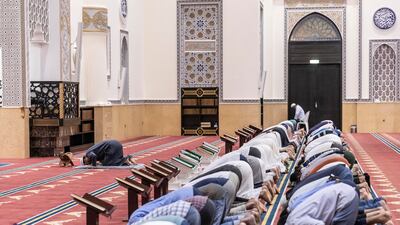
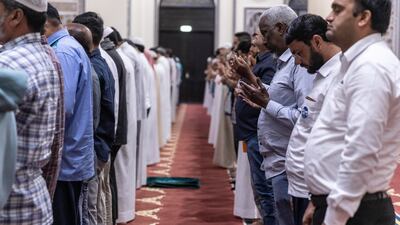
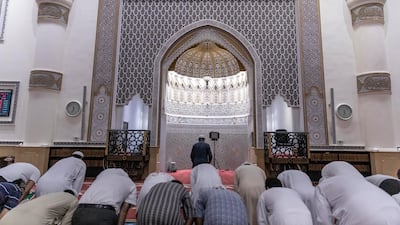
Taraweeh prayers take place after isha. These are extended prayers, typically performed in congregation at a mosque. During each nightly taraweeh, an imam will recite one of the 30 sections of the Quran. This ensures the holy book is completed by the end of Ramadan. While regular prayers can take between five to 10 minutes, taraweeh can take up to an hour.
12. Laylat Al Qadr
The final 10 days of Ramadan are considered the most holy because it is believed to have been the period in which the first verses of the Quran were revealed to Prophet Mohammed by the angel Jibril (Gabriel). Laylat Al Qadr, or the night of destiny, is believed to be one of the odd numbered nights during the final 10 days. During this period, Muslims increase their piety and it is said that acts of goodness and night prayers carried out on Laylat Al Qadr are better than those carried out over 83 years.
13. Itikaf
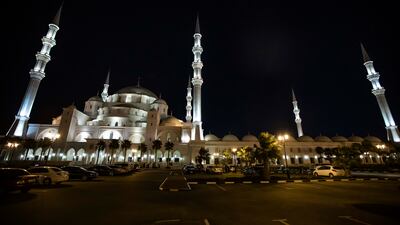
This means to isolate and dedicate one’s time to something. During the final 10 days of Ramadan, Muslims spend their days and nights at the mosque.
14. Eid Al Fitr
Eid Al Fitr is the religious holiday that celebrates the end of Ramadan. Iftar is a derivative of fitr, which means to eat or break the fast so Eid Al Fitr is the "festival of breaking the fast".
Fasting is not permitted during Eid Al Fitr. Muslims offer Eid prayers on this occasion.
15. Zakat and Zakat Al Fitr
Zakat is one of the five pillars of Islam. It means to donate a certain percentage of one’s wealth to charitable causes.
Muslims around the world make donations during the Ramadan month.
Zakat Al Fitr is paid before the Eid Al Fitr prayer at the end of Ramadan.
15 Ramadan phrases to learn:
- Ramadan Kareem or Ramadan Mubarak
- Sawm or siyam
- Iftar
- Madfa
- Suhoor
- Imsak
- Mosaharaty
- Qada
- Kaffara
- Salah
- Taraweeh
- Laylat Al Qadr
- Itikaf
- Eid Al Fitr
- Zakat and Zakat Al Fitr
This story was first published on April 2, 2022

Ten tax points to be aware of in 2026
1. Domestic VAT refund amendments: request your refund within five years
If a business does not apply for the refund on time, they lose their credit.
2. E-invoicing in the UAE
Businesses should continue preparing for the implementation of e-invoicing in the UAE, with 2026 a preparation and transition period ahead of phased mandatory adoption.
3. More tax audits
Tax authorities are increasingly using data already available across multiple filings to identify audit risks.
4. More beneficial VAT and excise tax penalty regime
Tax disputes are expected to become more frequent and more structured, with clearer administrative objection and appeal processes. The UAE has adopted a new penalty regime for VAT and excise disputes, which now mirrors the penalty regime for corporate tax.
5. Greater emphasis on statutory audit
There is a greater need for the accuracy of financial statements. The International Financial Reporting Standards standards need to be strictly adhered to and, as a result, the quality of the audits will need to increase.
6. Further transfer pricing enforcement
Transfer pricing enforcement, which refers to the practice of establishing prices for internal transactions between related entities, is expected to broaden in scope. The UAE will shortly open the possibility to negotiate advance pricing agreements, or essentially rulings for transfer pricing purposes.
7. Limited time periods for audits
Recent amendments also introduce a default five-year limitation period for tax audits and assessments, subject to specific statutory exceptions. While the standard audit and assessment period is five years, this may be extended to up to 15 years in cases involving fraud or tax evasion.
8. Pillar 2 implementation
Many multinational groups will begin to feel the practical effect of the Domestic Minimum Top-Up Tax (DMTT), the UAE's implementation of the OECD’s global minimum tax under Pillar 2. While the rules apply for financial years starting on or after January 1, 2025, it is 2026 that marks the transition to an operational phase.
9. Reduced compliance obligations for imported goods and services
Businesses that apply the reverse-charge mechanism for VAT purposes in the UAE may benefit from reduced compliance obligations.
10. Substance and CbC reporting focus
Tax authorities are expected to continue strengthening the enforcement of economic substance and Country-by-Country (CbC) reporting frameworks. In the UAE, these regimes are increasingly being used as risk-assessment tools, providing tax authorities with a comprehensive view of multinational groups’ global footprints and enabling them to assess whether profits are aligned with real economic activity.
Contributed by Thomas Vanhee and Hend Rashwan, Aurifer
ABU%20DHABI%20CARD
%3Cp%3E%3Cstrong%3E5pm%3A%20%3C%2Fstrong%3EWathba%20Stallions%20Cup%20%E2%80%93%20Handicap%20(PA)%20Dh70%2C000%20(Turf)%202%2C200m%0D%3Cbr%3E%3Cstrong%3E5.30pm%3C%2Fstrong%3E%3A%20Rub%20Al%20Khali%20%E2%80%93%20Maiden%20(PA)%20Dh80%2C000%20(T)%201%2C400m%0D%3Cbr%3E%3Cstrong%3E6pm%3A%20%3C%2Fstrong%3EAl%20Marmoom%20Desert%20%E2%80%93%20Maiden%20(PA)%20Dh80%2C000%20(T)%201%2C600m%0D%3Cbr%3E%3Cstrong%3E6.30pm%3A%20%3C%2Fstrong%3ELiwa%20Oasis%20%E2%80%93%20Handicap%20(PA)%20Dh80%2C000%20(T)%201%2C400m%0D%3Cbr%3E%3Cstrong%3E7pm%3A%20%3C%2Fstrong%3EAl%20Khatim%20Desert%20%E2%80%93%20Handicap%20(PA)%20Dh80%2C000%20(T)%201%2C600m%0D%3Cbr%3E%3Cstrong%3E7.30pm%3A%3C%2Fstrong%3E%20Al%20Quadra%20Desert%20%E2%80%93%20Handicap%20(TB)%20Dh80%2C000%20(T)%201%2C600m%3C%2Fp%3E%0A
Classification of skills
A worker is categorised as skilled by the MOHRE based on nine levels given in the International Standard Classification of Occupations (ISCO) issued by the International Labour Organisation.
A skilled worker would be someone at a professional level (levels 1 – 5) which includes managers, professionals, technicians and associate professionals, clerical support workers, and service and sales workers.
The worker must also have an attested educational certificate higher than secondary or an equivalent certification, and earn a monthly salary of at least Dh4,000.
Mercer, the investment consulting arm of US services company Marsh & McLennan, expects its wealth division to at least double its assets under management (AUM) in the Middle East as wealth in the region continues to grow despite economic headwinds, a company official said.
Mercer Wealth, which globally has $160 billion in AUM, plans to boost its AUM in the region to $2-$3bn in the next 2-3 years from the present $1bn, said Yasir AbuShaban, a Dubai-based principal with Mercer Wealth.
“Within the next two to three years, we are looking at reaching $2 to $3 billion as a conservative estimate and we do see an opportunity to do so,” said Mr AbuShaban.
Mercer does not directly make investments, but allocates clients’ money they have discretion to, to professional asset managers. They also provide advice to clients.
“We have buying power. We can negotiate on their (client’s) behalf with asset managers to provide them lower fees than they otherwise would have to get on their own,” he added.
Mercer Wealth’s clients include sovereign wealth funds, family offices, and insurance companies among others.
From its office in Dubai, Mercer also looks after Africa, India and Turkey, where they also see opportunity for growth.
Wealth creation in Middle East and Africa (MEA) grew 8.5 per cent to $8.1 trillion last year from $7.5tn in 2015, higher than last year’s global average of 6 per cent and the second-highest growth in a region after Asia-Pacific which grew 9.9 per cent, according to consultancy Boston Consulting Group (BCG). In the region, where wealth grew just 1.9 per cent in 2015 compared with 2014, a pickup in oil prices has helped in wealth generation.
BCG is forecasting MEA wealth will rise to $12tn by 2021, growing at an annual average of 8 per cent.
Drivers of wealth generation in the region will be split evenly between new wealth creation and growth of performance of existing assets, according to BCG.
Another general trend in the region is clients’ looking for a comprehensive approach to investing, according to Mr AbuShaban.
“Institutional investors or some of the families are seeing a slowdown in the available capital they have to invest and in that sense they are looking at optimizing the way they manage their portfolios and making sure they are not investing haphazardly and different parts of their investment are working together,” said Mr AbuShaban.
Some clients also have a higher appetite for risk, given the low interest-rate environment that does not provide enough yield for some institutional investors. These clients are keen to invest in illiquid assets, such as private equity and infrastructure.
“What we have seen is a desire for higher returns in what has been a low-return environment specifically in various fixed income or bonds,” he said.
“In this environment, we have seen a de facto increase in the risk that clients are taking in things like illiquid investments, private equity investments, infrastructure and private debt, those kind of investments were higher illiquidity results in incrementally higher returns.”
The Abu Dhabi Investment Authority, one of the largest sovereign wealth funds, said in its 2016 report that has gradually increased its exposure in direct private equity and private credit transactions, mainly in Asian markets and especially in China and India. The authority’s private equity department focused on structured equities owing to “their defensive characteristics.”
Call of Duty: Black Ops 6
Developer: Treyarch, Raven Software
Publisher: Activision
Console: PlayStation 4 & 5, Windows, Xbox One & Series X/S
Rating: 3.5/5
The biogs
Name: Zinah Madi
Occupation: Co-founder of Dots and links
Nationality: Syrian
Family: Married, Mother of Tala, 18, Sharif, 14, Kareem, 2
Favourite Quote: “There is only one way to succeed in anything, and that is to give it everything.”
Name: Razan Nabulsi
Occupation: Co-founder of Dots and Links
Nationality: Jordanian
Family: Married, Mother of Yahya, 3.5
Favourite Quote: A Chinese proverb that says: “Be not afraid of moving slowly, be afraid only of standing still.”
UAE gold medallists:
Omar Al Suweidi (46kg), Khaled Al Shehhi (50kg), Khalifa Humaid Al Kaabi (60kg), Omar Al Fadhli (62kg), Mohammed Ali Al Suweidi (66kg), Omar Ahmed Al Hosani (73), all in the U18’s, and Khalid Eskandar Al Blooshi (56kg) in the U21s.
More from Rashmee Roshan Lall
Biog
Mr Kandhari is legally authorised to conduct marriages in the gurdwara
He has officiated weddings of Sikhs and people of different faiths from Malaysia, Sri Lanka, Russia, the US and Canada
Father of two sons, grandfather of six
Plays golf once a week
Enjoys trying new holiday destinations with his wife and family
Walks for an hour every morning
Completed a Bachelor of Commerce degree in Loyola College, Chennai, India
2019 is a milestone because he completes 50 years in business
CHATGPT%20ENTERPRISE%20FEATURES
%3Cp%3E%E2%80%A2%20Enterprise-grade%20security%20and%20privacy%3C%2Fp%3E%0A%3Cp%3E%E2%80%A2%20Unlimited%20higher-speed%20GPT-4%20access%20with%20no%20caps%3C%2Fp%3E%0A%3Cp%3E%E2%80%A2%20Longer%20context%20windows%20for%20processing%20longer%20inputs%3C%2Fp%3E%0A%3Cp%3E%E2%80%A2%20Advanced%20data%20analysis%20capabilities%3C%2Fp%3E%0A%3Cp%3E%E2%80%A2%20Customisation%20options%3C%2Fp%3E%0A%3Cp%3E%E2%80%A2%20Shareable%20chat%20templates%20that%20companies%20can%20use%20to%20collaborate%20and%20build%20common%20workflows%3C%2Fp%3E%0A%3Cp%3E%E2%80%A2%20Analytics%20dashboard%20for%20usage%20insights%3C%2Fp%3E%0A%3Cp%3E%E2%80%A2%20Free%20credits%20to%20use%20OpenAI%20APIs%20to%20extend%20OpenAI%20into%20a%20fully-custom%20solution%20for%20enterprises%3C%2Fp%3E%0A