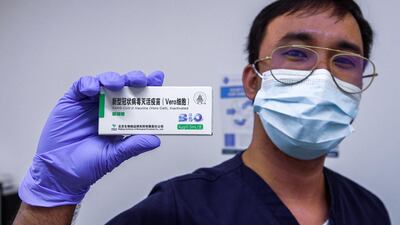
The UAE has sufficient supplies of Sinopharm vaccine to allow for some residents to take a third 'booster' shot to further protect them against Covid-19.
Extra doses were administered to a 'small number' of people whose immune systems were found to have not responded to the vaccine, a health expert said.
Residents concerned they might not have enough antibodies have been told they can check their levels, but should wait until three months after their second Sinopharm shot.
"We recommend that if you want to do so, it's within the period of three months of receiving your second shot, and then every three months to ensure that you have a sufficient level of antibodies to prevent, or fight against severe forms of Covid-19," Walid Zaher, chief research officer of G42 Healthcare, the company responsible for distributing the Sinopharm vaccine in the UAE, told Dubai Eye's Business Breakfast programme.
Dr Zaher said some people did not create enough antibodies to protect them against Covid-19 – a phenomenon “which is expected with all vaccines.”
He emphasised that very few people required a booster.
"It's a very small number compared to the millions who have received the vaccine already," he said.
“The main purpose here is to ensure the safety of everyone, and that was already achieved. It happens that some people will not respond as well as other people."
Dr Zaher said they had researched the benefits of giving a third dose of the Sinopharm vaccine, and so far the results had been positive.
"It has been shown within the context of a study, to boost immunity to a protected level from Covid-19, and that was the purpose behind giving the third shot to some people," he said.
“Let's think of this as a flu, and it's known that every year you have to renew your flu shot. So think of it as the same thing."
UAE Sinopharm vaccine trial – in pictures
-
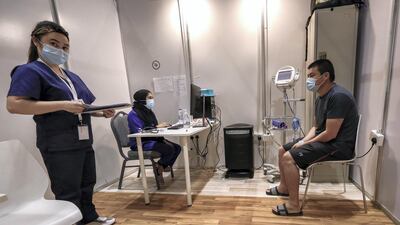
A volunteer undergoes a check-up before being accepted to the Covid-19 vaccine trial at Adnec. Victor Besa / The National -
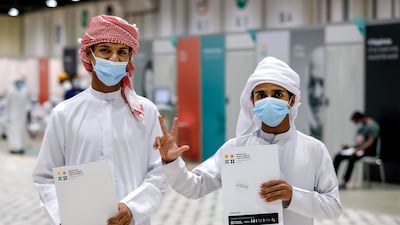
Vaccine volunteers at the Adnec volunteer facility. Victor Besa / The National -
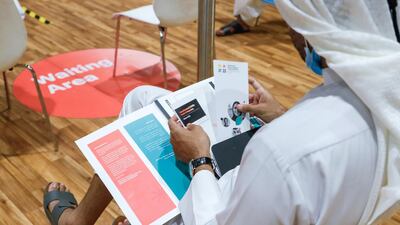
Volunteers read information about the Covid-19 vaccine trial at Abu Dhabi National Exhibition Centre. Victor Besa / The National -
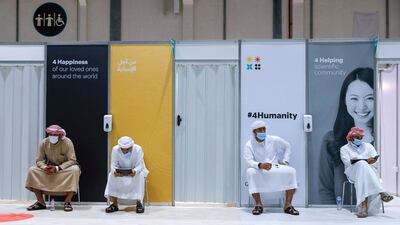
Vaccine volunteers wait to be screened at the Adnec facility. Victor Besa / The National -
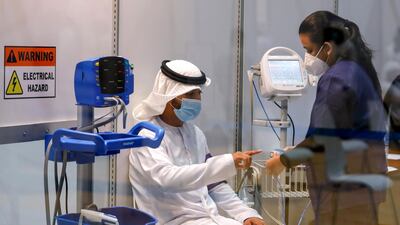
A volunteer has his heart rate checked after registering to take part in the Covid-19 clinical trial in Abu Dhabi. Victor Besa / The National -
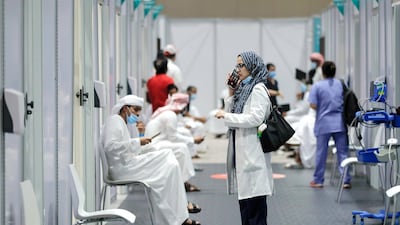
Volunteers wait to be screened and injected with the Covid-19 vaccine at Adnec. Victor Besa / The National -
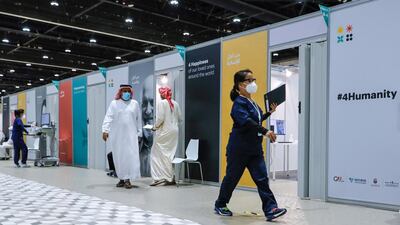
Volunteers are led to a stall where they are screened and vaccinated as part of the Covid-19 vaccine trial in Abu Dhabi. Victor Besa / The National -

Volunteers wait to be screened and injected with the Covid-19 vaccine at Adnec. Victor Besa / The National -
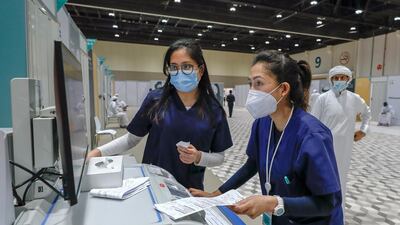
Nurses update medical records as part of the Covid-19 vaccine trial in Abu Dhabi. Victor Besa / The National -
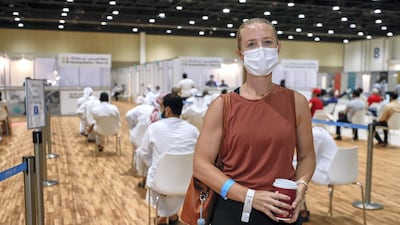
A mother-of-three, 41, has volunteered as part of the Covid-19 vaccine trial because her husband is in the aviation industry, which has been among the hardest hit by the pandemic. Victor Besa / The National -
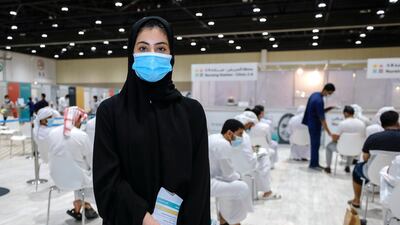
A volunteer, 26, takes part in the Covid-19 vaccine trial to give back and support the UAE. Victor Besa / The National -
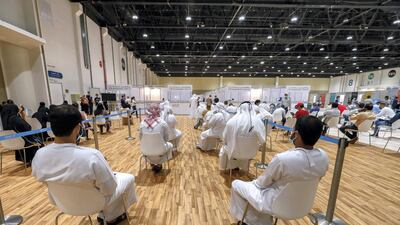
Volunteers wait their turn to be screened and inoculated with the first of two Covid-19 vaccines. Victor Besa / The National -
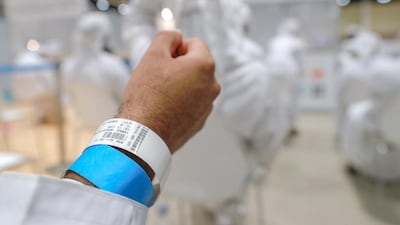
Volunteers wait their turn to be inoculated with the first of two Covid-19 vaccines. Victor Besa / The National -
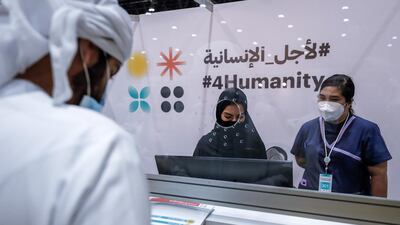
Volunteers register to take part in the Covid-19 vaccine trial in Abu Dhabi. Victor Besa / The National -
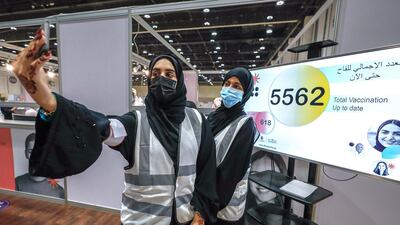
Staff take a selfie in front of the monitor that displays the number of volunteers who have been vaccinated since the start if the trial. Victor Besa / The National -
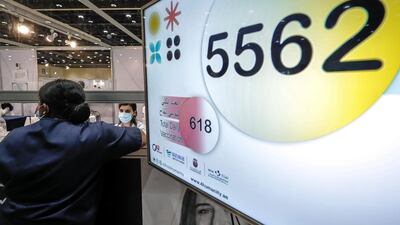
A monitor displays the number of volunteers who have received their first vaccine since the trial began. Victor Besa / The National -

A volunteer waits her turn to get a medical check up at the Covid-19 vaccine trial facility in Abu Dhabi. Victor Besa / The National -
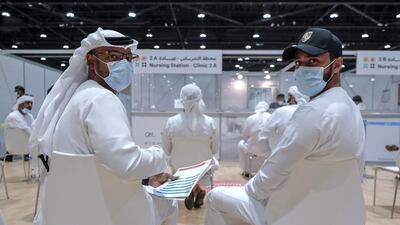
Volunteers read information about the Covid-19 vaccine trial at Abu Dhabi National Exhibition Centre. Victor Besa / The National -
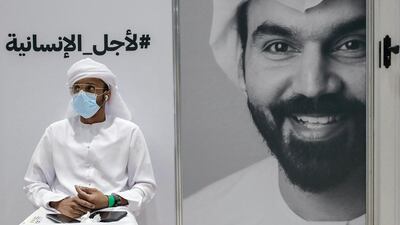
Volunteers for the Covid-19 vaccine trial wait to be screened at Abu Dhabi National Exhibition Centre. Victor Besa / The National


Residents who get an antibody test and find they have low levels of immunity to Covid-19 are not currently able to request a third shot. Instead, Dr Zaher recommended people should consult their doctors.
“The medic will then notify the healthcare facilities and authorities, and you will be scheduled for a third shot,” he said.
Those who participated in the initial Sinopharm vaccine trial and do not know if they received a placebo or the real thing, should consult the centre where they initially received their injections.
Details of the third booster injections were revealed as the UAE announced the restart of vaccinations for all residents.
The Emirates had briefly limited the availability of vaccines to the vulnerable and over-60s, but this has once more been extended to all.
Appointments are necessary for the first and second dose, but can be booked in most vaccine centres within a two-week window.
Dr Zaher emphasised that the UAE had ample supplies of the Sinopharm vaccine to cater for the third jabs.
“You're talking about a very small number of people, so the answer is definitely yes.
"If you're running a mass campaign to vaccinate millions of people, then there is definitely a couple of thousand – enough to vaccinate people who did not respond as well," he said.
UAE leaders receive their Covid-19 vaccine
-
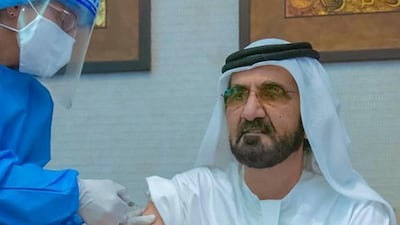
Sheikh Mohammed bin Rashid receives the Sinopharm vaccine to protect against Covid-19 on November 3, 2020. Courtesy: Dubai Media Office -
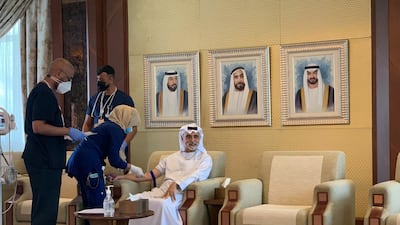
Sheikh Nahyan bin Mubarak receives the first of two shots of a vaccine that was trialled in the UAE. Wam -
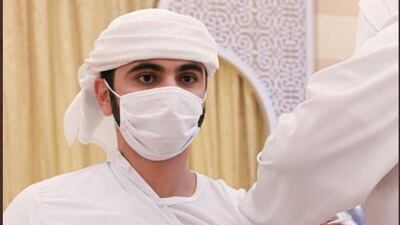
Sheikh Mansoor bin Mohammed, chairman of Dubai’s Supreme Committee of Crisis and Disaster Management, receives the Pfizer-BioNTech vaccine. Courtesy: Sheikh Mansoor -
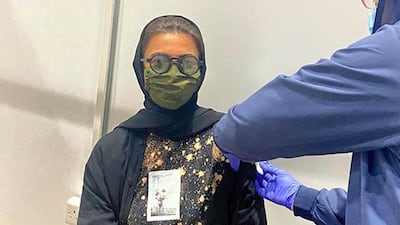
Noura Al Kaabi, Minister of Culture and Youth, gets the Sinopharm jab. -
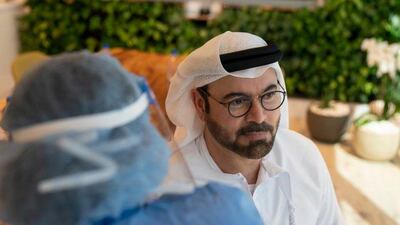
Mohammad Al Gergawi, Minister of Cabinet Affairs, receives the Covid-19 Sinopharm vaccine on Saturday, October 31. Courtesy: UAE Government Twitter -
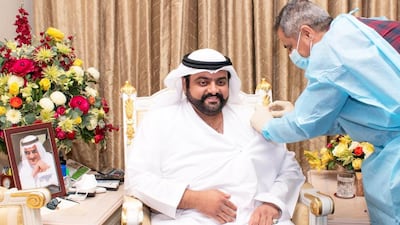
Sheikh Mohammed bin Hamad Al Sharqi, Crown Prince of Fujairah, receives his first dose of the Covid-19 vaccine on Wednesday. Wam -
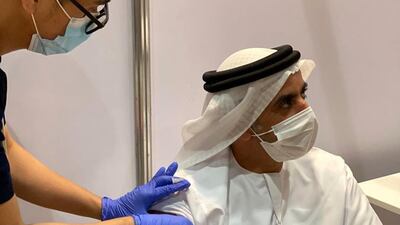
Sheikh Saif bin Zayed, Deputy Prime Minister and Minister of Interior, takes the Sinopharm vaccine. Courtesy: Sheikh Saif bin Zayed Twitter -
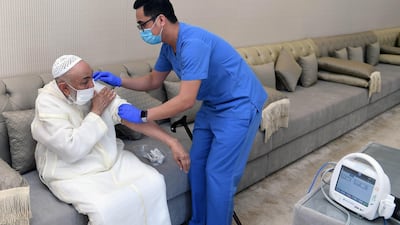
Sheikh Abdullah bin Bayyah, UAE Fatwa Council, is vaccinated with the Sinopharm innoculation on January 4, 2021. Wam -

Sheikh Khalid bin Mohammed, chair of Abu Dhabi's Executive Office, takes the first dose of the Sinopharm vaccine. Courtesy: Abu Dhabi Media Office -
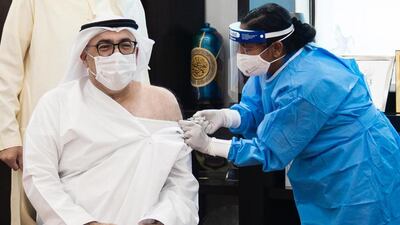
The UAE's health minister, Abdulrahman Al Owais, receives the Sinopharm vaccine. -
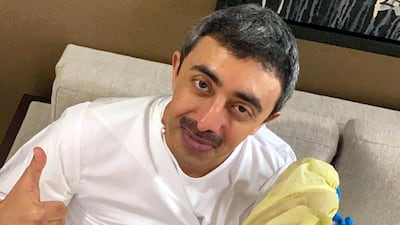
Sheikh Abdullah bin Zayed, Minister of Foreign Affairs and International Co-operation, gives a thumbs up as he is vaccinated against Covid-19. -
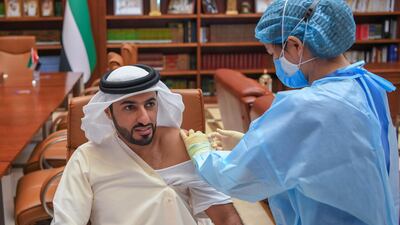
Sheikh Rashid bin Humaid Al Nuaimi, president of the UAE Football Association, receives the Covid-19 vaccine. -
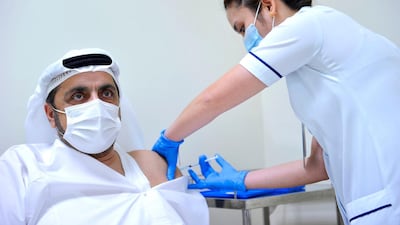
Khalifa bin Dary, executive director of Dubai Ambulance Services Corporation, receives his first dose of the Pfizer-BioNTech vaccine. Courtesy: Dubai Media Office -
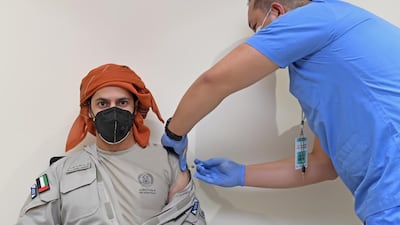
Lt Col Sheikh Zayed bin Hamad Al Nahyan, director of special patrols at Abu Dhabi Police, receives the Covid-19 vaccine. Courtesy: Abu Dhabi Police -
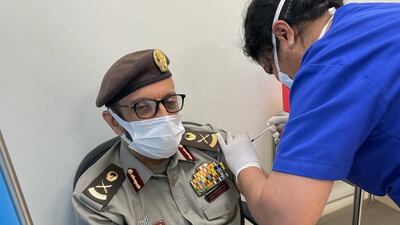
Maj Gen Mohammed Al Marri, director general of the General Directorate of Residency and Foreigners Affairs Dubai, receives his first dose of the Pfizer-BioNTech vaccine. Courtesy: Dubai Media Office -
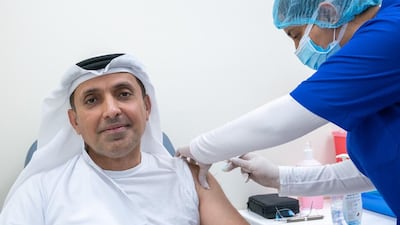
Maj Gen Talal Al Falasi, director general of Dubai's State Security Department, receives his first dose of the Pfizer-BioNTech vaccine. Courtesy: Dubai Media Office -
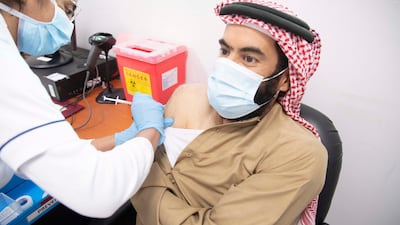
Abdullah Al Falasi, director general of Dubai Government Human Resources Department, receives his first dose of the Pfizer-BioNTech vaccine. Courtesy: Dubai Media Office -
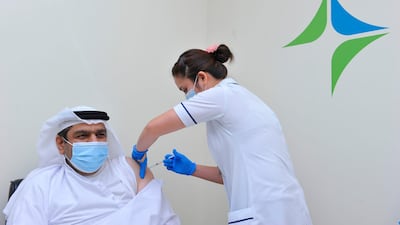
Amer Sharif, head of Dubai's Covid-10 Command and Control Centre, receives his first dose of the Pfizer-BioNTech vaccine. Courtesy: Dubai Media Office -
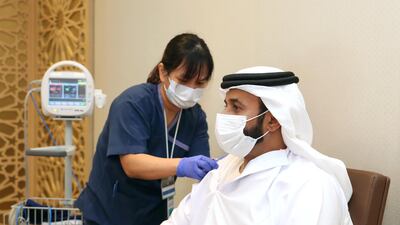
Obaid Al Shamsi, director general of the National Emergency Crisis and Disasters Management Authority, takes the first dose of Covid-19 vaccine



