
Frontline medical workers and patients are exempted from fasting during Ramadan, according to an order issued by the UAE Fatwa Council.
This was among five rulings issued by the body about the holy month, which is expected to begin this weekend.
The first is that fasting is obligatory for healthy people. But anyone suffering from Covid-19 does not have to fast when they are experiencing symptoms of the virus, if doctors say it will worsen their condition.
Medical staff fighting the outbreak are also exempted from fasting if they fear doing so would weaken their immune systems or compromise their ability to treat patients.
-
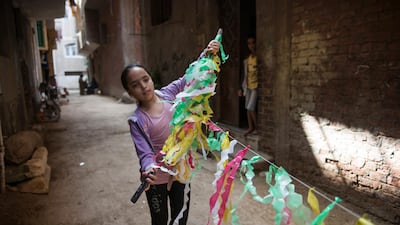
Children assist in the installation of Ramadan ornaments in the streets of Giza, Egypt. EPA -

Ramadan date sales at the Abu Dhabi Dates Market at, Mina Zayed. Victor Besa / The National -
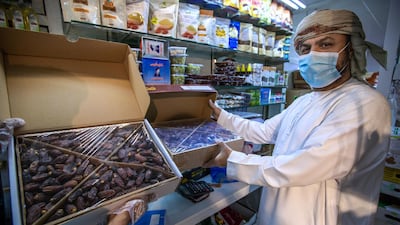
A Ramadan date shopper at the Abu Dhabi Dates Market at Mina Zayed. Victor Besa / The National -

Ramadan decoration and offers at the Lulu Hypermarket in Al Barsha in Dubai. Pawan Singh / The National -
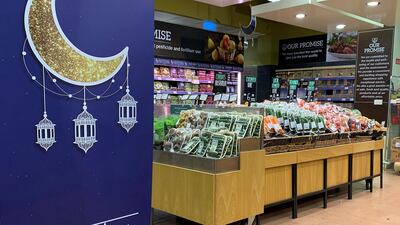
Ramadan decoration at the Spinneys in Al Barsha in Dubai. Pawan Singh / The National -
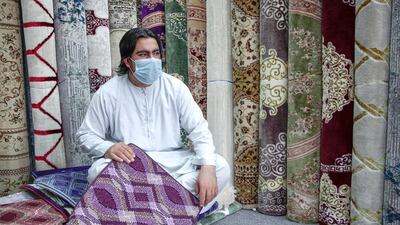
The Carpet Souk at the Zayed Port area. Lalujan, a carpet salesman is looking forward to Ramadan carpet sales. Victor Besa / The National -

The Carpet Souk at the Zayed Port area. An upholsterer cuts fabric for a Ramadan sofa. Victor Besa / The National -
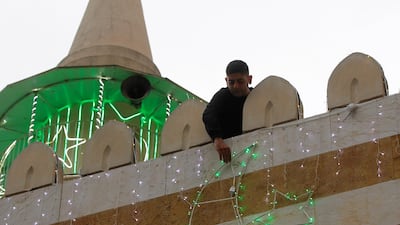
A man hangs decorations ahead of the Muslim holy month of Ramadan on a mosque during a countrywide lockdown over the coronavirus disease (COVID-19) in Beirut, Lebanon. Reuters -

A Palestinian girl leans out from the window of a vehicle to see the decorative lights in Gaza City as the threat of the COVID-19 pandemic lingers ahead of the Muslim holy month of Ramadan. AFP -

A Palestinian packs boxes with food that will be distributed to poor Palestinian families ahead oof the hoy month of Ramadan, in Nablus, West Bank. AP Photo -
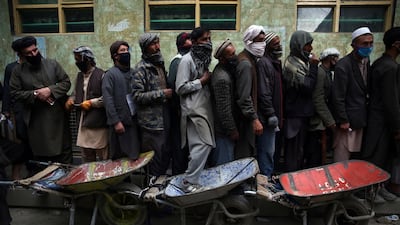
Daily-wage workers wait in line to receive free wheat donated by Afghan businessmen ahead of the upcoming holy fasting month of Ramadan in Kabul, Afghanistan. AP Photo -
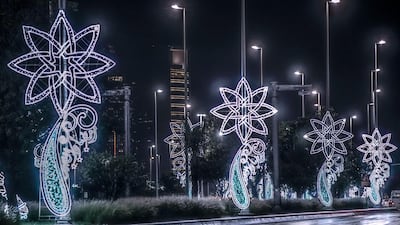
The newly installed Ramadan lights on the Abu Dhabi Corniche during the rain. Victor Besa / The National -
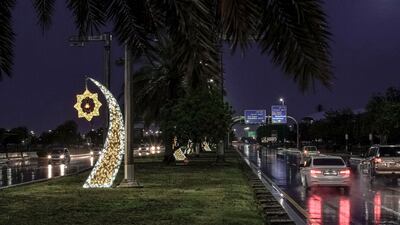
The newly installed Ramadan lights on the Corniche during the rain. Victor Besa / The National -
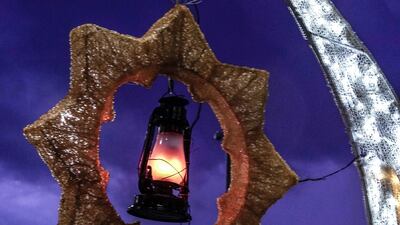
The newly installed Ramadan lights on the Corniche during the rain. Victor Besa / The National -
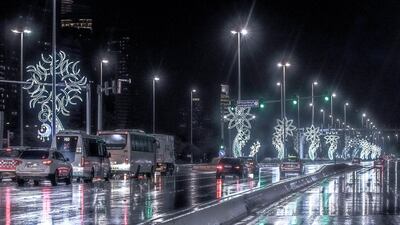
The newly installed Ramadan lights on the Corniche during the rain. Victor Besa / The National -
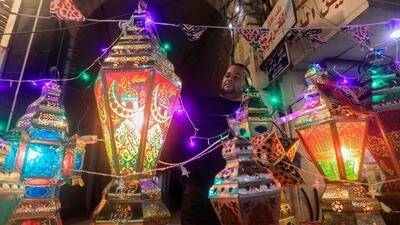
A Palestinian vendor displays traditional lanterns known in Arabic as "Fanous" outside his shop in Gaza City, ahead of the Muslim holy month of Ramadan. From cancelled iftar feasts to suspended mosque prayers, Muslims across the Middle East are bracing for a bleak month of Ramadan fasting as the threat of the COVID-19 pandemic lingers. Ramadan is a period for both self reflection and socialising. Believers fast from dawn to dusk and then gather around a family or community meal each evening of Islam's holiest month, which begins later this week and ends with Eid al-Fitr festivities. AFP -
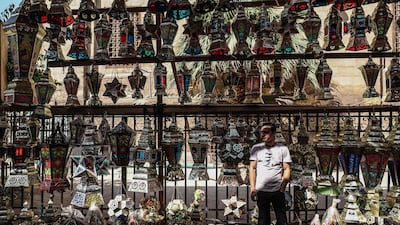
An Egyptian vendor sells traditional lanterns known in Arabic as "Fanous" ahead of the Muslim holy month of Ramadan in the capital Cairo. AFP -
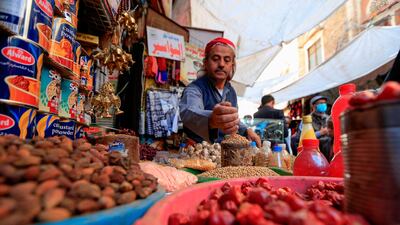
A Yemeni vendor waits for costumers in the old city market of the capital Sanaa ahead of the holy Muslim fasting month of Ramadan. AFP -
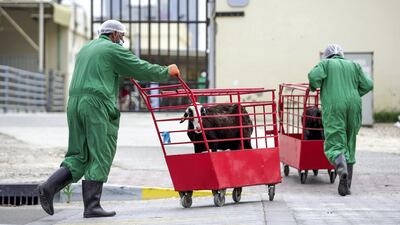
Livestock being carted from the Abu Dhabi Livestock Market to the Public Slaughter House which is directly across the street. Victor Besa / The National -
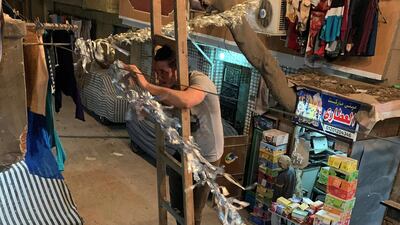
Egyptian youths prepare decorations for the Muslim holy month of Ramadan, also known to Egyptians as "Zeinat Ramadan" on a street in front of their homes during the night-time curfew to contain the spread of the coronavirus disease (COVID-19) in Cairo, Egypt,. REUTERS -
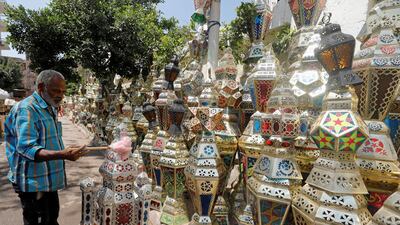
An Egyptian seller cleans a traditional Ramadan lantern called "fanous" at his shop ahead of the Muslim holy month of Ramadan, amid concerns over the coronavirus disease (COVID-19), in Cairo, Egypt. REUTERS -
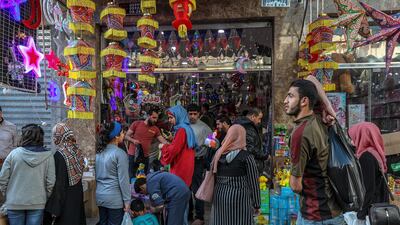
Palestinians shop in the market before the holy month of Ramadan in Gaza City. EPA -
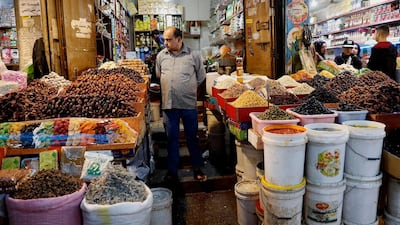
A vendor waits for customers to buy traditional food ahead of the holy fasting month of Ramadan, at the main market in Gaza City. AP Photo -
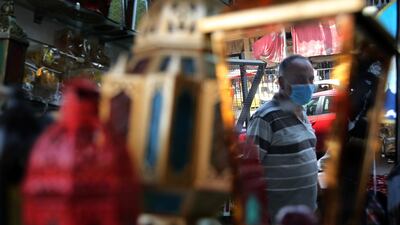
An Iraqi man wearing a mask is reflected on a traditional lantern known in Arabic as "Fanous" at the Shorja market in central Baghdad as Iraq prepares to welcome the holy fasting month of Ramadan which begins later this week. AFP -
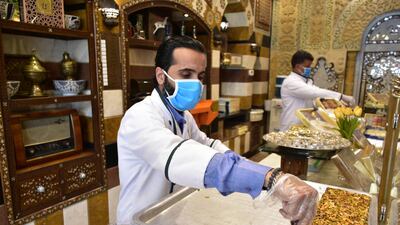
A vendor wearing face mask sells sweets at al-Midan neighborhood ahead of the month of Ramadan in Damascus, Syria. EPA -
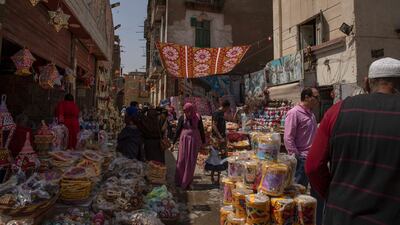
People shop for Ramadan lanterns ahead of the holy month, in the Sayeda Zeinab neighborhood of Cairo, Egypt. AP Photo -
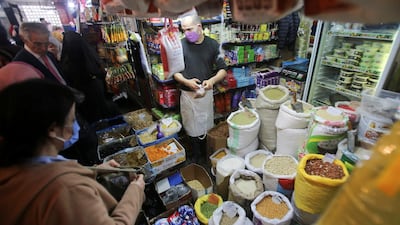
A vendor wearing a protective face mask serves customers inside his shop, ahead of the Muslim holy month of Ramadan, amid concerns over the coronavirus disease (COVID-19), in Algiers, Algeria. REUTERS -
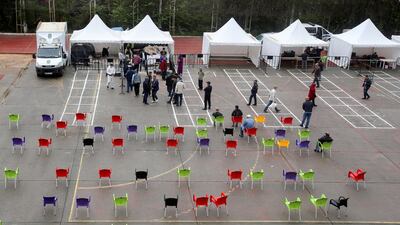
A general view shows an outdoor market set up by the Algerian government to prevent crowding inside supermarkets, ahead of the Muslim holy month of Ramadan, amid concerns over the coronavirus disease (COVID-19), in Algiers, Algeria. REUTERS -

Early Ramadan shoppers at Carrefour Yas Mall. A lady checks out a Ramadan promotional stand. Victor Besa / The National


The second fatwa says taraweeh, an extra extended prayer typically held in mosques after the evening prayers during Ramadan, can be performed at home under the current circumstances.
But the council said that, if possible, a family should be led in taraweeh prayers by the “man of the house”, who should read from the Quran or recite verses from it he has memorised.
The third fatwa concerns Eid Al Fitr prayer, if social distancing rules still apply during the period.
The council said that for Eid Al Fitr prayers, which are held after fajr – or sunrise – could be performed individually in homes without a sermon, should the situation not ease by then.
Families who live in the same house can pray together but the council said congregating to perform the prayer could endanger lives, which is strictly forbidden in Islam, so should be avoided.
The fourth fatwa said performing Friday prayers is not permissible. Instead, Muslims should perform dhuhr – or afternoon – prayers because Friday prayer has its own congregational requirements which, if not met, invalidates the prayer.

The body reminded people it is obligatory to follow the authorities’ instructions against gatherings to prevent the spread of Covid-19.
The fifth fatwa instructs Muslims to pay Zakat – a sustained, annual charity that is paid by Muslims calculated using a percentage of their income – earlier this year, “given the current circumstances”. Typically, Muslims pay Zakat once a year on a specific date of their choosing but the council said it would be “even better to pay it as quickly as possible” this year to help people suffering from the effects of the coronavirus.

The council cited an example when the “Prophet Mohammed allowed his uncle Al Abbas to pay his Zakat earlier than the due time to help the beneficiaries meet their needs”.
It said all types of Zakat are better spent within the country to help the beneficiaries meet their needs, state news agency Wam reported.
Zakat Al Fitr – a charitable contribution typically paid a few days before the end of Ramadan – can also be paid earlier at the beginning of the holy month, scholars said.
The council said all types of Zakat are better spent within the country and they could be paid to authorities or charitable organisations.
If there is money left over, the funds could be sent to other Muslims through the Emirates Red Crescent and other licensed charities.
Last month, the council issued a fatwa that prohibited congregational worship and called for all Muslims in the country to comply with government rules to limit the spread of the coronavirus.
It also banned Muslims who feel unwell from going to public places or attending any prayers, including those typically held on Friday, Eid and Ramadan.
The holy month is expected to begin on Friday, a member of the Arab Union for Astronomy and Space Sciences said. The exact date will be confirmed by the UAE’s moon-sighting committee – a group of astronomers, court officials and advisers from the country’s Islamic authority.
The committee meets to search for a new crescent moon, indicating the start of Ramadan.
This year, mosques will be closed for the duration of the holy month, which will be one of the biggest changes to Ramadan brought on by the coronavirus.

