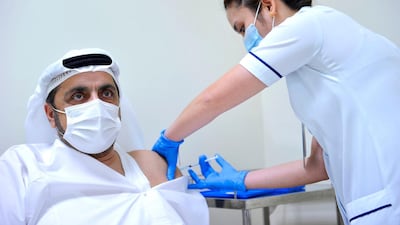
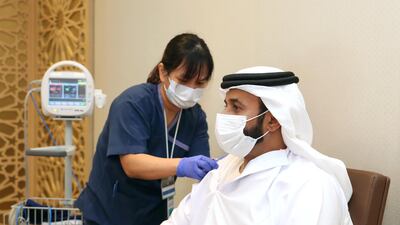
More than 100 vaccines against Covid-19 are being developed around the world. AFP

Coronavirus: Abu Dhabi physician suspended for discussing involvement in Covid-19 vaccine trial


  • English
  • Arabic

An Abu Dhabi physician has been suspended after breaching a confidentiality agreement by discussing his involvement in clinical trials for a Covid-19 vaccine.

Abu Dhabi's Department of Health took action after the health worker revealed his immunity results in a video clip following his participation in the trial.

The UAE hosted a Phase-3 trial of China's Sinopharm vaccine which involved 31,000 volunteers in the Emirates, Bahrain and Jordan.

The jab has since been administered to frontline medical workers, senior officials and some members of the Cabinet, after it received approval from the UAE Government for limited use in September.

"Revealing such information violates UAE legislation, and breaches protocol around the clinical trials and confidentially agreements," said a Department of Health statement.

"Clinical trials are conducted according to strict healthcare procedures and international protocols.

"As is the case with any scientific research, all clinical trial participants are subject to confidentiality agreements. These require that they do not disclose any details, unless a relevant entity chooses to do so."

Leading UAE figures receive vaccine:

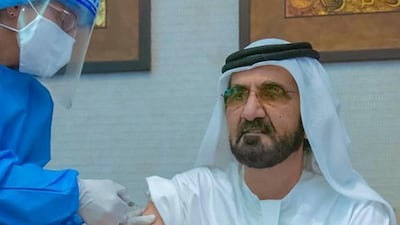
  • Sheikh Mohammed bin Rashid receives the Sinopharm vaccine to protect against Covid-19 on November 3, 2020. Courtesy: Dubai Media Office
    Sheikh Mohammed bin Rashid receives the Sinopharm vaccine to protect against Covid-19 on November 3, 2020. Courtesy: Dubai Media Office
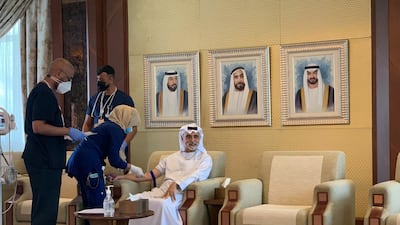
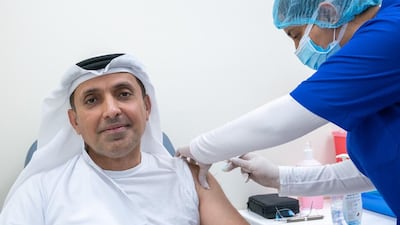
  • Sheikh Nahyan bin Mubarak receives the first of two shots of a vaccine that was trialled in the UAE. Wam
    Sheikh Nahyan bin Mubarak receives the first of two shots of a vaccine that was trialled in the UAE. Wam
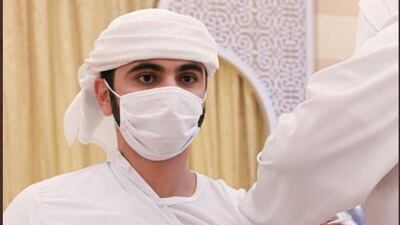
  • Sheikh Mansoor bin Mohammed, chairman of Dubai’s Supreme Committee of Crisis and Disaster Management, receives the Pfizer-BioNTech vaccine. Courtesy: Sheikh Mansoor
    Sheikh Mansoor bin Mohammed, chairman of Dubai’s Supreme Committee of Crisis and Disaster Management, receives the Pfizer-BioNTech vaccine. Courtesy: Sheikh Mansoor
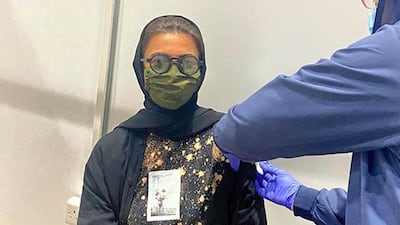
  • Noura Al Kaabi, Minister of Culture and Youth, gets the Sinopharm jab.
    Noura Al Kaabi, Minister of Culture and Youth, gets the Sinopharm jab.
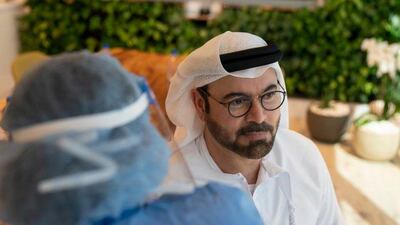
  • Mohammad Al Gergawi, Minister of Cabinet Affairs, receives the Covid-19 Sinopharm vaccine on Saturday, October 31. Courtesy: UAE Government Twitter
    Mohammad Al Gergawi, Minister of Cabinet Affairs, receives the Covid-19 Sinopharm vaccine on Saturday, October 31. Courtesy: UAE Government Twitter
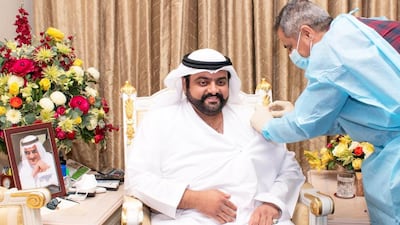
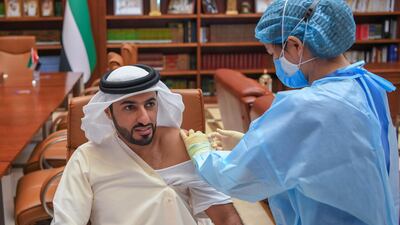
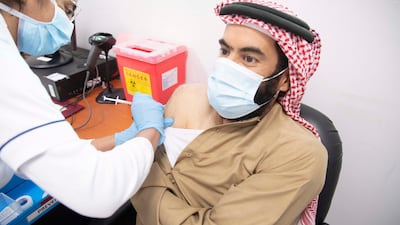
  • Sheikh Mohammed bin Hamad Al Sharqi, Crown Prince of Fujairah, receives his first dose of the Covid-19 vaccine on Wednesday. Wam
    Sheikh Mohammed bin Hamad Al Sharqi, Crown Prince of Fujairah, receives his first dose of the Covid-19 vaccine on Wednesday. Wam
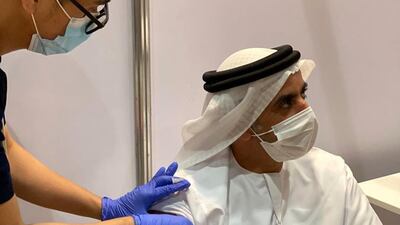
  • Sheikh Saif bin Zayed, Deputy Prime Minister and Minister of Interior, takes the Sinopharm vaccine. Courtesy: Sheikh Saif bin Zayed Twitter
    Sheikh Saif bin Zayed, Deputy Prime Minister and Minister of Interior, takes the Sinopharm vaccine. Courtesy: Sheikh Saif bin Zayed Twitter
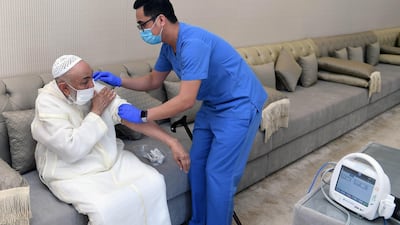
  • Sheikh Abdullah bin Bayyah, UAE Fatwa Council, is vaccinated with the Sinopharm innoculation on January 4, 2021. Wam
    Sheikh Abdullah bin Bayyah, UAE Fatwa Council, is vaccinated with the Sinopharm innoculation on January 4, 2021. Wam
  • Sheikh Khalid bin Mohammed, chair of Abu Dhabi's Executive Office, takes the first dose of the Sinopharm vaccine. Courtesy: Abu Dhabi Media Office
    Sheikh Khalid bin Mohammed, chair of Abu Dhabi's Executive Office, takes the first dose of the Sinopharm vaccine. Courtesy: Abu Dhabi Media Office
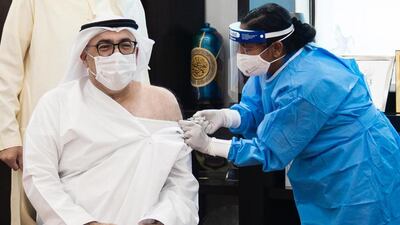
  • The UAE's health minister, Abdulrahman Al Owais, receives the Sinopharm vaccine.
    The UAE's health minister, Abdulrahman Al Owais, receives the Sinopharm vaccine.
  • Sheikh Abdullah bin Zayed, Minister of Foreign Affairs and International Co-operation, gives a thumbs up as he is vaccinated against Covid-19.
    Sheikh Abdullah bin Zayed, Minister of Foreign Affairs and International Co-operation, gives a thumbs up as he is vaccinated against Covid-19.
  • Sheikh Rashid bin Humaid Al Nuaimi, president of the UAE Football Association, receives the Covid-19 vaccine.
    Sheikh Rashid bin Humaid Al Nuaimi, president of the UAE Football Association, receives the Covid-19 vaccine.
  • Khalifa bin Dary, executive director of Dubai Ambulance Services Corporation, receives his first dose of the Pfizer-BioNTech vaccine. Courtesy: Dubai Media Office
    Khalifa bin Dary, executive director of Dubai Ambulance Services Corporation, receives his first dose of the Pfizer-BioNTech vaccine. Courtesy: Dubai Media Office
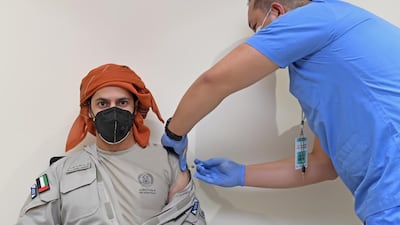
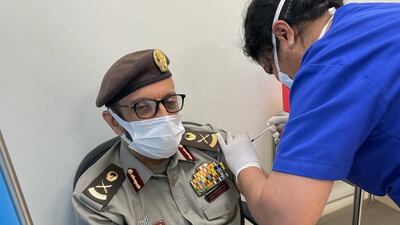
  • Lt Col Sheikh Zayed bin Hamad Al Nahyan, director of special patrols at Abu Dhabi Police, receives the Covid-19 vaccine. Courtesy: Abu Dhabi Police
    Lt Col Sheikh Zayed bin Hamad Al Nahyan, director of special patrols at Abu Dhabi Police, receives the Covid-19 vaccine. Courtesy: Abu Dhabi Police
  • Maj Gen Mohammed Al Marri, director general of the General Directorate of Residency and Foreigners Affairs Dubai, receives his first dose of the Pfizer-BioNTech vaccine. Courtesy: Dubai Media Office
    Maj Gen Mohammed Al Marri, director general of the General Directorate of Residency and Foreigners Affairs Dubai, receives his first dose of the Pfizer-BioNTech vaccine. Courtesy: Dubai Media Office
  • Maj Gen Talal Al Falasi, director general of Dubai's State Security Department, receives his first dose of the Pfizer-BioNTech vaccine. Courtesy: Dubai Media Office
    Maj Gen Talal Al Falasi, director general of Dubai's State Security Department, receives his first dose of the Pfizer-BioNTech vaccine. Courtesy: Dubai Media Office
  • Abdullah Al Falasi, director general of Dubai Government Human Resources Department, receives his first dose of the Pfizer-BioNTech vaccine. Courtesy: Dubai Media Office
    Abdullah Al Falasi, director general of Dubai Government Human Resources Department, receives his first dose of the Pfizer-BioNTech vaccine. Courtesy: Dubai Media Office
  • Amer Sharif, head of Dubai's Covid-10 Command and Control Centre, receives his first dose of the Pfizer-BioNTech vaccine. Courtesy: Dubai Media Office
    Amer Sharif, head of Dubai's Covid-10 Command and Control Centre, receives his first dose of the Pfizer-BioNTech vaccine. Courtesy: Dubai Media Office
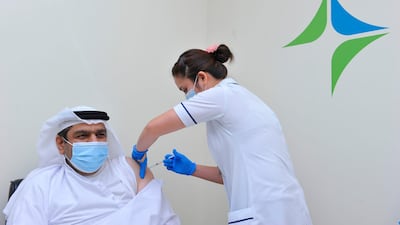
  • Obaid Al Shamsi, director general of the National Emergency Crisis and Disasters Management Authority, takes the first dose of Covid-19 vaccine
    Obaid Al Shamsi, director general of the National Emergency Crisis and Disasters Management Authority, takes the first dose of Covid-19 vaccine

The country hosted a Phase-3 trial that involved 31,000 volunteers in the Emirates, Bahrain and Jordan.

The jab has since been administered to frontline medical workers, senior officials and some members of the Cabinet, including Sheikh Mohammed bin Rashid, Vice President and Ruler of Dubai, after it received approval from the UAE Government for limited use in September.

In mid-October, China National Biotec Group, part of Sinopharm, which has two vaccines in development, said about 480,000 people had taken the jab to date. A further 93,000-plus had applied to be inoculated.

The results of the Phase-3 trial have not been independently reviewed in a published article yet, but a study in Lancet Infectious Diseases last month showed strong results from Phase 1 and 2, including in people older than 60.

Sinopharm's Phase-1 and 2 trials were carried out in China between 29 April and 30 July and involved more than 600 healthy volunteers aged 18 to 80.

In those two phases, the Lancet article said, the vaccine triggered antibodies that block the virus from infecting cells in all volunteers within 42 days.


KINGDOM%20OF%20THE%20PLANET%20OF%20THE%20APES
%3Cp%3E%3Cstrong%3EDirector%3A%3C%2Fstrong%3E%20Wes%20Ball%3C%2Fp%3E%0A%3Cp%3E%3Cstrong%3EStarring%3A%3C%2Fstrong%3E%20Owen%20Teague%2C%20Freya%20Allen%2C%20Kevin%20Durand%3C%2Fp%3E%0A%3Cp%3E%3Cstrong%3ERating%3A%20%3C%2Fstrong%3E3.5%2F5%3C%2Fp%3E%0A
Ten tax points to be aware of in 2026

1. Domestic VAT refund amendments: request your refund within five years

If a business does not apply for the refund on time, they lose their credit.

2. E-invoicing in the UAE

Businesses should continue preparing for the implementation of e-invoicing in the UAE, with 2026 a preparation and transition period ahead of phased mandatory adoption. 

3. More tax audits

Tax authorities are increasingly using data already available across multiple filings to identify audit risks. 

4. More beneficial VAT and excise tax penalty regime

Tax disputes are expected to become more frequent and more structured, with clearer administrative objection and appeal processes. The UAE has adopted a new penalty regime for VAT and excise disputes, which now mirrors the penalty regime for corporate tax.

5. Greater emphasis on statutory audit

There is a greater need for the accuracy of financial statements. The International Financial Reporting Standards standards need to be strictly adhered to and, as a result, the quality of the audits will need to increase.

6. Further transfer pricing enforcement

Transfer pricing enforcement, which refers to the practice of establishing prices for internal transactions between related entities, is expected to broaden in scope. The UAE will shortly open the possibility to negotiate advance pricing agreements, or essentially rulings for transfer pricing purposes. 

7. Limited time periods for audits

Recent amendments also introduce a default five-year limitation period for tax audits and assessments, subject to specific statutory exceptions. While the standard audit and assessment period is five years, this may be extended to up to 15 years in cases involving fraud or tax evasion. 

8. Pillar 2 implementation 

Many multinational groups will begin to feel the practical effect of the Domestic Minimum Top-Up Tax (DMTT), the UAE's implementation of the OECD’s global minimum tax under Pillar 2. While the rules apply for financial years starting on or after January 1, 2025, it is 2026 that marks the transition to an operational phase.

9. Reduced compliance obligations for imported goods and services

Businesses that apply the reverse-charge mechanism for VAT purposes in the UAE may benefit from reduced compliance obligations. 

10. Substance and CbC reporting focus

Tax authorities are expected to continue strengthening the enforcement of economic substance and Country-by-Country (CbC) reporting frameworks. In the UAE, these regimes are increasingly being used as risk-assessment tools, providing tax authorities with a comprehensive view of multinational groups’ global footprints and enabling them to assess whether profits are aligned with real economic activity. 

Contributed by Thomas Vanhee and Hend Rashwan, Aurifer