


A study has shed more light on the problem of obesity in the Gulf region, with young people said to be storing up problems for the future by putting on weight.
About one third of university students in the UAE are overweight or obese, the research says, and scientists have issued a warning that rate is likely to increase as this generation grows older.
Dr Mirey Karavetian, the senior author of the study, said the public had become used to seeing people who were overweight or obese and regarded larger body shapes as normal.
“A healthy person is perceived as underweight because they’re smaller than the majority, but that should be advocated,” she said.
the senior author of the study
Published in the journal Acta Biomedica, the study looked at the body mass index (BMI) – a measure of a person’s weight relative to their height – of 402 University of Sharjah students aged 18 to 25. Eighty-five per cent were Arab.
The study found that 136 participants, or 33.8 per cent, were overweight (represented by a BMI of 25 to 29.9) or obese (a BMI of 30 or above).
The study found the men had “significantly higher BMI and body fat" compared to the women, but concern about body shape and image was higher among the women.
In the study, 216 participants, or 53.7 per cent, were of normal weight, meaning their BMI was between 18.5 and 24.9, while 44, or 10.9 per cent, were underweight, with a BMI below 18.5.
Lack of exercise and unhealthy diets
Previous research has found that about 16 per cent of young people in the country carry out the recommended amount of exercise.
However, the UAE is not uniquely affected by obesity, with many other nations in the region facing similar issues.
A regional review of data compiled by the World Obesity Federation in late 2020 found that in Saudi Arabia, 42 per cent of women and 31 per cent of men were obese.
In the UAE, the figures were 31 per cent for women and 25 per cent for men.
The issue affects other countries in the Mena region, with no Arab nation among the healthiest 35 countries on the 2019 Bloomberg Global Health Index, which was based on factors including obesity and exercise levels.
Hidden calories in our favourite food - in pictures
-

Karak chai is a popular drink in the UAE, but not all drinkers may be aware of its high calorie content. Reem Mohammed / The National -

Muffins containing 100 calories of energy offer little nutritional value compared with 100 calories of fruit. Jeffrey E Biteng / The National -

Butter chicken is a popular dish that contains almost 500 calories, equivalent to a quarter of the total recommended daily limit doctors recommend for women. -

Fruit smoothies are often billed as a healthy option, but some can contain as many calories as fizzy drinks because of their high sugar content.


Sedentary, car-oriented lifestyles and unhealthy diets, including the popularity of fast food, are often blamed for the high rates of obesity.
Dr Karavetian, who was an associate professor at Zayed University in Dubai when the data was collected, but who is now at Toronto Metropolitan University in Canada, said the rates of people being overweight or obese would increase as the generation aged.
“They would have office jobs to do, have stressful lifestyles, taking care of families. All this increases the tendency to gain weight,” she said.
“Already one third is overweight or obese. It shows, eventually, as older adults, at least 50 per cent becoming overweight or obese.”
The study was based on data collected in 2019 but published this month. Titled Lean Body Mass and Self-Perceived Body Image among Youth in the United Arab Emirates, it is co-written with eight researchers from the University of Sharjah.
A scientist not connected to the research, Dr Raghib Ali, director of the New York University Abu Dhabi Public Health Research Centre and founder of the UAE Healthy Future Study, said the findings reflected a regional problem.
“It’s the major public health problem, not just in the UAE, but in many countries in the Gulf and the US. It’s a global problem, but in the UAE in particular it’s the number one risk factor,” he said.
Caution urged over exercising outdoors in hot weather - in pictures
-
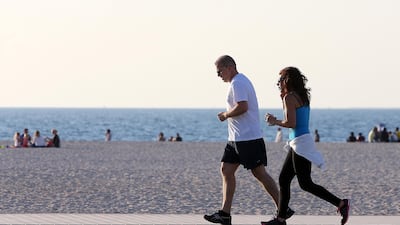
Some runners continue to hit the streets in late morning of afternoon even as temperatures hit 40C or more. Pawan Singh / The National -
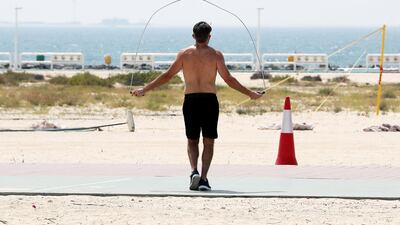
A man exercises outdoors at Sunset Beach in Dubai. Pawan Singh / The National -
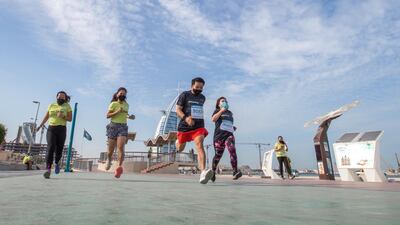
Doctors urge runners to drink 400-600 ml of water 30 minutes before exercise, and 100-200 ml of water every 10-15 minutes. Leslie Pableo for The National -
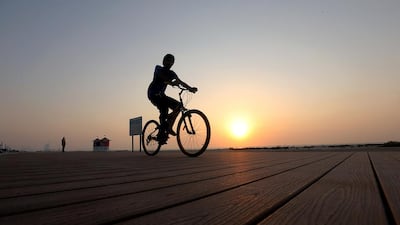
Exercising at sunset is much safer - though it can be humid in the evenings. Satish Kumar / The National -
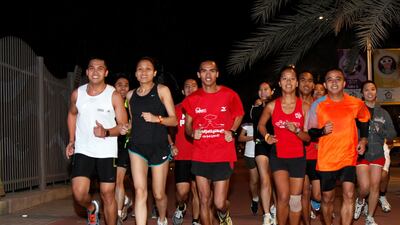
A late night running club pictured at Zabeel Park. Jeffrey E Biteng / The National


Health risks
Dr Ali said obesity was a cause of diabetes, many types of cancer, heart disease and hypertension or high blood pressure. About two thirds of the UAE population are overweight or obese, he said.
Some other nations further afield have problems of a similar scale to those reported in the Gulf. In Mexico, for example, about 73 per cent of the population is overweight or obese, figures from the Organisation for Economic Co-operation and Development have shown.
Dr Karavetian said the effects of being overweight or obese extended beyond the health problems experienced by an individual person.
“It’s critical, it’s alarming, because at the end of the day, weight and obesity have been linked not just to diseases, but productivity,” she said.
“As a country, it will be very critical, as youth become the next generation running the country. Overweight and obese people have more absences, less productivity, they will cost healthcare much more, and they will take much more medication.
“The economy suffers because of this if you don’t make radical changes in your health care and health promotion.”
Dr Karavetian said the numbers who are overweight or obese may be reduced by interventions at university such as efforts to increase physical activity or compulsory courses to promote healthy lifestyles.
The UAE has introduced measures to discourage the consumption of unhealthy food and drink, such as the 50 per cent tax on carbonated drinks and 100 per cent tax on energy drinks brought in in 2017.
From 2020, the 50 per cent tax was extended to sugar-sweetened beverages. But many countries find it a challenge to achieve change.
“There are very few countries that have managed to decrease the levels of obesity over time. There’s no clear evidence that interventions are effective,” Dr Ali said.
Adults are more conscious about their health
More adults are now taking their fitness seriously as new initiatives are launched in the Emirates.
A programme designed to “nudge” elderly people in Abu Dhabi to exercise more has led some people to more than triple the time they spend being active each day.
The Forever Fit programme, developed by NYU Abu Dhabi’s Centre for Behavioural Institutional Design, has succeeded in encouraging the least active seniors to exercise for an average of 15 minutes a day – three times as much as before.
The Dubai Fitness Challenge, a month-long initiative first launched by Sheikh Hamdan, Crown Prince of Dubai, has grown exponentially and encourages people to lose weight.
Several corporate wellness programmes, such as Standard Chartered Dubai Marathon, also try to encourage employees to live healthier lives.
Exercises to control high blood pressure - in pictures
-
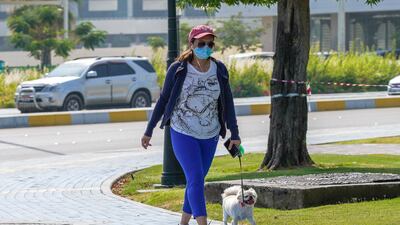
Exercise helps to lower blood pressure by reducing vessel stiffness so blood can flow around the body more easily. Victor Besa / The National -

Cycling is just as beneficial as walking to reduce blood pressure. Victor Besa / The National -

Physical activity such as hiking can lower blood pressure by up to 10 points. Reuters -

In a study, blood pressure readings were even more optimal when participants ambled while working. Getty Images -

Weight training or lifting can reduce blood pressure once the gym session is over. Reuters -
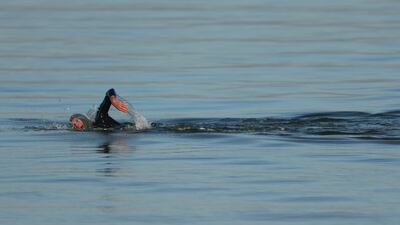
Swimming can be beneficial in controlling blood pressure in adults 60 and older. Getty Images



