


One of the driving forces behind the development of an inexpensive Covid-19 drug believed to have helped save one million lives says its success shows what the scientific world can achieve.
Prof Sir Martin Landray was a co-chief investigator for a clinical trial of dexamethasone in the early stages of the pandemic.
The steroid, which can cost less than Dh25 per patient, has since proved an invaluable tool – not only to show what works against the virus, but what doesn't.
It was the UK’s Recovery (Randomised evaluation of Covid-19 therapy) trial that demonstrated the drug’s ability to cut deaths by about one third among the sickest patients.
“The Recovery trial has demonstrated just what can be achieved,” Sir Martin said.
Involving 46,000 patients, most in the UK but with others spread around the world, Recovery provided vital insight into which medicines were most and least effective.
Notably, it showed the ineffectiveness of hydroxychloroquine, the malaria drug hailed by some as a wonder cure for Covid-19.
Launched in early 2020 and designed to make the process of managing trials simpler, Recovery is regarded as a shining example of how to test drugs in the midst of a pandemic, when health services and the people working in them face unprecedented pressures.
At the beginning of the pandemic, as the world faced a new virus, a new disease and no known treatments, speed was of the essence, so the focus was on “repurposing” drugs already approved to combat other conditions.
Some drug trials doomed to fail
“We started from the top of the list and we worked our way down,” Sir Martin said. “If we just threw treatments at people, we could end up wasting a lot of drugs for no good.
“We were going to have to know first which ones worked and which ones didn’t.”
At a time when many clinicians were exceptionally busy, evidence had to be gathered in a practical way, but the results had to be high quality to allow decisions about which treatments worked to be made.
Sir Martin, a professor of medicine and epidemiology at the University of Oxford’s Nuffield Department of Population Health, said this often was not the case with other trials of potential Covid-19 medicines. As the renowned scientific journal Nature described it in a headline, “Covid broke the evidence pipeline”.
“95 per cent of all clinical trials for Covid never had any hope of answering or providing a useful answer,” he said. “They weren’t designed to provide a useful answer.”
-
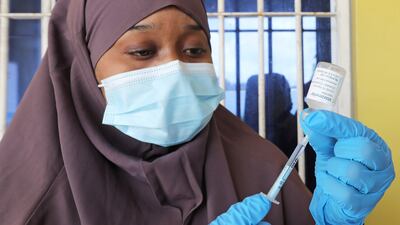
A healthcare worker prepares to administer a Covid-19 vaccine in Mogadishu, Somalia. Reuters -
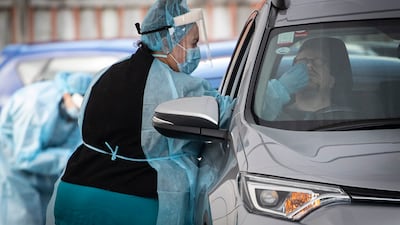
Workers take samples for Covid-19 tests at a drive-through clinic in Auckland, New Zealand. AP -

A monk uses his mobile phone in Ho Chi Minh City, Vietnam. Reuters -
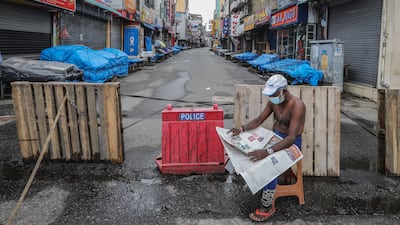
A man reads a newspaper next to closed shops after the government announced an island-wide lockdown in Colombo, Sri Lanka. EPA -

A woman instructs her grandson to clean his hands at the State Fair in Louisville, Kentucky. Reuters -
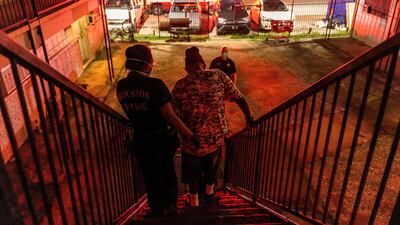
Medics transport a Covid-positive patient to a hospital in Houston, Texas. AFP -

Members of the security forces guard the Taj Mahal after sunset in Agra, India. EPA -

Vancouver Whitecaps goalkeeper Maxime Crepeau signs autographs before his team's match against Los Angeles FC in Vancouver, Canada. AP -
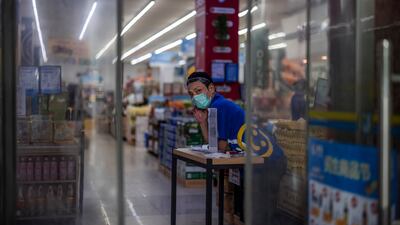
An employee stands at the entrance of a supermarket to check visitors' health app QR codes and body temperature in Shanghai, China. EPA -
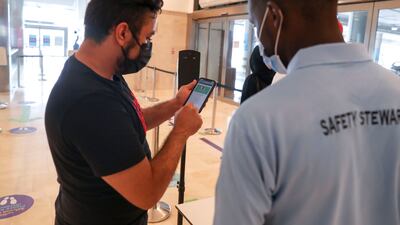
A man shows the green pass on his phone before entering a shopping mall in Abu Dhabi, UAE. Khushnum Bhandari / The National


There were “hundreds” of trials of hydroxychloroquine that were never going to provide rigorous information about the drug’s worth against Covid-19.
Trials were set up without, for example, enough participants to provide statistically robust answers. Others lacked the required control groups – people not given the treatment, for comparison with those who have.
Part of the problem, Sir Martin said, is that researchers are given more academic credit for setting up and leading a trial than for assisting with an existing one.
Helping to lead the recovery
The aim is to extend Recovery into influenza, although this has been delayed because measures to prevent the spread of the coronavirus have meant there is little flu in the UK and some other countries, making trials difficult.
Recovery offers lessons for future pandemics, including that there should be more nimble systems to approve clinical trials.
“The virus can get on a plane and go from Bangalore to Boston in 12 hours,” Sir Martin said. “We cannot have a situation where it takes six to 12 months to get the trials up and running and the approvals in place.”
While getting started is important, the pandemic has also shown the need not for more trials, but for “more better trials”.
Taking lessons from Recovery, Sir Martin has launched Protas, a not-for-profit organisation to run clinical trials. Sanofi, the French pharmaceutical company, will provide up to £5 million (Dh24.6 million) for the venture.
Cutting costs is key
-
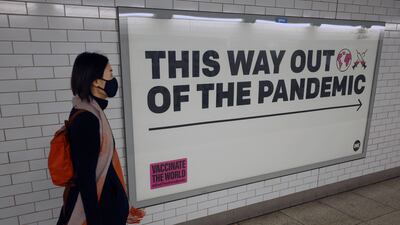
A sign pointing the way out of the pandemic on the London Underground. Reuters -
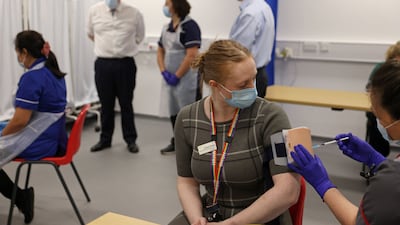
UK Prime Minister Boris Johnson visits a coronavirus vaccination training session during a visit to Milton Keynes University Hospital. AFP -
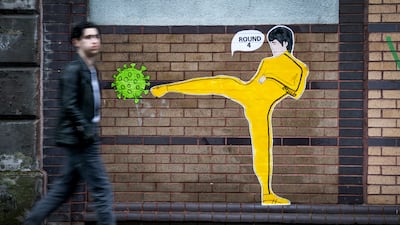
A picture by street artist 'Palley' in Glasgow's East End shows Bruce Lee kicking a coronavirus molecule. PA -
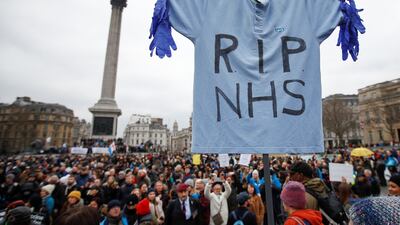
National Health Service workers carry an NHS polo shirt with a slogan written across it during a protest against vaccine rules in Trafalgar Square, central London. Reuters -

A marcher burns a flare during the NHS staff protest in London. Reuters -

Commuters walk over London Bridge during the morning rush hour. The British government has asked people to return to working in offices as coronavirus restrictions are eased. AP -
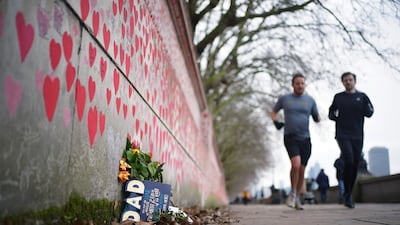
The National Covid Memorial Wall outside St Thomas' Hospital in London. PA -

Trainee nurse Chloe Slevin, with her painting 'Corona Lisa'. The interpretation of Leonardo da Vinci's masterpiece in PPE clothing will be auctioned for charity. PA


The aim is to cut the cost of trials and, in doing so, enable more drugs to enter clinical trials and potentially be used for dementia, heart failure, kidney failure and arthritis.
Through its work with charities, industry, researchers, clinicians and patient groups to deliver trials, Protas aims to bring more drugs to market and reduce their eventual price.
“Because a single trial may cost $1 billion, many interesting drugs are left in the laboratory,” said Sir Martin, who is Protas's chief executive.
“Or people try to reduce the cost by making the trial too small … so we don’t fully understand the value of the treatment.
“When it comes to market, someone has to pay for that cost – not only for the successes, but also for the failures. So health services are saying, ‘We won’t use it at all, or in a limited way.’”
The cost of major drug trials “could easily be reduced to less than one tenth” of the current spend, Sir Martin believes.
“Exactly what that looks like will vary, but a big trial … may cost $100 million instead of $1 billion. At its most extreme end, the recovery trial is about $15 million, certainly less than $20 million, for 46,000 patients and ten drugs. Trials do not have to be expensive.”
Savings can be made in several ways, including by not using commercial contractors, who are not incentivised to cut costs, to run trials.
Technology can help, too, as participants can use smartphones to input their own details, and much information routinely collected by health services can, with permission, be used.
The aim is to recruit into trials not just patients at large facilities linked to universities in major cities, but also patients at smaller hospitals.
Drawing on lessons from Recovery, duplication can be reduced and trials simplified.
“The way many trials are done is that they take the last protocol, people copy it across, and add more details,” Sir Martin said.
“The protocol becomes more and more complicated, often with information that’s not critical to the key question. It’s a bit like if you try to write a book together, nobody cuts much out, they keep adding to the word count.
“Our approach is, ‘Let’s start with a blank page for each question. What are the critical questions we really need to know? How are we going to deliver this for this particular drug?’”
So the method that proved successful during the pandemic could yield more medical advances, this time for a much wider range of illnesses.

