

Sheikh Mohammed bin Rashid, Vice President and Ruler of Dubai, says the UAE's annual Arab Reading Challenge has become the largest such event in the world.
Sheikh Mohammed on Sunday said 24.8 million school pupils from 46 countries had taken part in this year's competition, the finals of which are expected to be held towards the end of the year.
The Arab Reading Challenge was launched by Sheikh Mohammed in 2015 to encourage a million young people to read at least 50 books in a year.
It has grown in popularity annually, with 22.5 million children from 44 countries taking part last year.
"The Arab Reading Challenge has become the largest reading project in the world, with record participation of 24.8 million students from 46 countries around the world," Sheikh Mohammed wrote on Twitter, accompanied by a video commemorating the achievement.
"Reading in this project is in Arabic. Our goal is to consolidate our language in the hearts of the young generations, and to connect them with their Arab culture and roots.
"Thank you to everyone who contributed, participated and supported this global project in all participating countries. And thank you to more than 150,000 reading supervisors who helped achieve this."
The challenge usually starts at the beginning of the academic year, around September, and continues until the end of the academic year.
The Arab Reading champion is selected based on the pupil's ability to articulate general knowledge, critical thinking and communication skills, plus the diversity of books they have selected.
Sharing remarkable stories
A Syrian schoolgirl who survived a deadly missile attack during the civil war in her country was crowned the most recent Arab Reading Challenge champion in November.
Sham Al Bakour, who was seven when she was named winner, was only six months old when her family's car was struck during violence in Aleppo in December 2015.
Her father was killed while she and her mother survived the horrific attack.
-
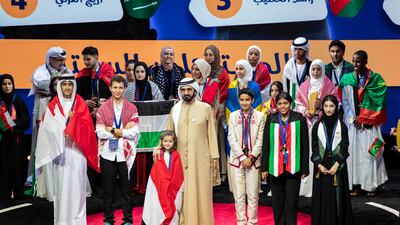
Sheikh Mohammed bin Rashid, Vice President and Ruler of Dubai, with the six finalists at the Arabic Reading competition at Dubai Opera. Left to right, Mohammed Jamil (Bahrain), Rashid Al Khateeb (Jordan), Sham Bakour (Syria), Adam al Qasimi (Tunisia), Ghala Al Enzi (Kuwait) and Areej Al Qarni (Saudi Arabia). All photos: Ruel Pableo for The National -

Winner of the 2018 Arabic Reading competition, Maryam Amjoun of Morocco, reads a selection of Sheikh Mohammed's writing. -

Contestants from different regions and countries participated in the Arabic Reading competition. -

The event included special performances. -
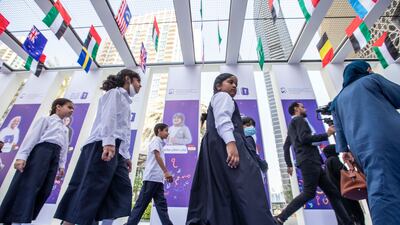
The Arab Reading Challenge was launched by Sheikh Mohammed in 2015 to encourage a million young people to read at least 50 books in a year. -
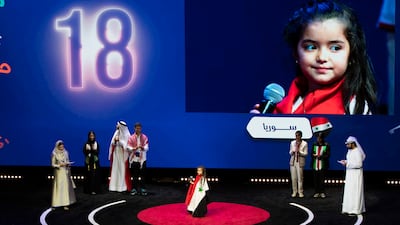
Sham Bakour of Syria won first place. -
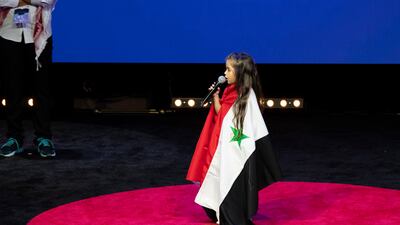
Sham Bakour was draped in a Syrian flag as she spoke to attendees. -
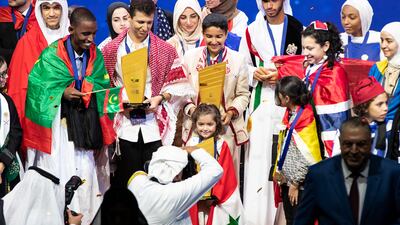
The annual winner is selected based on the pupil's ability to articulate general knowledge, their critical thinking and communication skills, plus the diversity of books they have selected. -
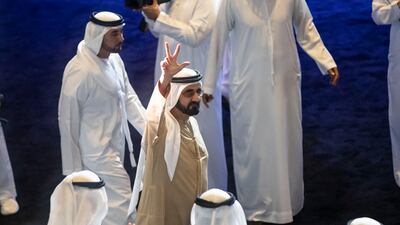
Sheikh Mohammed greeting the crowds at Dubai Opera. -
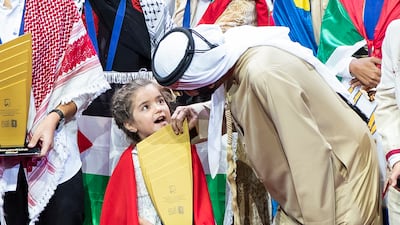
Sheikh Mohammed with winner, Sham Bakour from Syria. -
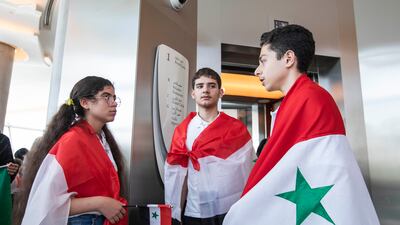
Contestants proudly wore their national flags at the event. -
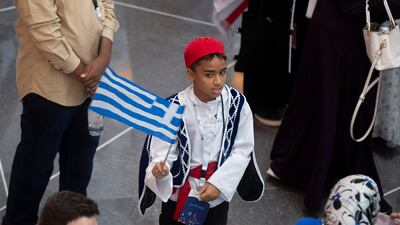
Each contestant represented their home nation. -
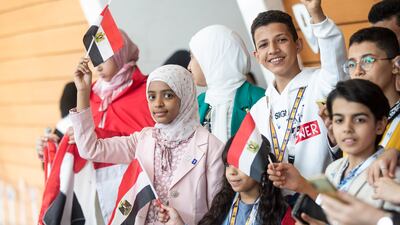
Children enjoying the event at Dubai Opera. -
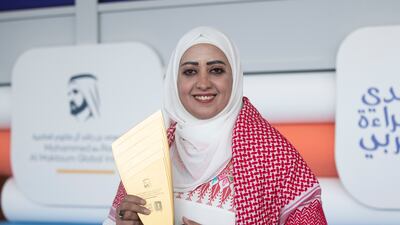
Noor Al Jboor was another winner at the reading challenge.


She completed a remarkable journey from tragedy to triumph to win words of praise from Sheikh Mohammed.
In footage released by Dubai Media Office, Sheikh Mohammed was seen speaking to Sham as she clutched her winner's trophy at a ceremony at Dubai Opera House.
Her success was met with warm applause from a large audience at the Downtown Dubai cultural spot.
The young literature lover read 70 books to win the competition.
When asked about what she would do with the Dh1 million ($270,000) prize money, she said she would give it to her mother.
Sham secured top spot ahead of Adam Al Qasimi from Tunisia in second and Rashid Al Khateeb from Jordan in third.

