



The UAE is ready to ring in the changes in 2023 with new laws coming into force to further modernise the legal system, strengthen workers' rights and increase Emirati participation in the private sector.
Many aspects of daily life will be affected by the policies, from rules governing marriage, divorce, inheritance and child custody for non-Muslims, to the make-up of the average office.
The National takes a look at the measures being introduced and how they will affect people in all walks of life in the new year.
Major shake-up of family law
-
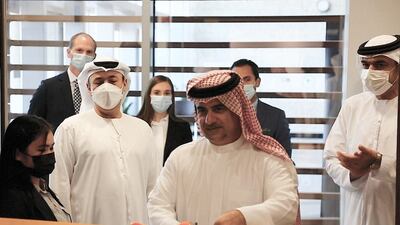
Officials open the Family Court at Abu Dhabi Judicial Department in 2021. Photo: ADJD -
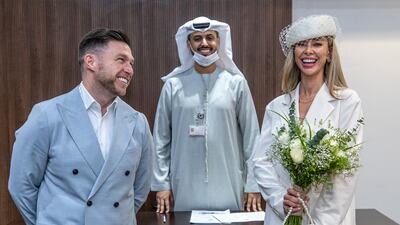
British couple Craig Lindsay and Sarah Goodman marry in a civil ceremony in February 2022. Victor Besa / The National -

Itamar Bareket, from Tel Aviv, places the ring on to his wife-to-be Nogah's finger at the civil court in Abu Dhabi. Khushnum Bhandari / The National -

The couple chose Abu Dhabi because civil marriages are not allowed in Israel. Khushnum Bhandari / The National -
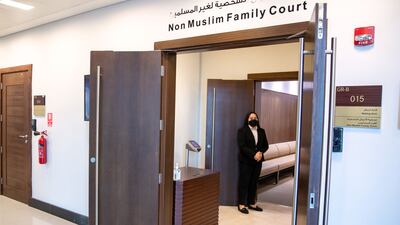
The court also handles divorces and other family matters such as inheritance. Victor Besa / The National -
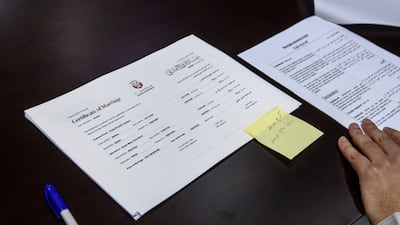
The process involves paperwork and a ceremony with an official. Victor Besa / The National -
At least dozens of couples have been married at Abu Dhabi Judicial Department and many more plan to do so. Victor Besa / The National


Abu Dhabi’s civil family court system, which allows non-Muslim couples to divorce and marry in a non-Sharia legal process, will be replicated across the country from February 1.
The federal law for non-Muslim expatriates, announced earlier this month, covers key family matters such as marriage, divorce, inheritance and child custody.
It sets out to grant equal rights to men and women in such matters.
Previously, a couple seeking a divorce in a local court would follow a Sharia-based process. This differs significantly from what they may be used to in their home country. Many instead choose to marry, divorce or arrange a will abroad.
Non-Muslim couples can now marry “based on the will of both the husband and wife”, meaning consent from the wife’s father or guardian is no longer mandated.
The requirement to have several male Muslims as witnesses has also been removed.
Couples will also be able to request a divorce without having to prove one party was at fault.
Divorces can be approved on the first hearing without having to attend family counselling sessions or mandatory mediation.
Alimony and other financial requests can be applied for via a “post-divorce request form”.
Procedures will be put in place to resolve issues of child custody after a divorce.
Previously, it was the case that a father could immediately claim custody of his son at the age of 11 and his daughter when she turned 13.
It will now be the case that the court determines who takes custody, with the best interests of the child being the deciding factor.
The new laws include the right to leave property in your will to the person of your choice.
In the absence of a will, half of a person’s estate will be left to their spouse, with the remainder divided up between their children.
Proof of paternity for non-Muslims will be based on marriage or the recognition of paternity, with DNA tests being conducted if paternity is unknown.
Safety net for workers
From January 1 all public and private sector employees must subscribe to the country’s social security programme.
The scheme will act as insurance in case of a loss of employment and is divided into two categories ― those earning monthly salaries of up to Dh16,000 and those earning more than that figure.
The cost for employees in the first category will be Dh5 per month, or Dh60 a year, while workers earning the higher salary will have to pay Dh10 per month, or Dh120 a year.
Employees are eligible for compensation for losing their job on the condition they have worked and subscribed for at least 12 months to the insurance programme.
They will be ineligible for the insurance, however, if they have been dismissed for disciplinary reasons or resigned from their post.
Starting a new job, or leaving the country, will also render the employee ineligible for an insurance pay-out.
Employees will be entitled to three months' compensation, which will not exceed 60 per cent of the monthly salary, the Ministry of Human Resources and Emiratisation said earlier this year.
The maximum amount that will be paid out is Dh10,000 for those earning less than Dh16,000 a month, with a ceiling of Dh20,000 for those in the higher bracket.
Emiratisation drive gathers pace
-
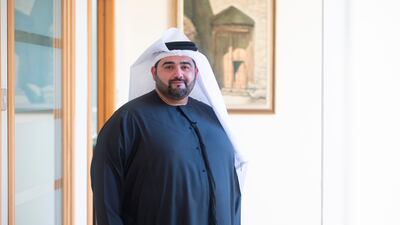
Abdulla Galadari, an Emirati lawyer and senior partner at Galadari Advocates & Legal Consultants in Dubai. Ruel Pableo for The National -

Abir Araki, Emiratisation and nationalisation manager at Cigna Insurance Middle East in Dubai. Pawan Singh / The National -

UAE National Career Fair, World Trade Centre, Downtown, Dubai. Chris Whiteoak / The National -
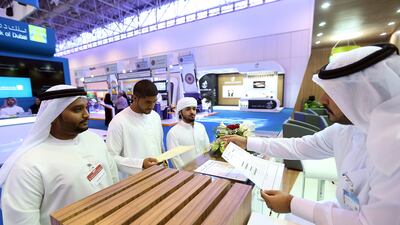
Young men at the Dubai Islamic Bank stand during the National Career Exhibition in Sharjah. Satish Kumar / The National -
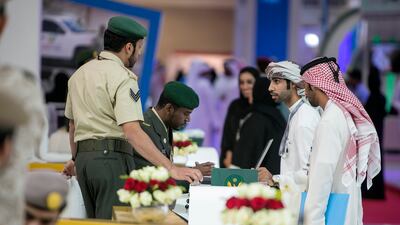
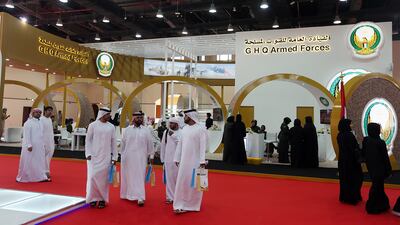
Emiratis at the Armed Services stand at a job fair at Adnec. Silvia Razgova / The National -
Emirati job seekers and students at the RAK Career Fair in Ras Al Khaimah. Satish Kumar / The National -
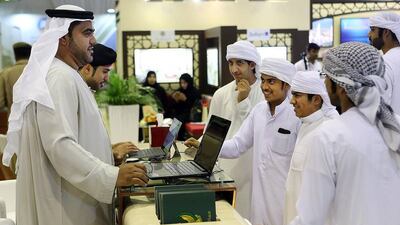
Young Emiratis at a jobs fair in Fujairah trying to get a foot on the career ladder. Satish Kumar / The National


From January 1, 2023, private companies with more than 50 employees must ensure that 2 per cent of staff members are Emirati.
Employers that fail to reach the 2 per cent target by the end of the year will have to pay a Dh72,000 fine ($19,602) in January for each Emirati worker they fail to hire, the equivalent to Dh6,000 for each month of this year.
The new law does not apply to companies registered in free zones, although they are being encouraged to hire Emiratis.
The policy is being introduced by the government to ensure 10 per cent of the private sector workforce is Emirati by 2026.
The UAE is keen for citizens to play a greater role in the progress of the private sector, which is a key driver of economic growth.
Corporate tax
Companies will have to pay a 9 per cent corporate tax on earnings above Dh375,000, according to a new policy being introduced in 2023.
The new tax will be effective for the financial year starting on June 1.
Profits below Dh375,000 will not be taxed. Companies will have nine months from the end of each financial year to pay their corporate tax bill.
Salaries and other forms of personal income are exempt from the new tax.

