



With a little more than two weeks to go before the January Emiratisation deadline, companies are looking to hire UAE citizens in customer-facing roles across various sectors.
Recruitment agencies have cautioned firms against a focus on “filling quotas”, saying there is often a need for an overall change in the compensation packages for all employees for the Emiratisation programme to work.
“We've received more inquiries for Emirati profiles, usually in sectors such as hospitality and retail,” Hamza Zaouali, founder of Iris Executives which specialises in the placement of UAE citizens, told The National.
“In the last month, companies have approached us for dozens of roles to be filled urgently.
founder of Iris Executives
“My number one advice to HR managers to hire and retain top Emirati talent would be to be crystal clear on the role and the career progression.
“If you just hire an Emirati for quota reasons, they will find somewhere where there is actually a clearer and more enticing future for them.”
Authorities have stressed that private sector companies must place UAE citizens in skilled positions to achieve Emiratisation targets.
By January 1, companies with more than 50 employees must ensure 2 per cent of their staff are Emirati under a government drive to encourage more citizens to enter the private sector.
Any employer that fails to reach the target will have to pay a fine of Dh72,000 ($19,602) for each Emirati worker they fail to hire, which equates to Dh6,000 for each month of this year.
The Ministry of Human Resources and Emiratisation said skilled work was a key condition.
“The ministry is closely monitoring the Emiratisation-related procedures which companies are following, as well as the types of jobs they are offering to UAE nationals,” the ministry said on Twitter last week.
The percentage of Emiratis in the private workforce will increase by 2 per cent each year until 2026, when the government expects 10 per cent of all staff to be UAE citizens.
Recruiters said that, while the banking and legal sectors had the highest rates of hiring UAE citizens, there was interest from companies in retail, health care, hospitality and finance with roles in business development and marketing.
What must change for Emiratisation to work?
Companies that have never hired UAE citizens require modifications in budget, grades and salary of existing employees.
“When companies try to hire UAE nationals at existing salary scales, that can't work,” Mr Zaouali said.
“The UAE market has a very wide range of salaries for the same role so it is very easy for a company to be on the very low side of the spectrum.
“Hiring Emiratis means that you should accept to pay a more premium salary if you are to be in line with other firms that have also hired Emiratis.”
Customer-facing roles are opening up for UAE citizens across several sectors, with companies looking to fill managerial and entry-level positions.
Zahra Clark, head of the Middle East and North Africa region for Tiger Recruitment, said the demand was from regional firms and large multinational companies in retail, hospitality and professional services.
“This trend started in September and I’d say that the demand to hire UAE nationals is 30 per cent up from previous years,” she said.
“The private companies Tiger Recruitment is working with are looking to fill roles across the board. These are mainly generalist and business support roles in administration, HR, marketing, legal and communications — typically at a senior level.
“We’re being briefed to hire heads of HR, heads of acquisition, marketing directors and similar managerial-type roles.”
What skills are needed?
Micah Styles, managing director of Barker Langham Recruitment, said there is demand for Emiratis in front-of-house roles that involve dealing with the public.
“As we specialise exclusively in the rapidly developing market of visitor experience — including museums, attractions, expos and large-scale cultural events and activations — a large proportion of our employees and our candidates that we recruit are naturally drawn from the Emirati talent pool,” Mr Styles told The National.
“This is because the skill that we most often seek is an intellectual and emotional connection to the experience that we are producing — and being skilled in the importance of cultural context is highly valuable to us and our clients.”
The company had identified skilled Emiratis for “all available positions,” he said, from director to senior management roles in fields such as marketing and communications, human resources and strategy.
It also covered middle and entry-level positions in visitor-facing roles such as guides, hosts and in customer services.
-
Sheikh Mansour bin Zayed and Sheikh Abdullah bin Zayed chair the National Competitiveness Council. New figures show 50,000 Emiratis now work in the UAE's private sector - a rise of more than 28,000 in one year. Photo: UAE Government Media Office -
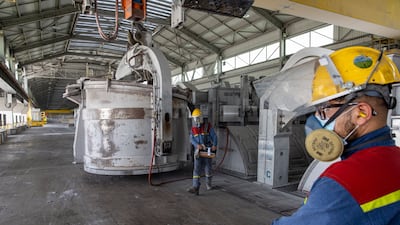
As of January 2023, companies in the UAE must ensure that 2 per cent of their workforce is Emirati. This will rise by 1 per cent every six months until it is 10 per cent. Freezone companies are exempt. Christopher Pike / Bloomberg -
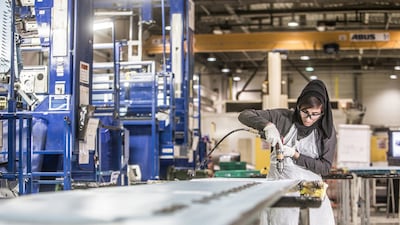
Semi-government owned companies such as Strata, which makes aircraft parts, are major employers of Emiratis. The government wants more privately-owned companies to hire Emiratis. Photo: Mubadala -
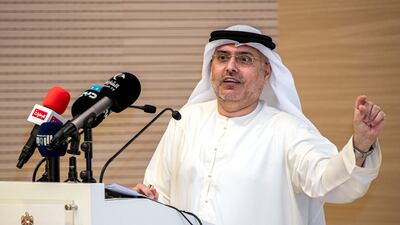
Dr Abdulrahman Al Awar, Minister of Human Resources and Emiratisation, said a greater mix of Emiratis and foreign talent will make the country more competitive. Victor Besa / The National -
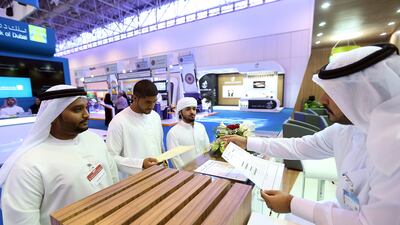
Young Emiratis are being urged to look to the private sector for opportunities and away from traditional jobs in government. Satish Kumar / The National


“Across the UAE, in both public and private sectors, the demand for skilled Emiratis is very strong and Barker Langham Recruitment supports the prediction that this will increase evermore so in 2023 in response to the guidelines recently published,” he said.
The firm has designed training programmes for Emiratis and foreign residents to raise their skills to international standards in the visitor-experience field.
Banks and the financial sector
The banking sector has traditionally been a strong recruiter of UAE citizens.
Abu Dhabi Islamic Bank said Emiratis made up 45 per cent of its employees, giving it one of the highest Emiratisation rates among lenders in the country.
The bank hired about 320 Emiratis in various positions including senior management roles this year.
“Senior leadership positions within the bank vary across the business verticals including retail and private banking, information technology and human resources,” an ADIB representative said.
One of the bank’s ambitions is to support Emirati youths within the financial services industry, and a training programme focuses on developing leadership skills.
“ADIB’s leadership programmes are aimed to empower the diverse pool of Emirati talents by providing them the essential tools to enhance their progression to senior roles within the bank,” said Nasser Al Awadi, group chief executive of Abu Dhabi Islamic Bank.
Major private sector drive
The Nafis scheme is a federal government programme that aims to improve the competitiveness of Emiratis so they can take on 75,000 jobs in the private sector over the next five years.
A monthly salary top-up is part of a support plan that covers unemployment benefits and child allowance.
The government has cracked down on companies found guilty of abusing the incentive packages, with action taken against firms that inflate Emirati employment numbers.
A private sector company that advertised unskilled jobs for Emiratis is under investigation by prosecutors after social media users complained that a fast food outlet offered UAE citizens roles as sandwich makers in a job advertisement.

