

An Emirati minister said she was "beaming with pride" over the empowerment of young people ready to help to shape the green agenda before the UAE's hosting of the Cop28 global climate change conference next year.
Shamma Al Mazrui, Minister of State for Youth, hailed the UAE's efforts to invest in the next generation and harness their potential to drive the country's development.
Ms Al Mazrui said she was excited to see youth being given a platform to play a significant role in the decision-making process.
“I am very excited for the Federal National Council elections happening next year and the role of youth in parliament," she said.
Cop28 will be held at Expo City Dubai and the meeting of world leaders in November 2023 will seek to find solutions to the problems posed by climate change.
The Cabinet member was part of President Sheikh Mohamed's landmark visit to France last week, during which she shared the UAE's vision for youth with French contemporaries.
“Our discussion with the youth minister [of France] was more what they could also learn from the UAE," Ms Al Mazrui told The National.
"We shared our youth council model with them. We talked about how we can involve youths within the decision-making process and I think this is inspiring for them as well — to think about institutionalising and use their voice in their decision-making.”
UAE students make mark in France
-
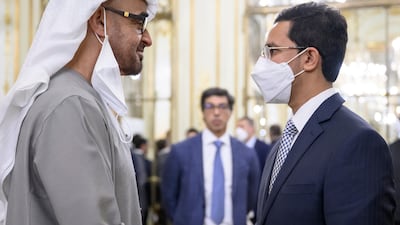
HH Sheikh Mohamed bin Zayed Al Nahyan, President of the United Arab Emirates (L) greets Dr Abdulla Alfzari. All photos: Presidential Court -
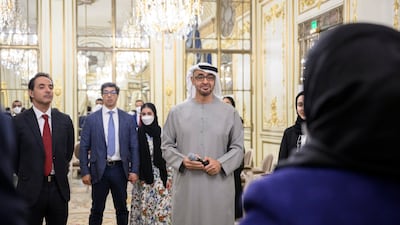
Sheikh Mohamed greets Emirati students and doctors. -
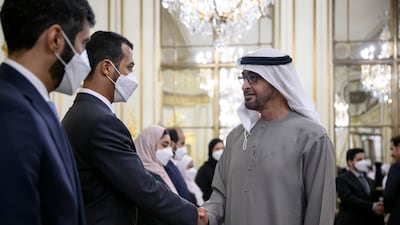
Sheikh Mohamed greets students. -
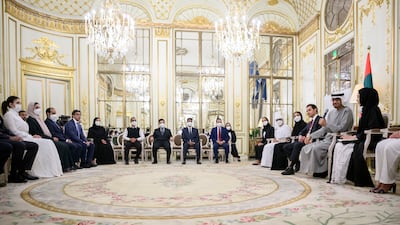
Sheikh Mohamed and Emirati students and doctors, along with Shamma bint Suhail Al Mazrouei, UAE Minister of State for Youth, right, Sheikh Hazza bin Zayed, third right, and Sheikh Mansour bin Zayed, UAE Deputy Prime Minister and Minister of the Presidential Court, fourth left. -
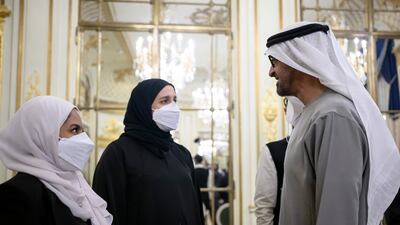
Sheikh Mohamed greets students and doctors. -
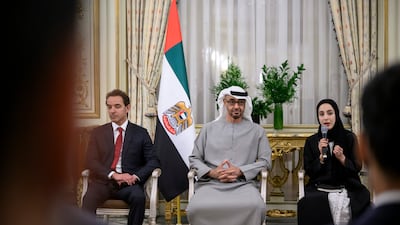
Sheikh Mohamed with Sheikh Hazza bin Zayed, left, and Shamma bint Suhail Al Mazrouei. -
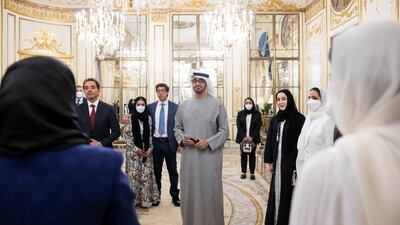
Sheikh Mohamed speaks to Emirati students and doctors. -
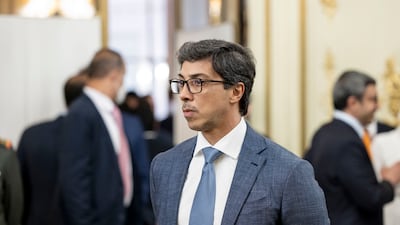
Sheikh Mansour bin Zayed. -
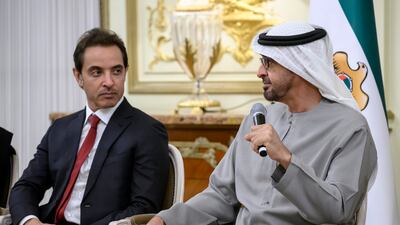
Sheikh Mohamed and Sheikh Hazza bin Zayed, left. -
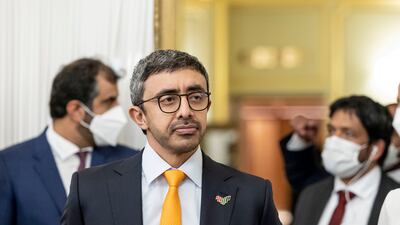
Sheikh Abdullah bin Zayed, Minister of Foreign Affairs and International Co-operation. -
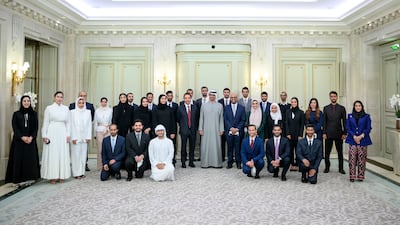
President Sheikh Mohamed and Sheikh Hazza bin Zayed, vice chairman of the Abu Dhabi Executive Council, with Emirati students and doctors studying in France.


During the visit, Ms Al Mazrui joined Sheikh Mohamed in meeting Emirati students attending universities in France.
He urged them to strive to achieve academic excellence, which he said would enable them to contribute to the UAE's growth.
Sheikh Mohamed said students studying abroad had an important ambassadorial role for their country, which included demonstrating the values of tolerance, co-existence and intercultural dialogue that underpin the Emirati community.
“What I think inspired me was to see how the UAE has empowered youths and given them opportunities to work in France and learn," Ms Al Mazrui said.
"That's exactly what the leadership believes is the most important investment. The fact that His Highness’s first stop, right after he landed was to see these young people and to hear their stories, to understand their aspirations, shows the power of the leadership listening to and engaging youth as the vital and most important aspect.
“I'm beaming with pride with the amount of responsibility that our leadership have given youth."
Ms Al Mazrui praised the policies in place to assist young people, such as ensuring representation for youth on federal bodies and ministries.
She said one of the biggest challenges facing youth ministers around the world was the difficulty of working across all sectors and communicating with ministers in each of those fields.
But she said that problem has been eliminated in the UAE, "because each minister already has a youth council".
"So the voice of youth has already addressed and reached leadership, which is a smart way of decentralising youth empowerment, by empowering the mass of youth,” she said.
President Sheikh Mohamed's state visit - in pictures
-
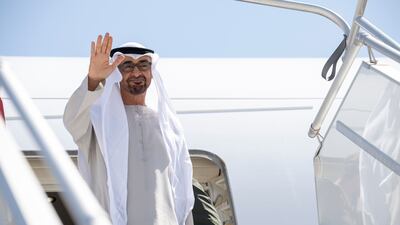
The President, Sheikh Mohamed, leaves France after his official state visit. Photo: Presidential Court -
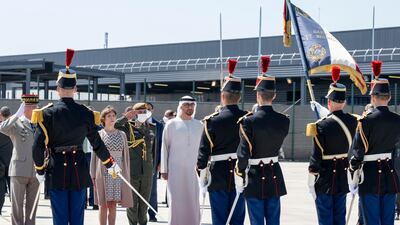
Sheikh Mohamed stands for the national anthem. Catherine Colonna, French Minister for Europe and Foreign Affairs, is also pictured. Photo: Presidential Court -
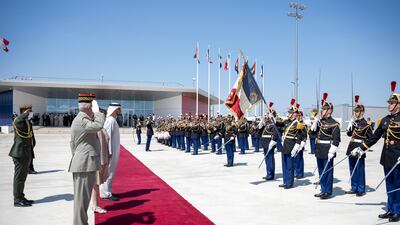
Sheikh Mohamed stands for the national anthems. Photo: Presidential Court -
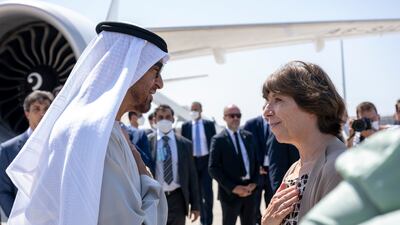
Sheikh Mohamed bids farewell to Ms Colonna. Photo: Presidential Court -
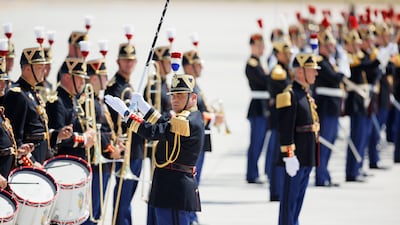
Members of the French honour guard play the national anthem before Sheikh Mohamed's departure. Photo: Presidential Court -
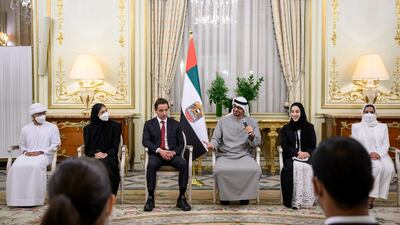
President Sheikh Mohamed speaks to Emirati students and doctors studying in France. Seen with Shamma bint Suhail Al Al Mazrouei, UAE Minister of State for Youth, second right, and Sheikh Hazza bin Zayed, vice chairman of the Abu Dhabi Executive Council, fourth right. Photo: Presidential Court -
President Sheikh Mohamed with Emirati students and doctors, along with Shamma bint Suhail Al Al Mazrouei, Sheikh Hazza bin Zayed and Sheikh Mansour bin Zayed, UAE Deputy Prime Minister and Minister of the Presidential Court, fourth from left. Photo: Presidential Court -
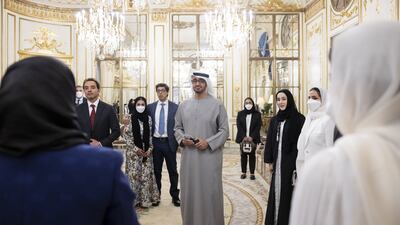
President Sheikh Mohamed meets students and doctors. Photo: Presidential Court -
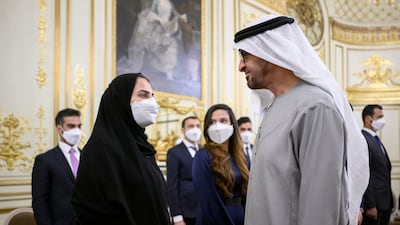
President Sheikh Mohamed greets Emirati students and doctors who are studying in France. Photo: Presidential Court -

Sheikh Mohamed, with Sheikh Zayed bin Mohamed, speaks to Catherine Colonna. Photo: Presidential Court -

Sheikh Mohamed arrives at Matignon Hotel in Paris to meet Prime Minister Elisabeth Borne. Chris Whiteoak / The National -

Sheikh Mohamed arrives at the Matignon to meet Ms Borne. Chris Whiteoak / The National -

Sheikh Mansour bin Zayed leaves Matignon hotel. Chris Whiteoak / The National -
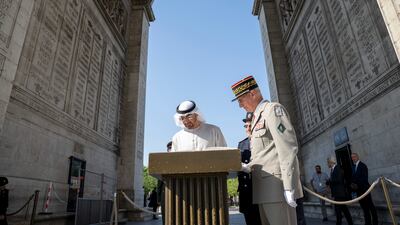
President Sheikh Mohamed signs a guest book during a military ceremony at the Arc de Triomphe in Paris. Photo: Presidential Court -
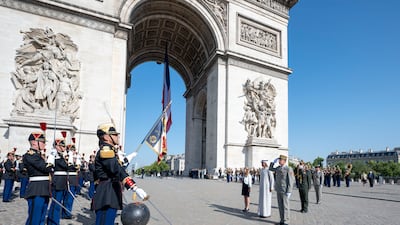
Sheikh Mohamed stands at attention as the national anthems of the UAE and France are played at the Arc de Triomphe. Photo: Presidential Court -
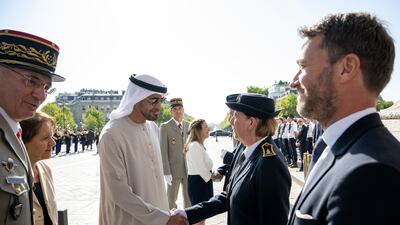
The UAE President greets a members of the Unknown Soldier’s Torch Committee. Photo: Presidential Court -
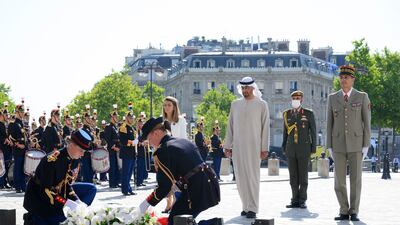
Sheikh Mohamed lays a wreath at the Tomb of the Unknown Soldier. Photo: Presidential Court -
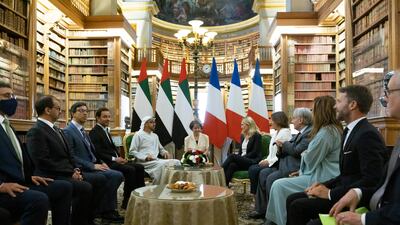
The UAE President meets Yael Braun-Pivet, sixth from right, President of the French National Assembly, in Paris. The senior UAE officials include Sheikh Mansour bin Zayed, Deputy Prime Minister and Minister of the Presidential Court; Sheikh Abdullah bin Zayed, Minister of Foreign Affairs and International Co-operation; Sheikh Hazza bin Zayed, Vice Chairman of the Abu Dhabi Executive Council; and Sheikh Hamed bin Zayed, managing director of Abu Dhabi Investment Authority and Abu Dhabi Executive Council Member. Photo: Presidential Court -
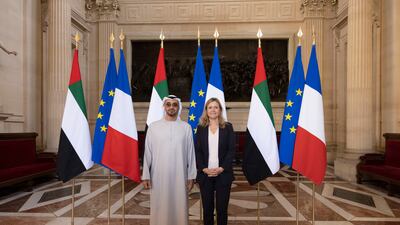
Sheikh Mohamed with Ms Braun-Pivet at the National Assembly Presidency Palace. Photo: Presidential Court -
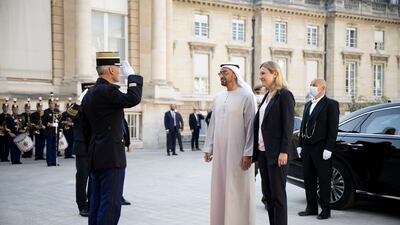
Sheikh Mohamed is received by Ms Braun-Pivet during his state visit to France. Photo: Presidential Court -
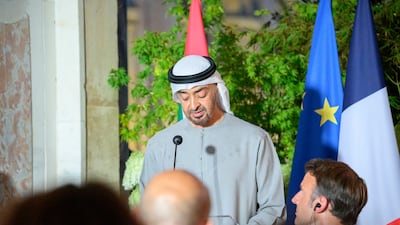
The UAE President gives a speech during a dinner hosted in his honour by French President Emmanuel Macron at the Versailles Grand Trianon in Paris. Photo: Presidential Court -
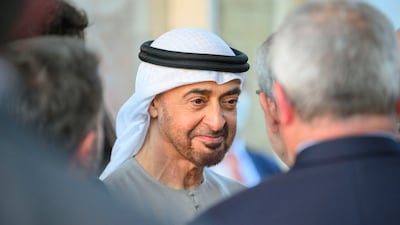
Sheikh Mohamed is in France on his first overseas trip as UAE President. Photo: Presidential Court -
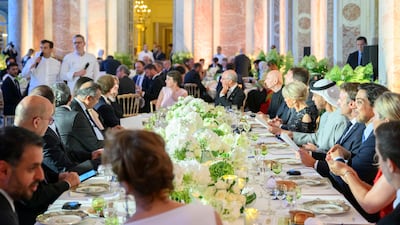
Sheikh Mohamed discussed the important role that France has undertaken in the Middle East and expressed his interest in continuing to work together to promote peace, stability and security across the region. Photo: Presidential Court -
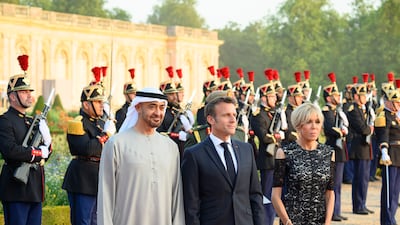
Sheikh Mohamed, Mr Macron and France's first lady Brigitte Macron at the Versailles Grand Trianon. Photo: Presidential Court -

Sheikh Mohamed with French Senate President Gerard Larcher in Paris. Chris Whiteoak / The National -
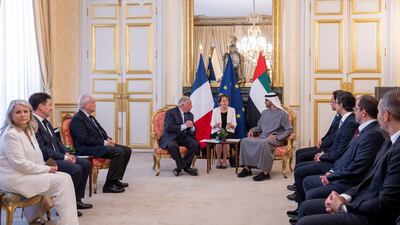
The UAE President met Mr Larcher at Luxembourg Palace. Photo: Presidential Court -
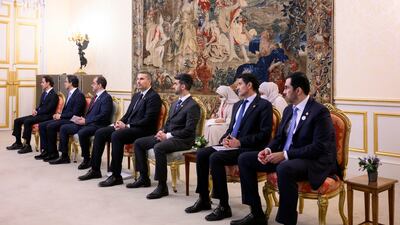
Members of the UAE delegation attend the meeting at Luxembourg Palace. Photo: Presidential Court -
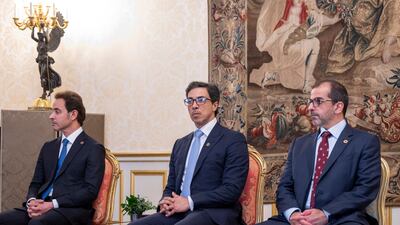
Sheikh Mansour bin Zayed, UAE Deputy Prime Minister and Minister of the Presidential Court; Sheikh Hamed bin Zayed, managing director of the Abu Dhabi Investment Authority and Abu Dhabi Executive Council Member; and Sheikh Hazza bin Zayed, vice chairman of the Abu Dhabi Executive Council, during the meeting at Luxembourg Palace. Photo: Presidential Court -

Sheikh Mohamed's decision to visit France on his first trip overseas as UAE head of state is considered highly significant and a recognition of the strength of ties between the two countries. Chris Whiteoak / The National -

Sheikh Mohamed and a delegation of ministers and senior officials began the day with a visit to the historic Les Invalides complex, home to the military museum. Chris Whiteoak / The National -

The UAE President then travelled a short distance to Luxembourg Palace. Chris Whiteoak / The National -

Mr Larcher said he was pleased to have the opportunity to discuss the Cop28 climate change conference, which will be hosted at Expo City Dubai in November 2023, and 'a lot about the energy issue, which is very important'. Chris Whiteoak / The National -

Sheikh Mohamed arrives at Luxembourg Palace in Paris. Chris Whiteoak / The National -
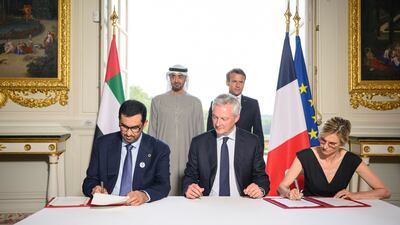
Sheikh Mohamed and Mr Macron watch as Dr Sultan Al Jaber, UAE Minister of Industry and Advanced Technology, and managing director and group chief executive of Adnoc, and France's Energy Transition Minister Agnes Pannier-Runacher sign a comprehensive strategic energy partnership between the two countries. Photo: Presidential Court -
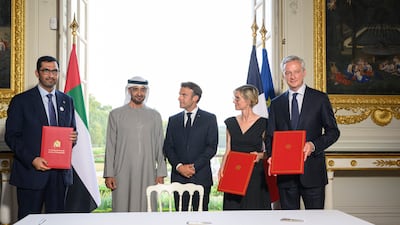
Sheikh Mohamed, Mr Macron, Dr Al Jaber, Ms Pannier-Runacher and France's Economy Minister Bruno Le Maire after the signing ceremony in Paris. Photo: Presidential Court -
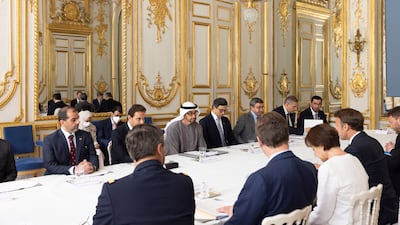
Sheikh Mohamed holds talks with Mr Macron at Elysee Palace in Paris. Photo: Presidential Court -

Sheikh Mohamed is welcomed to Elysee Palace by Mr Macron. Photo: Presidential Court -

Sheikh Mohamed with Mr Macron and France's first lady Brigitte Macron after the UAE President's arrival at Elysee Palace in the French capital. Chris Whiteoak / The National -

The UAE leader warmly embraced Mr Macron on his arrival in Paris, describing him as a friend and his country as one of the Emirates' closest allies. Chris Whiteoak / The National -

During a private lunch, the two leaders reviewed new agreements that expand decades of partnership and collaboration between the UAE and France. Chris Whiteoak / The National -

Sheikh Mohamed spoke about the common interest that the UAE and France share in confronting climate change. Chris Whiteoak / The National -

A French guard of honour awaits the arrival of Sheikh Mohamed to Elysee Palace. Chris Whiteoak / The National -
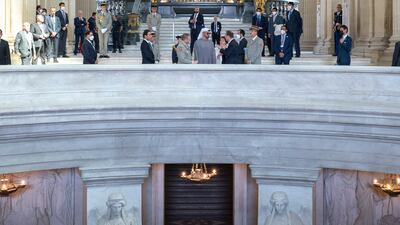
The UAE President attends an official reception hosted by Sebastien Lecornu, France's Minister of Armed Forces, at the military museum in Paris. Photo: Presidential Court -
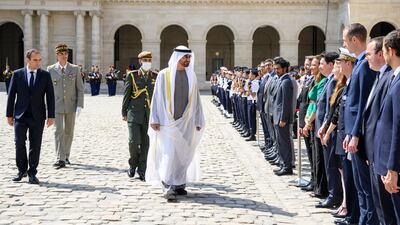
Sheikh Mohamed is accompanied by Mr Le Cornu as he inspects a guard of honour and meets officials at the military museum. Photo: Presidential Court -
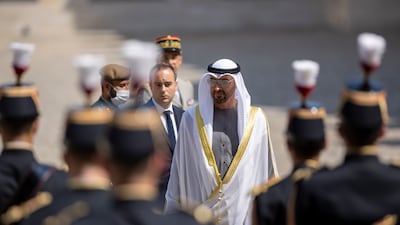
The UAE President visited the tomb of Napoleon Bonaparte within the Dome des Invalides at the military museum. Photo: Presidential Court -

Sheikh Mohamed was set to meet top French officials during his two-day visit, including Prime Minister Elisabeth Borne and President of the National Assembly Yael Braun-Pivet. Photo: Presidential Court -
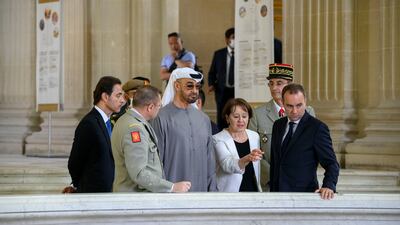
Sheikh Mohamed with Sheikh Hazza bin Zayed, vice chairman of the Abu Dhabi Executive Council, and Mr Le Cornu at the military museum. Photo: Presidential Court -
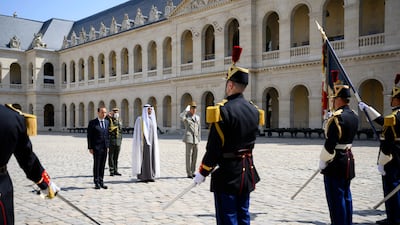
Sheikh Mohamed and Mr Le Cornu stand at attention as the two countries' anthems are played. Photo: Presidential Court -
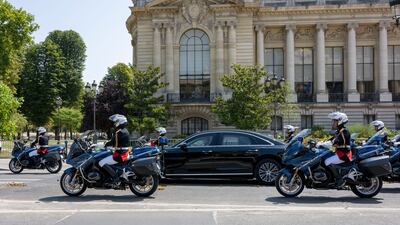
The UAE President's motorcade arrives at the military museum. Photo: Presidential Court -
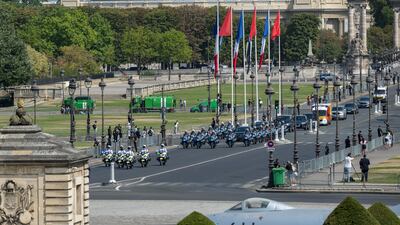
Emirati flags adorned the streets around Elysee and Luxembourg palaces. Photo: Presidential Court



