Sheikh Mohamed bin Zayed, Crown Prince of Abu Dhabi and Deputy Supreme Commander of the Armed Forces, said that UAE is committed to eradicating malaria.
On World Malaria Day, April 25, Sheikh Mohamed said on Twitter that the Emirates will continue to work with international partners to fight the disease.
"We strive to harness the power of innovation to reduce the burden of preventable diseases, accelerate their eradication and bring new hope and opportunity to people around the world,” he said.
"On World Malaria Day, we remain committed in the fight to end malaria through global partnerships and will continue to work with the global community to lead on innovative and equity-driven programmes to save millions more lives.”
The UAE is a major contributor in the fight to make malaria history through the Roll Back Malaria initiative.
Sheikh Mohammed has donated millions of dollars to fight the disease.
With a total contribution of Dh19.32 billion of developmental aid in 2017, the UAE spent 1.31 per cent of its gross national income on foreign developmental aid — almost twice the global target of 0.7 per cent set by the UN, according to state news agency Wam.
The donations in 2017 represent a 23.72 per cent increase on the year before, when the UAE contributed Dh15.57 billion.
The World Malaria Day message calls for continued investment and political commitment to prevent and control the disease. The day was first marked by World Health Organisation member states during the World Health Assembly of 2007.
Malaria is a preventable and treatable disease, but WHO and its partners have reported that progress against it is in danger of stagnating.
According to WHO data, in 2020, there were an estimated 241 million new cases of malaria and 627,000 malaria-related deaths in 85 countries. More than two-thirds of deaths were among children under the age of 5 living in the WHO African region.
In recent years, researchers have developed tools and technologies to fight the disease, such as insecticide-treated nets, spatial mosquito repellents and gene-drive approaches.
In October 2021, the WHO also recommended the broad use of the RTS, S malaria vaccine for young children living in areas with moderate and high transmission of the disease.
The WHO said it made recommendations based on the findings of a pilot programme in Ghana, Kenya and Malawi that has reached more than 900,000 children since 2019.
The WHO said its scheme could save the lives of between 40,000 and 80,000 children each year.
The latest data shows that more than a million children in Ghana, Kenya and Malawi have now received at least one dose of RTS, S, the first anti-malaria vaccine.
The breakthrough vaccine was pioneered in Malawi in April 2019 and found to be safe and to substantially reduce severe cases of the disease, the WHO said in a World Malaria Day statement.
"This vaccine is not just a scientific breakthrough, it's life-changing for families across Africa,” WHO director general Tedros Adhanom Ghebreyesus said.
"It demonstrates the power of science and innovation for health. Even so, there is an urgent need to develop more and better tools to save lives and drive progress towards a malaria-free world.”
The vaccine is manufactured by British pharmaceutical company GSK and more than $155 million has been provided by Gavi, the Vaccine Alliance, for the delivery of the vaccines, the statement said.
The organisation welcomed progress in the development of other treatments, too, but said more funding was needed in the fight against malaria — an average of $851m a year over the period 2021-2030.
About 90 per cent of the world's malaria cases are recorded in Africa, where 260,000 children die from the disease each year.
What is the malaria vaccine?
RTS, S is a first-generation vaccine that could be complemented by other vaccines with similar or higher efficacy.
Other vaccines such as R21/Matrix-M are in early clinical development. The successful completion of trials for these vaccines will be important to assess their safety and efficacy.
Pharma company BioNTech, manufacturer of the Pfizer-BioNTech coronavirus vaccine, has said that it is developing a malaria vaccine using mRNA technology.
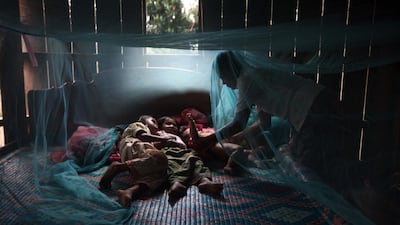
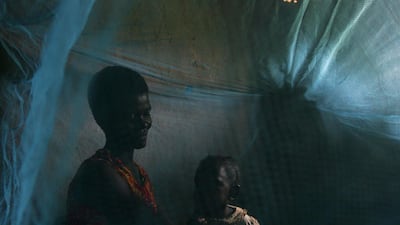
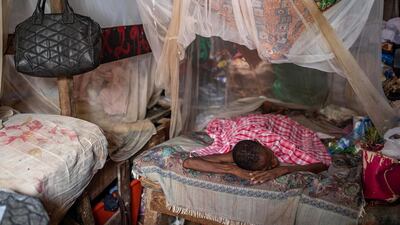
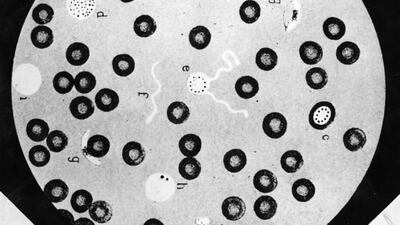
Fight against malaria — in pictures
The Bio
Favourite place in UAE: Al Rams pearling village
What one book should everyone read: Any book written before electricity was invented. When a writer willingly worked under candlelight, you know he/she had a real passion for their craft
Your favourite type of pearl: All of them. No pearl looks the same and each carries its own unique characteristics, like humans
Best time to swim in the sea: When there is enough light to see beneath the surface
T20 WORLD CUP QUALIFIER
Results
UAE beat Nigeria by five wickets
Hong Kong beat Canada by 32 runs
Friday fixtures
10am, Tolerance Oval, Abu Dhabi – Ireland v Jersey
7.30pm, Zayed Cricket Stadium, Abu Dhabi – Canada v Oman
What the law says
Micro-retirement is not a recognised concept or employment status under Federal Decree Law No. 33 of 2021 on the Regulation of Labour Relations (as amended) (UAE Labour Law). As such, it reflects a voluntary work-life balance practice, rather than a recognised legal employment category, according to Dilini Loku, senior associate for law firm Gateley Middle East.
“Some companies may offer formal sabbatical policies or career break programmes; however, beyond such arrangements, there is no automatic right or statutory entitlement to extended breaks,” she explains.
“Any leave taken beyond statutory entitlements, such as annual leave, is typically regarded as unpaid leave in accordance with Article 33 of the UAE Labour Law. While employees may legally take unpaid leave, such requests are subject to the employer’s discretion and require approval.”
If an employee resigns to pursue micro-retirement, the employment contract is terminated, and the employer is under no legal obligation to rehire the employee in the future unless specific contractual agreements are in place (such as return-to-work arrangements), which are generally uncommon, Ms Loku adds.
The%20Crown%20season%205
%3Cp%3E%3Cstrong%3EStars%3A%20%3C%2Fstrong%3EImelda%20Staunton%2C%20Jonathan%20Pryce%2C%20Lesley%20Manville%2C%20Jonny%20Lee%20Miller%2C%20Dominic%20West%2C%20Elizabeth%20Debicki%2C%20Salim%20Daw%20and%20Khalid%20Abdalla%3C%2Fp%3E%0A%3Cp%3E%3Cstrong%3EWritten%20by%3A%20%3C%2Fstrong%3EPeter%20Morgan%3C%2Fp%3E%0A%3Cp%3E%3Cstrong%3ERating%3A%3C%2Fstrong%3E%204%2F5%20stars%3C%2Fp%3E%0A
Know your Camel lingo
The bairaq is a competition for the best herd of 50 camels, named for the banner its winner takes home
Namoos - a word of congratulations reserved for falconry competitions, camel races and camel pageants. It best translates as 'the pride of victory' - and for competitors, it is priceless
Asayel camels - sleek, short-haired hound-like racers
Majahim - chocolate-brown camels that can grow to weigh two tonnes. They were only valued for milk until camel pageantry took off in the 1990s
Millions Street - the thoroughfare where camels are led and where white 4x4s throng throughout the festival
The biog
Name: Ayisha Abdulrahman Gareb
Age: 57
From: Kalba
Occupation: Mukrema, though she washes bodies without charge
Favourite things to do: Visiting patients at the hospital and give them the support they need.
Role model: Sheikha Fatima bint Mubarak, Chairwoman of the General Women's Union, Supreme Chairwoman of the Family Development Foundation and President of the Supreme Council for Motherhood and Childhood.
Company%20Profile
%3Cp%3E%3Cstrong%3ECompany%20name%3A%20%3C%2Fstrong%3ENamara%0D%3Cbr%3E%3Cstrong%3EStarted%3A%20%3C%2Fstrong%3EJune%202022%0D%3Cbr%3E%3Cstrong%3EFounder%3A%20%3C%2Fstrong%3EMohammed%20Alnamara%0D%3Cbr%3E%3Cstrong%3EBased%3A%20%3C%2Fstrong%3EDubai%20%0D%3Cbr%3E%3Cstrong%3ESector%3A%20%3C%2Fstrong%3EMicrofinance%0D%3Cbr%3E%3Cstrong%3ECurrent%20number%20of%20staff%3A%20%3C%2Fstrong%3E16%0D%3Cbr%3E%3Cstrong%3EInvestment%20stage%3A%20%3C%2Fstrong%3ESeries%20A%0D%3Cbr%3E%3Cstrong%3EInvestors%3A%20%3C%2Fstrong%3EFamily%20offices%0D%3Cbr%3E%3C%2Fp%3E%0A
Timeline
2012-2015
The company offers payments/bribes to win key contracts in the Middle East
May 2017
The UK SFO officially opens investigation into Petrofac’s use of agents, corruption, and potential bribery to secure contracts
September 2021
Petrofac pleads guilty to seven counts of failing to prevent bribery under the UK Bribery Act
October 2021
Court fines Petrofac £77 million for bribery. Former executive receives a two-year suspended sentence
December 2024
Petrofac enters into comprehensive restructuring to strengthen the financial position of the group
May 2025
The High Court of England and Wales approves the company’s restructuring plan
July 2025
The Court of Appeal issues a judgment challenging parts of the restructuring plan
August 2025
Petrofac issues a business update to execute the restructuring and confirms it will appeal the Court of Appeal decision
October 2025
Petrofac loses a major TenneT offshore wind contract worth €13 billion. Holding company files for administration in the UK. Petrofac delisted from the London Stock Exchange
November 2025
180 Petrofac employees laid off in the UAE
AI traffic lights to ease congestion at seven points to Sheikh Zayed bin Sultan Street
The seven points are:
Shakhbout bin Sultan Street
Dhafeer Street
Hadbat Al Ghubainah Street (outbound)
Salama bint Butti Street
Al Dhafra Street
Rabdan Street
Umm Yifina Street exit (inbound)
Mercer, the investment consulting arm of US services company Marsh & McLennan, expects its wealth division to at least double its assets under management (AUM) in the Middle East as wealth in the region continues to grow despite economic headwinds, a company official said.
Mercer Wealth, which globally has $160 billion in AUM, plans to boost its AUM in the region to $2-$3bn in the next 2-3 years from the present $1bn, said Yasir AbuShaban, a Dubai-based principal with Mercer Wealth.
“Within the next two to three years, we are looking at reaching $2 to $3 billion as a conservative estimate and we do see an opportunity to do so,” said Mr AbuShaban.
Mercer does not directly make investments, but allocates clients’ money they have discretion to, to professional asset managers. They also provide advice to clients.
“We have buying power. We can negotiate on their (client’s) behalf with asset managers to provide them lower fees than they otherwise would have to get on their own,” he added.
Mercer Wealth’s clients include sovereign wealth funds, family offices, and insurance companies among others.
From its office in Dubai, Mercer also looks after Africa, India and Turkey, where they also see opportunity for growth.
Wealth creation in Middle East and Africa (MEA) grew 8.5 per cent to $8.1 trillion last year from $7.5tn in 2015, higher than last year’s global average of 6 per cent and the second-highest growth in a region after Asia-Pacific which grew 9.9 per cent, according to consultancy Boston Consulting Group (BCG). In the region, where wealth grew just 1.9 per cent in 2015 compared with 2014, a pickup in oil prices has helped in wealth generation.
BCG is forecasting MEA wealth will rise to $12tn by 2021, growing at an annual average of 8 per cent.
Drivers of wealth generation in the region will be split evenly between new wealth creation and growth of performance of existing assets, according to BCG.
Another general trend in the region is clients’ looking for a comprehensive approach to investing, according to Mr AbuShaban.
“Institutional investors or some of the families are seeing a slowdown in the available capital they have to invest and in that sense they are looking at optimizing the way they manage their portfolios and making sure they are not investing haphazardly and different parts of their investment are working together,” said Mr AbuShaban.
Some clients also have a higher appetite for risk, given the low interest-rate environment that does not provide enough yield for some institutional investors. These clients are keen to invest in illiquid assets, such as private equity and infrastructure.
“What we have seen is a desire for higher returns in what has been a low-return environment specifically in various fixed income or bonds,” he said.
“In this environment, we have seen a de facto increase in the risk that clients are taking in things like illiquid investments, private equity investments, infrastructure and private debt, those kind of investments were higher illiquidity results in incrementally higher returns.”
The Abu Dhabi Investment Authority, one of the largest sovereign wealth funds, said in its 2016 report that has gradually increased its exposure in direct private equity and private credit transactions, mainly in Asian markets and especially in China and India. The authority’s private equity department focused on structured equities owing to “their defensive characteristics.”
Who's who in Yemen conflict
Houthis: Iran-backed rebels who occupy Sanaa and run unrecognised government
Yemeni government: Exiled government in Aden led by eight-member Presidential Leadership Council
Southern Transitional Council: Faction in Yemeni government that seeks autonomy for the south
Habrish 'rebels': Tribal-backed forces feuding with STC over control of oil in government territory
Avatar: Fire and Ash
Director: James Cameron
Starring: Sam Worthington, Sigourney Weaver, Zoe Saldana
Rating: 4.5/5