

A major project is under way to help replenish and plant more mangroves along the UAE’s coastlines using drones, a senior minister said.
Flying low over the ground and firing mangrove seeds into the water, the eco-friendly crafts may become a common sight by next year.
Dr Thani Al Zeyoudi, Minister of Climate Change and Environment, said the drone-powered reforestation project would help to protect UAE shores from rising seas levels and boost fish stocks.
"The ministry is working on a number of initiatives, including the planting of mangroves via drones," Dr Al Zeyoudi told The National.
“We recently launched a pilot phase in Umm Al Quwain that aims to restore a natural ecosystem that is beneficial to wildlife, environment and local population.
"If successful we will roll it out across the country by the end of this year or early next.
"Mangroves reduce almost 10 times the amount of CO2 emissions in comparison to on-land trees.
“As well as this, they help to purify the water and provide safe areas for fish and other marine life to live and grow.”
As part of the initiative, mapping drones would help to assess the topography and quality of the ground. Once collected, the data would be used to analyse the best places to plant.
There are several key threats to mangroves, including urban expansion, limited fresh water resources and pollution.
Dr Al Zeyoudi said the need to restore, replenish and grow more of these coastal shrubs was vital to rebuilding the UAE’s ecosystem.
In the UAE, mangrove coverage varies. The latest data from the Environment Agency Abu Dhabi, which uses high-resolution satellites to map the emirate's mangroves, put their area at about 155 square kilometres.
That figure is believed to have nearly doubled over the past three decades due to plantation and rehabilitation projects.
Some of the key species living in the UAE’s mangroves include the greater flamingo, the western reef heron and the Kalba collared kingfisher.
Drone-enabled planting projects have already been successful in the UAE.
-
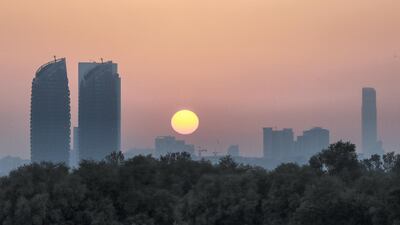
The sunset over Al Reem Island is seen from the Eastern Mangroves area of Abu Dhabi. Victor Besa / The National -
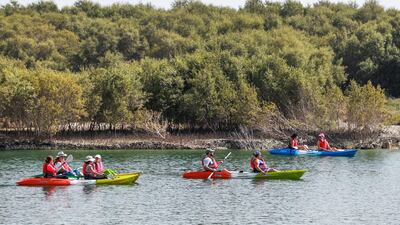
Tourists set off for a kayaking trip through the Eastern Mangroves. Victor Besa / The National -
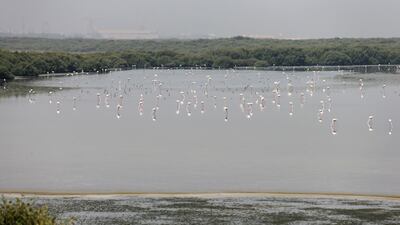
Flamingos at Al Zorah Natural Reserve in Ajman. Sarah Dea / The National -

Mangroves line the bay near the Anantara Al Yamm Villa Resort on the Sir Bani Yas Island, one of the largest natural islands in the UAE. Visiting guests helped plant mangroves, contributing to the stability of the local ecosystem. Silvia Razgova / The National -
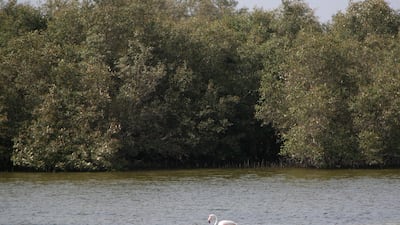
A flamingo wades in the shallow water in front of Mangroves in Abu Dhabi. Sammy Dallal / The National -
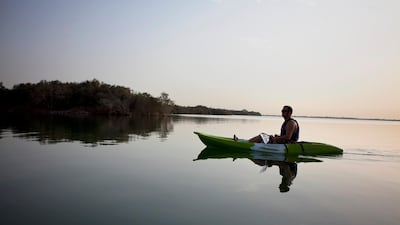
Kayakers navigate the cool early-morning waters between mangrove islands in Abu Dhabi. (Silvia Razgova/The National) -
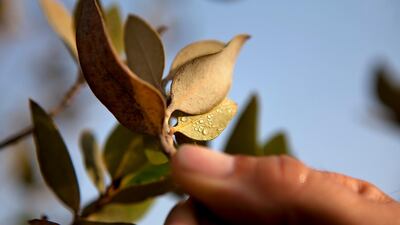
Salt-water crystals are exposed on mangrove trees in Abu Dhabi. Silvia Razgova/The National -
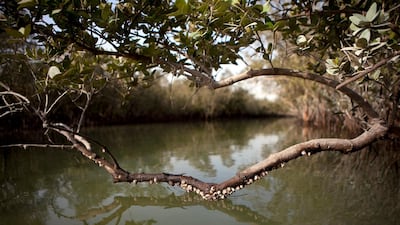
Marine life attaches to a mangrove branch which hangs just above the water in the Eastern Mangroves, Abu Dhabi. Silvia Razgova/The National -
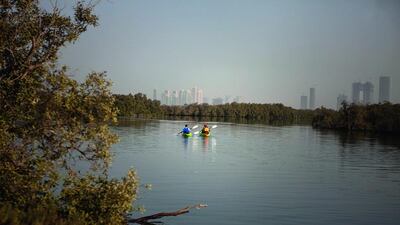
Kayaking in the mangroves, Abu Dhabi. Silvia Razgova / The National


Just recently - and for the first time - the ministry seeded more than six million local plant species using drones.
“We managed to spread 6,250,000 seeds of local plants and shrubs, from the ghaf tree to samar plant, in just eight days,” Dr Al Zeyoudi said.
“We did it during the rainy season so we could capitalise on the waterfall during that period.
“We chose a number of areas where we knew there was good water sources nearby like valleys and dams.
“On average we planted about 800,000 seeds per day using about three to four drones on a constant cycle."
Compared to manual plantation, he said this method proved to be more efficient, quicker and helped the team cover a wider area.
The UAE is one of the first governments to roll-out drone-planting projects on a large scale and it contributed to a global goal to plant billions of trees to help tackle the effects of climate change.
"The project was carried out in a number of emirates including Fujairah, Ras Al Khaimah and Abu Dhabi," he said.
"The more than six million seeds planted could help absorb more than 300 tonnes of CO2 per year."

