


The rise of the Covid-19 pandemic stopped the world in its tracks. Roads emptied, flights were grounded, offices and schools temporarily closed their doors and keeping others at a social distance became the norm.
As the pandemic swept through cities such as Tehran, Mumbai, New York and London, the fabric of society became uncertain.
In the past, the spread of contagious diseases led to profound changes in urban planning. No other region is developing as fast as Saudi Arabia and the UAE.
'We can really start afresh with how people live'
In the 1850s, the cholera epidemic in the US led to the advent of public health regulation, said Catherine Brinkley, assistant professor of community and regional development at the University of California in a blog post.
Similarly, governments and planners should see Covid-19 as an opportunity to stop and think about cities, said Akshay Deshpande, a senior urban designer at the Dubai office of engineering company Arup, and author of the report, A new approach to urban space in a post-pandemic Middle East.
“We can really start afresh with how people live. We took it for granted that meetings had to happen in person, and within six months everything was different,” he said.
“Now we have realised we could live differently – we need to see how our cities can be redesigned to accommodate this new way of living. Going forward we need to embrace the changes in the city model.
Reflecting on how we live now
"No other region is developing as fast as Saudi Arabia and the UAE – it’s an opportunity for them not to repeat the mistakes of the past. It’s a chance."
With 68 per cent of the world's population projected to live in urban areas by 2050, according to the UN, the shape of future cities is one of the pressing issues of our times.
So how could the cities of the Gulf change because of coronavirus?
The National takes a look at the wide-ranging implications the pandemic could have on the cities of the future.
1. Putting the brakes on the daily commute

A year on, the pandemic has irrevocably changed the behaviour of white-collar workers in urban environments.
In one survey, at least half of UAE workers said they felt happier and more productive working from home.
So even as restrictions ease, most chief executives are likely to choose a hybrid solution for their staff.
Commuting will become much more infrequent, and cities will become more localised, with cafes replacing offices, and local shops replacing hypermarkets.
We already see these 'polycentric' areas in large European metropolises such as Paris and London, where urban pockets or 'villages' serve a smaller community.
In the future, this trend could spread to smaller towns, as residents will no longer commute each day, and will require more services within walkable distances.
Areas of Saudi Arabia's new uber-city Neom are already being designed with this lifestyle in mind.
'The Line' project has been plotted around people, not roads, and the town will extend along a 170-kilometre coastal strip.
Cars and roads will be banned and, instead, communities will connect via an eco-friendly, high-speed, public transit service.
Walkability will define life, with all essential daily services, such as schools, medical clinics, leisure centres and green spaces within a five-minute walk.
The benefits of this hyper-local life are clear, said Mr Deshpande.
“It is really sustainable, you can spend more time with your family, and the more time you spend in your neighbourhood the more likely you are to support local business," he said.

2. Less commuting means fewer cars
As commuting declines, so will the need for cars, car parks and roads.
Think of the amount of space taken up by a car, 80 per cent of the time they are static – parked at home or near the workplace. Take away a million or more of those vehicles, and imagine the kerbside space and empty car parks.
These areas can be reclaimed to make cities more pleasant places to live.
Car parks could be turned into recreational parks, and we could see landscaped nature reclaim parts of the region’s cities.
Restaurants and cafes could spill over the kerbs to offer outside dining, allowing customers to congregate outdoors, a boon in a post-Covid world where social distancing is likely to continue in some form.
Residents would need cars for longer journeys and transporting bulky goods, but transport strategists predict the gradual increase in autonomous vehicles will lead to hourly rental rather than ownership.
Urban planners hope public transport will also replace many car journeys. The Dubai 2040 Urban Master Plan aims to reduce the emirate's reliance on cars, by ensuring 55 per cent of the population will live within 800 metres of a main public transport station.
3. Age of the bicycle

As cars decline, the popularity of cycling is expected to soar, as citizens seek to avoid the potential health hazard of public transport during the Covid-era.
Not just pedal bikes, instead electric cycles and scooters will proliferate – a trend already witnessed on the streets of Abu Dhabi and Dubai.
Short journeys in the heat of summer are even bearable when zipping along at speed, and electric vehicles release no emissions, unlike cars and buses.
City planners will need to make way for this two-wheel trend, so expect to see a proliferation of cycle lanes.
This has already started to happen in Europe, points out Mr Deshpande. City planners in Paris put in temporary bike lanes during the pandemic, and they are now a permanent fixture.
4. Affordable property prices
As the need for large corporate offices declines, communal mixed-use properties will grow in popularity.
Boardrooms will be shared, and flexible working spaces that can be expanded on ‘in the office’ days, will become the norm.
So what will happen with all that unused commercial space? It is likely to be repopulated as housing, leading to a glut of space on the market.
This should in turn make property cheaper, and shoebox-sized flats could become a thing of the past.
Furthermore, thanks to working from home, fewer people will need to live in large conurbations, so the cities of the future are likely to be smaller, and the premium on urban, centralised property will be less marked.

5. Give me space
The shape of cities in the future depends on whether the world succeeds in conquering Covid-19.
If the vaccines work and herd immunity is achieved, then normality can return. If not, our cities will need to adapt for physical distancing.
Pavements will get wider, as will corridors in newly built shopping malls and hospitals.
-
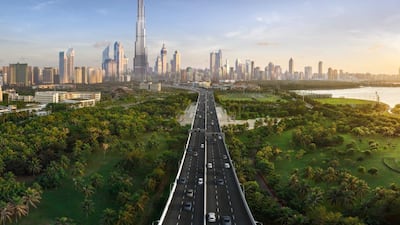
Beaches will be extended by 400 per cent and 60 per cent of Dubai will be nature reserves under the 2040 plan. Courtesy: Sheikh Mohammed bin Rashid Twitter -
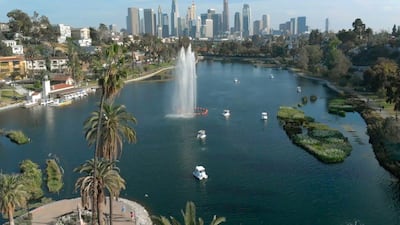
Beaches will be extended by 400 per cent and 60 per cent of Dubai will be nature reserves under the 2040 plan. Courtesy: Sheikh Mohammed bin Rashid Twitter -
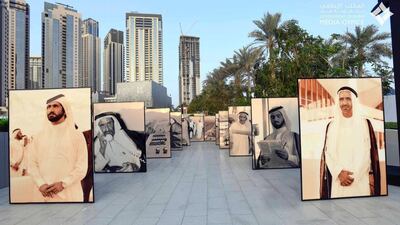
Historical images of Sheikh Mohammed bin Rashid and Sheikh Rashid, former Ruler of Dubai, at the presentation of the Dubai 2040 plan. Courtesy: Dubai Media Office -

The Dubai Urban Master Plan 2040, signed by Sheikh Mohammed bin Rashid, Vice President and Ruler of Dubai. Courtesy: Dubai Media Office -
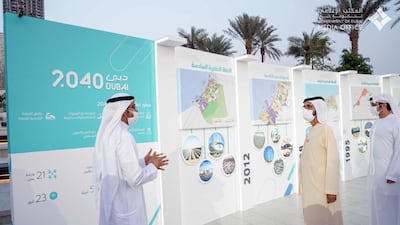
Sheikh Mohammed bin Rashid, Vice President and Ruler of Dubai, at an exhibition of the Dubai 2040 plan. Courtesy: Dubai Media Office -
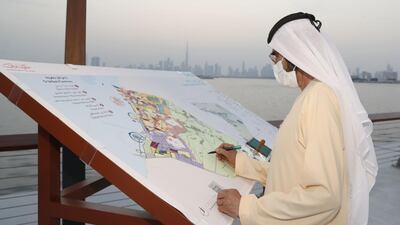
Sheikh Mohammed bin Rashid, Vice President and Ruler of Dubai, signs the Dubai Urban Master Plan 2040. Courtesy: Dubai Media Office -
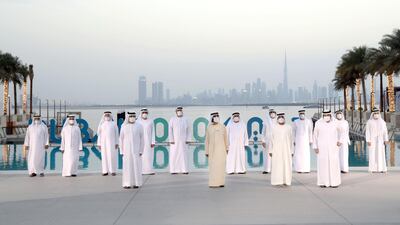
Sheikh Mohammed bin Rashid, Vice President and Ruler of Dubai, launches the Dubai 2040 Urban Master Plan. Wam -
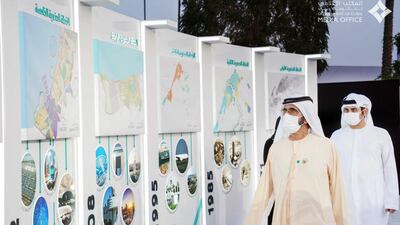
Sheikh Mohammed bin Rashid, Vice President and Ruler of Dubai, and Sheikh Maktoum bin Mohammed, Deputy Ruler of Dubai, at an exhibition of the Dubai 2040 plan. Courtesy: Dubai Media Office -

Sixty per cent of Dubai will be covered in nature reserves, under the 2040 plan unveiled by Sheikh Mohammed bin Rashid, Vice President and Ruler of Dubai. Courtesy: Sheikh Mohammed bin Rashid Twitter -
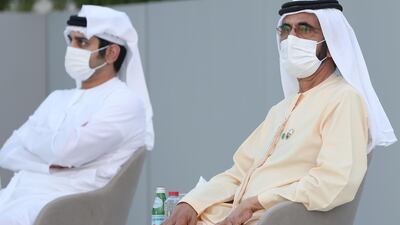
Sheikh Mohammed bin Rashid, Vice President and Ruler of Dubai, and Sheikh Maktoum bin Mohammed, Deputy Ruler of Dubai, launch the Dubai 2040 Urban Master Plan. Wam -
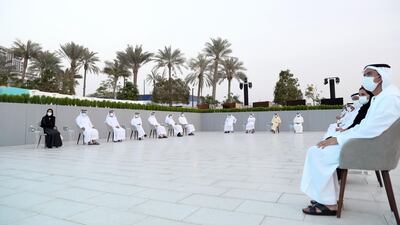
Sheikh Mohammed bin Rashid, Vice President and Ruler of Dubai, launches the Dubai 2040 Urban Master Plan. Wam -
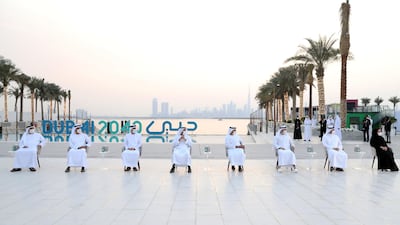
Sheikh Mohammed bin Rashid, Vice President and Ruler of Dubai, and Sheikh Maktoum bin Mohammed, Deputy Ruler of Dubai, launch the Dubai 2040 Urban Master Plan. Wam -
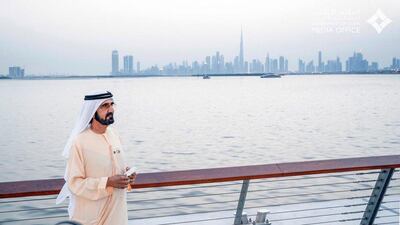
Sheikh Mohammed bin Rashid, Vice President and Ruler of Dubai, launched the Dubai 2040 plan with a move to overhaul the emirate's landscape. Courtesy: Dubai Media Office -
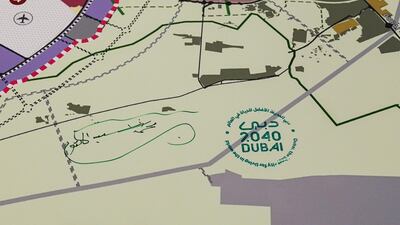
The Dubai Urban Master Plan 2040, signed by Sheikh Mohammed bin Rashid, Vice President and Ruler of Dubai. Courtesy: Dubai Media Office -

Since 1960, Dubai has implemented seven urban plans to keep up with the emirate's growing population. Courtesy: Dubai Media Office -
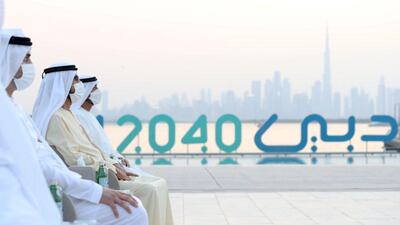
Sheikh Mohammed bin Rashid, Vice President and Ruler of Dubai, unveils the 2040 plan to overhaul the city's urban landscape. Courtesy: Sheikh Mohammed bin Rashid Twitter -
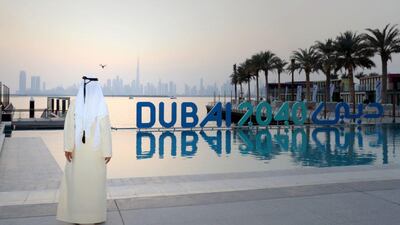
Sheikh Mohammed bin Rashid, Vice President and Ruler of Dubai, unveils the 2040 plan to overhaul the city's urban landscape. Courtesy: Sheikh Mohammed bin Rashid Twitter -

Since 1960, Dubai has brought in eight urban plans to keep up with the emirate's growing population. Courtesy: Dubai Media Office


Doors will become automatic, and keys will disappear, as biometric data will dominate the security space.
Elevators are likely to be voice-activated, and transport and payments automated.
Movement around a city will become seamless, with all touchpoints removed to reduce the risk of infection.
On the other hand, if herd immunity is achieved, perhaps this Covid-era of distancing will pass into distant memory, and we will find comfort in crowds again.
6. Staying fit

As the pandemic pushed health to the top of everyone’s priority list, cities will be designed around keeping their residents fit and healthy.
In his report on urban space, Mr Deshpande highlighted the importance of repurposing “left-over open spaces” between and around buildings for exercising and socialising.
“As cities in the Middle East continue to develop there’s a strong case to turn some of the undeveloped plots spread across the city into parks, especially in areas which have very limited open spaces,” he said.
Even pre-Covid, governments in the Gulf had realised the importance of green space.
The centrepiece of Egypt's $58 billion New Administrative Capital is a vast urban park, double the size of New York's Central Park, with a 10km long botanical garden.
Egyptian officials say they have allocated 15 square metres of green space per inhabitant.
Kuwait's planned Silk City, built on islands around the capital, will include a national wildlife sanctuary and a "green belt of gardens and vast green spaces," according to the state news agency.
Meanwhile, the Dubai 2040 Urban Master Plan also describes a leafy future, with 60 per cent of Dubai comprising nature reserves and natural areas.
7. Street life

Streets should come under the spotlight, said Mr Deshpande because they “don’t have to be entirely for movement and transition – if well-planned, they can become social centres in their own right.”
Modern Middle Eastern cities have recently been designed around destinations accessed by car, like mega-malls and skyscrapers.
The metropolises of the future will be better connected with contiguous, integrated street-life.
Even the intensity of the summers in the Gulf can be countered with leafy trees and water features.
Children should be safe to cycle and scoot outside their urban homes.
“Here in Dubai for example, we drive to places so we can go for a walk,” said Mr Despande.
“We need to look at how we reconfigure our streets so our children can walk and play on them,” he said.
8. Designing buildings for well-being
As physical health has become a priority, so too will mental health.
The impact of the pandemic on our collective psyche is yet to be fully understood, but after months of partial and total lockdowns, city planners and architects of the future are likely to focus on how their designs can improve residents’ well-being.
As a consequence the design of buildings is set to change, predicted Mr Deshpande.
“Middle Eastern cities often feature mid/high rise buildings that do not have balconies or even windows that open further than a crack.
“Private and semi-private outdoor spaces such as balconies, courtyards, and podiums not only provide a breather from the confines of our internal spaces but also provide options for people to socialise with their neighbours, reinforcing a sense of community.”
“People realised they needed this when they were stuck in their homes during Covid,” he added.
9. Smarter cities

Residents might not be able to see it, but the cities of the future will be smarter.
Covid-19 showed how important technology is to keep a city running.
Dubai and Abu Dhabi’s reliable digital networks enabled thousands of residents to lock down without losing connectivity with their workplaces or schools.
In many cities residents are still required to pay for internet access. In the future this is likely to change, as governments realise the value of harnessing residents' smartphone data to introduce more efficient services.
The New Administrative Capital near Cairo has also been designed with a smart core, so residents can access services and public transport, and buy products using one card.
Satellites and CCTV will monitor the city, ensuring a rapid reaction to accidents, fires and traffic jams.
In the near future, social distancing could even be managed through geolocation on our devices, with a traffic light system designed depending on congestion in certain areas.

