• President Sheikh Mohamed, who was Crown Prince of Abu Dhabi and Deputy Supreme Commander of the Armed Forces at the time, at the launch of the UAE’s Net Zero 2050 Strategic Initiative at Expo 2020 Dubai. With him are Sheikh Maktoum bin Mohammed, Deputy Prime Minister and Minister of Finance, right, Mariam Al Mheiri, Minister for Climate Change and Environment, left, and Dr Sultan Al Jaber, Minister of Industry and Advanced Technology, chairman of Masdar and chief executive of Adnoc, second left. All photos: Ministry of Presidential Affairs
    President Sheikh Mohamed, who was Crown Prince of Abu Dhabi and Deputy Supreme Commander of the Armed Forces at the time, at the launch of the UAE’s Net Zero 2050 Strategic Initiative at Expo 2020 Dubai. With him are Sheikh Maktoum bin Mohammed, Deputy Prime Minister and Minister of Finance, right, Mariam Al Mheiri, Minister for Climate Change and Environment, left, and Dr Sultan Al Jaber, Minister of Industry and Advanced Technology, chairman of Masdar and chief executive of Adnoc, second left. All photos: Ministry of Presidential Affairs
  • A display about the UAE’s Net Zero 2050 Strategic Initiative in the UAE pavilion at Expo 2020 Dubai.
    A display about the UAE’s Net Zero 2050 Strategic Initiative in the UAE pavilion at Expo 2020 Dubai.
  • President Sheikh Mohamed, centre, in the UAE pavilion at Expo 2020 Dubai. With him are Sheikh Mansour bin Zayed, Deputy Prime Minister and Minister of Presidential Affairs, right, Sheikh Maktoum bin Mohammed, Deputy Prime Minister and Minister of Finance, second right, Dr Sultan Al Jaber, Minister of Industry and Advanced Technology, fourth right, and Abdullah Al Marri, Minister of Economy, left.
    President Sheikh Mohamed, centre, in the UAE pavilion at Expo 2020 Dubai. With him are Sheikh Mansour bin Zayed, Deputy Prime Minister and Minister of Presidential Affairs, right, Sheikh Maktoum bin Mohammed, Deputy Prime Minister and Minister of Finance, second right, Dr Sultan Al Jaber, Minister of Industry and Advanced Technology, fourth right, and Abdullah Al Marri, Minister of Economy, left.
  • President Sheikh Mohamed, right, with Dr Sultan Al Jaber and Abdullah Al Marri, left.
    President Sheikh Mohamed, right, with Dr Sultan Al Jaber and Abdullah Al Marri, left.
  • President Sheikh Mohamed, centre, at Expo 2020 Dubai with Sheikh Mansour bin Zayed, Deputy Prime Minister and Minister of Presidential Affairs, right, and Dr Sultan Al Jaber.
    President Sheikh Mohamed, centre, at Expo 2020 Dubai with Sheikh Mansour bin Zayed, Deputy Prime Minister and Minister of Presidential Affairs, right, and Dr Sultan Al Jaber.
  • President Sheikh Mohamed, front row, third right, with: Sheikh Mansour bin Zayed, Deputy Prime Minister and Minister of Presidential Affairs, second right; Sheikh Maktoum bin Mohammed Al Maktoum, Deputy Prime Minister and Minister of Finance, fourth right; Dr Sultan Al Jaber, Minister of Industry and Advanced Technology, right; Mohamed Al Gergawi, Minister of Cabinet Affairs, fifth right; and Mariam Al Mheiri, Minister for Climate Change and Environment, left. Back row, from right to left: Abdullah Al Marri, Minister of Economy; Suhail bin Mohamed Al Mazrouei, Minister of Energy and Infrastructure; and Reem Al Hashimi, Minister of State for International Co-operation and Director General of Expo 2020 Dubai.
    President Sheikh Mohamed, front row, third right, with: Sheikh Mansour bin Zayed, Deputy Prime Minister and Minister of Presidential Affairs, second right; Sheikh Maktoum bin Mohammed Al Maktoum, Deputy Prime Minister and Minister of Finance, fourth right; Dr Sultan Al Jaber, Minister of Industry and Advanced Technology, right; Mohamed Al Gergawi, Minister of Cabinet Affairs, fifth right; and Mariam Al Mheiri, Minister for Climate Change and Environment, left. Back row, from right to left: Abdullah Al Marri, Minister of Economy; Suhail bin Mohamed Al Mazrouei, Minister of Energy and Infrastructure; and Reem Al Hashimi, Minister of State for International Co-operation and Director General of Expo 2020 Dubai.
  • President Sheikh Mohamed with Mariam Al Mheiri and Suhail bin Mohamed Al Mazrouei.
    President Sheikh Mohamed with Mariam Al Mheiri and Suhail bin Mohamed Al Mazrouei.

How UAE can achieve net zero despite growing population


Daniel Bardsley
  • English
  • Arabic

Countries such as the UAE can still aim for net zero, even though their populations and economies are growing fast, a leading decarbonisation expert has said while on a visit to the country.

A focus on renewable energy and technologies, such as carbon capture and storage, can aid efforts to cut carbon emissions, according to Prof Mercedes Maroto-Valer.

Net zero can be achieved when the greenhouse gases being released are balanced out by removing them from the atmosphere.

We’re developing a portfolio of solutions. In the UAE … they can use those best for them. There’s no single bullet
Prof Mercedes Maroto-Valer

Carbon Capture and Storage (CCS) offers huge rock formations kilometres underground that can safely store centuries worth of CO2.

Prof Maroto-Valer, who is director of the UK Industrial Decarbonisation Research and Innovation Centre (IDRIC), visited the UAE this month to highlight efforts to reduce the impact that industry has on the climate.

Speaking to The National, she said whether countries could achieve economic growth while decarbonising their economies “was a question we asked ourselves probably starting 10 to 12 years ago”. It concerned whether economic growth could be decoupled from CO2 emissions.

A model of Sustainable City in Dubai, the region’s first Net Zero Operational Sustainable community model displayed at the World Future Energy Summit 2017 at the Abu Dhabi Exhibition Centre. Ravindranath K / The National

“In the UK [since 1990] we’ve grown our GDP [gross domestic product] by 70 per cent. Our emissions have gone down by 45 per cent. It’s possible to do that,” she said.

“The biggest single opportunity you have in terms of transformation is renewables. It’s for decarbonising electricity.

“There are other sectors, particularly industry, that even if you go with renewables, it won’t help all the way to decarbonisation.”

For such heavy industry and manufacturing, Prof Maroto-Valer said technological solutions, such as CCS, could be employed.

Among the UAE companies focusing on CCS is Abu Dhabi National Oil Company (Adnoc), which said it aims to increase CO2 storage.

While the UAE population has tripled since 2000, it is forecast to grow further. In Dubai, for example, the population is forecast to grow from 3.5 million to 5.8 million, according to the Dubai 2040 Urban Master Plan.

As its population grows, the UAE has committed to limiting net carbon emissions, with the country having announced in October last year, shortly before the Cop26 UN climate change conference in Scotland, that it aimed to reach net zero by 2050.

Prof Maroto-Valer said she was “very impressed” with the UAE’s commitment to decarbonising, something that was held at “a very high level”, including from ministers and companies.

“I think of the range of technologies – CCS, hydrogen, renewables – these are going to be used in many, many countries,” she said.

“We’re developing a portfolio of solutions. In the UAE … they can use those best for them. There’s no single bullet.”

Prof Mercedes Maroto-Valer says she is very impressed with the UAE’s commitment to decarbonising. Photo: Heriot-Watt University

As well as being director of IDRIC – which is funded by £20m (Dh96.87m) from UK Research and Innovation (UKRI), a British government organisation – Prof Maroto-Valer is director of the Research Centre for Carbon Solutions at Heriot-Watt University. The university has three campuses in Scotland, one in Dubai, and one in Malaysia.

Prof Maroto-Valer, who is also UKRI’s industrial decarbonisation champion, is helping to lead efforts to decarbonise six key UK industrial clusters – in Scotland, Teeside (in north-east England), Humber (also in north-east England), Southampton (on England’s south coast), north-west England and south Wales, which together are responsible for about half the UK’s industrial emissions.

Sectors represented include chemicals, iron and steel, ceramics, glass, paper and pulp, food and drink, and oil refining.

“We’re working with them and we provide the research and innovation needed so all these clusters will move to net zero,” she said.

The aim is to have one of the world’s first net-zero industrial clusters by 2040 and, in the meantime, to develop low-emission clusters.

Prof Maroto-Valer is keen to share lessons from academic research and from these industrial clusters with other parts of the world, including the UAE. The aim is to set up international partnerships promoting decarbonisation.

“Such knowledge can be taken to other countries,” she said.

“All these sectors are facing the same challenges. The solutions may be a little bit more specific to the locations.

“There’s a huge demand for cement in the UAE. We see a lot of the same sectors which need to transition. It’s how we drive creative solutions together.”

During her trip to the UAE, Prof Maroto-Valer took part in a panel session at the UK pavilion at Expo 2020 Dubai that discussed hydrogen and Scotland’s efforts to achieve net zero.

She also delivered a distinguished lecture at the Heriot-Watt Dubai Campus on how collaborative research and innovation can help achieve net zero after Cop26. She said the UAE’s hosting, in 2023, of Cop28, was highly significant.

“There’s really a very important message: it’s not just something for the western countries,” she said.

“We need every single player and country to be committed.”

What is decarbonisation?

Decarbonisation is the removal or reduction of CO2 being released into the atmosphere with the end goal of eliminating it completely.

This is achieved by using low-carbon energy sources.

The Paris Agreement, which was signed by 196 parties in December 2015, promotes "zero-carbon solutions" and has spurred countries and companies into setting carbon neutral targets.

Saudi Arabia pledges to reach net-zero carbon emissions: in pictures

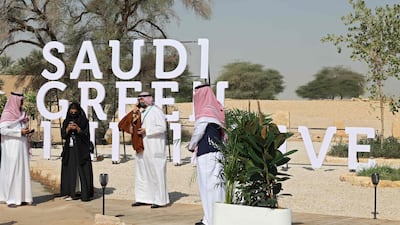
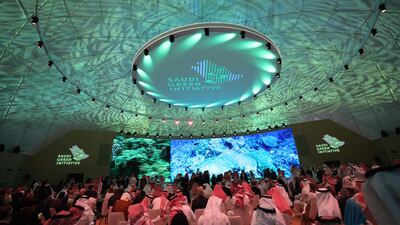
  • Delegates take part in the opening ceremony of the Saudi Green Initiative forum in Riyadh. AFP
    Delegates take part in the opening ceremony of the Saudi Green Initiative forum in Riyadh. AFP
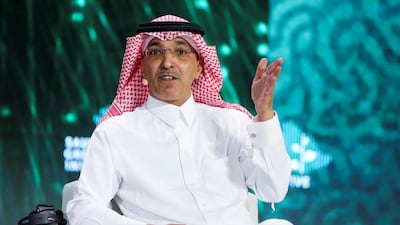
  • Saudi Finance Minister Mohammed Al-Jadaan addresses delegates during one of the sessions at the forum. Reuters
    Saudi Finance Minister Mohammed Al-Jadaan addresses delegates during one of the sessions at the forum. Reuters
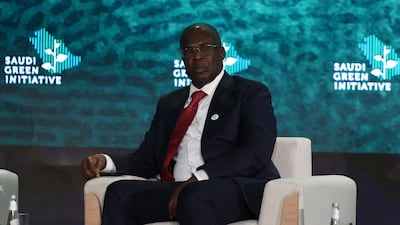
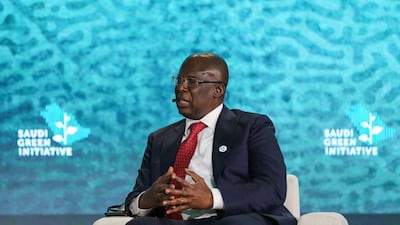
  • Nigeria's Minister of State for Petroleum Resources Timipre Sylva takes part in one of the sessions. AFP
    Nigeria's Minister of State for Petroleum Resources Timipre Sylva takes part in one of the sessions. AFP
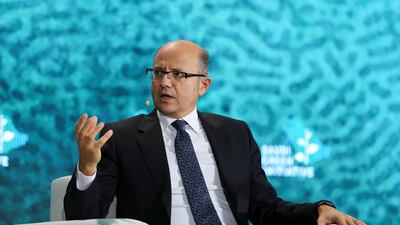
  • Azerbaijan's Minister of Energy Parviz Shahbazov makes a point at the forum. Reuters
    Azerbaijan's Minister of Energy Parviz Shahbazov makes a point at the forum. Reuters
  • Nigeria's Minister of State for Petroleum Resources Timipre Sylva speaks at the forum. Reuters
    Nigeria's Minister of State for Petroleum Resources Timipre Sylva speaks at the forum. Reuters
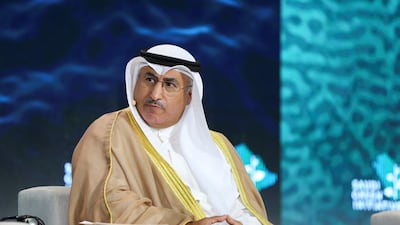
  • Kuwait's Oil Minister Mohammed Al Fares attends the Saudi Green Initiative forum. Reuters
    Kuwait's Oil Minister Mohammed Al Fares attends the Saudi Green Initiative forum. Reuters
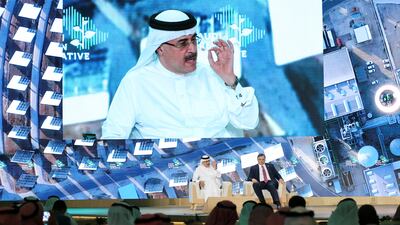
  • Amin Nasser, president and chief executive of Saudi Aramco, speaks during a discussion with TotalEnergies chairman and chief executive Patrick Pouyanne at the forum. Reuters
    Amin Nasser, president and chief executive of Saudi Aramco, speaks during a discussion with TotalEnergies chairman and chief executive Patrick Pouyanne at the forum. Reuters
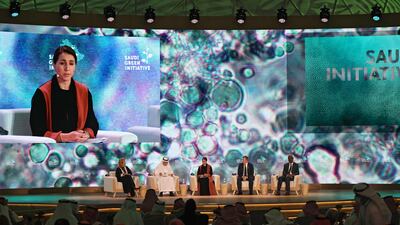
  • The UAE's Minister of Climate Change and Environment, Mariam Al Mheiri, speaks during the opening ceremony of the forum in Riyadh. AFP
    The UAE's Minister of Climate Change and Environment, Mariam Al Mheiri, speaks during the opening ceremony of the forum in Riyadh. AFP
  • Delegates at the opening ceremony of the forum. AFP
    Delegates at the opening ceremony of the forum. AFP
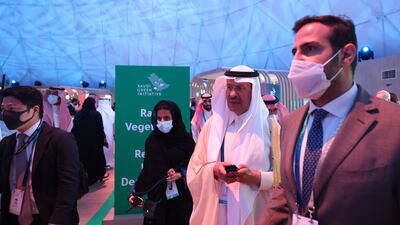
  • Saudi Energy Minister Prince Abdulaziz bin Salman arrives for the opening ceremony. AFP
    Saudi Energy Minister Prince Abdulaziz bin Salman arrives for the opening ceremony. AFP
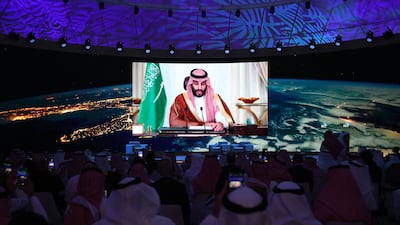
  • Saudi Crown Prince Mohammed bin Salman delivers a speech during the opening ceremony of the forum. AFP
    Saudi Crown Prince Mohammed bin Salman delivers a speech during the opening ceremony of the forum. AFP
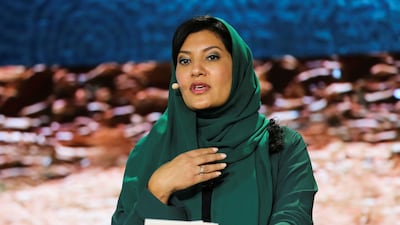
  • Princess Reema bint Bandar, Saudi Arabia's ambassador to the US, addresses delegates at the forum. Reuters
    Princess Reema bint Bandar, Saudi Arabia's ambassador to the US, addresses delegates at the forum. Reuters
Banned items
Dubai Police has also issued a list of banned items at the ground on Sunday. These include:
  • Drones
  • Animals
  • Fireworks/ flares
  • Radios or power banks
  • Laser pointers
  • Glass
  • Selfie sticks/ umbrellas
  • Sharp objects
  • Political flags or banners
  • Bikes, skateboards or scooters
APPLE IPAD MINI (A17 PRO)

Display: 21cm Liquid Retina Display, 2266 x 1488, 326ppi, 500 nits

Chip: Apple A17 Pro, 6-core CPU, 5-core GPU, 16-core Neural Engine

Storage: 128/256/512GB

Main camera: 12MP wide, f/1.8, digital zoom up to 5x, Smart HDR 4

Front camera: 12MP ultra-wide, f/2.4, Smart HDR 4, full-HD @ 25/30/60fps

Biometrics: Touch ID, Face ID

Colours: Blue, purple, space grey, starlight

In the box: iPad mini, USB-C cable, 20W USB-C power adapter

Price: From Dh2,099

If you go

The flights

Emirates flies from Dubai to Seattle from Dh5,555 return, including taxes. Portland is a 260 km drive from Seattle and Emirates offers codeshare flights to Portland with its partner Alaska Airlines.

The car

Hertz (www.hertz.ae) offers compact car rental from about $300 per week, including taxes. Emirates Skywards members can earn points on their car hire through Hertz.

Parks and accommodation

For information on Crater Lake National Park, visit www.nps.gov/crla/index.htm . Because of the altitude, large parts of the park are closed in winter due to snow. While the park’s summer season is May 22-October 31, typically, the full loop of the Rim Drive is only possible from late July until the end of October. Entry costs $25 per car for a day. For accommodation, see www.travelcraterlake.com. For information on Umpqua Hot Springs, see www.fs.usda.gov and https://soakoregon.com/umpqua-hot-springs/. For Bend, see https://www.visitbend.com/.

Updated: March 25, 2022, 12:22 PM