
The digital imprint of a holy month observed against the backdrop of the coronavirus pandemic will leave a positive impact for years to come after UAE groups embraced technology to bring communities closer together.
While mosques have remained closed and large gatherings were banned due to safety measures, Muslims have banded together to take part in Ramadan events in larger numbers than ever before.
Ahmed Hamed, a spokesperson at Al Manar Islamic Centre, a non-profit organisation in Dubai imparting the teachings of Islam, said its shift in focus to online events opened up access to an international audience.
The centre organised virtual lectures attended by around 300,000 people across the globe, whereas around 10,000 people usually attend their annual conference held in Dubai.
The centre has reached out to a further 2.5 million people through social media.
"We were forced to use technology and digital media to take the message far and wide. Socially we came together more than ever before with learning stationed on people's laptops and mobiles," said Mr Hamed.
"We have a lot of avenues open and even after this pandemic, we will continue using this technology as there are huge savings of time and the learning and teaching can be done in a smarter way.
"Even when we can have a live conference in Dubai, we would be keen to hold online lectures, as we can bring in more speakers."
The centre organised a virtual session to answer questions of new Muslims celebrating their first Ramadan alone away from their families, and of non-muslims who wished to know more about Ramadan.
At the Islamic Information Centre in Dubai the entire team had to work remotely in the month of Ramadan while organising classes conducted via Zoom as well as on Whatsapp which were attended by more than 500 students.
The centre hosted a Virtual Ramadan Conference under the theme "Month of Mercy" in five languages using YouTube live and was viewed by an online audience of more than 10,000.
Staff also took advantage of the vast platforms offered by Facebook and Insta Live to hold daily sessions on Ramadan.

"One of the unique things we tried this year was a Ramadan-themed quiz exclusively for non-Muslims in the UAE which saw active participation from people from more than 45 nationalities," said Rashid Al Junaibi, director of the Islamic Information Centre in Dubai.
"The centre has been preparing to work smart using technology long before the pandemic and hasn't been impacted badly due to the current scenario as it was well equipped to handle the situation," said Mr Al Junaibi.
"We plan to launch new e-learning platforms and to invest more on Artificial Intelligence to answer common questions asked by Non Muslims about Islamic culture.
"Technology has definitely played a major role in helping us reach out to people. The other positive aspect we see it enables us to save time and manage our resources more efficiently."
Virtual initiatives were created to help learning but also to enable people to do good, volunteer, and aid in relief efforts across the globe.
The Office of Community Outreach at New York University Abu Dhabi launched a virtual do good guide to provide a wealth of resources for people who wish to make a positive impact in the world, from the safety of their homes.
-
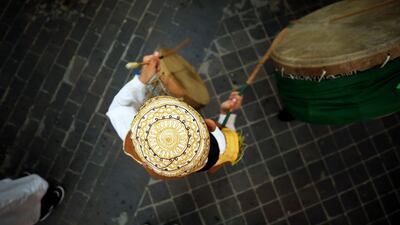
Members of a traditional band beat drums during Ramadan, amid concerns over the spread of coronavirus disease, in Sidon's old city, southern Lebanon. REUTERS -

Palestinian Muslim worshippers, distanced from each other due to the Covid-19 pandemic, pray outside the closed Al Aqsa Mosque compound in the Old City of Jerusalem, as they mark Lailat Al Qadr, one of the holiest nights during Ramadan. AFP -

A man swings around fireworks ahead of Eid Al Fitr celebrations, the religious festival that marks the end of Ramadan, amid the ongoing coronavirus pandemic in Klang, outside Kuala Lumpur, Malaysia. EPA -
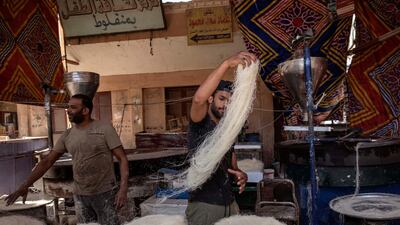
28-year-old football defender Mahrous Mahmoud, right, makes Ramadan sweets, in Manfalut, a town 350 kilometres south of Cairo in the province of Assiut, Egypt. AP Photo -

People purchase new clothes, a custom ahead of Eid Al Fitr a the end of Ramadan, at a shopping centre in Jakarta. AFP -
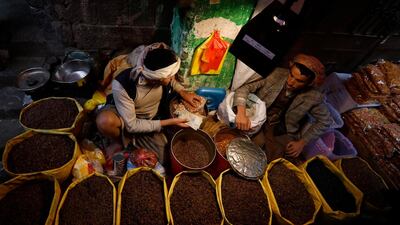
Yemeni vendors sell sun-dried raisins ahead of Eid Al Fitr, which marks the end of Ramadan, amid the ongoing coronavirus pandemic, at a market in Sanaa, Yemen. EPA -
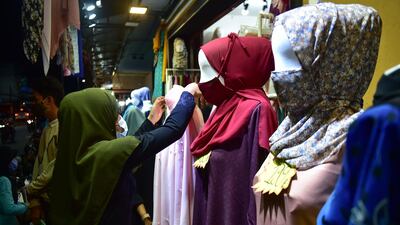
Members of the Muslim community wearing face masks amid concern over the spread of the Covid-19 shop for clothes at a market in the southern Thai province of Narathiwat, ahead of Eid Al Fitr marking the end of Ramadan. AFP -
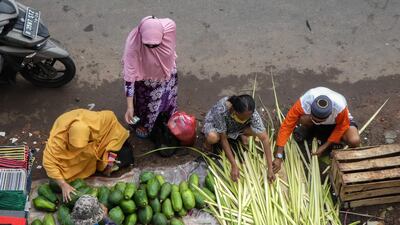
Indonesians purchase coconut leaves, to be weaved into pouches to make rice cakes, a traditional food item served during Eid Al Fitr which marks the end of Ramadan, at a market ahead of the holiday in Jakarta. AFP -

A sweets seller adjusts his products ahead of Eid Al Fitr, in downtown Amman, Jordan. EPA -

The Umayyad Palace is illuminated ahead of the 73rd festivities for the Anniversary of the Independence, in downtown Amman, Jordan. EPA -
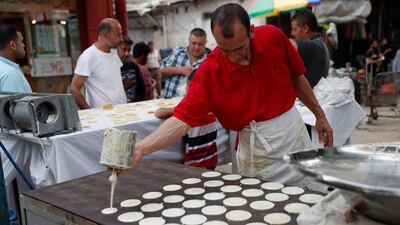
A vendor prepares sweets, qatayef, a pancake-like shell which is filled with nuts or sweet cheese, fried in oil or baked then dipped in sugar syrup, a popular sweet during Ramadan at the main market of Shijaiyah neighbourhood in Gaza City. AP Photo -
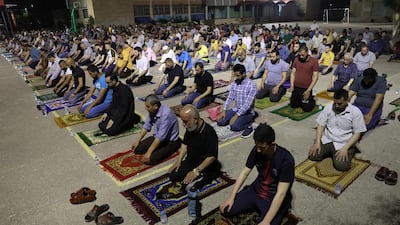
Palestinians pray the Tarawih (extended night prayers) in Jenin school in the West Bank city of Jenin. EPA -

Algerian volunteers, part of the charitable association "Joy of Eid", fill food parcels to be distributed to needy families ahead of the Muslim Eid Al Fitr in the capital Algiers. AFP -
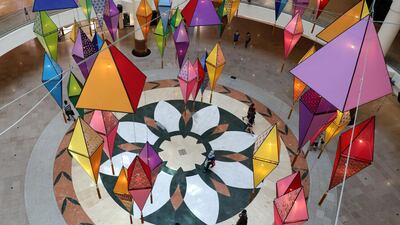
Shoppers walk past Eid Al Fitr decoration in a mall, marking the end of Ramadan, amidst concerns about the spread of the coronavirus disease, in Kuala Lumpur, Malaysia. REUTERS -
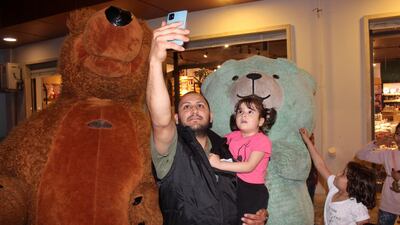
A man takes a selfie with his daughter next to persons wearing bear costumes, in preparation for Eid Al Fitr, marking the end of Ramadan, following the outbreak of the coronavirus disease, in Misrata, Libya. REUTERS -
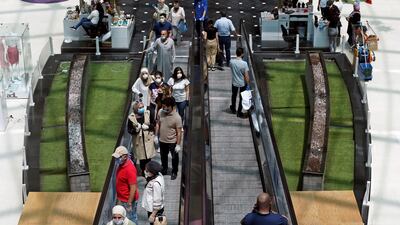
Jordanian people shop in a mall in preparation for Eid Al Fitr, marking the end of Ramadan, amidst concerns about the spread of the coronavirus disease, in Amman, Jordan. REUTERS


The guide featured local and international online volunteering opportunities, as well as information on virtual events, courses, books, and podcasts for social good.
"We chose to launch it at the onset of Ramadan as we found ourselves sheltering at home at a time when we are usually planning our in-person Ramadan Sadaqah initiatives," said Suparna Mathur, director of community outreach at NYUAD.
"The do good guide was a way for us to still offer virtual opportunities related to the values and practice of generosity, kindness and giving that are hallmarks of this holy month."
Over 2,000 individuals have used the guide so far.
“The guide will continue beyond Ramadan featuring content from a diverse range of sources that are intended to provoke reflection and inspire action."
“Our aim is to be relevant to the community and so we hope that next Ramadan we will be able to design or redesign a giving initiative - whether it is continued or new - that meets the needs of active good citizens wanting to create a positive impact.”

