
Pupils across the UAE are preparing for the start of a new school year on August 30 – and the prospect of a return to classrooms for the first time in months.
Most parents do not yet know how often their children will attend classes, if their lessons resume at all.
In Abu Dhabi, parents will be told by the end of this week at the latest which model their children’s school will follow. Some will reopen full-time, while others continue with part-time distance learning. They will, however, return to the classroom for at least some of the time.
In Dubai, full-time distance learning remains an option for schools.
So what is likely to happen?
And how can parents best prepare their children to go back after such a long time away?
The National explains.
What do we know about the return to the classroom in Dubai and Abu Dhabi?
In Dubai, schools have been invited to submit proposals to the Knowledge and Human Development Authority, the emirate’s private school regulator, for approval.
Plans are being drawn up according to schools’ population, campus size and number of teaching staff. Each must comply with safety measures intended to protect people from the virus.
-

The first thermal gate has been installed at the school that can measure the temperature of hundreds of children passing through it quickly. Courtesy: Jumeira Baccalaureate School -
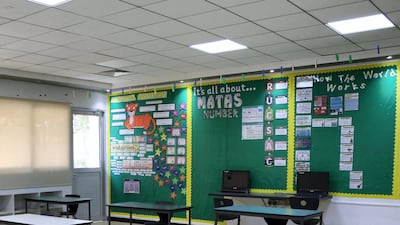
All desks in the classrooms have a distance of two metres. Courtesy: Jumeira Baccalaureate School -
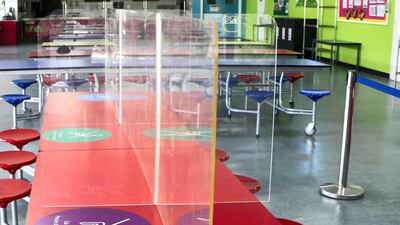
Plastic screens have been installed in the cafetaria to separate pupils. Courtesy: Jumeira Baccalaureate School -
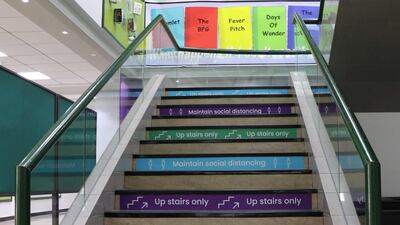
Markings on each step will help pupils remember not to get close to each other. Courtesy: Jumeira Baccalaureate School -
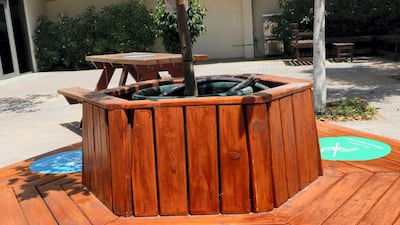
There are marking all around the school to remind pupils to maintain social distancing. Courtesy: Jumeira Baccalaureate School -

Several basketball hoops have been installed for pupils.Courtesy: Jumeira Baccalaureate School -
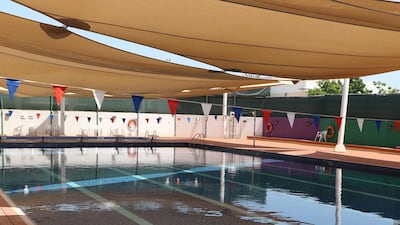
Lane markings will help pupils avoid coming in close contact with each other. Courtesy: Jumeira Baccalaureate School -
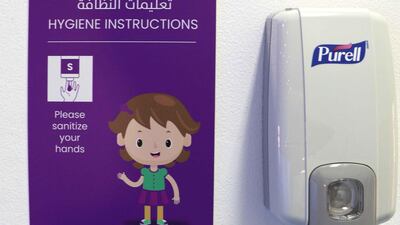
There are hand sanitiser stations at regular intervals so that pupils can clean their hands more often. Courtesy: Jumeira Baccalaureate School -
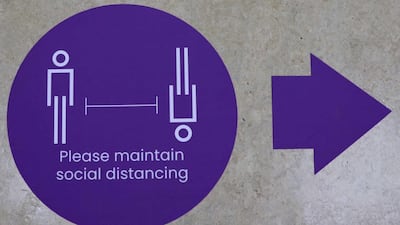
Markings show separate exit and entry points. Courtesy: Jumeira Baccalaureate School -
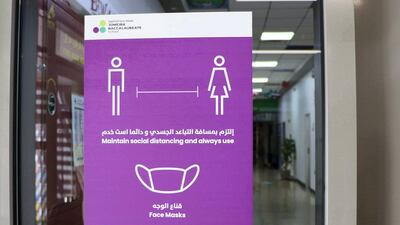
Markings to remind pupils the importance of precautionary measures. Courtesy: Jumeira Baccalaureate School -
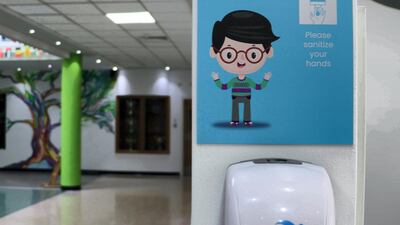
There are hand sanitiser stations at regular intervals so that pupils can clean their hands more often. Courtesy: Jumeira Baccalaureate School -
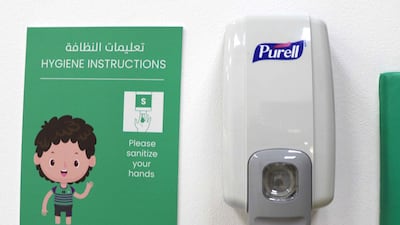
A hand sanitiser station outside a classroom. Courtesy: Jumeira Baccalaureate School -
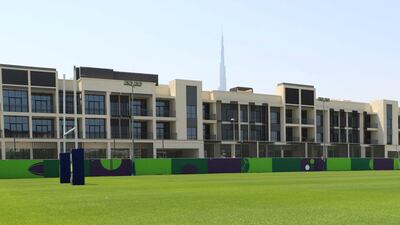
Marking to follow social distancing at the school. Courtesy: Jumeira Baccalaureate School -

Markings to show separate entry and exit points. Courtesy: Jumeira Baccalaureate School -

Floor markings at the school. Courtesy: Jumeira Baccalaureate School


It is thought some schools may choose to hold classes in gymnasiums or garden areas, while others may decide to continue online learning.
In Abu Dhabi, schools have been given the choice, subject to approval, to allow children into school full-time; on alternating days, for half days; alternating weeks; or a combination of the above. Full distance learning will not be an option.
Schools must let parents know, this week, by July 30, which model they will follow.
How can parents prepare their children to return to the classroom?
The first step is actually for parents to prepare themselves for the eventuality, experts say.
“We need to understand it is vital for children to go back to school because it is important for their academic development, and their social, mental and emotional well-being,” said Dr Izza Khan, a consultant paediatrician at NMC Royal Hospital, Dubai Investment Park.
Once parents are sure they are doing the right thing, they can guide and instruct them on how to best take of themselves, their friends and their family to ensure they don’t become ill, she said.
The most important thing is to stress how different school will be for them this year.
That means advising them to expect testing, temperature checks, masks and social distancing, among other changes. In Abu Dhabi, pupils must also be tested for the virus before they start.
Experts have said it is vital they know to anticipate these changes.
“They should say there will be things which are different, and we have to adjust ourselves,” Dr Khan said.

“Most children are very resilient. They have spent most of the time at home, so they do understand and realise the world has changed,” she said.
Teaching them the proper way to wash their hands, which means for at least 20 seconds, and the correct way to cough and sneeze into their elbow or tissue, are also both vital.
Is there anything else parents should consider?
All children over the age of six will have to wear face masks at school, so it is vital they know this.
“They can go to the supermarket and choose a mask that they like. Children like to make that choice,” Dr Khan said. “And they have gone beyond our expectations, actually. Most of the children I see outside are wearing masks. Yes we have to fix them every now and then, but they are doing well.”
Ensuring their children get enough sleep before they return is also vital. Some children may have become accustomed to later bedtimes, and they will have to once again become used to the early starts.
“We need to ensure that they go to sleep on time,” Dr Khan said.
“When children sleep on time and have a routine, this makes their immune system much stronger. And they are able to fight off infections. So we need to ensure they sleep on time, they wake up early, they have a healthy breakfast before they go to school.”
Before they send their children to school each morning, parents should test their children’s temperatures, because those with fevers will be turned away at the gate and referred for testing.
“If a child has a fever or a mild cold or cough, it is not advisable to send them to school,” Dr Khan said.
“Some parents before Covid-19 would send their kid with a mild fever or give them some paracetamol and send them to school and say ‘let’s see what happens’. That’s not advisable at all.”
How can parents help children who feel anxious about their return to school?
“Children are facing anxiety in two ways,” said Dr Khan.
“The first is that they will be going back and potentially exposing themselves to this virus. Then they are also worried they might not be able to keep up with the schoolwork or coursework, because for all these months they were studying at home.”
In a document prepared for parents, Abu Dhabi Department of Education and Knowledge said children should be told it is natural for them to feel anxious or nervous about their return to school.
“Have an open conversation about their anxieties and fears about returning to school and reassure them about safety measures and precautions the schools will have in place to keep everyone healthy,” Adek said.
“Explain to your children that they will play an important role in keeping themselves and their community healthy by wearing a mask, maintaining social distancing and sanitising hands.”
Parents should also highlight the positives, such as being able to see their friends again and learn new things.
“We can assure them that in a few countries around the world, their schools have opened,” Dr Khan said. “The pupils who have been going there for the last month or two, they have been doing well. We are not seeing Covid-19 that much in children, and even if they do contract the virus, it tends to be very mild, with mild symptoms.”

