


Leading Chinese universities are named among the world's best in a new higher education league table.
Tsinghua University and Peking University, both in Beijing, improved their positions in the latest Times Higher Education rankings, which assessed performances in key course subjects.
Tsinghua University took fifth place for clinical and health subjects, above prestigious US institutions Stanford and Yale.
In business and economics, it moved up from 11th last year to eighth, edging out Yale and London School of Economics.
Peking University was seventh ― up from eighth last year ― for teaching education.
The University of Oxford retained the number one spot for clinical and health subjects as well as computer science, according to the World University Rankings 2023 by Subject released on Tuesday by Times Higher Education.
Harvard University was ranked the world’s best for engineering studies and life sciences, while Stanford University is the top higher education institution for arts and humanities in 2023.
Elsewhere, Massachusetts Institute of Technology was top for business and economics, with Stanford University second and the University of Oxford third.
Chinese university 'tougher to get into than Harvard'
Senthil Nathan, managing director and co-founder of Edu Alliance, a higher education consultancy based in the UAE and the United States, said Chinese universities had a growing student international population, particularly from South Asia and Africa.
Dr Nathan said the reason for their popularity was affordable fees as well as strong academic standards, particularly in medical and Stem-related areas.
Getting into highly-ranked Chinese universities is extremely difficult with some accepting less than 1 per cent of their applicants.
-
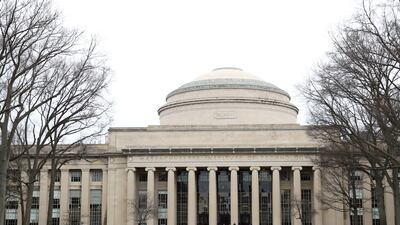
1 — Massachusetts Institute of Technology, US. AFP -
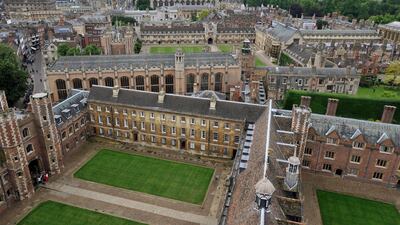
2 — University of Cambridge, UK. PA -

3 — Stanford University, US. Reuters -

4 — University of Oxford, UK. Getty Images -
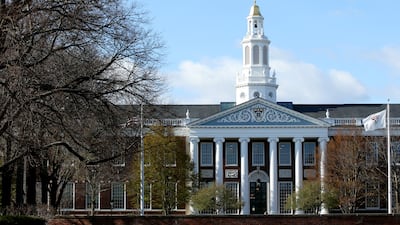
5 — Harvard University, US. AFP -
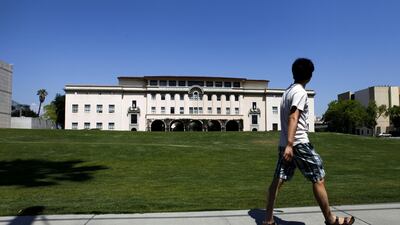
6 — California Institute of Technology, US. Bloomberg -

7 — Imperial College London, UK. Reuters -

8 — University College London, UK. Bloomberg -

9 — ETH Zurich, Switzerland. Reuters -

10 — University of Chicago, US. Reuters -
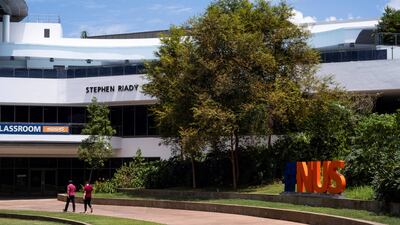
11 — National University of Singapore, Singapore. AFP -

12 — Peking University, China. Imaginechina via Reuters -
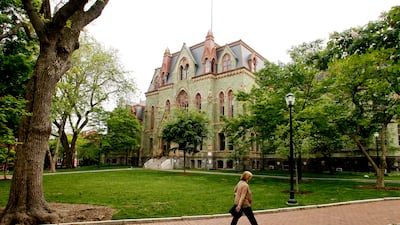
13 — University of Pennsylvania, US. EPA -
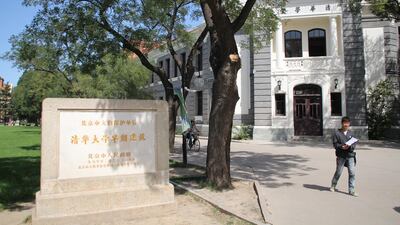
14 — Tsinghua University, China. Getty Images -

15 — University of Edinburgh, UK. PA via Reuters -

16 — Swiss Federal Institute of Technology Lausanne, Switzerland. AFP -

16 — Princeton University, US. Reuters -

18 — Yale University, US. Reuters -

Nanyang Technological University, Singapore. Reuters -

20 — Cornell University, US. Getty Images


"China is bigger than India in higher education and Chinese students are excellent. Getting into the University of Beijing, for example, is extremely difficult and tougher than getting into Harvard University,” Dr Nathan said.
"The top two universities in China, Tsinghua University and Peking University, accept 0.03 to 0.05 per cent of applicants.
"The other four top universities Zhejiang University, Fudan University, University of Science and Technology of China, and Shanghai Jiao Tong University ― are also very hard to get in to. Only 0.2 per cent of Gaokao entrance exam takers get admission in these universities.”
Harvard University has a 5 per cent acceptance rate.
"Even for international students, the acceptance rate in these top universities is in the range of 10 per cent to 20 per cent. The C9 group of universities in China are of similar prestige and class to Ivy League schools in the USA and the Russell group universities in the UK,” he said.
He said the Covid-19 pandemic had a significant effect on students, however, who had to go back to their home countries because of border restrictions during the pandemic.
He said many students in science, engineering and medicine struggled because they did not get hands-on or lab experience.
"This has created a big setback and I think many students will hesitate to go now.”
The most popular majors for international students going to China are medicine, international economics, computer science, business administration, civil / mechanical / communication engineering, architecture, and Chinese language.
US and UK universities take majority of top spots
Massachusetts Institute of Technology in the US improved its position for social sciences from second last year to first this year while the University of Oxford lost its top spot and dropped to third place.
Universities in the UK and Saudi Arabia strengthened their positions this year while several top US universities dropped down the table in the new rankings.
-
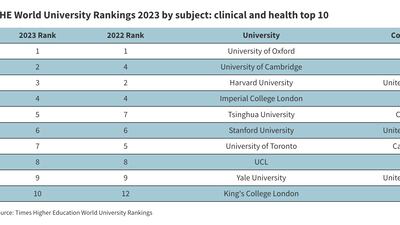
The top ten institutions for clinical and health studies. All photos: Times Higher Education -

The top ten institutions for business and economics studies. -
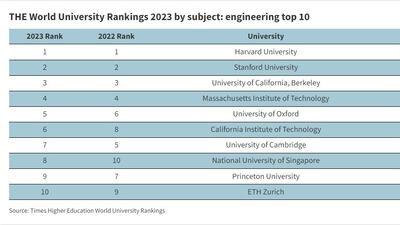
The United States is home to the top four universities for engineering, according to a global education league table. -
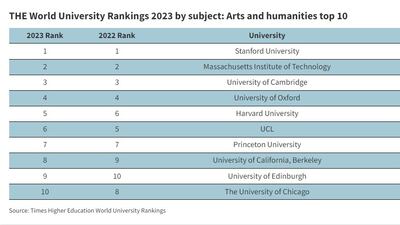
Stanford University leads the way for arts and humanities. -
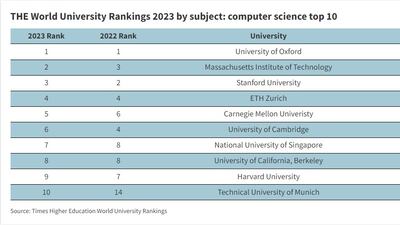
The top ten universities for studying computer science.


The majority of universities in the top 10 for different subjects were from the United States and the United Kingdom, although there were a few entrants from China.
Stanford University, University of Cambridge, and Princeton University are the top three in the world for studying psychology.
For law, Stanford University, New York University, and University of Cambridge hold the top three spots in the world.
For computer sciences, University of Oxford, Massachusetts Institute of Technology, and Stanford University are the three best higher education institutions in the world. Technical University of Munich holds 10th spot globally.
The Times Higher Education World University Rankings 2023 by subject uses data from the overall Times Higher Education World University Rankings published this month, which showed the UK’s University of Oxford retaining its top spot for the seventh consecutive year.
In the current league table, 1,799 universities from 104 countries and regions are included.
The rankings provide an overview of a university’s quality, drawing on an analysis of 15.5 million research publications and 121 million citations to those publications, plus more than 40,000 responses to an annual academic reputation survey and hundreds of thousands of additional data points covering a university’s teaching environment, international outlook and industry links.

