


Online learning looks set to be a crucial tool for universities long after the Covid-19 pandemic has been overcome as students continue to thrive in a new digital age of education.
Institutions across the world switched to remote learning in the early stages of the outbreak as safety measures brought face-to-face lessons to a halt.
As vaccination rates rise and confidence slowly returns, in-person teaching is becoming common once more.
In May, tens of thousands of university students in the UAE took on-site exams with strict Covid-19 regulations in place.
But lessons have been learnt regarding the benefits of digital teaching to university life.
Rewards of remote learning

According to a growing body of research carried out in the Emirates, the outcomes for students may be better as a result.
Heriot-Watt University Dubai, for example, “will continue to offer blended learning,” according to Prof Ammar Kaka, the provost and vice principal.
He said the campus had always planned to bring in more digital teaching and insisted there were benefits for the students.
“One of the biggest advantages of digital learning materials is the opportunity for asynchronous learning — a student can learn independently, at a time convenient to them,” he said.
“With additional support provided by the instructor and peers, participants can design their learning schedule, to a certain extent, around their own work and play.”
As reported in The National in April, research at Al Ain University found that grade-point averages for students improved after classes went online as a result of the coronavirus.
'Clear improvement' by students
During a term in the 2019-2020 academic year when classes were face-to-face, 38 per cent of students secured a grade-point average between 3.0 and 4.0, but this rose to 49 per cent in a later term when distance learning was used. The paper did raise concerns that cheating may be easier with online learning, however.
A subsequent study at UAE University, published the International Research Journal of Engineering and Technology, has found similar improvements in performance.
Carried out by Dr Addy Wahyudie, an associate professor in electrical engineering, the research compared the results of students taking a control systems course in the autumn term of 2019 with those who took the same course the following academic year.
Dr Wahyudie wrote in the paper that there was a “clear improvement” in the performance of students when classes moved online, with the proportion earning an A grade increasing from 33 per cent in Autumn 2019 to 40 per cent in Autumn 2020. There was also an increase in the numbers obtaining B and C grades.
Meanwhile, the proportion of students who failed the course fell from 7 per cent to zero. Several reasons could account for the improvements, such as students having better opportunities to go over the material they have been taught.
“The recording feature in teaching mode was really helpful, the student can easily revise their knowledge by referring to the recording,” said Dr Wahyudie.
“From comparing the results of the two teaching modes, the online learning has resulted a more satisfying result compared to the face-to-face learning mode.”
Hybrid model proves successful
He concluded in the paper that when face-to-face teaching was brought back, “certain aspects” of online teaching should remain, including recorded lectures.
“It is expected that the combined features of these teaching modes will give maximum attainment of course learning outcomes,” he said.
At Heriot-Watt University Dubai, the approach taken during the pandemic is described as “responsive blended learning,” with most programmes offering “some on-campus learning opportunities throughout the year”.
A “virtual learning environment” is used, Prof Kaka said, to deliver live and pre-recorded videos and to set assignments and other activities.
“The pandemic has accelerated new learning and teaching opportunities, and, for example, our students have been able to attend virtual classes alongside their colleagues at our other campuses, which really enables a global learning experience,” he added.

At Murdoch University Dubai there was also a transition to online learning when the pandemic began, and the university plans to adopt a mixed approach in future.
“We hope to switch back to face-to-face teaching and learning, incorporating hybrid learning, to support the transition phase in the next academic trimester,” said Faiza Qureshi, programme co-ordinator for the Master of Education and foundation year at the university.
She said the transition to online teaching “was not difficult” for lecturers because the university had “always championed” the use of technology in the classroom.
A key challenge when the students are being taught online is to keep them “challenged, engaged and supported,” which the institution said it did by using discussion boards, interactive media and learning apps.
“One main area which is often overlooked is assessments, to encourage high order thinking skills and deep learning. The format of assessments must be adapted in an online environment,” said Ms Qureshi.
Five in-demand degrees after Covid-19:
-

'The National' takes a look at five university degrees that will be the most in-demand in a post-Covid-19 world. A UAE-based education consultation firm, Hale Education, and Heriot-Watt University in Dubai helped compile the list. Getty Images -
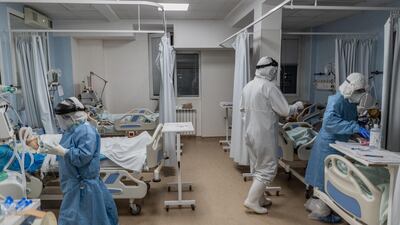
A university degree in public health will be popular in the labour market, according to Peter Davos, founder of Hale Education. Professionals in this field can either focus on hard sciences and attend medical school, or work in epidemiology, statistics, policy and social sciences. With Covid-19 exposing the strongest and weakest healthcare systems, jobs in this field will likely grow. Getty Images -

Data science is already very popular. It is an interdisciplinary field that is a mix of computer science, mathematics and problem solving. Stephen Gill, head for the school of mathematical and computer sciences at Heriot-Watt University, said that skill requirements naturally change when there is an increased usage of technology. Courtesy: Heriot-Watt -

Jobs in cyber security are growing rapidly across the world, as the world continues to adapt to digital ways and cyber-attacks increase. The cyber security market will be worth $363.05 billion in 2025, according to research consultancy group Mordor Intelligence. Stock photo -
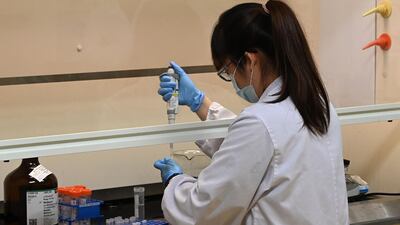
Biotechnology involves technology based on biology. With the advancement of technology, biotech is being used in multiple fields and sectors, including genetics, biochemistry, molecular biology, medicine and therapies, agriculture (modified plants and biofuels) and industrial biotech. It can also play an important role in the development of vaccines. AFP -
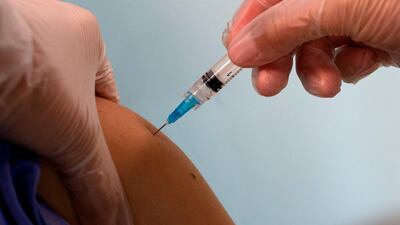
Immunology is the study of the immune system. While immunologists work to manage and treat conditions like asthma, allergies and immunodeficiency, they also use their clinical work experience to research and test new treatments. It could not be more relevant as the world grapples with Covid-19. AFP



