



With Ramadan upon us, a family in the UAE has shared their journey through the generations to reveal how the holy month has evolved yet remained a cornerstone of faith, family, and tradition.
This three-generation narrative not only expresses the essence of Ramadan but also the cultural shifts and enduring values that have traversed time.
Nahla Abu Dheis, 74, said the warmth of home-cooked meals and lack of modern appliances defined the preparation for iftar.
“Back in my day, there were no microwaves or blenders. Every dish, every sweet prepared for Ramadan was a labour of love, a testament to a woman's dedication to her family,” Ms Abu Dheis told The National.
She spoke of how Ramadan was a time of togetherness, and of shared efforts in the kitchen leading to the unforgettable aroma of Eid cookies filling the neighbourhood, a tradition she dearly misses in today's fast-paced world.
Originally from Palestine and a grandmother to 14 children, she also reflected on the simplicity of Ramadan in her youth.
“We didn't have the luxury of restaurants or festive decorations to mark the holy month. Our homes were simple, our tables were modest, but our hearts were full of joy and gratitude,” Ms Abu Dheis said.
She spoke about the change in Ramadan's portrayal on television, contrasting it sharply with the programming of her youth.
“Ramadan TV shows used to be special, carrying messages of virtue, patience, and the essence of Islam,” Ms Abu Dheis added.
“Now, it saddens me to see how commercialised and distant from the holy month's true meaning some shows have become.”
Her husband, Saeed Nouri Al Tareefi, 76, brings to life a different aspect of Ramadan, focusing on the communal and spiritual facets.
He moved to Abu Dhabi in 1969, after his family was displaced from Palestine. The couple met here in the UAE, with their children and grandchildren all being born here.
'Prepared our food, homes and souls for Ramadan'
“The sound of the cannon at sunset, the drum of the Mesaharati, these were the sounds of joy and of unity,” Mr Al Tareefi said.
“It saddens me deeply that such traditions are fading.”
For him, these memories are bittersweet reminders of a bygone era when the anticipation of Ramadan was comparable to waiting for a cherished guest and when families stored essentials weeks in advance, reflecting the depth of their preparation for the holy month.
“Weeks before Ramadan, families would get busy planning and storing all sorts of essentials,” he said.
"We didn't just store food; we prepared our souls and homes for a month of giving, praying, and being together.
“Back then, it was a time for deeper faith, stronger family ties, and for visiting relatives, a practice that nurtured our bonds and our spirits.
“It troubles me that the essence of fasting, the discipline, the compassion, and the community spirit are aspects that seem weaker now.”
Their 49-year-old daughter, Dalia, bridges the gap between tradition and modernity.
Growing up in the UAE, she witnessed the evolution of Ramadan celebrations and the emergence of suhoor tents but chose to adhere to the core values instilled by her parents.
“Ramadan was, and should remain, a time dedicated to Allah and to family,” she said.
“Suhoor tents and breaking fast in restaurants may appeal to some but, for me, the essence of Ramadan lies in simplicity and devotion.”
She believes these customs indicate a commercialisation of the holy month, representing a deviation from its true spirit.
Judy Afanna, her 20-year-old daughter, represents the younger generation's approach to Ramadan, one that balances tradition with contemporary customs.
“Ramadan decorations, suhoor tents, and special clothes add a different dimension to our celebrations," Ms Afanna said.
“[But] the essence of Ramadan, as taught by our grandparents and mother, remains intact in my heart.”
Reflecting on the differences between her generation and her mother’s and grandmother's in terms of iftar preparation, she said: "My grandmother's generation had to prepare meals from scratch, investing hours of work in the kitchen.
“I know how to cook, my grandmother taught me, but I don’t unless I have to.”
Her 23-year-old brother, Fahd, highlighted the importance of family gatherings, prayer, fasting, and charity.
“My grandparents instilled in us the values of Ramadan from a young age,” he said.
“While the ways we celebrate the month may have evolved, the core principles remain unchanged.”
This multi-generational narrative of Ramadan in the UAE weaves a tapestry of change and continuity.
Preparations around the world ahead of Ramadan 2024 – in pictures
-
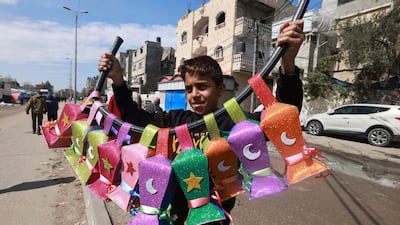
A displaced Palestinian child sells handmade Ramadan lanterns in Rafah. AFP -
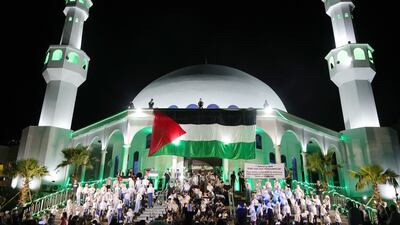
Muslims gather to celebrate the beginning of Ramadan at the Omar Ibn Al-Khatab Mosque, in Foz do Iguacu, Brazil. EPA -
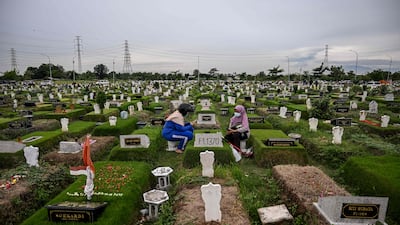
People visit the graves of family members in Surabaya, during a tradition before the start of Ramadan. AFP -
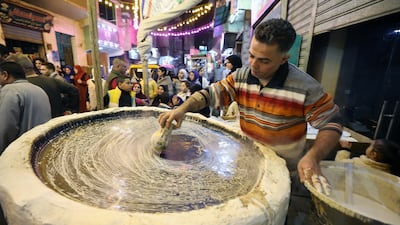
An Egyptian baker prepares Knafeh ahead of Ramadan in Giza, Egypt. EPA -
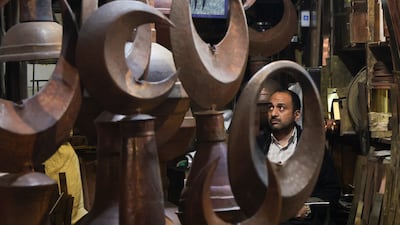
A vendor of copper Islamic figures at his shop at El Moez Street in Cairo, Egypt. Reuters -
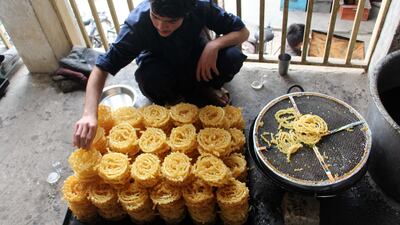
Traditional sweets are prepared ahead of Ramadan, in Kandahar, Afghanistan. EPA -
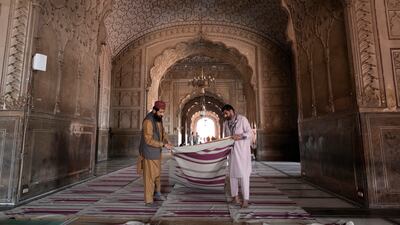
Workers clean the carpet in the Badshahi Mosque in preparation for Ramadan, Lahore, Pakistan. AP -
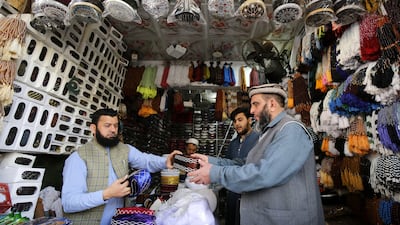
People buy prayer caps in Peshawar, Pakistan. EPA -
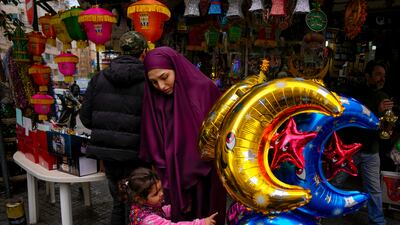
People shop for decorations at a shop in Beirut, Lebanon. AP -
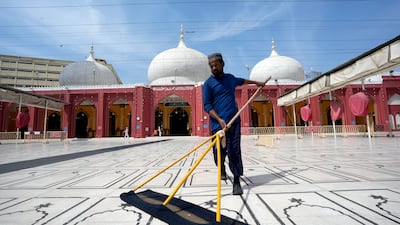
A Pakistani man cleans a mosque in Karachi, Pakistan. AP -
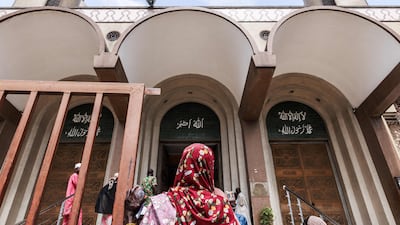
A woman stands in front of the Lagos Central Mosque in Lagos. AFP -
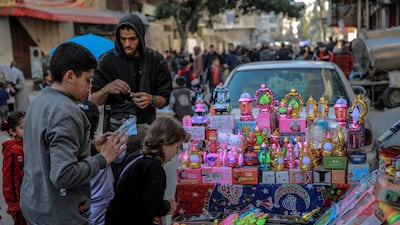
Palestinian children look at toys in Gaza city, amid the ongoing conflict between Israel and Hamas militants, as Ramadan nears. AFP -

A view of the Ramadan lights installation at Piccadilly Circus in London. AP -
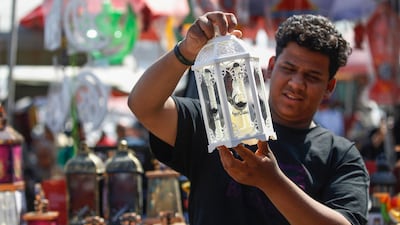
An Iraqi man sells traditional lanterns at the Shorja market in central Baghdad. AFP -
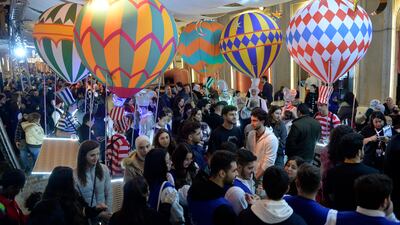
People attend the opening of the Ramadan Market in Beirut, Lebanon. EPA -
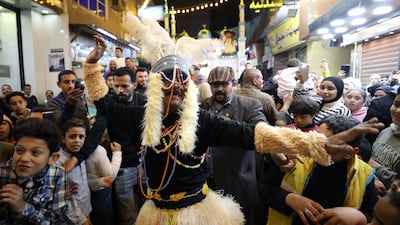
People celebrate along a street ahead of the holy month of Ramadan in Giza, Egypt. EPA



