


An NYU Abu Dhabi professor who was conducting medical research in Morocco says he is glad to know many of the "kind people" who joined his study survived the earthquake that claimed about 3,000 lives.
A 6.8-magnitude quake struck the High Atlas Mountains, 70km from Marrakesh, on September 8.
The disaster has displaced 300,000 people, the UN reported.
Moroccan Youssef Idaghdour, associate professor of biology, and five students were conducting research in High Atlas villages for a project called the African Ancestry Immune Cell Atlas.
associate professor of biology at NYUAD
The team set out to study how genetics and the environment affect gene expression and immune response in people of African ancestry.
Some of the mountain villages he visited were the most severely affected by the earthquake.
Prof Idaghdour told The National it was hard to believe many of the people he had met might not have survived the earthquake.
"I have been to these villages three times this year alone," said Prof Idaghdour, whose ancestors come from the Atlas village of Ighrem.
"My last trip was in July, and we spent two months visiting a total of 20 villages, including Tafingoult, Tinmel and Ijoukak in the province of Taroudant, which was hit hard.
"We met so many kind people. The communities are very welcoming. Although they lead a simple life, they are extremely generous to outsiders."
Believed to be indigenous people, they call themselves Amazigh, meaning "free people", and they live a nomadic life resembling that of their ancestors.

The villages, deep in the Atlas Mountains, are some of the most difficult to reach in North Africa.
The people rely on cattle and agriculture as their main source of income, and some live in clay houses without electricity or running water.
"Nowadays, many villages have electricity and mobile connectivity," said Prof Idaghdour.
Although hundreds are feared dead in the villages, Prof Idaghdour said most of the research participants have survived.
"When we heard about the earthquake, the first thing we did was to check if our participants were safe. Our work comes second to ensuring the communities are safe," he said.
He also said the biological samples they collected survived the quake.
"My local collaborator in Agadir rushed to the lab, where we stored the biological samples in the middle of the night to check if the freezers were OK. Thank God. Everything was fine."
Immune cells research in Atlas Mountains
The research team was studying people between the ages of 18 and 60 in Morocco's cities and villages to better understand the relative effect of urban and rural life on immune systems.
Prof Idaghdour was among the international researchers and collaborators to receive funding from the Chan Zuckerberg Initiative to create a globally inclusive immune cell atlas in rural and urban populations of African ancestry.
The $2.7 million project focuses on studying variations in immune cells in populations and the relationship between environmental, genetic and immunological factors.
The team had plans to return next month, but Prof Idaghdour said the situation has now to be reassessed.
"Right now, community outreach and support to rebuild their lives are the top priorities," he said.
Morocco earthquake latest – in pictures
-
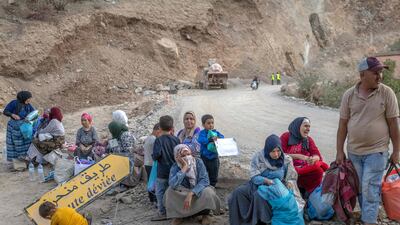
People displaced by the earthquake sit with their belongings by the side of the road between Marrakesh and Taroudant in the Atlas mountains. AFP -
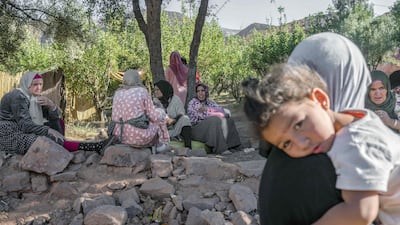
A makeshift camp is set up in the open. AFP -
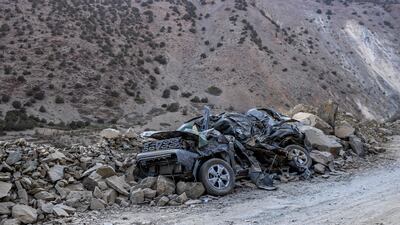
A car is crushed by rubble in the aftermath of the earthquake. AFP -
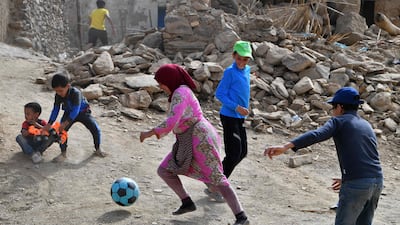
Children play football beside the rubble of collapsed homes in the village of Afella Igir in the Amizmiz region of Morocco. AFP -
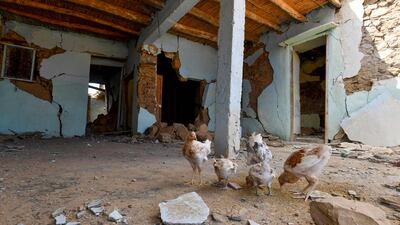
Chickens peck for food at an abandoned home in Afella Igir. AFP -

Not much sign of life in Afella Igir. AFP -

The Moroccan Army on hand in the village of Talat N'Yaaqoub, south of Marrakesh, as the search for victims goes on. EPA -
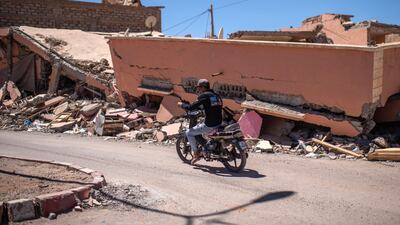
Ruins in the earthquake-hit village of Talat N'Yaaqoub. EPA -
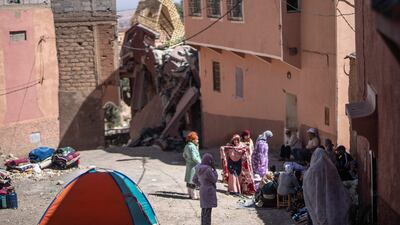
Tents have become homes for people in Moulay Brahim village, whose lives have been turned upside-down by the earthquake. AP -
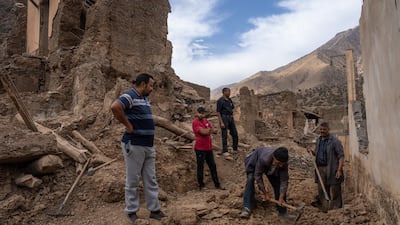
Men clear the rubble of houses that collapsed in Imgdal. Getty Images -
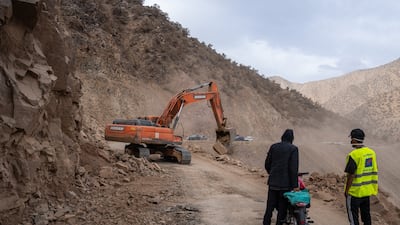
A digger clears a mountain road in Talat N'Yaaqoub. Getty Images -

A badly damaged building leans over in Talat N'Yaaqoub. Getty Images -
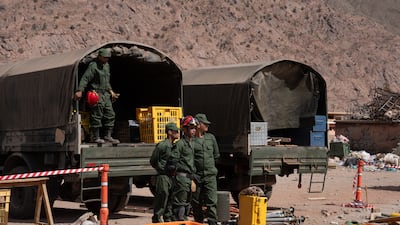
Lorries carrying aid and equipment to be used by rescuers in Talat N'Yaaqoub. Getty Images -
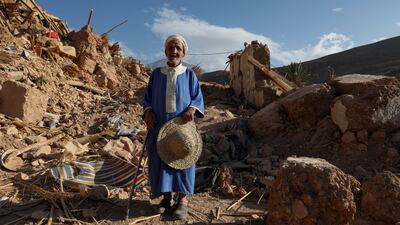
An elderly man is surrounded by rubble in Tikht village, Morocco, days after the quake struck. Reuters -
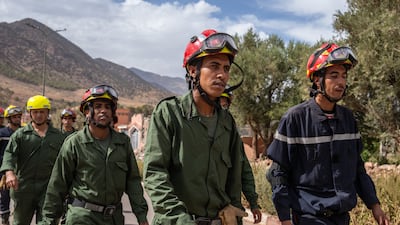
Rescue workers in Talat N'Yaaqoub prepare to search for survivors. Getty Images -
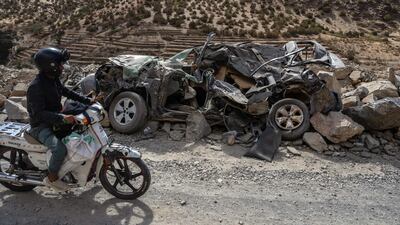
Another crushed car on a mountain road in Talat N'Yaaqoub. Getty Images -
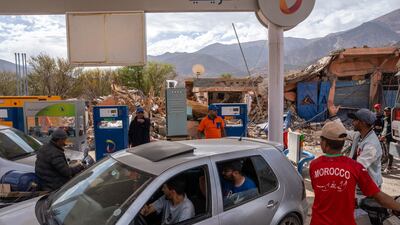
Motorists queue for fuel at one of the few filling stations still open in Talat N'Yaaqoub. Getty Images -
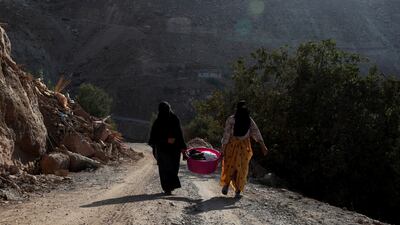
Carrying belongings outside the village of Tikht. Reuters -
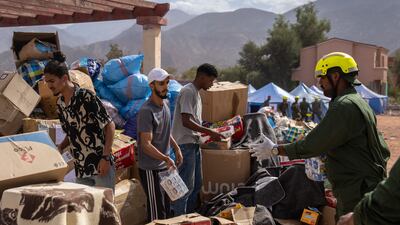
Aid workers distribute relief supplies in Talat N'Yaaqoub. Getty Images -
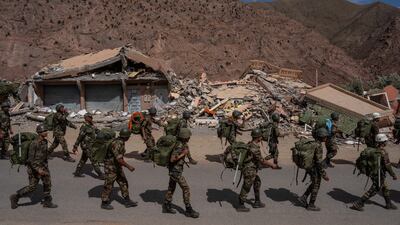
Moroccan troops prepare to embark on relief missions in the mountains near Talat N'Yaaqoub. Getty Images -
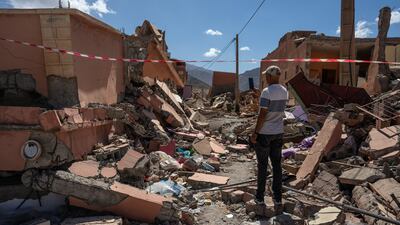
A man films the ruins of collapsed buildings in Talat N'Yaaqoub. Getty Images



