

Latest: Abrahamic Family House to open on March 1
President Sheikh Mohamed said the UAE remains committed to promoting “mutual respect, understanding and diversity”, as Abu Dhabi prepares to open its multi-faith place of worship.
The Abrahamic Family House on Saadiyat Island features a mosque, church and synagogue.
The structure, which also includes a cultural centre, will welcome visitors to worship, learn and engage in dialogue. It will open on March 1.
“The UAE has a proud history of people from diverse communities working together to create new possibilities,” wrote Sheikh Mohamed on Twitter.
“As the Abrahamic Family House in Abu Dhabi is inaugurated, we remain committed to harnessing the power of mutual respect, understanding and diversity to achieve shared progress.”
The names of the three houses of worship are Imam Al Tayeb Mosque, St Francis Church and Moses ben Maimon Synagogue.
The Abrahamic Family House's design, by Ghanaian-British architect Sir David Adjaye, captures the values shared between Judaism, Christianity and Islam.
The complex “recounts the history and builds bridges between human civilisations and heavenly messages”, Abu Dhabi's government said previously.
It is set to be a physical manifestation of the Document on Human Fraternity signed by Pope Francis and Dr Ahmed Al Tayeb, the Grand Imam of Al Azhar, during the pontiff's landmark visit to the UAE in 2019.
The project was first announced on February 5, 2019, by Sheikh Mohamed, who was Crown Prince of Abu Dhabi at the time.
-
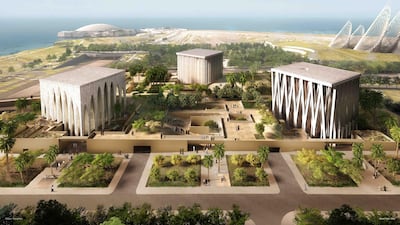
An artist's illustration of the Abrahamic Family House set to be built on Saadiyat Island in Abu Dhabi. Courtesy Adjaye Associates -
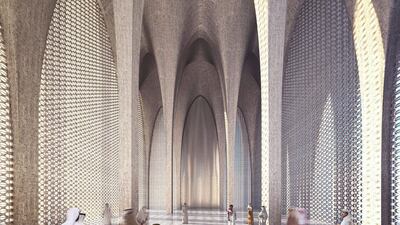
The interior of the mosque. Abrahamic Family House will bring together Islam, Christianity and Judaism through three main buildings – a mosque, a church and a synagogue. Courtesy Adjaye Associates -

The synagogue. Courtesy Adjaye Associates -
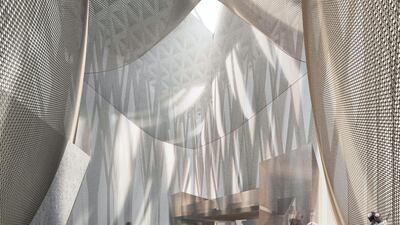
The interior of the synagogue. While the three places of worship are of the same height, the designs and interiors will differ significantly. Courtesy Adjaye Associates -
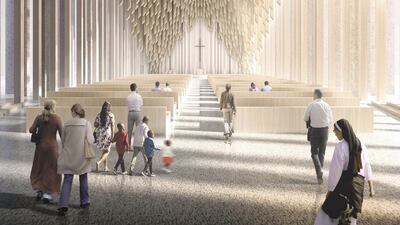
The interior of the church. Courtesy Adjaye Associates -
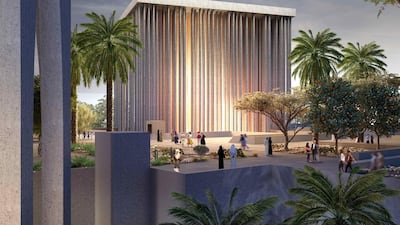
The exterior of the church. “When I looked at the history of the architecture that has represented these three different faiths, I realised architecture has also been complicit in a description of the differences of these faiths,” Mr Adjaye said. Courtesy Adjaye Associates -
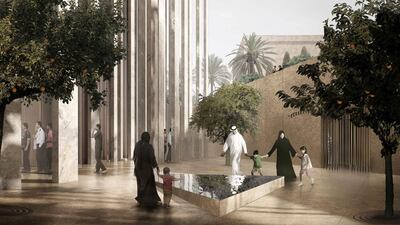
The courtyard of the church. Courtesy Adjaye Associates -

Each separate building will connect through a central garden that will house a museum and centre for education. Courtesy Adjaye Associates -
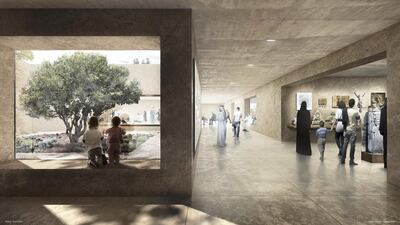
The visitor Centre of Abrahamic Family House. Courtesy Adjaye Associates -
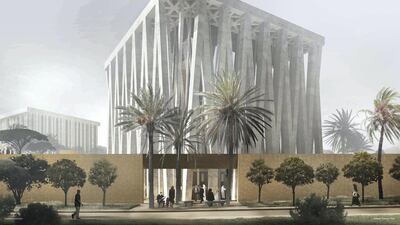
A view of the podium. Courtesy Adjaye Associates


Its construction in the capital of the UAE — a country home to dozens of nationalities that practise a number of faiths — was particularly special, said officials.
The Abrahamic House is in line with the country's efforts to provide a welcoming home to people of all cultures and faiths.
Abu Dhabi’s historic Hindu temple is due to open in February 2024.

