


At the Cop27 climate change summit, one visitor to Sharm El Sheikh had a much more ambitious target on his mind than net zero.
Peter Fiekowsky does not just want to see a reduction in carbon emissions, but is keen for large-scale efforts to be made to remove greenhouse gases from the atmosphere.
The author and campaigner, who says current emissions targets are suicidal, in 2018 set up the Foundation for Climate Restoration, which advocates a multi-pronged strategy to bring carbon dioxide and methane levels down significantly by the middle of this century.
author and climate campaigner
"If we follow the UN target, the CO2 level will be 55 per cent higher than humans have ever survived, and the warming will be very high," said Mr Fiekowsky, a Massachusetts Institute of Technology-educated resident of Silicon Valley who visited Sharm El Sheikh to spread awareness about his approach.
"There’s very little chance, almost no chance, that humanity as we know it will survive that condition. It’s that simple."
Before the Industrial Revolution, the CO2 concentration in the atmosphere was about 280 parts per million (ppm). With about 1.5 trillion tonnes of CO2 having been released by human activity, the US government’s National Oceanic and Atmospheric Administration measured the concentration this year to be about 421ppm, up about 1.8ppm on 2021.
Multi-pronged strategy
Mr Fiekowsky said that several measures could, together, bring down the figure to below 300ppm by 2050. By the end of the century, it could be about 260 or 270ppm, which he said could help to reverse ecological damage caused by climate change. An additional technique could reduce methane in the atmosphere.
One method is ocean iron fertilisation, which involves adding "extremely small quantities" of iron to the seas from ships. This promotes the growth of photosynthetic organisms that capture carbon.
"You do it in the right place, at the right time and at the right concentration, then you can get very rapid photosynthesis and sequestration," he said
Related to this, with seaweed permaculture, nutrient-rich water is pumped into the oceans at a low level. Kelp could be grown in these areas, about half of which could be harvested ― producing revenue to finance the operation ― while the rest sinks, taking its carbon with it for the long term.
A third approach is pioneered by a Californian company, Blue Planet Systems, which uses waste concrete and CO2, which could be from iron and steel plants or other industrial facilities, to produce synthetic limestone, which is suitable for construction.
Finally, methane oxidation employs iron chloride evaporated into ship exhausts to produce tiny aerosols in the atmosphere. Sunlight releases chlorine, which oxidises methane, converting this potent greenhouse gas into water and carbon dioxide.
This year, Fiekowsky and Carole Douglis detailed these approaches in a book, Climate Restoration: The Only Future That Will Sustain The Human Race.
Also this year, Mr Fiekowsky helped to create the Climate Restoration Safety and Governance Board, which reviews and approves projects "capable of making a significant impact towards restoring global CO2 and methane levels".
Mr Fiekowsky hopes that efforts could be funded by family offices, which are institutions set up by wealthy individuals, often businesspeople, to manage their personal financial assets.
"From what I can see right now, governments have shown no interest whatsoever and universities have shown no interest whatsoever. They have to speak to their current constituencies, not to future generations," he said.
Asher Minns, executive director of the Tyndall Centre for Climate Research at the University of East Anglia in the UK, said the need to remove greenhouse gases is "becoming ever more urgent", so all potential approaches should be looked at.
He said it was likely that "a huge investment on a grand scale" in "lots of different technologies" would be needed to reverse the growth in atmospheric CO2 levels.
Approaches must prevent greenhouse gases from leaking back into the atmosphere and should, Mr Minns said, be thoroughly tested to avoid "unforeseen consequences" when used.
"It’s common [that when] mankind tries to fix a problem, it causes problems elsewhere," he said. "Most solutions are purely theoretical and untested, certainly untested at the scale and costs needed."
Mr Fiekowsky said that trials indicate that any unforeseen consequences from his approaches are more likely to be positive than negative, and is confident that his combination of approaches could restore the climate.
"The general public is very receptive," he said. "We all have our children and grandchildren we’re concerned about. I get a certain amount of pushback from the scientific community, because what we’re doing is not predictable. The scientists push back, but the scientists as parents love it."
Climate change around the world - in pictures
-

Engineers carry solar panels on to the roof of a property in Barcelona in September 2022. Spain and other Mediterranean countries have generated record amounts of power from wind and solar farms. Bloomberg -
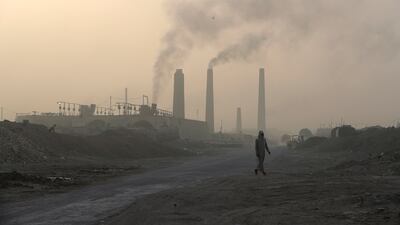
Smoke rises from brick factory stacks in Nahrawan, Baghdad. Tackling emissions from heavy industry is crucial to tackling global warming. Reuters -
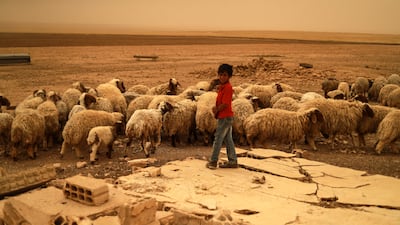
A boy stands near a flock of sheep as a sandstorm approaches in the Syrian countryside of Tabqa. Syria is among the countries most vulnerable and poorly prepared for climate change, which is expected to worsen. AFP -
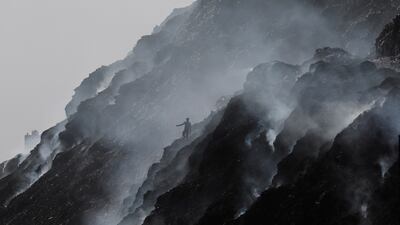
Mountains of smouldering rubbish at the Bhalswa landfill in New Delhi, India. Reuters -
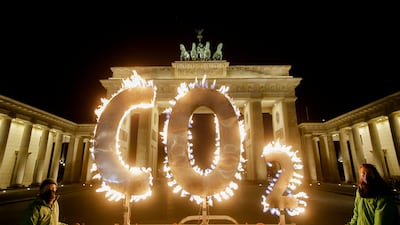
Greenpeace activists take part in a climate change protest in front of the Brandenburg Gate in Berlin in May. AP -
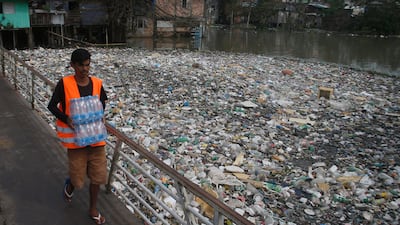
A man carries water bottles across the heavily polluted Negro River in Manaus, Brazil. About 35 tonnes of rubbish are removed daily from the river. AP -
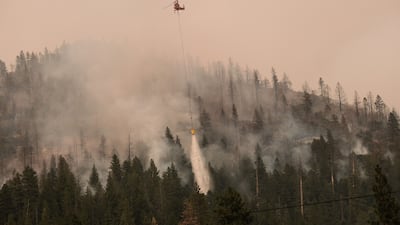
A helicopter drops water on a brush fire in California. Bloomberg -
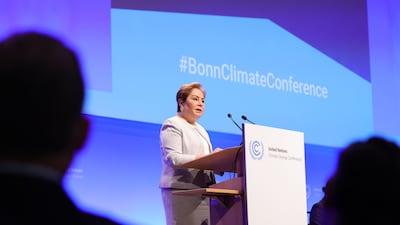
UN climate chief Patricia Espinosa speaks on the opening day of the Bonn climate change conference in Germany. Getty -
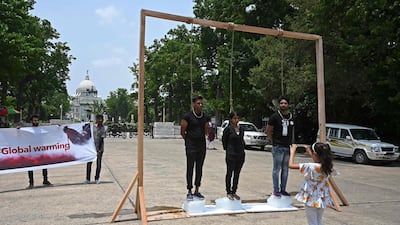
Activists take part in a demonstration to raise awareness of global warming, during an event to mark World Environment Day in Kolkata. AFP -
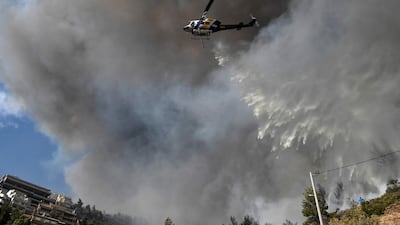
A helicopter drops water on a bushfire near a residential district in Athens. The fire forced residents to flee. AFP -
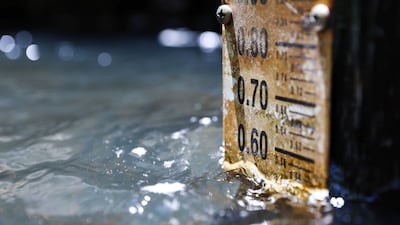
A gauge measures water levels in the Rio Nambe river, in New Mexico. Ninety per cent of the state is experiencing extreme drought. Getty -

Afghan refugees search for recyclable material from heaps of rubbish in Karachi, Pakistan. AP -

A climate activist ties herself to the net during the semi-final tennis match between Croatia's Marin Cilic and Norway's Casper Ruud at the French Open in Roland Garros in Paris. AP -
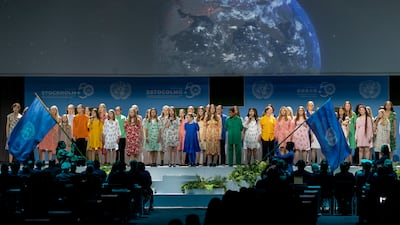
A dance group performs at a climate summit in Stockholm, Sweden. Getty -

US climate envoy John Kerry talks to a delegate at the Stockholm 50 climate summit. Getty -
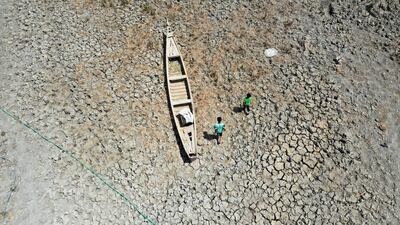
A boat is stranded during low tide at the Chebayesh marsh in Dhi Qar province, Iraq. Reuters -
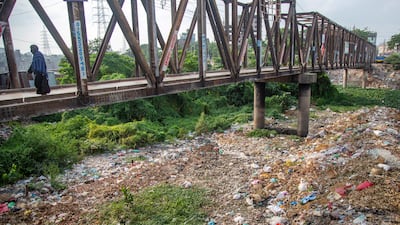
A woman crosses a polluted river in Dhaka, Bangladesh. EPA -
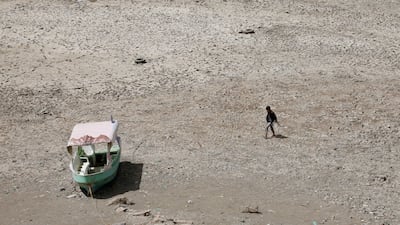
A man walks past an abandoned boat in the bed of a drought-affected reservoir on the outskirts of Sana'a, Yemen. EPA



