



Futurists, policymakers, scientists and industry leaders are gathering at the Dubai Future Forum this week to discuss how society, governments and technology could look in the next 20, 30 or 40 years.
The conference is taking place at the Museum of the Future on Tuesday and Wednesday and will welcome 70 futurists from all over the world, who will share their visions.
Omar Sultan Al Olama, the UAE's Minister of State for Artificial Intelligence, Digital Economy and Remote Work Applications, will give the opening speech.
“Dubai Future Forum is an annual platform for discussing future opportunities and challenges, identifying priorities, and enhancing collaboration between governments, the private sector and societies to keep pace with the rapidly evolving world around us,” he said.
Amy Webb from the Future Today Institute will be a keynote speaker.
“Chief executives, government leaders, policymakers and central banks are grappling with immense volatility and critical uncertainties,” she said.
“Their decisions today will determine the long-term fate of human civilisation.
“Strategic foresight has never been more urgent and more necessary. The world's most eminent forecasters are gathering at the Dubai Future Forum to challenge leaders — and each other — to be more ambitious in meeting our emerging global challenges.”
Well-known futurist and theoretical physicist Dr Michio Kaku will also be speaking.
Future of governments
The conference will focus heavily on how governments are adapting to changes happening around the world.
The first panel session will be on how governments can mitigate challenges through foresight.
Speakers will include Abdulla Nasser Lootah, Director General of the UAE's Prime Minister's Office, and Sophie Howe, future generations commissioner for Wales.
There will also be a panel on whether international borders would still exist in the future, as society continues to produce more “global citizens”.
Speakers will discuss whether traditional citizenship would still play an important part in individual and social identity.
Future of technology
Technology will also be a focus at the forum.
There will be discussions on alternate forms of digital currencies, if personal data could be monetised by businesses, and if personal data could be used as a medium of exchange to pay for digital services.
Another panel session will share ideas on whether digital poverty is the new global crisis.
Panellists will discuss the impact of digital transformation on social and economic equity.
Future of the space industry
Experts will discuss whether space agencies and companies should focus on “space research” or “space colonisation”.
Billionaire Elon Musk hopes to send a million people to Mars by 2050.
But his plans are often criticised by scientists, who say that the Red Planet has hostile conditions in which it would be impossible to survive.
There have been calls by scientists for space agencies and companies to focus instead on improving the health of Earth, including fighting against climate change.
Terraforming Mars will also be discussed. That is a process of modifying the atmosphere of a planet to make it habitable.
Dubai Metaverse Assembly at the Museum of the Future — in pictures
-
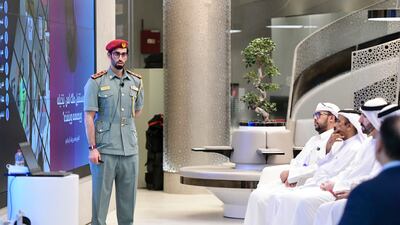
Presentations regarding different facets of Metaverse at the Dubai Metaverse Assembly at Museum of the Future. All photos: Khushnum Bhandari / The National -
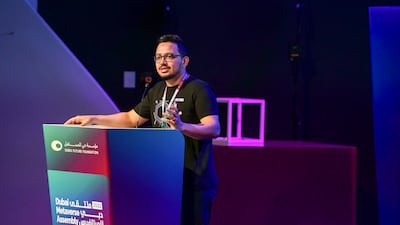
Sandeep Nailwal, co-founder of Polygon, speaks about The Building Blocks for WEB 3.0 and the Metaverse. -

From left, Alex Gubbay, Head of Digital at 'The National', moderator Amin Al Zarouni, of Bedu, Abdelrahman Mohamed, of MetaCon Global, Abdulla Mohamed Al Dhaheri, of Chaintech Lab, and Haya Al Gussain, of Evolve Network Club take part in the UAE Metaverse Contributors' panel discussion. -
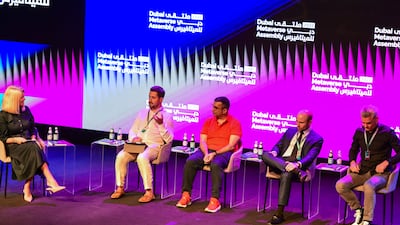
From left, Jane Witherspoon of Euronews moderates a panel discussion on 'Which sectors is the Metaverse already impacting' with Yusuf Bahadir, of GoArt, Vishal Gondal, founder and CEO of GOQii, David Clark-Joseph, of Pixelynx and Bradford Bird, of The Fabricant. -

Tom Urquhart from Arabian Radio Network speaks about gaming with Ahmed Tehemar, of Gamefi. -
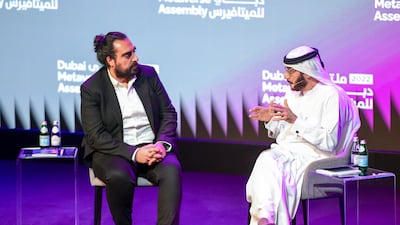
From left, Mustafa Alrawi of 'The National' speaks to Adel Al Redha, CEO of Emirates about 'Opportunities in Aviation'. -
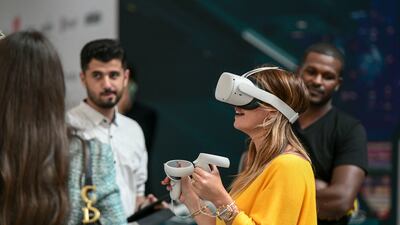
A visitor tests a virtual reality headset at the Dubai Metaverse Assembly at Museum of Future. -
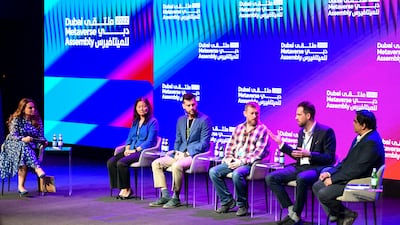
From left, moderator Mina Al-Oraibi, Editor-in-Chief at 'The National', HSBC's Catherine Zhou, Alexander Chehade from Binance, Keith Jordan from Mastercard, DIFC Authority's Christian Kunz and Vinit Shah from the Virtual Assets Regulatory Authority discuss the role of governments in virtual worlds. -
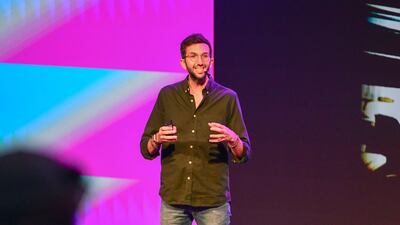
Ziad Traboulsi from Meta addresses the assembly. -
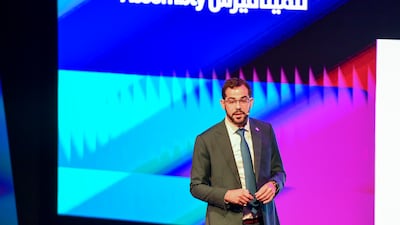
Gabriel Abed, ambassador of Barbados to the UAE, speaks about the future of nations in the Metaverse. -
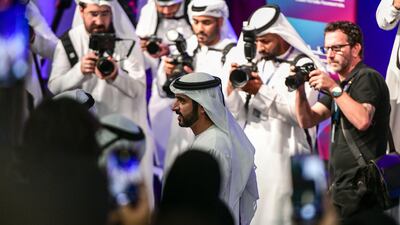
Sheikh Hamdan bin Mohammed, Crown Prince of Dubai, attends the event at Museum of the Future. -
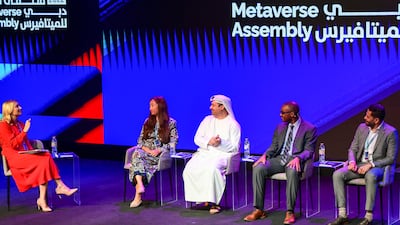
From left, Euronews moderator Laura Buckwell, Cathy Li of the World Economic Forum, Digital Dubai's Marwan Al Zarouni, Meta's James Hairston and Balsam Danhach of FTX discuss 'Maximizing the Potential of Ecosystems on the Metaverse'. -

Brandy Scott of the Arabian Radio Network, left, and Sultan Ahmed Bin Sulayem, Group Chairman and CEO of DP World discuss 'How the Metaverse will Enable People and Operations'. -
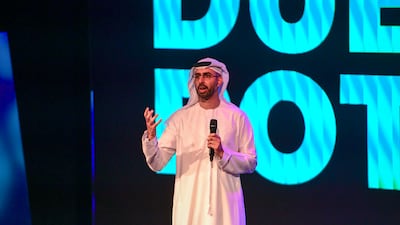
Omar Al Olama, Minister of State for Digital Economy, AI and Remote Working System, speaks about 'Unlocking Dubai's Potential'. -
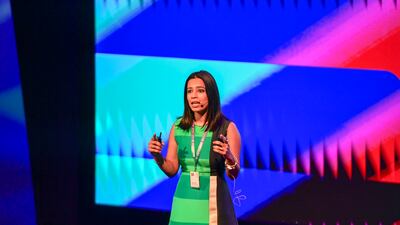
Asma Shabab of Accenture leads the 'Building the Responsible Metaverse' discussion with virtual speaker Anne Groeppelin, also from Accenture. -
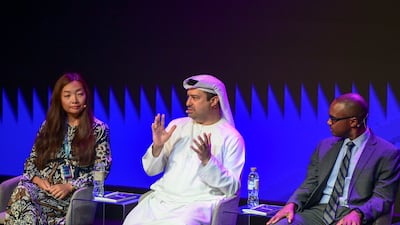
Ms Li, left, and Mr Hairston, right, listen as Mr Al Zarouni makes a point. -
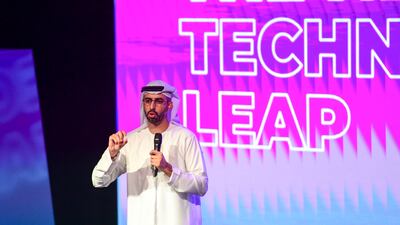
Mr Al Olama, who is also Chairman of Dubai Chamber of Digital Economy and Vice Chairman of the Higher Committee for Future Technology and Digital Economy in Dubai. -
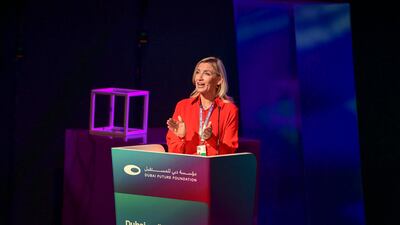
Moderator Ms Buckwell leads the panel discussion on 'Maximizing the Potential of Ecosystems on the Metaverse'. -

From left, The National's Sarah Forster moderates a discussion with Samuel Hamilton of the Decentraland Foundation, Majid Al Futtaim's Joe Abi Akl, Damac Properties' Ali Sajwani and Guy Parsonage from PwC on 'Opportunities in Virtual Real Estate'. -
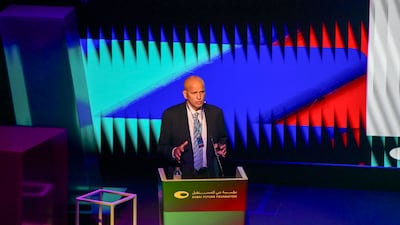
Ihab Foudeh from Microsoft speaks on the topic of 'Unravelling the Metaverse and its Future'. -
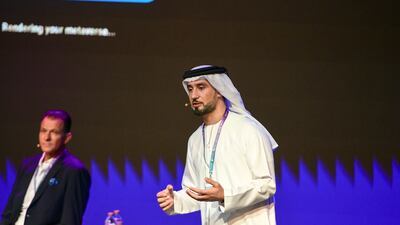
Khalifa Al Jaziri Al Shehhi gives a presentation on 'Metaverse and the Economy'. -
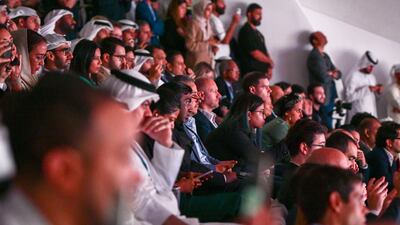
Some of the audience at the Dubai Metaverse Assembly. -
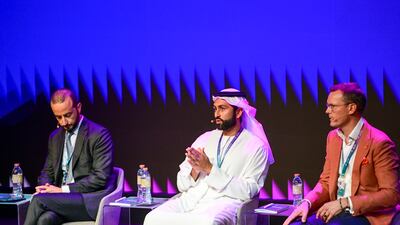
From left, Mr Abi Akl, Mr Sajwani and Mr Parsonage continue their discussion. -
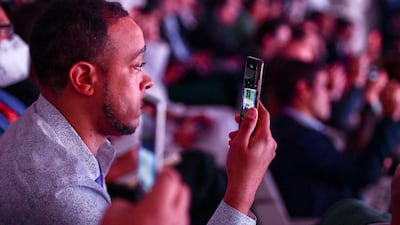
The audience takes in the discussion. -
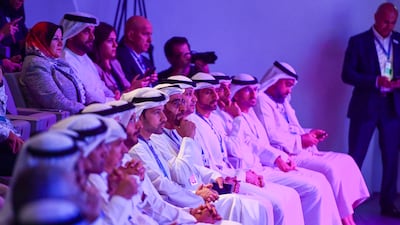
Front-row seats for the Dubai Metaverse Assembly. -

Minister of Economy Abdulla bin Touq, second from left, joins a discussion on 'Metaverse and the Economy' moderated by Karl Tlais, left, founder and strategic advisor of iAdvisory, Accenture managing director Bashar Kilani, second from right, and BCG Digital Ventures managing director and partner Mark Zaleski. -

Khalfan Belhoul, CEO of the Dubai Future Foundation gives the opening address.



