

A 2-year-old boy is on the road to recovery from the rare muscle-wasting disease spinal muscular atrophy (SMA) after doctors in Dubai gave him a $2.1 million gene therapy injection.
Rasheed's mother said he started showing symptoms of the disease, which is often fatal, when he was less than a year old.
She said she saw Rasheed had issues with his legs. Despite the reassurances of several doctors, he could not crawl, sit, or control his body at the age of 11 months.
The family, who are Egyptian and live in Dubai, took Rasheed to Al Jalila Children’s Specialty Hospital almost 12 months ago, before his first birthday. Medics there diagnosed SMA, a condition that can cause muscle weakness and can affect a child’s ability to develop.
Doctors administered a Zolgensma injection, a prescription gene therapy that is the most expensive life-saving drug in the world, costing about $2.1m.
When Rasheed's clinical team met this month for one-year post-therapy assessment, they found he was demonstrating improved upper limb movement.
“We are pleased with Rasheed’s progress,” said Dr Haitham El Bashir, paediatric neuro-rehabilitation consultant at the hospital.
“He can now move his shoulders against gravity while in a sitting position, he can transit from lying to sitting with minimal assistance from his hips, he can kneel for at least five minutes, and he has started to shuffle his way around on his bottom.”
Rasheed's mother said doctors have told her that improvement levels vary from one child to another, so she needs to patiently monitor her child.
“He has since regained the ability to raise and move his arms. Signs of improvement start from the top of the body to the bottom, from the arms to the waist and eventually the legs,” she said.
August is SMA Awareness Month and Dr El Bashir urged parents to look out for symptoms in their babies such as floppiness, problems with breathing and swallowing, and continual signs of weakness.
“In our experience, the sooner you identify the condition and start the treatment, the better outcome you can achieve,” he said.
“Some children can lose some skills they have gained because they become weaker with time and there is a huge risk because the rapidity of muscle deterioration is such that it can affect breathing and swallowing, which can threaten the child’s life.

“Early identification and treatment are beyond doubt significant to the child’s well-being because a patient treated at two weeks of age is going to do better than one treated at the age of 2.
“That is why it is especially important to have newborn screening. SMA is easy to diagnose through a simple 24-hour genetic test.”
Rasheed’s mother has also urged parents to watch their children from birth for signs of SMA and to seek help immediately if they have concerns.
What are SMA and gene therapy?
Spinal muscular atrophy affects one in 10,000 children and can limit the ability to crawl, walk, sit up, and control head movements.
Children as young as two months can display signs of the most common type of SMA and account for 60 per cent of SMA patients.
SMA is a hereditary disease caused by a missing or faulty gene that the body requires to make a protein essential for motor neuron cell survival.
Without sufficient levels of the protein, the motor neurons — nerve cells in the brain stem and spinal cord that control activities such as speaking, walking, breathing, and swallowing — die, leading to muscle weakness and atrophy. There are four types of the condition.
Type 1 is the most severe and many children with it do not live past the age of 2.
Children with Type 2 may sit without support, but cannot walk on their own.
Type 3 is a milder form of the disease and resembles muscular dystrophy. Children are usually able to walk with difficulty and some eventually need a wheelchair. They usually have a normal life expectancy.
Type 4 is very rare. It starts in young adulthood and results in mild motor impairment.
Treatment includes the spinal injection that Rasheed received. It is a one-time infusion that transfers the missing survival motor neurone gene directly into body cells through a virus vector — tools commonly used by molecular biologists to deliver genetic material into cells.
In 2019, the Food and Drug Administration in the US approved Zolgensma to treat SMA in children who are younger than 2 years old. It is the first gene therapy to receive FDA approval for the treatment of SMA.
Other recommended treatments include a syrup given to the child for the rest of their life and Spinraza injections, with four injections to be given in the first two months of treatment and then every four months for the rest of the patient’s life.
Spinraza is injected into the fluid surrounding the spinal cord through a needle inserted into the lower back.
The price of Spinraza is $750,000 for the first year and then $350,000 a year after that, giving a total cost of about $4m every decade, drugs.com said.
In the two years since Al Jalila Children’s launched its dedicated gene therapy, the hospital has provided the Zolgensma treatment to 41 patients from 13 countries from across Europe and the Middle East, with the largest number of patients arriving from Turkey.
“It has made a huge difference to the young SMA patients and their families who previously had to travel to the USA for treatment,” Dr El Bashir said.
“In the SMA case, we inject the AAV-9 virus that carries a normal DNA into the cells through an infusion which helps in producing the normal SMN protein needed for the spinal cord neurons to survive.
“Children with SMA have a deficiency of SMN protein, which causes nerves that control muscles — the motor neurons — to die.
"Eventually, their muscles become weak and waste away, with eventual loss of movement and difficulty in breathing and feeding."
The hospital also offers a screening programme study into the epidemiology of SMA in Emirati newborns. It is being undertaken at Genomics Centre, Dubai Health Authority, and private hospitals, which are examining 6,500 newborns across 10 public and private maternity hospitals in the UAE.
The study aims to identify the number of SMA patients who live in the country and project how many there are likely to be in the future, to aid government planning for treatment offerings.
Paul Pogba visits Al Jalila Children’s Specialty Hospital - in pictures
-
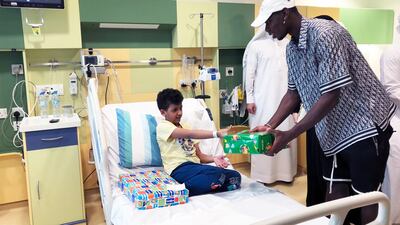
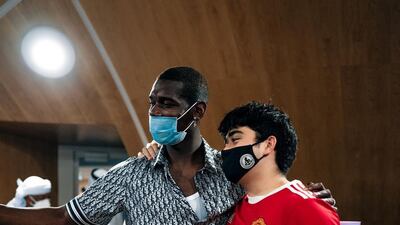
France and Manchester United superstar Paul Pogba swapped the football pitch for the hospital ward when he paid a surprise visit to Al Jalila Children’s Specialty Hospital in Dubai in November 2021. Photo: Al Jalila Children’s Specialty Hospital -
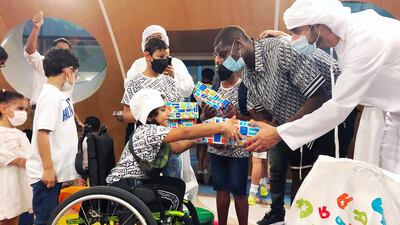
Pogba meets patients at the hospital and presents them with gifts. Photo: Al Jalila Children’s Specialty Hospital -
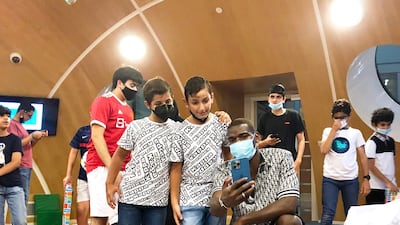
Pogba poses for pictures during his visit. -
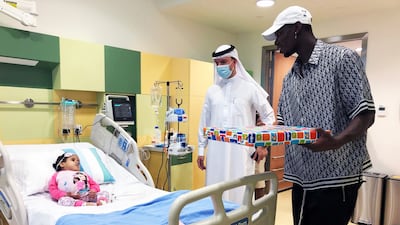
Pogba tours the hospital's wards and rooms. -

The United star posted pictures from the visit on his Instagram account. @paulpogba -

One of the pictures shared by Pogba on his Instagram account. @paulpogba -
Pogba takes a selfie with a fan. @paulpogba



